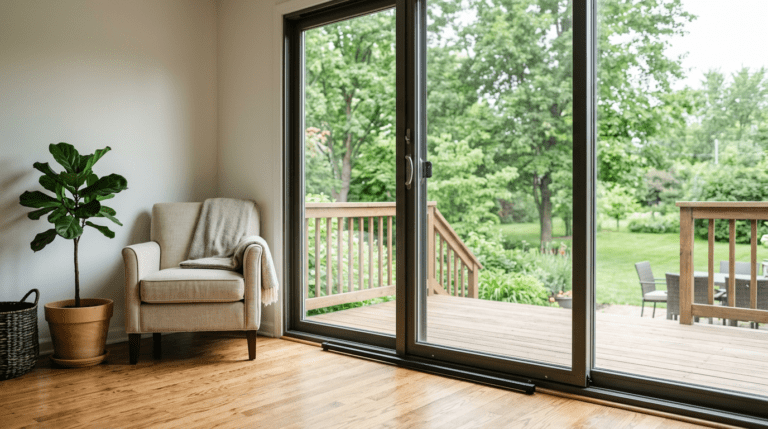

Sliding door roller replacement means lifting the moving panel off its track, unscrewing the two roller assemblies from its bottom rail and fitting matching ones. Check the track and the roller adjustment first: a dented sill or a panel set too low drags just like a worn wheel.
That which is most annoying in life is a sliding door that gets stuck every time you want to open it. It’s not only the effort wasted; it’s the small, daily annoyance that begins to drive you slowly, up the wall. Most people try to push out whatever dust or debris they can see and feel from the bottom track and then grab a screwdriver or specialty Allen key to tighten the little adjustment screws. (Sometimes that’s all it takes, honestly, and you’re set.) But if you’ve done all that and your door still trails you like an old jalopy, it’s likely that the rollers have outlived their usefulness. Is it a big deal to swap them out? Let’s dig a little deeper into what’s involved.
And, if you’ve already tried some cleaning and fiddling and the door still won’t play ball, why not make use of a service like our Sliding Glass Door Repair & Replacement service. But you may want to see if you can wield the firepower yourself first, so let’s examine it further.
Key Takeaways
- Cost: depends on the door size and weight, the roller type, and whether the track needs repair as well.
- Replace rollers when: door takes >5 lbs to slide, you hear scraping, or door catches. Cleaning/lubrication first — only replace if those don’t restore smooth glide.
- Lifespan: stainless ball-bearing rollers 15–25 yrs in clean tracks; cheap rollers in dirty tracks 5–10 yrs. Vacuum track + silicone (not WD-40) every 6–12 months.
- Lift technique: back off adjustment screws to drop rollers, lift straight up, top clears first. 80–150 lb door — two people for heavy ones.
- Track first: if track is bent or pitted, replace it WITH the rollers — otherwise new rollers fail within 1–2 years from grinding on a damaged surface.
Why Do the Rollers in a Sliding Glass Door Fail?

Here are the leading five offenders (plus a quick extra) that could help you better understand where things fall apart:
- Wear and Aging: Rollers wear out eventually, particularly after years of regular use. We’ve talked about how materials will get bent out of shape and are less effective the more they wear out, but we should emphasize that cheaper rollers will wear out faster than more expensive, high-quality rollers. Saving money upfront can sometimes hurt you more in the long term.
- Dirty Dust Bunnies: The grime that builds up is the stealthy foe of smooth gliding. But even if you religiously clean the tracks, tiny particles can still get stuck in the roller mechanism. (A quality handheld vacuum is your best friend in this case.)
- Bad Installation: If the rollers on your door weren’t lined up exactly when it was installed, you’ll see uneven wearing much sooner than system intended. Occasionally, a slight change in alignment — a fraction of an inch, for instance — can set off accelerated damage.
- Overloading: Have you ever tried to carry too much food on a plate and dropped everything? It’s a somewhat similar story for sliding doors. Overloading the door’s capacity or having something repeatedly bang into it will put all sorts of structural strain on it.
- Corrosion and Moisture: Rust isn’t just unsightly; it degrades metal and can cause the rollers to seize. If condensation or rainwater repeatedly strikes the door’s bottom edge, the roller assembly may gradually rust.
Temperature Fluctuations (Bonus Point)
Sudden swings from extreme heat to extreme cold can trigger expansions and contractions that can put a strain on the roller materials. Eventually, this back-and-forth can warp some parts, creating misalignment or cracks.
Check the Track and Adjustment Before Buying Rollers
A hard-sliding door does not always need new rollers. Andersen’s own guidance says that if the rollers spin freely and the sill track shows no dents or deep scratches, adjusting the panel may be all the door needs.
Run these checks in order, from the cheapest fix to the most involved:
- Vacuum the bottom track and wipe it clean. Grit packed into the track is a frequent reason a door feels rough.
- Look at the rail the wheels ride on. A dented or scored track cap will chew up new rollers, so it has to be replaced along with them; Andersen orders the sill track cap separately through its support team.
- Adjust the panel height. On Pella sliding doors the adjustment screws sit at both ends of the bottom rail: clockwise raises the panel, counterclockwise lowers it. Set the panel parallel to the frame, with even weatherstrip contact top and bottom.
- Only then pull the panel and inspect the wheels. Andersen’s rule is simple: rollers that are hard to spin, chipped, cracked or worn get replaced.
The adjustment step also matters after new rollers go in. A panel that sits too low drags its bottom edge on the sill, and one set too high leaves uneven gaps at the weatherstrip.
Step-by-Step Instructions for Roller Replacement

REMOVE THE DOOR
Be careful not to twist it or scratch the edges. (Little-known fact: The glass is hairline-crack-happy if you’re ungentle.) Once you can wrestle it free, find a safe spot where it can lean, ideally against some cushy surface.
Bonus Tip: Don’t try to brute-force the door out if it feels stubborn. Enlist a friend or family member to assist. Having a second set of hands can help avoid expensive slips and falls.
LOOSEN THE ROLLER SCREW
There’s usually a small screw (or two) that secures the roller assembly, and this secures most doors. Generally it’s just above the adjustment screw, but on some newer doors you’ll find it concealed right at the bottom. And keep rotating it to the left with a trusted Phillips screwdriver. Hold onto those screws in a little container (perhaps a jar lid?) so they don’t disappear on you magically.
Bonus Reminder: While you’re at it, take a look at the bottom edge of the door to see if corrosion or old grease is gumming things up.
REMOVE THE ROLLERS
After that, the rollers should pop out with a small push. This is where you’ll find out if they are beyond repair or simply a little scuffed. Either way, be gentle. If they’re stuck, don’t force it — try wriggling them loose or putting a little penetrating oil around the edges.
IDENTIFY WHICH TYPE OF ROLLER YOU NEED
There’s nothing worse than the wrong parts that mean multiple trips to the store. Record any part numbers on your old rollers, take a couple of close-up photos, and perhaps measure their exact width and diameter. You’ll be glad you did later when you’re not struggling to fit together mismatched components.
REPLACE OLD ROLLERS WITH NEW ONES
Install the new rollers lined up in the same orientation as the old set. Get this wrong and your door won’t slide at all after reassembly. Tighten the screws (clockwise, naturally) but don’t get carried away — just tighten them just enough to keep everything snug. Give the rollers a spin with your finger to ensure they are running smoothly.
Pro Tip: Some doors come with adjustable rollers. Be ready to tweak those settings when the door is on the track again.
PRE-CLEAN THE RAILS
Before you just drop the door back in, take a minute to vacuum the tracks (a narrow-nozzle vacuum does wonders). Next, wipe them down with a wet cloth to polish up any caked-on grease. A clean, silicone-based lubricant or a dry lube for sliding doors can help prolong the life of your new rollers; consider adding it.
INSTALL THE SLIDING GLASS DOOR
Now swing the door back and lift it onto the rails. Lower it into place slowly, making sure it sits on the new rollers correctly. Pull it in and out a few times. If you feel any rough patches, you may have to make some last-minute adjustments to the screws. Then, when it glides with the greatest of ease, you are good to go.
Match the Replacement Roller to Your Door
The right roller matches the old one in housing size, wheel diameter, wheel type and profile, and in where its adjustment screw sits. Brand and series narrow the search faster than measurements, so start with the label or the paperwork if you have them.
Andersen gliding patio doors
Andersen publishes which roller each series uses. The operating panel rides on two rollers, and the panel has to come off before you can inspect them.
- 400 Series and 200 Series doors made from 1982 on use a tandem roller; panels 8 feet or taller take a heavier-duty version of it.
- 100 Series doors made from March 2010 on use that same tandem roller, while older 100 Series doors need a 100 Series-only part.
- A-Series doors made after December 2021 use an A-Series roller, and older A-Series panels can be upgraded to it.
- E-Series doors have used tandem ball-bearing rollers since 1979; Andersen asks owners to contact it to order them.
Pella sliding patio doors
Pella’s owner’s manual gives the removal steps by product line, and they differ. On several lines you lower the panel first by turning the adjustment screws counterclockwise, then lift the bottom of the panel off the track from outside. If the wheels will not clear the track, lower the panel further for more room.
Other brands and older doors
When there is no label, the old roller is the pattern. Measure the housing length, width and height, the wheel diameter, and note whether the wheel is steel or nylon, flat or grooved. A grooved wheel rides a raised rail and a flat wheel a flat track, so the profile has to match the sill as well as the door. Photos of both ends of the housing save a return trip.
Some older doors take rollers that are no longer made, and then the closest universal assembly has to be matched by measurement and adjusted on the door. Our sliding door repair visits check the rollers and the track together, since worn wheels and a worn track often go together.
Conclusion

We at Window Gurus are ready to bring back the effortless glide of your sliding door.
Professional Help
Our experienced technicians arrive fully prepared with quality replacement rollers and the knowledge to fix your door as if it were brand new. Because the last thing anyone wants is to mess around with a finicky sliding door when you just want to let in a refreshing breeze, right?
Our team never rushes through a job — during glass door removal, we don’t just make sure it’s safe, every roller gets aligned before we leave! And we charge you fair and schedule you flexibly.”
Don’t let a squeaky or jammed door dampen your day. With professional roller replacement, you’ll avoid injuries, save yourself the hassle of going back and forth to your nearest hardware store, and get the door fixed with parts matched to it. After all, your sense of security is worth it. So reach out and allow us to do the heavy lifting. So, we’ll ensure that your sliding door will glide like a dream again, allowing you to enjoy a hassle-free environment at your home.
If the rollers, track, or door alignment still fight you after the basic steps, request a no-pressure repair estimate before forcing the panel and risking broken glass or frame damage.
Frequently Asked Questions
Quick answers to common reader questions, drawn directly from real search intents.
Five steps: (1) lift the door off the track — older doors lift straight up, newer ones need adjustment screws backed all the way out first; (2) lay it flat on a padded surface; (3) unscrew the roller assembly from the bottom rail (usually 2 screws); (4) press the new roller into place and screw it in; (5) re-hang the door, then turn the adjustment screws clockwise to raise the roller into the track. Total time: 60–90 min for a competent DIYer.
The cost depends on the door and the parts. Heavy oversized doors that need two installers, aluminum doors with proprietary rollers, and a damaged track that has to be replaced at the same time all raise it. We confirm the price after seeing the door.
Most common cause: dirt and debris in the track grinds the rollers down over 5–10 years. Second: the door has been forced when it stuck (often after the track bent), which deforms the wheels. Third: the roller adjustment was set too high, putting weight on the metal flange instead of the wheel. Inspect the track first — if it’s pitted or bent, replace it along with the rollers, otherwise the new rollers will fail in 1–2 years.
Start by removing the screen door first if there is one. Find the adjustment screws at the bottom of the operating door (usually accessed through small holes in the bottom rail) and turn them counter-clockwise to drop the rollers all the way down. Then lift the door straight up — the top should clear the upper track first, then swing the bottom out. For heavy doors, use two people. Sliding glass doors weigh 80–150 lbs.
Quality stainless-steel ball-bearing rollers in a clean track: 15–25 years. Cheap pressed-steel rollers or dirty tracks: 5–10 years before they get hard to slide. Sign your rollers are failing: the door takes more than 5 lbs of force to slide, you hear scraping, or the door catches and pops back. Vacuum and brush the track every 6 months and apply silicone (NOT WD-40) once a year — that doubles the lifespan.
Limited. Adjustment screws can raise/lower rollers in place (no parts needed, about 5 minutes) — fixes “drags on track” but not broken wheels. Lubrication (silicone spray + brush) addresses dirty rollers without removal — buys 6–12 months. But replacing actual rollers requires lifting the door off; there’s no shortcut. Anyone offering “in-place roller replacement” is upselling — it’s not mechanically possible without removing the sash.
Start with the brand and series from the door label or paperwork, since manufacturers such as Andersen list the roller for each series. Without that, measure the old roller’s housing and wheel diameter and note the wheel material and profile before you order.
Clean the bottom track first, then adjust the rollers. On Pella sliding doors the adjustment screws are at both ends of the bottom rail: clockwise raises the panel and counterclockwise lowers it. Set the panel parallel to the frame, and replace any wheel that is cracked or hard to spin.

Ready to fix your windows? Get a free quote in 30 seconds.
Family-owned, licensed & insured. Free, no-obligation quotes.