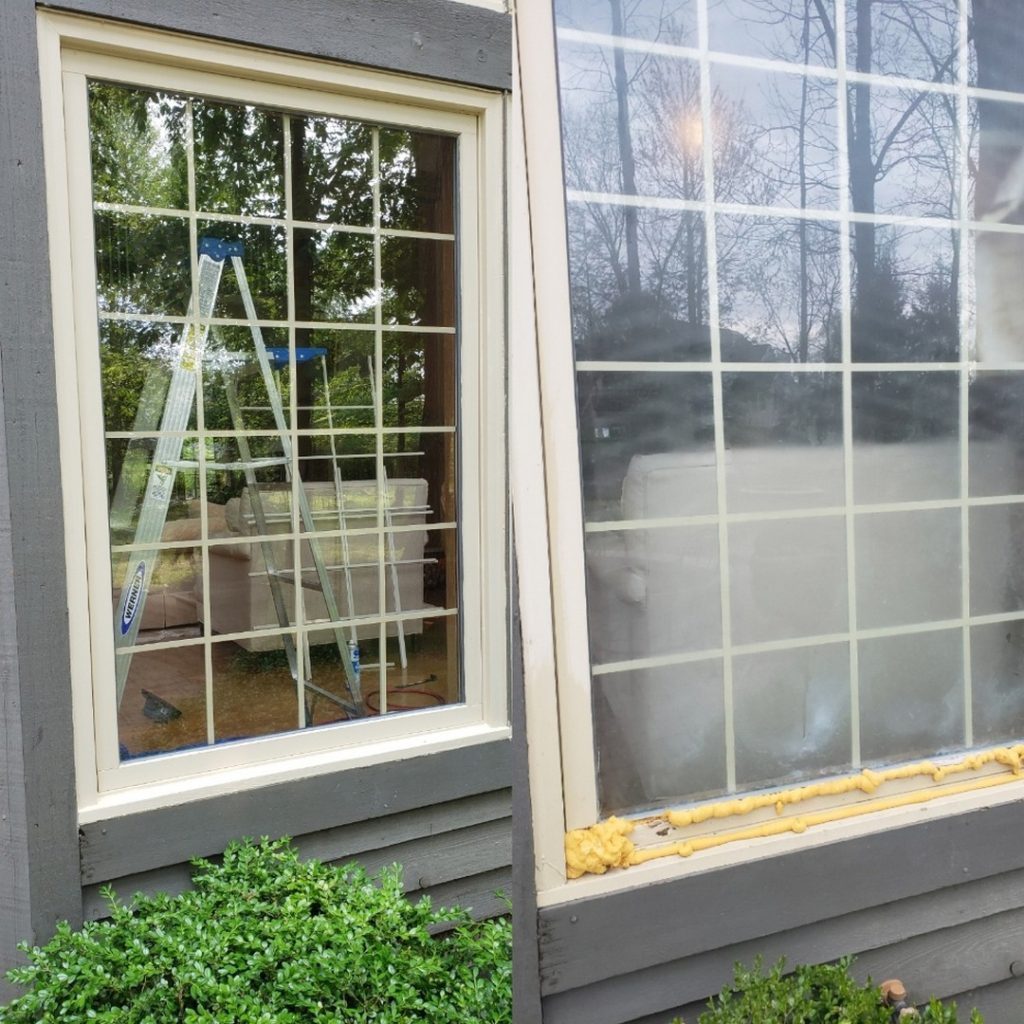
Do you dream of spotless windows? Even though the glass might be intact, rain stains or marks from building materials can seriously degrade their appearance. How can you remove rain and snow stains without much effort? Read on to find out.
Key Takeaways
- 5-step removal ladder: vinegar (fresh) → baking soda paste → CLR → #0000 steel wool → cerium oxide polish (for etched glass).
- Safe products: white vinegar, baking soda, CLR, microfiber cloth, #0000 steel wool. NEVER: ammonia, bleach, razor blades, abrasive pads.
- Causes: sprinkler overspray (#1 preventable), hard water mineral deposits, industrial fallout. Mineral bonds harden over months — clean fast.
- Prevention: redirect sprinklers, squeegee dry after washing, apply Rain-X-style sealant every 6–12 months. Whole-house softener for severe hard-water areas.
- Vinegar caveat: safe on glass, harmful to wood/paint/limestone trim. Spray-wipe-rinse within 10 min, don’t pool on adjacent surfaces.
What Causes Window Stains?
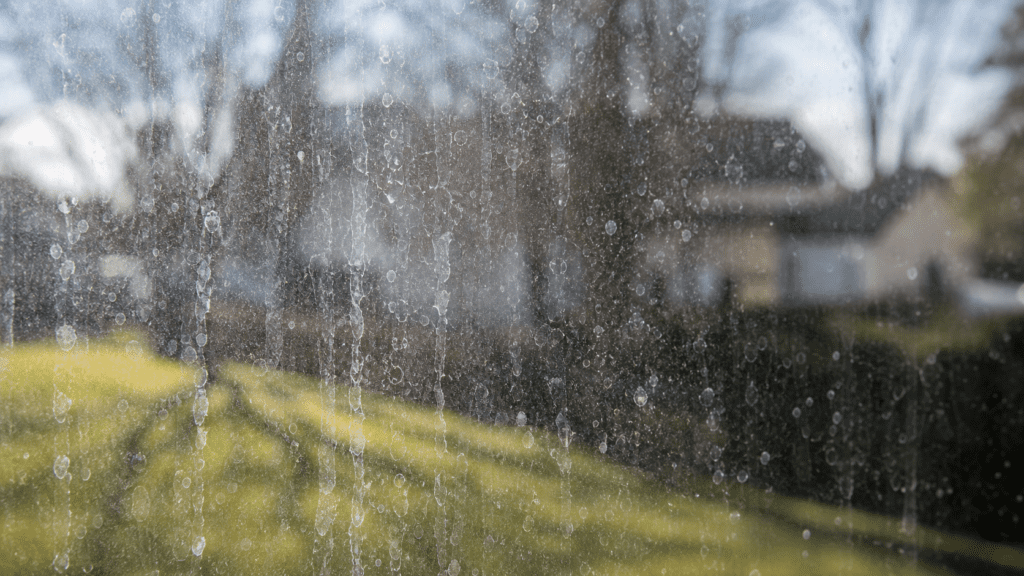
Before you start removing water stains, it’s important to understand why they appear. Water stains form when mineral-rich water dries on the glass without being wiped off. As the water evaporates, it leaves behind minerals, creating chalky white deposits on the window surface.
Besides rainwater, other causes of window stains include:
- Sprinklers spraying water on the windows
- Gutters allowing water to run down the windows
Some windows come with a factory treatment that prevents water stains. For untreated windows, you can have professionals apply a sealant, carnauba wax, or water repellent to prevent rainwater from accumulating. These treatments cause water to roll off the glass without forming hard water stains.
How to Remove Water Stains from Windows
| Method | Description |
|---|---|
| Vinegar and Water |
|
| Lemon |
|
| Baking Soda and Water |
|
| Store-Bought Products |
|
If the spots stay etched into the pane after cleaning, it may be time to look at when the glass needs more than cleaning instead of continuing to scrub the surface.
Preventing Hard Water Stains on Windows
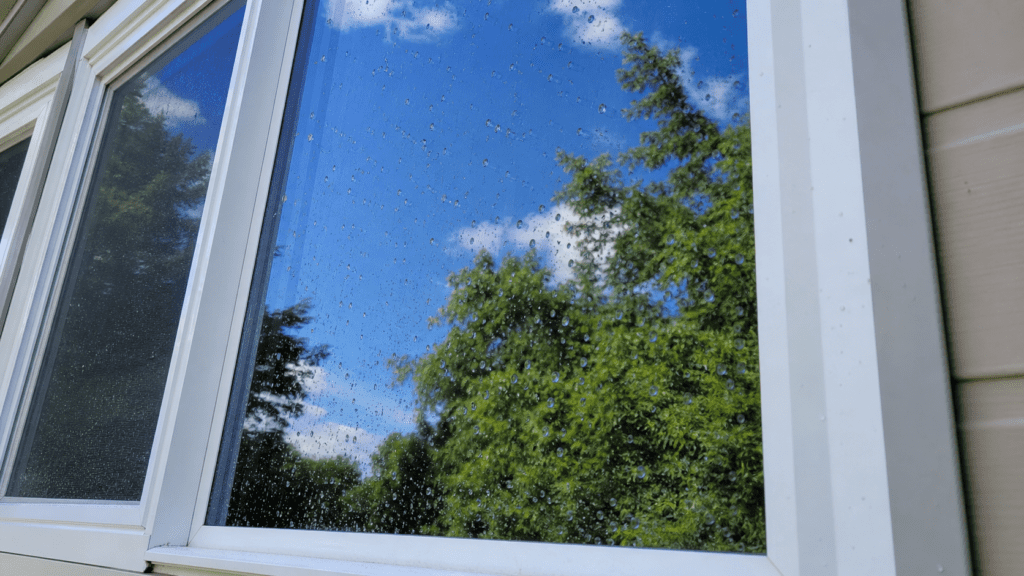
Tired of constantly cleaning your windows? Consider applying a hydrophobic coating to keep them crystal clear for years. However, if you’ve noticed signs of damage like rot or decay, it’s time to repair rotted window sill areas. Our professional service addresses these issues thoroughly, ensuring long-term durability and protection for your windows.
Frequently Asked Questions
Quick answers to common reader questions, drawn directly from real search intents.
Five solutions ranked by effectiveness: (1) white vinegar (50/50 with water) — works on fresh stains in 5–10 minutes; (2) lemon juice + baking soda paste — cuts mineral buildup; (3) commercial CLR or Lime-A-Way ($8–$15) — for stubborn deposits; (4) #0000 steel wool + water — physical removal of etched spots without scratching glass; (5) cerium oxide polish ($15–$25) — for permanent etching from years of buildup. Always test on a small area first; never use ammonia on tinted or low-E coated glass.
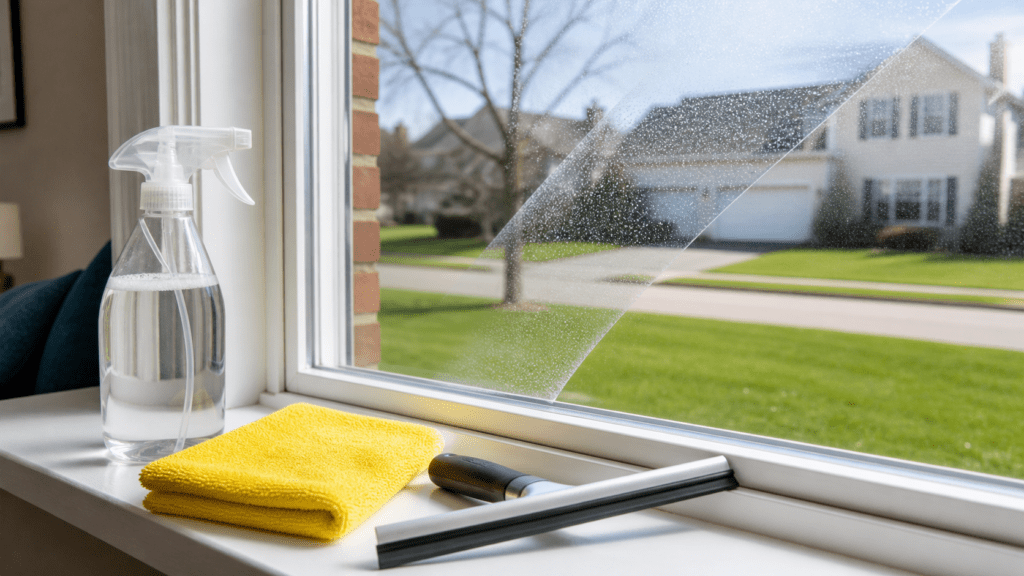
For light deposits: white vinegar applied with a spray bottle, let sit 5 minutes, scrub with microfiber, rinse. For mineral buildup: a paste of baking soda and water, work in with a soft sponge, rinse. For severe hard-water stains that have etched the glass: cerium oxide glass polish on a felt buffing pad — this is what professional auto detailers use. Don’t use abrasive scouring pads or razor blades on coated glass — both will permanently scratch.
Hard water stains contain calcium and magnesium deposits that bond to glass. Solution: a 60/40 mix of white vinegar and warm water, applied with a microfiber cloth, scrubbed gently in circles. For tough stains, soak a vinegar-saturated paper towel against the glass for 15–20 minutes before scrubbing. Stubborn cases: CLR Calcium Lime Rust remover ($8). Never use bleach, ammonia, or abrasive cleaners — they damage low-E coatings and tinted glass.
Three main causes: (1) sprinklers that hit the windows — the most common preventable cause; (2) hard water (high mineral content) drying on the glass after rain or condensation; (3) industrial fallout (concrete dust from nearby construction). Stains form when water evaporates, leaving dissolved minerals behind. Over months and years, these minerals chemically bond with the glass surface — the longer you wait, the harder they are to remove.
Three preventive steps: (1) redirect lawn sprinklers away from windows — by far the biggest source; (2) wipe windows dry after washing with a squeegee, not a paper towel; (3) apply a glass sealant (Rain-X for cars works on home windows too) — water beads off, minerals can’t bond. Reapply sealant every 6–12 months. For severe hard-water areas, install a whole-house water softener — it eliminates the mineral source for any spray that does hit the glass.
Plain white vinegar (acetic acid 5%) is safe on standard glass and won’t etch or damage it. But: vinegar IS hazardous to nearby surfaces. Don’t let it run onto wood frames, painted trim, or stone sills — it’ll dull paint and etch limestone or marble. It can also degrade the rubber gaskets around the IGU over time if applied repeatedly. Safe usage: spray on glass, wipe off within 10 minutes, rinse with plain water. Avoid daily use on the same window.

Ready to fix your windows? Get a free quote in 30 seconds.
Family-owned, licensed & insured. Free, no-obligation quotes.