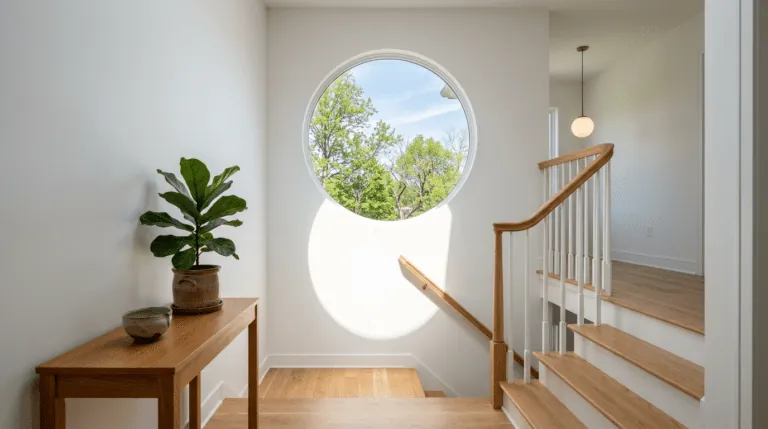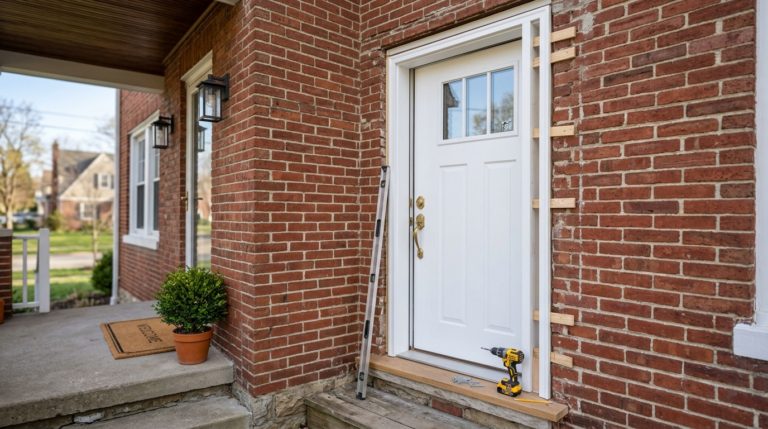

A farmhouse home lives or dies on its windows. They set the rhythm of the facade, decide how much light reaches the kitchen, and signal whether the house reads as a restored 1900s farmstead or a fresh modern build. Pick the wrong style and a thoughtful exterior can feel off, even when everything else is right.
This guide walks through the window shapes that suit a farmhouse, how traditional and modern versions differ, the grid patterns and frame colors that carry the look, and the materials that hold up through an Ohio winter. If you are planning a build or a remodel, our team handles new window and door installation across the Columbus and Cincinnati metros and sees these choices play out on real houses every week.
Quick answer: The most farmhouse-friendly styles are double-hung, casement, and awning windows, usually in a tall, simple shape. Modern farmhouses favor black frames with few or no grids, while traditional ones lean on white frames and divided lites. Match the style to your home and keep it consistent.
What Makes a Window Farmhouse Style
Farmhouse style is less about one specific window and more about proportion and restraint. The look grew out of working rural homes, where windows were tall, narrow, and arranged in clean rows to catch light and cross-breezes without fuss. That heritage still drives the aesthetic: simple rectangular shapes, vertical emphasis, and a frame that frames the view rather than competing with it.
Two details do most of the work. The first is shape. Farmhouse windows are usually taller than they are wide, which suits the high ceilings and steep gables common to the style. The second is the grid, or the lack of one. A classic farmhouse uses divided panes that nod to old hand-set glass, while a modern farmhouse strips the grids away for a cleaner face. Get the proportion and the grid right and almost any window type can read as farmhouse.
It also helps to think about the whole wall, not one opening. Farmhouse exteriors rely on repetition, so windows that line up and share a size and style look intentional. A single oddball shape in the middle of a row breaks the spell faster than any color choice.
Traditional vs. Modern Farmhouse Windows
The word farmhouse covers two fairly different looks, and knowing which one you are after narrows every later decision. Traditional farmhouse leans into heritage: white or cream frames, divided lites in a two-over-two or six-over-six pattern, and natural wood or painted trim. It feels warm, layered, and rooted in the home’s history, which suits the older farmhouses scattered around central Ohio.
Modern farmhouse keeps the silhouette but trades the ornament for contrast. Frames go matte black, grids shrink or vanish, and the glass gets larger to flood rooms with light. The result is the crisp black-on-white look that defines so many new builds. Neither version is more correct; they simply tell different stories, and the right call depends on the age and bones of your house.
Many homeowners land somewhere in between, and that transitional path is a safe one. You might keep grids only on the front-facing windows, choose a soft black or bronze instead of a stark one, or pair white frames with a black front door. Mixing eras works as long as you commit to a clear rule and apply it consistently.
Double-Hung Windows: The Farmhouse Classic
If one window says farmhouse, it is the double-hung. Both sashes slide, so you can drop the top, raise the bottom, or open both to pull a cross-breeze through the house, the same way the original farmsteads stayed cool before air conditioning. The tall, balanced shape fits the style perfectly and looks right in a row across a wide front porch.
Double-hung windows also carry grids better than almost any other type. A two-over-two pattern reads traditional without feeling fussy, and you can run the grids on the upper sash only for a lighter, more current take. They tilt in for cleaning too, which matters on a second story above a wraparound porch where ladders are awkward.
The trade-off is airflow. Because only half the opening clears at once, a double-hung moves less air than a window that swings fully open. For most rooms that is a fair exchange for the classic look, but in a kitchen or a stuffy upstairs bedroom you may want to mix in a style that opens wider. Our double-hung window work covers both new installs and tune-ups when an older sash stops gliding.
Casement and Awning Windows for Airflow
When ventilation matters, casement and awning windows earn their place on a farmhouse. A casement is hinged on the side and cranks outward, so the entire opening clears and scoops air into the room. With the grids left off, its single clean pane suits a modern farmhouse beautifully and gives an unbroken view of the yard or the fields beyond.
Awning windows hinge at the top and open outward from the bottom, which creates a small built-in shelter from the rain. That lets you leave them cracked during one of Ohio’s sudden summer showers without water running down the wall. They also work well stacked above a picture window or set high for privacy in a bathroom or stairwell.
Both styles seal tightly because the sash presses against the frame when you crank it shut, which helps on a blustery winter night. The main thing to plan around is the outward swing: keep casements clear of walkways, decks, and porches where an open sash could catch someone. Our casement window page goes deeper on where they fit best.
Picture, Bay, and Bow Windows for Light
Farmhouse style loves natural light, and a few fixed and combination windows deliver it by the armful. A picture window is a large, fixed pane that does not open, so it gives the biggest, clearest view for the money and frames a landscape like artwork over a sink or a reading nook. Pair one with a couple of operable casements on either side and you get both the view and the airflow.
Bay and bow windows push the wall outward to create depth, a built-in seat, or a shelf for plants. A bay uses three panels at sharper angles for a bold projection, while a bow uses four or more gently curved panels for a softer, rounded bump-out. Both add the kind of cozy, light-filled corner that farmhouse interiors are known for, and both suit a front room or a breakfast nook.
Scale is the thing to watch here. These windows are statement pieces, so one per elevation is usually plenty. Crowd a facade with too many projections and the clean farmhouse rhythm gets noisy and loses the calm that makes the style work.
Grids and Grille Patterns: Getting the Look Right
Grids, also called grilles or muntins, are the single biggest lever for steering a window between traditional and modern. The pattern you choose, and where you put it, changes the whole personality of the facade. A two-over-two splits each sash into two tall panes and reads classic but uncluttered. A six-over-six adds more, smaller panes for a deeper colonial-farmhouse feel. Leaving the grids off entirely lands you firmly in modern territory.
You do not have to grid every window in the house, and most people should not. A common, budget-smart approach is to put grids only on the windows that face the street, where they do the visual work, and leave the rest clear for light and an open view. The trick is consistency: pick one pattern and use it on every gridded opening so the front of the house reads as one composition.
On older farmhouses around Columbus, the mistake we see most is mixing grid patterns from different remodels, a two-over-two here, a colonial grid there. Settle on a single pattern for the whole street-facing wall and the house instantly looks more deliberate.
One more detail to settle early. Grids come as simulated divided lites laid over the glass, or as a grille sealed between the panes for easy cleaning. The between-the-glass option keeps wiping simple, while applied grids cast a more authentic shadow line when you look at the window up close.
Black or White: Choosing a Frame Color
Color is where a farmhouse declares its era. Crisp white frames are the heritage choice, blending into white siding for a soft, timeless wall that lets the trim and the front door do the talking. Cream and warm off-whites do the same job with a gentler, more lived-in feel that suits an older home and its original woodwork.
Black frames are the signature of the modern farmhouse, and the appeal is obvious: dark sash against light siding draws a sharp outline around every window and makes the whole elevation look tailored. Bronze and deep charcoal give a slightly softer version of the same contrast if stark black feels like too much. Black also pairs naturally with the metal roofs, gooseneck lights, and dark doors that travel with the style.
A word of caution for our climate. Dark frames absorb more solar heat, so on a south or west wall that bakes in the afternoon sun, a black exterior finish runs hotter than a white one. Quality frames handle it without trouble, but it is worth choosing a finish rated for heat and asking how the color is applied so it does not fade or chalk after a few Ohio summers.
Frame Materials That Suit a Farmhouse
The material under the finish decides how the window ages, how much upkeep it needs, and how well it holds the look you paid for. Farmhouse style works with all of the common materials, so the choice comes down to maintenance, budget, and how authentic you want the frame to feel up close.
Each option trades something. Wood looks the part and takes paint like nothing else, but it asks for the most care in a freeze-thaw climate. The synthetics need almost no maintenance but feel a little less traditional in hand. Here is how they stack up for a farmhouse.
- Wood gives the most authentic, paintable, heritage look, but needs sealing and repainting to survive Ohio moisture and freeze-thaw cycles.
- Fiberglass holds paint and a slim, wood-like profile, resists warping, and shrugs off temperature swings with little upkeep.
- Vinyl is the low-maintenance, budget-friendly choice, strong in white but harder to get in a convincing deep black.
- Clad wood wraps a wood interior in aluminum or fiberglass outside, pairing a warm indoor look with a weatherproof exterior.
For a black modern-farmhouse exterior, fiberglass and clad wood usually give the most durable dark finish. For a painted-white traditional look on a tighter budget, vinyl and wood both do the job.
Energy Efficiency in an Ohio Climate
A farmhouse can look perfect and still cost you every month if the glass is not built for the weather. Central Ohio swings from humid summers to hard freezes, and the window has to hold comfort against both. The good news is that the efficient choices do not change the farmhouse look at all; they live in the glass and the seals, not the style.
Start with double-pane glass and a low-E coating, a microscopically thin layer that reflects heat back where it belongs, keeping warmth in during winter and the worst of the summer sun out. An inert gas fill between the panes adds another layer of insulation. Together they cut drafts, soften the cold spots near the glass, and ease the load on your furnace through a long heating season.
Pay attention to the seals and the install as much as the glass. A well-made window set square and properly sealed keeps moisture out of the wall and prevents the foggy, failed insulated units that show up when a seal gives way. In an older farmhouse with settled framing, a careful installation is often what separates a window that performs from one that leaks air at every corner.
Common Farmhouse Window Mistakes
Most farmhouse window regret traces back to a handful of avoidable missteps, and they tend to surface only after the windows are in and the scaffolding is down. Run through this list before you order, because each item trades a small decision now for a look you will see every day.
None of these are about spending more. They are about consistency and matching the window to the house.
- Mixing grid patterns across the facade, which makes a careful exterior look pieced together.
- Choosing windows too wide for the style, which loses the tall, vertical proportion that defines the look.
- Adding grids to every window, which darkens rooms and dates the back of the house nobody needed to see gridded.
- Picking a finish not rated for sun, so a bold black frame fades or chalks on the hot side of the house.
- Copying the neighbor instead of your own home, when the window should suit your roofline, siding, and era.
Not Sure Which Style Fits Your Home?
Choosing farmhouse windows is easier when someone can stand in front of your actual house and talk through shape, grids, color, and material against your roofline and siding. The right call on a 1910 farmstead is rarely the right call on a new modern-farmhouse build.
Book a free, no-pressure window consultation with our Columbus and Cincinnati team, and get straight guidance on the styles that will suit your home and hold up to Ohio weather.
FAQ: Choosing Farmhouse Windows

Ready to fix your windows? Get a free quote in 30 seconds.
Family-owned, licensed & insured. Free, no-obligation quotes.