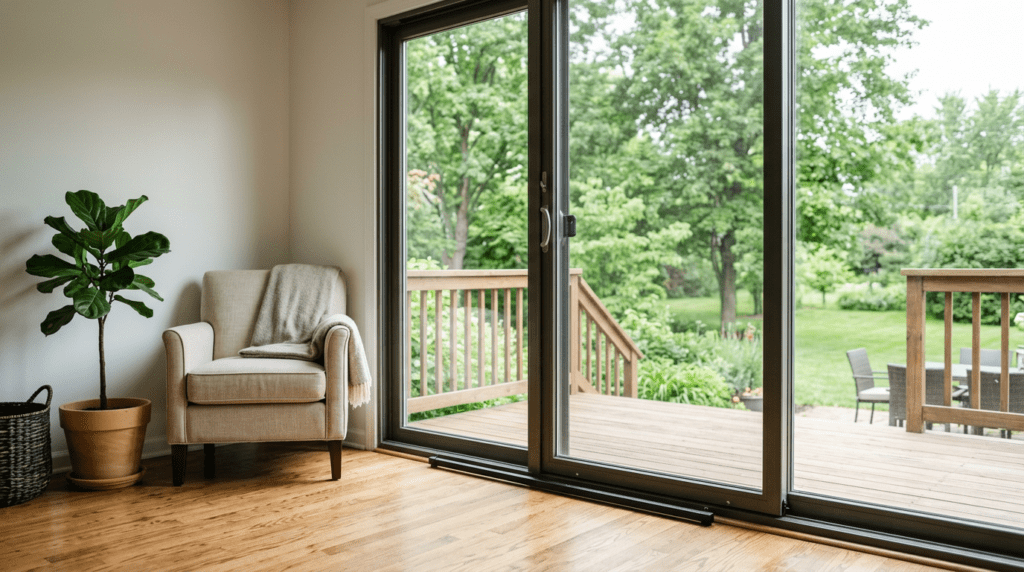
A sliding patio door is the softest entry point on most homes. It is a wide sheet of glass at the back of the house, usually out of a neighbor’s view, and the latch that came with it is often a thin hook that pops with a hard shove. The good news is that you can close every one of those gaps in an afternoon with parts that fit any slider.
This guide covers the locks, bars, and anti-lift tricks that actually stop a forced entry, plus the one step most homeowners skip: making sure the door closes square and locks fully in the first place. A door that drags on worn rollers will fight any lock you add, which is why a quick sliding door tune-up often comes before the hardware. Layer a few of these together and a once-easy target becomes a real deterrent.
Quick answer: To secure a sliding patio door, layer your defenses. Add a secondary lock such as a foot bolt or pin lock, drop a security bar or cut dowel into the bottom track, and drive anti-lift screws into the top channel so the panel cannot be pried out. Finish with shatter-resistant film and a door sensor.
Why a Sliding Patio Door Is an Easy Target
A sliding door gives an intruder more to work with than a solid entry door does, and it does it in three ways at once. The factory latch is usually a single spring-loaded hook, easy to jimmy with a flat tool or even a sharp tug on an older unit. The panel is mostly glass, which is both the largest part of the door and the most fragile. And because the door rides on rollers, a worn or loose panel can sometimes be lifted straight up and out of its frame.
Location makes all of it worse. Patio doors face the backyard, deck, or a quiet side of the house where there is little foot traffic and few sightlines from the street. A burglar who would never touch a front door in plain view will happily work a back slider screened by a privacy fence or an overgrown hedge.
So securing the door is never about one gadget. You are closing four separate weak points: the lock, the glass, the lift-off path at the track, and the cover that lets someone work unseen. Handle them as a set and the door stops being the obvious way in.
Start With a Door That Actually Closes Right
Before you spend a dollar on hardware, slide the door shut and watch what your hand does. If you have to lift the panel, lean a shoulder into it, or jiggle it to get the latch to catch, the door is not really locking, it is resting in roughly the right place. A hook that only half-seats will rattle open under pressure no matter how good the lock looks.
The usual cause is worn rollers or a panel that has dropped out of square, and in Ohio there is a seasonal twist. Freeze-thaw cycles heave thresholds and shift older frames, so a door that latched fine in October can bind or sag by January. A panel that drags is also a panel that can be worked loose at the top track, which undoes your anti-lift effort later.
On service calls around Columbus, the patio door that will not lock is rarely a bad lock. Nine times out of ten the rollers are flat or the panel has sagged, so the hook never lines up with the keeper. Fix the glide and the lock seats on its own.
If the door does not close square and latch cleanly on its own, get the rollers and track serviced first. Every lock, bar, and pin you add after that depends on the panel sitting where it should.
Upgrade the Lock and Add a Backup
The single latch at the handle is the first thing to improve, because it is the lock a burglar expects to beat. Replacing a tired factory latch with a sturdier unit helps, but the bigger gain comes from adding a second lock at a different point on the panel. Two locks in two places force an intruder to defeat both, which most will not bother to try.
Auxiliary locks are cheap, and several install with a screwdriver and no drilling into the glass. The common types each hold the door a different way, so pick one that suits your frame and how often you open the door:
- Foot bolt: a spring-loaded pin you drop with your toe into a hole in the track, fast for daily use.
- Pin lock: a pin that passes through the sliding panel into the fixed frame, anchoring the two together.
- Clamp or loop lock: mounts at the top rail where a burglar cannot reach from outside, good as a nighttime setting.
- Track stop: a small screw-down block that limits how far the door can travel, useful for venting safely.
For a door you want to manage from a phone, a slider-compatible smart lock or sensor adds a second point and an alert at the same time. Whatever you choose, mount it where the panel is solid, never through a stressed corner of the frame.
Block the Track With a Bar or Dowel
One of the surest ways to stop a slider is to keep it from sliding at all. A bar or rod laid in the bottom track jams the panel in place, so even a lock that gets forced leaves the door physically pinned shut. This is the classic Charley bar, and it works because there is no finesse to defeat, just a solid length of metal in the way.
Security bars come in two styles. A pressure-fit or hinged bar mounts to the frame and folds down across the door, easy to lift when you want to go out, which makes it a favorite for renters and families. A cut wooden dowel or a length of pipe sized to the track is the no-cost version and works just as well, as long as you measure it to sit snug with the door closed.
Keep the track clean so the bar seats flat and the door still closes fully against it. In winter, a track that collects water and grit can freeze a foot bolt or wedge a bar out of line, so the same clearing that keeps the door sliding keeps these blocks honest. A bar plus a working lock is a strong, low-effort pairing for most homes.
Stop the Lift-Off: Anti-Lift Screws and Blocks
Here is the step almost everyone misses. Even with a lock and a bar in the track, a sliding panel that rides loose can be lifted up off its rollers and tilted out of the bottom track, bypassing both. Burglars know this, and on an older or worn door it takes only a few seconds.
The fix is to close the gap at the top of the door. Drive two or three short screws into the upper track so their heads hang down just far enough to stop the panel from rising, or set purpose-made anti-lift blocks at each end. Either way the panel can still slide normally but no longer has room to jump the track.
Match the hardware to your frame. Aluminum and steel frames take screws well, but vinyl gets brittle in cold weather, and over-driving a screw into a vinyl frame on a January morning can crack it. Start the hole carefully, do not force it, and if the frame feels chalky or split it is worth asking about a sturdier patio door before you rely on it for security.
Toughen the Glass
The lock can be perfect and the track pinned shut, and an intruder can still reach in through broken glass. The pane is the real weak point of any slider, so the question is not whether the glass can break but how long it takes and how much noise it makes. Slowing that down buys time and often sends a burglar elsewhere.
Shatter-resistant security film, applied to the inside face, holds a cracked pane together instead of letting it fall away. The glass still breaks, but it stays in the frame, so there is no quick clean opening to climb through. Thicker films rated for security do more than the basic anti-glare kind, and they pair well with an alarm that the noise of a sustained attack will trigger.
Pay attention to the condition of the glass itself. A failed seal that leaves the unit fogged or a cracked pane is already compromised, and film will not rescue a bad piece of glass. If the door has a fogged or failed insulated unit, replace it first, then film the fresh pane. For a single broken pane in an otherwise good door, a straight glass repair restores the strength before you reinforce it.
Add Eyes and Alarms
Physical locks stop the door from opening; sensors make sure someone knows the moment it is tried. A simple door contact sensor tied to a security system signals the instant the panel moves, and a glass-break detector listens for the specific frequency of shattering glass. Together they cover both ways a slider gets attacked, even when the house is empty.
Visibility does as much work as electronics. A motion-activated light over the patio strips away the cover that makes a back door attractive, and a camera at the corner of the house both records and deters. Smart sensors that push an alert to your phone close the gap when you are away, turning a silent break-in into one you hear about right away.
Do not overlook the low-tech layer. Trim back shrubs and tree limbs that screen the door, and keep valuables out of sight from the glass so the door does not advertise what is inside. A burglar choosing between a hidden door and one lit, watched, and clearly alarmed will almost always pick someone else’s house.
How to Secure a Sliding Patio Door, Step by Step
The order matters as much as the parts. Start by making the door close and lock properly, then add layers from the lock outward, so each new measure builds on a sound base instead of papering over a loose panel. Work through the list below and you will hit every weak point in sequence.
None of these steps takes long on its own, and you do not need all seven to make a real difference. Even the first three turn an easy slider into a hard one.
- Make sure the door closes square and locks fully. Service worn rollers and the track first if the latch does not seat cleanly.
- Upgrade the lock or add a backup. Fit a foot bolt, pin lock, or clamp lock as a second locking point.
- Block the track. Drop a security bar or a cut dowel into the bottom channel.
- Add anti-lift screws or blocks. Close the gap at the top track so the panel cannot be lifted out.
- Reinforce the glass with security film. Hold a cracked pane together to slow a break-in.
- Add a sensor or alarm. Mount a door or glass-break sensor tied to a security system.
- Light the approach and clear the sightlines. Add a motion light and trim the cover around the door.
Mistakes That Leave the Door Wide Open
Most patio-door break-ins exploit a shortcut the homeowner took, not a clever new technique. Run through this list before you call the job done, because each item here is a gap that a single afternoon closes for good.
The pattern in almost all of them is trusting one device to do the whole job. Security on a slider is about layers, and skipping a layer is what leaves the opening.
- Relying on the factory latch alone, which is the exact lock burglars expect and practice on.
- Adding a track bar but skipping anti-lift screws, leaving the panel free to be lifted right over the bar.
- Over-driving screws into a cold vinyl frame, which cracks the frame and can void the door warranty.
- Ignoring worn rollers, so the lock never fully seats and the door rattles loose under pressure.
- Filming a cracked or fogged pane, which dresses up glass that is already failing instead of replacing it.
- Leaving the door cracked for air with no lock set, which hands an intruder an open invitation.
Not Sure Your Patio Door Locks Like It Should?
If your slider sticks, sags, or the latch only catches when you lift the panel, no add-on lock will hold the way it should. The door needs to close square first, and a quick look tells you whether it is a roller, a track, or a worn lock at fault.
Book a free, no-pressure patio door assessment with our Columbus-area team, and we will tell you straight whether a tune-up sets it right or it is time to look at a replacement.
FAQ: Securing a Sliding Patio Door

Ready to fix your windows? Get a free quote in 30 seconds.
Family-owned, licensed & insured. Free, no-obligation quotes.