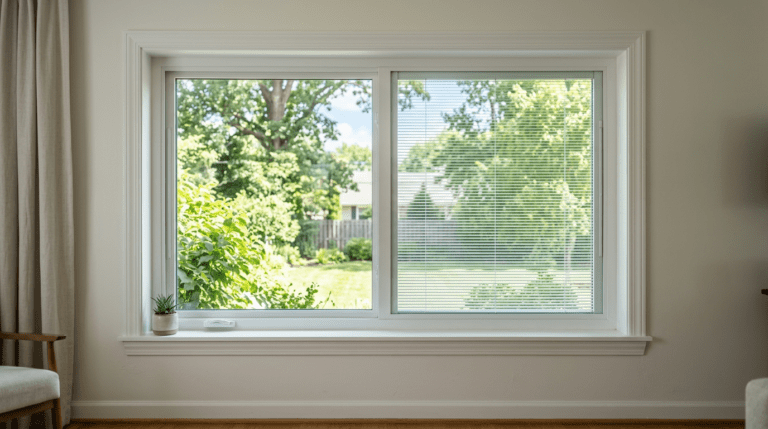

Reaching the outside of a second-story window is the part of the job that stops most people. The glass over a porch roof, above a bay, or at the top of a stairwell sits too high for a step stool and too far out for a normal squeegee, so it gets skipped for years until the grime is baked on. You do not need to balance on a wobbly ladder or pay someone every season to fix that.
A handful of ground-based tools (a telescopic pole, a water-fed brush, a magnetic cleaner, and a tilt-in sash you may already own) let you clean high outside glass safely from a spot where both feet stay planted. This guide covers which method fits which window, the exact technique for a streak-free finish, and the Ohio reasons (hard water, pollen, freeze-thaw) to get it right. Clear views start with sound, well-sealed glass and seals, so it pays to look closely while you work.
Quick answer: To clean exterior windows you cannot reach, use a telescopic cleaning pole or a water-fed brush from the ground for most second-story glass. For sealed panes, a magnetic cleaner works from inside, and tilt-in sashes let you wash the outside from indoors. For very high or steep spots, hire a pro.
First, Match the Method to the Window
Before buying any gear, look at the window itself, because the right tool depends on three things: how high the glass is, whether the sash opens, and how baked-on the dirt is. A first-floor pane over a flowerbed is a different problem from a fixed window at the top of a two-story foyer. Picking the wrong approach is how people end up on a ladder they should not be on.
For most second-story windows within about twenty feet of the ground, a telescopic pole or a water-fed brush reaches from a safe footing on the lawn. If the window is sealed shut but you can get to it from inside, a magnetic cleaner scrubs both sides at once. And many newer double-hung and casement windows tilt or swing inward, letting you wash the exterior glass without ever leaving the room. Save the ladder, or a call to a pro, for steep roofs and anything a pole cannot reach from level ground.
What You Need to Clean High Windows
The kit for high windows is short, and most of it costs less than a single professional visit. The two pieces that do the heavy lifting are a long reach and a good squeegee or brush head; everything else is about the cleaning solution and a streak-free dry. Buy the longest pole that still feels controllable, since a flimsy pole at full extension is hard to steer and tiring to hold overhead.
Gather everything before you start so you are not walking back to the garage with a dripping pole in hand. A gentle solution beats a harsh one here, because any residue left on glass you cannot easily reach will streak the moment the sun hits it.
- A telescopic cleaning pole with a microfiber sleeve and a squeegee head, ideally reaching 15 to 20 feet.
- A water-fed pole or garden-hose attachment for rinsing high glass without climbing.
- A magnetic window cleaner for sealed panes you can reach from inside.
- Dish soap and white vinegar for a mild, streak-free cleaning solution.
- A bucket and distilled or filtered water to cut the hard-water spotting common across central Ohio.
- Microfiber cloths for edges and any spots you can finish by hand.
How to Clean High Windows with an Extension Pole
The extension-pole method is the workhorse for high outside glass, and the order matters as much as the scrubbing. Rinse first so you are not grinding grit across the pane, wash with a light touch, then pull the water off cleanly before it dries. Work on a cool, overcast day when you can, because direct sun dries the solution into streaks faster than you can squeegee it away.
Do one window at a time and keep the pole moving in smooth, overlapping strokes. While you are out here, pop the screens out and give them a wash too, following our guide to cleaning window screens so dirty mesh does not undo your work. The single move that separates a clear pane from a streaky one is drying the squeegee blade between passes, so keep a cloth clipped to your belt.
- Pick a dry, overcast day. Avoid direct sun, which dries the solution into streaks before you can wipe it.
- Rinse off the loose dirt. Wet the glass first to float away grit and pollen so the brush does not scratch.
- Mix a mild solution. A few drops of dish soap and a splash of vinegar in a bucket of warm water is plenty.
- Scrub with the brush or sleeve. Run the pole’s microfiber head over the glass in overlapping strokes, top to bottom.
- Squeegee from the top down. Pull the blade in straight, slightly overlapping passes, wiping it dry after each one.
- Rinse with clean water. A final pass with filtered or distilled water leaves the fewest spots as it dries.
- Spot-check from a distance. Step back, find any missed streaks, and touch up reachable corners with a cloth.
The Water-Fed Pole and Garden-Hose Method
When a window is too high even for a standard squeegee pole, a water-fed system takes over. These are longer poles with a soft brush head that feeds water up through the shaft, so you scrub and rinse in one motion from the ground. The better kits run the water through a small filter that strips out the dissolved minerals, which is the trick behind their party piece: you leave the glass wet and it dries spot-free with no squeegee at all.
A simpler version is a brush-and-soap attachment on your garden hose. It will not match a filtered water-fed pole for a flawless dry, but for routine dirt on a second-story window it rinses away pollen and dust quickly. If you go this route in central Ohio, finish with a pass of distilled water wherever you can, since our hard tap water is what leaves the cloudy spots after everything else has dried.
Magnetic and Robotic Cleaners for Tricky Spots
Some windows cannot be reached from the ground or opened from inside, and that is where the gadget options earn their place. A magnetic window cleaner is two padded blocks held together through the glass by strong magnets; you move the inside half and the outside half tracks it, scrubbing the exterior you cannot touch. They work best on single-pane and thinner double-pane glass, and the better models include a safety cord so the outer pad cannot fall if it slips off an edge.
Robotic window cleaners go a step further, sticking to the glass with suction or a magnet and crawling across on their own. They handle large fixed panes, like a tall stairwell window, with little effort from you, though they move slower than a pole and stumble on heavy grime. Match the tool to the glass thickness and the dirt: light, regular cleaning suits both gadgets, while a year of baked-on film still wants a proper scrub.
Wash the Outside from Inside with Tilt-In Sashes
The easiest high window to clean is often the one you can flip toward you. Most double-hung and single-hung windows made in the last twenty years have tilt-in sashes: release the two tabs at the top of the lower sash, tilt it into the room, and the outside face of the glass is suddenly at arm’s length. Casement and awning windows that crank fully open give you similar access to the exterior pane from inside.
On replacement jobs around Columbus, homeowners are surprised how many of their existing windows already tilt in for cleaning. They have washed the outside with a ladder for years without realizing the sash was built to pivot toward them.
If your windows are older and do not tilt, this is one of the quiet perks people notice after an upgrade. Check the top rail of the sash for two small tabs or levers before you drag a ladder out; testing them takes a second and can turn a risky outdoor job into a five-minute one at the kitchen counter. Our walkthrough on cleaning glass streak-free covers the wiping technique once the sash is in front of you.
Mistakes That Leave Streaks or Risk a Fall
Cleaning high glass is mostly about avoiding a few errors that either streak the window or put you at risk. Most of them come from rushing, or from fighting the weather instead of working with it. Run through this list before you start, because a do-over on a second-story window is a lot more annoying than getting it right the first time.
The biggest avoidable mistake has nothing to do with cleaning at all: stretching off a ladder to reach that last corner. A pole keeps both feet on the ground, which is the entire point of these tools.
- Cleaning in direct sun, which dries the solution and bakes in streaks before you can squeegee.
- Using hard tap water for the final rinse, which leaves cloudy mineral spots as it dries.
- Over-reaching from a ladder, the single most common cause of falls during window cleaning.
- Scrubbing dry, gritty glass, which drags dirt across the pane and leaves fine scratches.
- Letting dirty runoff sheet onto the glass below, so you end up cleaning the same pane twice.
When to Call a Pro, and the Ohio Climate Factor
There is a point where the smart move is to step back and let someone with the right rig handle it. Third-story windows, glass over a steep or slick roofline, and large panes above a hard landing are not worth a fall to save a service fee. Professional crews carry water-fed poles that reach far higher than a consumer kit, along with the training and insurance to work at height.
Ohio’s climate also shapes how often the job comes around. Spring coats everything in tree pollen, summer humidity bakes a film onto south-facing glass, and winter freeze-thaw cycles leave hard-water runoff and grit behind. Two cleanings a year, once after pollen season and once before winter, keeps the buildup from setting hard. If the glass looks permanently cloudy between the panes no matter how you clean it, that is a failed seal rather than dirt, and it is worth having the unit looked at before you scrub at it again.
Windows Still Look Cloudy After Cleaning?
If your glass stays hazy, spotted, or foggy between the panes after a thorough wash, the problem is not the dirt, it is the glass or the seal. Cleaning the outside of an unreachable window is not worth the risk if the view will never come clear anyway.
Book a free, no-pressure window assessment with our Columbus-area team and find out whether it is a quick glass fix or something the cleaning will never touch.
FAQ: Cleaning Hard-to-Reach Windows

Ready to fix your windows? Get a free quote in 30 seconds.
Family-owned, licensed & insured. Free, no-obligation quotes.