The kitchen window works harder than any other window in the house. It frames the view while you do dishes, vents steam off a boiling pot, and often carries the room’s only real daylight over the sink. Choosing the right one is partly about looks and mostly about how you actually use the room.
This guide covers the best window types for a kitchen, smart ideas for light and airflow, how high the sill should sit above the counter, and the glass and frame choices that survive a steamy room through an Ohio winter. If your layout is changing or the opening needs to grow, that work belongs with a proper new window installation so the window sits square and sealed.
Quick answer: The best kitchen window is usually a casement over the sink, because its crank is easy to reach across a counter and it seals tight for ventilation. Add plenty of glass for light, a Low-E coating to protect counters, and a frame that shrugs off steam. Match the size to your cabinets and sightline.
The Best Window Over the Kitchen Sink
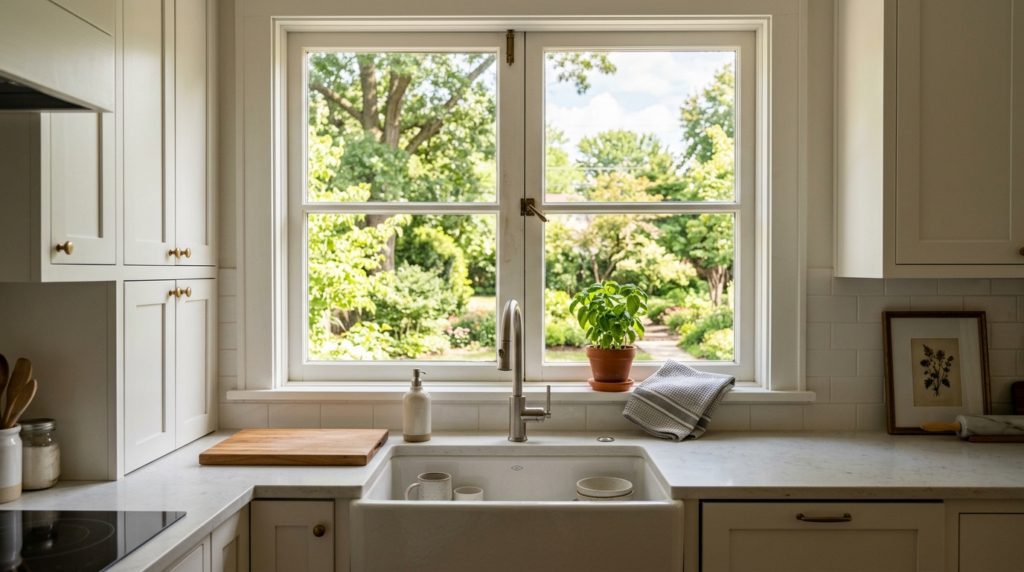
The spot above the sink is the hardest place in the house to reach a window, and it drives most kitchen window decisions. You are leaning over a counter, often a deep one, with a faucet in the way, so the window has to open with the least reach and effort possible.
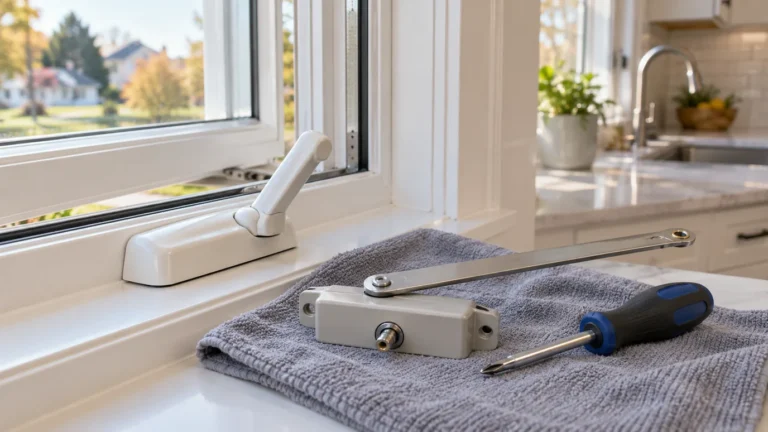
That is why a casement is the go-to choice over a sink. It swings out on a hinge and opens with a crank you can turn from the front edge of the counter, with no stretching to push a heavy sash upward. It also seals against its frame when closed, which gives you a tighter window than a slider for the cold months. A single casement window over the sink is the cleanest answer for most kitchens.
When a casement will not work, two backups fit a kitchen well. A sliding window glides side to side and needs no clearance to swing, which helps when the sink sits under a low cabinet or a porch roof outside. A double-hung still works if the sink is shallow enough to reach the lower sash, and it suits a traditional or historic home where a crank-out casement would look out of place. The trade is that the top sash usually stays out of reach, so you only get the bottom half for airflow.
Kitchen Window Ideas Beyond the Sink
Not every kitchen window sits over the sink, and the rest of the room opens up some of the best ideas. The goal shifts from easy reach to light, view, and the way the kitchen connects to the next space. A few layouts come up again and again on Ohio remodels.
Pick the idea that matches what your kitchen is short on, whether that is daylight, a place to grow herbs, or a way to open the room onto a patio.
Picture and bay windows for light and view
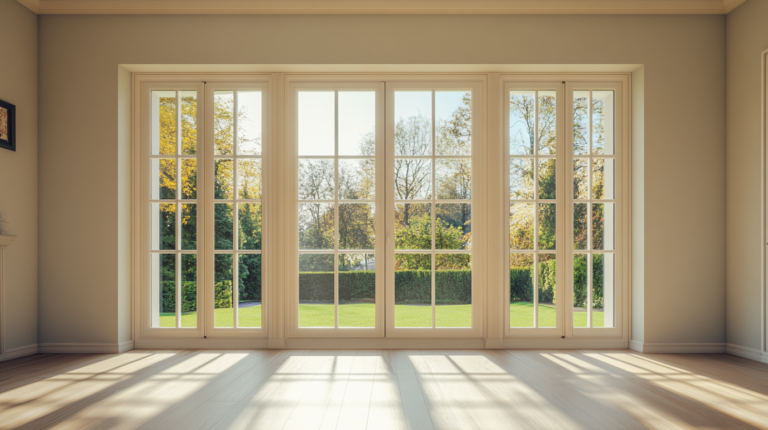
A large picture window has no frame bars or hardware in the way, so it pulls in the most daylight and the cleanest view, which is ideal in an open-concept kitchen that looks onto the yard. A bay or bow window pushes the wall out a little and creates a sunny ledge. That ledge makes a natural breakfast nook in a corner, or a deep sill for plants and morning coffee. Both read as a feature wall rather than just a window.
Garden and pass-through windows
A garden window projects out from the wall like a small glass box, with panes on several sides and a shelf inside for herbs that catch light from more angles. A pass-through window opens to a patio bar or porch and turns the kitchen into an indoor-outdoor space for entertaining, which earns its keep at summer cookouts. Both are eye-catching, though a projecting garden box has more seams to seal and loses heat faster in winter than a flat window.
Transom and corner windows for tight walls
When upper cabinets eat the usable wall, a row of transom windows above them or a strip of clerestory glass near the ceiling brings in light without giving up storage. Two windows meeting at a corner with no post between them wrap a breakfast nook in daylight and make a small kitchen feel larger. These ideas work best when you plan them with the cabinet layout rather than fighting it afterward.
Getting Light Without Losing Heat
A kitchen lives on daylight, but more glass means more surface for heat to escape in January and pour in on a July afternoon. The fix is not less glass, it is better glass. A modern double or triple pane with a Low-E coating and argon fill lets the light through while reflecting heat back toward the side you want it on.
Orientation decides how to tune that glass. A south or west kitchen window that bakes in afternoon sun needs a lower solar-heat-gain coating, or it will fade your countertops and cabinets and turn the room into an oven by dinner. A north-facing window can run a higher gain to grab what light it can. For comfort, getting the glass package right matters more than the frame.
The other glass issue shows up as fog between the panes. A sealed insulated unit that has failed will haze over, and no wiping clears it, because the moisture is trapped inside. A kitchen’s heat and steam push those seals harder than anywhere else in the house. A foggy pane does not mean a whole new window; an insulated glass replacement swaps the failed unit and leaves the frame in place.
Ventilation Is the Kitchen's Real Job
Every other room wants a window mainly for light. A kitchen needs one to clear the air. A pot of pasta, a hot oven, and a sink full of dishes pump steam, grease, and cooking smells into the room, and a range hood only catches part of it. An operable window over or near the cooking zone gives that moisture somewhere to go.
This is where casement and awning windows earn their place. Both swing open on a hinge and scoop air from top to bottom, so they move far more air than a double-hung that only opens halfway. If you can place a second operable window on another wall, you set up cross-ventilation that pulls a breeze straight through the room and flushes the steam out before it settles on the cabinets.
Airflow is not only about comfort. Trapped cooking moisture is what feeds mildew along the sill and in the corners, and in a humid Ohio summer a kitchen that cannot breathe stays damp for days. A window that actually opens wide, used while you cook, is the cheapest mold prevention in the house.
Why Kitchen Windows Take the Hardest Beating
A kitchen window faces a workload no other window in the house sees. Day after day it takes steam off the stove, splashes from the sink, and grease that drifts up and films the glass and hardware. Then an Ohio winter sets the outside of that same glass near freezing while the inside stays warm and wet. That clash is what wears kitchen windows out first.
On kitchen jobs around Columbus, the window over the sink is almost always the one in the worst shape. The sill is soft from years of splashes and condensation, the casement crank is gummed up with grease, and the seal gave out long before any other window in the home.
Two failures follow from that. The constant moisture rots the sill and the framing right under the window, often hidden behind the trim until the wood goes soft, which is why a rotted sill repair is one of the most common kitchen calls. The freeze-thaw swing also stresses the glass, so a kitchen is where you are most likely to find a cracked pane that needs glass repair after a sharp cold snap. Knowing this going in steers you toward a tougher window and a sill you keep dry.
Frame Materials for a Steamy, Cold-Winter Room
The frame has to live in that steam and cold without warping, swelling, or rotting, which narrows the field for a kitchen more than for a dry bedroom. The question is less about looks and more about how the material handles moisture and a wide temperature swing year after year.
Here is how the common frame materials stack up for a working kitchen in this climate:
- Vinyl resists moisture completely and never needs paint, the low-maintenance default for most kitchens, though color choices are limited.
- Fiberglass barely moves with temperature, so its seals survive freeze-thaw longer, a strong pick for an exposed south or west wall.
- Wood looks right in a historic Columbus kitchen and insulates well, but it needs sealing and watching, since kitchen steam is exactly what rots it.
- Clad wood gives you a wood interior with an aluminum or vinyl skin outside, the warm look without the outdoor upkeep.
- Aluminum is strong and slim but conducts cold, so it sweats and frosts at the edges on a January morning, the weakest choice for an Ohio kitchen.
For most homeowners the call comes down to vinyl for value and easy upkeep, or fiberglass for the longest life on a sun-and-weather-exposed wall. If you want the look of wood in a double-hung window for a period kitchen, clad wood gives you that without repainting the outside every few years.
Size, Sill Height, and Fitting the Cabinets
A kitchen window has to fit the cabinets and counter as much as the wall opening, so size and placement are not free choices. Over the sink, most windows run between two and four feet wide, with a single larger unit reading cleaner than two small ones broken up by a post in the middle of your view.
Height is the detail people get wrong. The sill should sit a few inches above the counter or backsplash, roughly six to ten inches, so it clears the faucet and any splash guard without leaving an awkward gap. Set it too low and water pools on the sill; set it too high and you lose the view and the light you wanted in the first place.
If you are remodeling and want a bigger window than the old one, the wall opening has to be enlarged and re-framed, not just stretched to fit. Older Columbus and Cincinnati kitchens often settle out of square over the decades, so the opening should be checked and trued before the new window goes in, or it will never seal evenly. That structural side of the job is where careful planning pays for itself.
Planning a Kitchen Window Upgrade?
The right kitchen window is the one that matches how you cook, where the light falls, and how the room handles a wet, cold-and-hot Ohio year. If you are weighing a casement over the sink against a bigger picture window, or wondering whether your sill and seals have more life in them, a set of eyes on the actual opening settles it fast.
Book a free, no-pressure kitchen window assessment with our Columbus-area team and get a straight recommendation on the type, glass, and frame that fit your kitchen and your budget.
FAQ: Kitchen Windows

Ready to fix your windows? Get a free quote in 30 seconds.
Family-owned, licensed & insured. Free, no-obligation quotes.