A pantry door is one of the few interior doors you look at every day, and swapping a solid slab for glass changes how the whole kitchen reads. Glass lets light into a dark pantry, breaks up a flat wall of cabinetry, and makes a small kitchen feel less boxed in. The trick is choosing a style and a glass type that fit how tidy your shelves actually stay.
This guide walks through frosted, clear, reeded, and etched glass, the door styles that suit tight kitchens, and the one detail most decor articles skip: the glass itself. If you are weighing a full interior door swap, it helps to know your options before you shop.
Quick answer: The best glass pantry door ideas pair the right glass with your storage habits. Choose frosted or reeded glass to soften clutter, clear glass for a display-style pantry, and etched glass for a custom look. Match the door style, sliding, barn, French, or hinged, to the space you have.
Why a Glass Pantry Door Works
The strongest reason to choose glass is light. A solid pantry door turns the back of a kitchen into a dead zone, while a glass panel borrows daylight from the room and pushes it onto the shelves so you can see what you are reaching for. In a north-facing or galley kitchen, that borrowed light makes the whole space feel larger.
Glass also adds visual interest to a wall that is usually all flat doors. It signals that this is the pantry, not another closet, and it gives the eye something to land on. Paired with the right kitchen window choices, a glass pantry door ties the room together.
The honest trade-off is upkeep. Glass shows fingerprints and dust more than a painted slab, and clear glass puts your shelves on display, so it rewards a pantry you keep reasonably tidy. None of that is a dealbreaker; it just steers which glass type fits your habits.
Frosted Glass for Privacy Without the Clutter
Frosted glass is the most popular choice for a reason: it blurs the view into the pantry while still letting light through. You get the bright, open feel of glass without putting every cereal box and mismatched container on show. From a step away, the shelves read as soft shapes and shadow rather than clutter.
Frosting comes in degrees. A lightly frosted panel still hints at what is inside, while a heavily sandblasted or acid-etched panel is almost opaque and reads closer to a solid door with a glow. Reeded and other patterned privacy glass sit in the middle, scrambling the view with texture instead of a flat haze.
This is the safest pick if your pantry is a working pantry rather than a styled one. It forgives a messy shelf, hides the contents from kitchen guests, and still earns you the light and the design upgrade that drew you to glass in the first place.
Clear Glass for an Open, Display-Style Pantry
Clear glass is the opposite bet: full visibility, full light, and a clean modern finish. It works beautifully when the pantry is part of the design, with matching jars, baskets, and a little organization behind it. A clear panel makes a butler’s pantry or a coffee station feel like a feature rather than storage.
The catch is obvious. Everything behind clear glass is on view, so the look only holds up if the shelves stay neat. If groceries tend to land wherever there is room, a clear door will broadcast that to the whole kitchen, and the upgrade can backfire.
A middle path is clear glass on the upper portion with a solid lower panel, so the tidy, displayed items sit at eye level while bulk storage and small appliances hide below. That half-and-half approach keeps the airy look without demanding a perfectly styled bottom shelf.
Reeded and Textured Glass for Soft Light
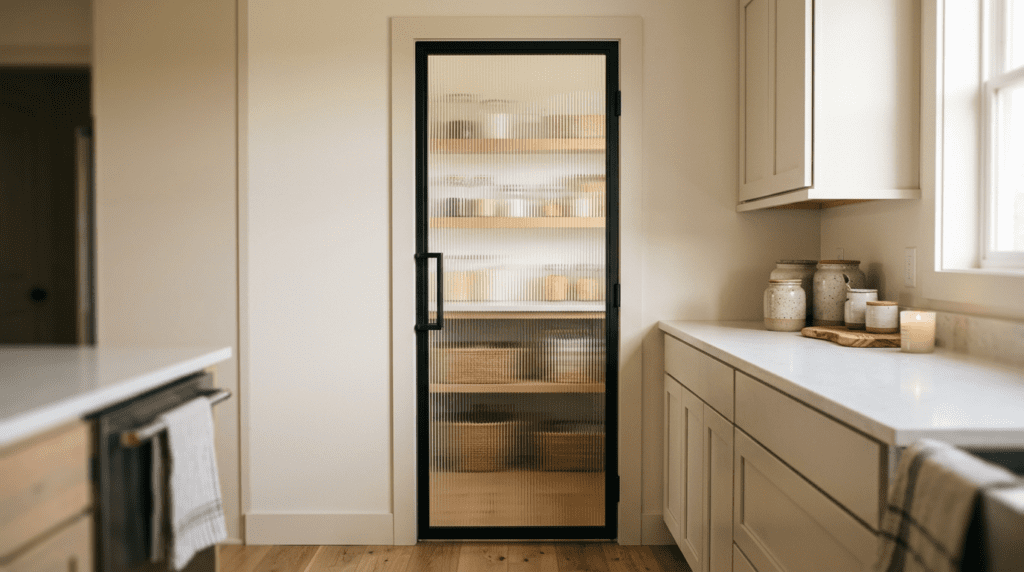
Reeded glass, with its vertical ribbed lines, has become one of the most requested looks in kitchens, and it suits a pantry door perfectly. The ribs bend the light and break up the view, so you get privacy that feels intentional and architectural rather than purely practical. It pairs especially well with warm wood frames and brass hardware.
Other textures do similar work with a different mood. Seeded glass carries tiny bubbles for a vintage, old-glass feel, while rain or fluted patterns scatter light in soft streaks. Each one hides clutter through distortion instead of a frosted haze, which keeps the panel looking lively as light moves across it through the day.
Textured glass is forgiving in a busy kitchen for a second reason: it disguises water spots and fingerprints far better than flat clear or frosted glass. For a household with kids reaching for snacks, that is a quiet, practical win.
Etched and Decorative Glass for a Custom Look
If you want the pantry door to be a true focal point, etched and decorative glass turns it into a piece of art. A glass shop can sandblast or acid-etch a design into the panel, anything from a simple border or monogram to a botanical pattern or a script word across the center. The design is permanent and part of the glass, not a sticker that peels.
Decorative options range from subtle to bold. A frosted border around a clear center keeps the door bright while adding detail, while a fully etched scene gives you both privacy and personality. Leaded or grid-style accents lean traditional, and a clean geometric etch reads modern.
Custom work also means you are not limited to off-the-shelf sizes. If you have an odd opening or want to match an existing door, a custom glass panel can be cut and finished to fit, which is often simpler than hunting for a stock door that almost works.
Half-Glass and French Pantry Doors
Door configuration matters as much as the glass, and two styles dominate hinged pantries. A half-glass door, also called a half-lite, puts a single glass panel in the top half over a solid lower panel. It is a balanced look that brightens the pantry while hiding the floor-level clutter of bags, bins, and small appliances.
French pantry doors use a grid of smaller panes, often with muntins dividing the glass, for a classic, slightly formal feel. A single French door suits a standard opening, while a pair works on a wide pantry and lets you open both sides to load groceries. Painted black or deep green, a French door becomes the kitchen’s centerpiece.
Both styles read as deliberate design rather than a builder-grade slab. They also let you mix glass types: a half-lite can carry reeded or frosted glass, and a French door can combine clear and textured panes for a layered look.
Sliding, Barn, and Pocket Doors for Tight Kitchens
When a swinging door would block a walkway or bump the island, a sliding style solves the clearance problem. A glass barn door rides a track mounted above the opening and slides flat against the wall, adding farmhouse character along with the light. It is the showpiece option, though it needs clear wall space beside the pantry to slide onto.
Pocket doors take the opposite approach and disappear into the wall cavity, leaving the opening completely clear. A frosted or reeded glass pocket door gives you the light and the privacy without any door visible when it is open, which suits a tight galley kitchen. Retrofitting one into an existing wall is involved, so it is easiest during a remodel.
Bifold glass doors fold to the side and need very little swing room, making them a strong pick for a narrow reach-in pantry. Each of these keeps the floor clear, so the choice usually comes down to how much wall space you have and the look you are after.
Black Frames and Bold Color as a Focal Point
The frame around the glass shapes the whole effect, and color is where a pantry door earns its keep as a design feature. A black or charcoal frame against light cabinetry and neutral walls creates instant contrast and a modern, gallery-like edge. It is the single easiest way to make a plain opening look custom.
Warm tones work too. A natural or stained wood frame brings a softer, organic feel that suits farmhouse and transitional kitchens, especially paired with reeded or seeded glass. Deep green, navy, or matte black all read as intentional and current without committing the rest of the kitchen to a trend.
Keep the frame finish talking to your other hardware and fixtures. Matching the door frame to cabinet pulls, the faucet, or pendant lights pulls the look together, so the pantry door feels designed into the room rather than added on.
The Glass Spec That Actually Matters
Most pantry door articles stop at style, but the glass spec decides how safe and how durable the door really is. A full-height glass panel in a busy kitchen should be tempered safety glass, which breaks into small blunt pieces instead of long shards if it ever takes a hit. It is the same logic that applies to any door people walk past with full hands.
Durability of the finish matters just as much, especially with frosting. Peel-and-stick frost film is cheap and tempting, but a kitchen runs warm and damp, and that combination lifts film at the edges over time. Acid-etched or sandblasted frosting is part of the glass and never peels, wipes off, or clouds.
On kitchen jobs around Columbus, the frosted pantry doors that still look crisp after a few years are almost always the etched ones. The stick-on films tend to curl at a corner once the steam and humidity of a working kitchen get to them.
Thickness and texture choices feed back into safety and feel. Thicker glass dampens noise and feels solid when the door closes, while textured glass hides the smudges that flat glass shows in raking morning light.
How to Choose the Right Glass Pantry Door
With so many combinations, the choice gets simpler when you work through a few questions in order. Start with how tidy the pantry stays, since that drives the glass type more than any style trend. Then match the door configuration to the space and clearance you actually have.
Run through this short checklist before you shop or call a glass shop:
- Privacy level: clear for a styled pantry, frosted or reeded for a working one.
- Door style: hinged or French for standard openings, sliding, barn, or pocket where swing room is tight.
- Frame material and color: wood for warmth, painted metal or black for contrast, matched to your hardware.
- Glass safety: ask for tempered glass on any full or half-height panel.
- Upkeep: textured glass hides smudges; plan to wipe any glass door regularly to keep it clear.
That last point is worth a habit. Glass doors look their best clean, and a quick pass with the right method keeps them streak-free; our guide to cleaning glass without streaks works just as well on a pantry door as on a window.
Mistakes to Avoid With a Glass Pantry Door
A glass pantry door is a low-risk upgrade, but a few common missteps turn a smart choice into a daily annoyance. Most come down to matching the glass to real life rather than a styled photo. Run through these before you commit.
None of them are about budget. They are about choosing for the pantry you actually keep, not the one in the catalog.
- Clear glass over a messy pantry, which puts every stray bag and box on display.
- Cheap peel-and-stick frost film, which lifts and curls in a warm, humid kitchen.
- Skipping tempered glass on a full-height panel, trading a small saving for a real safety risk.
- Ignoring swing clearance, hanging a hinged door where a slider or pocket door belonged.
- Mismatched hardware, a shiny modern handle on a rustic barn door that fights the rest of the kitchen.
Thinking About a Glass Pantry Door?
The right glass pantry door comes down to the glass type, the door style, and a safe, lasting finish, and those are easy to get wrong when you are choosing from a showroom photo alone. A door that fits your opening, your kitchen’s clearance, and the way you actually use the pantry is the one you will be happy with for years.
If you want a hand matching the glass, frame, and configuration to your kitchen, book a free, no-pressure door and glass consultation with our Columbus and Cincinnati team. We will walk the options with you and handle the measuring and install.
FAQ: Glass Pantry Doors

Ready to fix your windows? Get a free quote in 30 seconds.
Family-owned, licensed & insured. Free, no-obligation quotes.