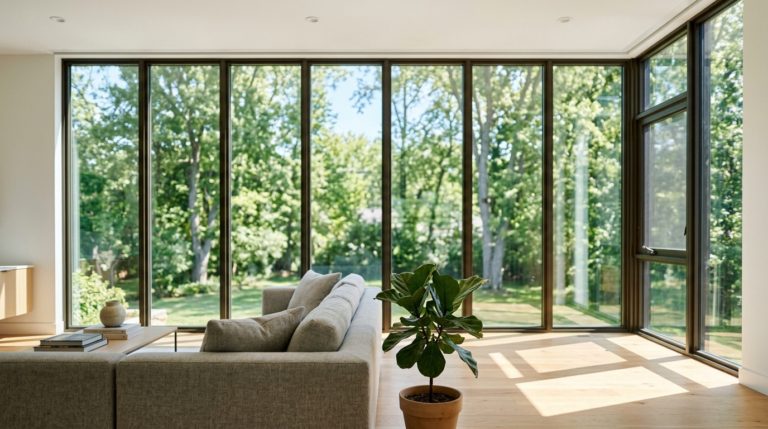
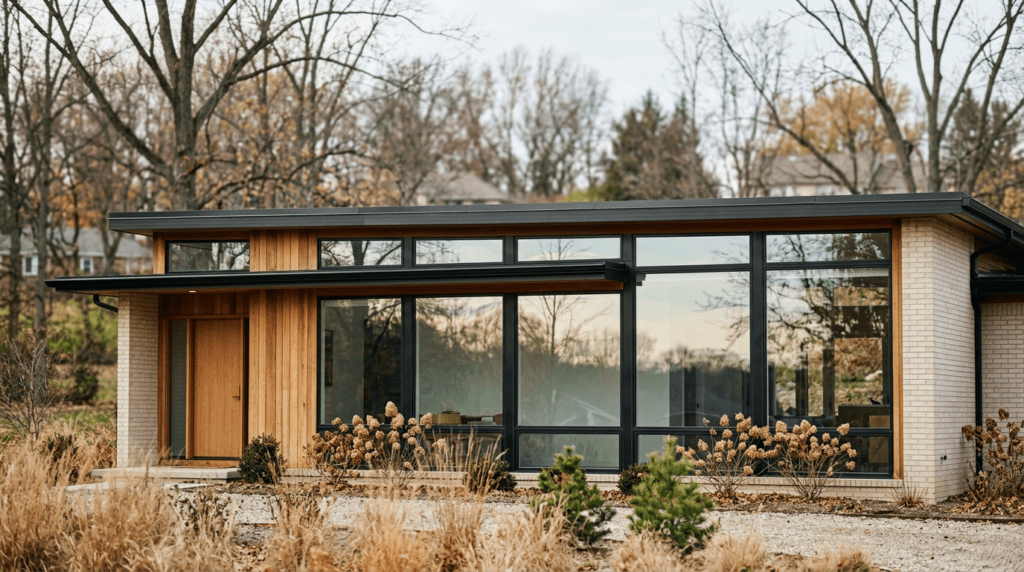
Mid-century modern homes were built around glass. The wide picture windows, the horizontal bands of glazing, and the low rooflines that frame a backyard were never decoration; they were the whole point of the style. So when the original windows fog, stick, or bleed heat every January, the goal is not just a working window. It is a window that holds the clean, open look the house was designed around.
This guide covers the styles that read as mid-century, the frame materials and colors that keep the sightlines slim, the glass that makes a wall of single panes livable in Ohio, and the mistakes that quietly turn a crisp ranch into something generic. If your originals are past saving, a careful new window installation can keep the architecture intact while fixing the comfort.
Quick answer: Choose styles with large fixed glass and slim frames, such as picture, casement, awning, sliding, and clerestory windows. Favor narrow aluminum or fiberglass frames in black or white, add Low-E double-pane glass for Ohio winters, and match the original openings so the home keeps its horizontal, open look.
What Makes a Window Mid-Century Modern
The style runs from the late 1940s through the 1960s, and it has a clear visual logic. Walls give way to glass, frames shrink to the thinnest line that will hold the pane, and the whole composition pulls horizontal to echo a low, ground-hugging roof. A mid-century window is less an object in the wall than a missing piece of wall.
That look rests on a few habits. Glass is large and often fixed, because a picture window has no rails or muntins to interrupt the view. Frames are narrow and quiet, in aluminum, steel, or slim wood. Grilles and divided lites are rare; the era prized one clean sheet of glass over a grid. Windows are grouped into ribbons or wrapped around corners so a room reads as open to the yard rather than punched with separate holes.
Keep those three traits in mind as you shop, because they are what your eye registers as authentic. Slim frame, big uninterrupted glass, horizontal grouping. A replacement that honors all three will look right even if the materials underneath are thoroughly modern.
Window Styles That Define the Look
A mid-century home rarely uses one window type. It combines a few, with large fixed panes carrying the view and smaller operable units handling air. The trick is choosing styles that stay flat and minimal rather than busy. Our broader guide to window styles covers each in detail, but a handful do most of the work in this era.
Picture windows are the centerpiece. Because they do not open, they can run large with the thinnest possible frame, which is exactly the wall-of-glass effect the style is after. Casement and awning windows pair well alongside them, since both crank open on slim hardware and can sit flush in a ribbon without breaking the line. Sliding windows give the same low, horizontal proportion with a way to open.
- Picture windows for the main view, fixed and frameless-looking. See our take on picture windows.
- Casement and awning units for ventilation without grids or heavy sashes.
- Sliding windows for a wide, horizontal opening that matches the rooflines.
- Clerestory windows set high on the wall to pull in light over furniture; see clerestory windows.
- Corner and ribbon groupings that wrap or band the glass for an open feel.
Frame Materials: Slim Profiles Without the Cold
The original homes leaned on aluminum and steel because those metals were strong enough to hold a big pane in a thin frame. That strength is still the appeal today, but the bare metal of the 1950s carried a problem this guide returns to below: it conducts cold straight indoors. The material question now is how to keep the slim profile without the draft.
Fiberglass has become the practical answer for most homeowners. It is strong enough for narrow sightlines, resists Ohio’s humidity swings without warping, and insulates far better than plain aluminum. Thermally broken aluminum, which inserts a non-conductive barrier inside the frame, keeps the true industrial look while cutting the heat loss. Slim wood or wood-clad frames suit a warmer, more organic mid-century palette if you want stained timber inside.
- Fiberglass for thin frames, low maintenance, and strong insulation.
- Thermally broken aluminum for the authentic metal look without the cold bridge.
- Wood or wood-clad for warmth and a stained interior, at higher upkeep.
- Vinyl only with care, since its bulkier sightlines can fight the slim mid-century line.
The Catch With Original Aluminum Frames in Ohio Winters
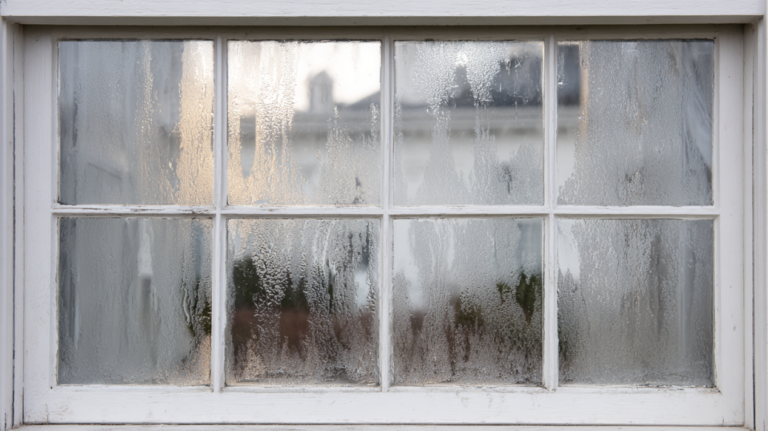
If your ranch still wears its first set of windows, you have likely felt this. Bare aluminum is a superb conductor, so on a sub-freezing Columbus morning the inside face of the frame runs almost as cold as the outside air. Warm, humid indoor air hits that cold metal and condenses, which is why original frames sweat, drip, and grow a line of mildew along the sill every winter.
The single panes make it worse. A large sheet of uninsulated glass radiates your heat outward and pulls a cold draft down in front of it, so a beautiful picture window can leave the whole room feeling chilly even when the thermostat says otherwise. Through repeated freeze-thaw cycles, the trapped moisture also works at the glazing and the wall behind the frame.
On mid-century ranches around central Ohio, the frost and water people find on a big front window in January is almost never a leak. It is a single pane in a metal frame doing exactly what bare aluminum does in the cold. New insulated glass in a broken-thermal frame ends it.
Glass That Makes a Wall of Windows Livable
Mid-century design asks the glass to do a lot, so the glass spec matters more here than in a house with small openings. The baseline is a double-pane insulated unit with a Low-E coating and argon fill between the panes. The Low-E layer reflects heat back where it came from, keeping winter warmth in and summer sun out, while the argon slows the transfer through the gap.
For a south or west wall of glass, pay attention to solar heat gain as well as insulation, since a big unshaded pane can overheat a room in an Ohio July. A lower solar-heat-gain coating tames that without darkening the view. Triple glazing is worth considering on the largest north-facing panes, where the extra layer cuts both the heat loss and the cold-radiance that makes a room feel drafty.
None of this changes the look. The coatings are nearly invisible, so you keep the clean, open glass the style depends on while the room finally holds a steady temperature.
Colors, Finishes, and Hardware
Color is where a replacement either nails the era or drifts toward a builder-grade look. Mid-century frames stayed neutral and quiet so the architecture and the view could lead. Black and white are the two anchors, with black reading more true to the original steel-and-aluminum era and white giving a lighter, airier feel. Clear anodized aluminum and muted bronzes also fit the period palette.
If you want the most authentic result, a slim black frame is usually the safer bet than bright white, since it recalls the dark metal of the originals. Our guide to black windows walks through how the color behaves inside and out. Whatever you choose, keep it consistent across the elevation so the glass stays the star.
Hardware follows the same restraint. Look for low-profile cranks and locks with straight lines and a simple finish, in brushed nickel, chrome, or a matte black that disappears into the frame. Ornate or colonial hardware will jar against the clean lines faster than almost any other detail.
Matching the Original Openings
The proportions of a mid-century home are deliberate, so a replacement should fit the existing openings rather than reshape them. Custom sizing matters here more than on a typical house, because the openings are often wide, low, or grouped in ways stock windows do not match. A unit that is a few inches off throws the whole horizontal rhythm out of balance.
Where the originals were joined into a ribbon or wrapped a corner, the replacements should be joined the same way, with the mullions between them kept as slim as the structure allows. The fewer and thinner the divisions, the closer the result reads to the seamless glass the style is known for. On older Columbus ranches, it is also worth checking the rough framing for the moisture rot that decades of frame condensation can leave behind before the new units go in.
You do not have to do every window at once. A phased approach, tackling the worst walls first, is a reasonable way to spread the work while keeping the look uniform if you stick to one frame and color throughout.
How to Choose Mid-Century Modern Windows, Step by Step
Pulling the decisions together, the order below keeps you from optimizing one detail at the expense of the whole look. Start from the architecture and work toward the spec sheet, not the other way around.
The step people skip is the first one. Read what the house already does, then make every later choice serve that, so the finished wall of glass still belongs to the home.
- Start with the original style. Note the existing types and proportions so replacements keep the horizontal lines.
- Choose slim, efficient frames. Pick narrow fiberglass or thermally broken aluminum for thin sightlines without the cold.
- Lead with fixed glass. Use large picture units for the views, then add a few operable casements or awnings for air.
- Spec the glass for Ohio. Order Low-E, double-pane, argon-filled units so the big openings hold heat.
- Pick an authentic color. Choose black or white with clean, low-profile hardware instead of ornate grilles.
- Match the openings. Size each unit to the original opening, or join units cleanly, to keep the proportions.
- Plan the install. Decide all-at-once or phased, and confirm any code needs for tempered or egress glass.
Mistakes That Break the Mid-Century Look
Most of the ways a mid-century home loses its character come from a single window choice made for convenience rather than the architecture. None of these are about budget. They are about resisting the stock options that fight the style, and they show up the moment the glass goes in.
Run through this list before you sign off on an order, because each item is far easier to avoid than to undo once the units are set.
- Adding grilles or colonial grids, which clutter the clean single pane the era is built on.
- Swapping picture windows for double-hungs, which breaks the horizontal line with rails and a vertical proportion.
- Choosing bulky vinyl frames, whose thick sightlines shrink the glass and read as builder-grade.
- Defaulting to bright white when a slim black frame is usually closer to the original metal.
- Ignoring the thermal break, which keeps the look but brings back the condensation and cold.
Keeping the Look, Losing the Drafts?
The hard part of a mid-century home is fixing the comfort without flattening the design. The right slim-frame, insulated units do both, but they have to be sized and joined to suit the original openings, not forced from a stock catalog.
Book a free, no-pressure window assessment with our Columbus-area team and get a straight read on which windows keep your home’s lines while finally holding the heat.
FAQ: Windows for a Mid-Century Modern Home

Ready to fix your windows? Get a free quote in 30 seconds.
Family-owned, licensed & insured. Free, no-obligation quotes.