Black windows have moved from a designer splurge to one of the most requested looks in new homes and remodels. The appeal is easy to see: dark frames outline a view the way a mat frames a photo, and they pull a facade together whether the siding is white clapboard or weathered brick. But the same color that looks so crisp also costs more, shows water spots, and behaves differently depending on what the frame is made of.
This guide covers what black windows do well, where they fall short, and how to style them inside and out, with an eye on what holds up through Ohio’s hot summers and freeze-thaw winters. If you are weighing them for a new window installation or a full replacement, knowing the trade-offs before you order saves you from an expensive surprise.
Quick answer: Black windows offer bold contrast, slimmer sightlines, and a style that reads both modern and classic. The downsides are a higher price, more visible dust and water spots, and dark frames that get hot in direct sun. Choose a heat-stable material like fiberglass and they hold up well for decades.
Why Black Windows Took Over Home Design
Dark steel windows are not new. They came out of early twentieth-century factories and warehouses, where slim iron frames held big panes of glass to flood the floor with light. Architects borrowed the look for lofts and modern homes, and by the time the farmhouse style swept through the 2010s, black sashes against white siding had become a signature.
What keeps them from feeling like a passing fad is how easily they cross styles. A dark frame looks at home on a sharp contemporary build, a center-hall colonial, or a brick Cape Cod. The color reads as a neutral, the same way a black picture frame works on almost any wall, so it dates far more slowly than a trendy siding color would.
On remodels around Columbus, the request usually starts with one inspiration photo and grows from there. Homeowners see the contrast on a neighbor’s house, picture it on their own, and realize the frame color does more for curb appeal than almost any other single change short of new siding.
The Pros: What Black Windows Get Right
The biggest draw is contrast. A dark frame outlines every opening and gives a flat facade depth and rhythm, which is why the look photographs so well and sells so fast in listings. Inside, the same effect turns a plain window into a framed view of the yard.
There is a practical upside too. Many black window lines use slimmer frames and sashes, so you get more glass and a little more daylight in the same rough opening. Those gains add up across the whole house, not just the front elevation.
- Strong curb appeal. Dark frames define each opening and lift the look of the whole exterior.
- Slimmer sightlines. Narrower frames mean more glass and a cleaner view for the same window size.
- Style flexibility. The color suits modern, farmhouse, and traditional homes alike.
- A built-in focal point. Frames draw the eye to a feature window or a row of openings.
- Resale appeal. Buyers respond to the look, so a home tends to show better.
The Cons: What to Weigh Before You Commit
None of the drawbacks are deal-breakers, but they are real, and they are easier to accept when you know them going in. The first is simple: black costs more than white or almond, often a noticeable step up, because of the finishes and coatings involved.
The rest come down to the color itself. Dark surfaces show dust, pollen, and hard-water spotting far more than white frames, so they look dirty sooner between cleanings. In a room that already gets little daylight, heavy dark frames can make the space read smaller. And a dark frame in direct sun runs hot, which matters more for some materials than others.
- Higher price. The dark finish adds cost over standard white or tan frames.
- Shows dirt. Dust, pollen, and water spots stand out and call for more frequent wiping.
- Heat absorption. Frames in full sun get hot, which can stress some materials.
- Can darken a room. In low-light spaces the frames may feel heavy.
- Grilles can vanish. Dark grids blur into dark glass unless they sit on the exterior.
Do Black Frames Fade or Warp? Why Material Matters
This is the question that should drive your decision, and most buying guides skim past it. A dark frame absorbs a lot of solar heat, and on a south or west wall in an Ohio summer the surface climbs far hotter than the air around it. How well the window handles that swing depends almost entirely on what the frame is made of.
Fiberglass takes the heat best. It barely expands or contracts as temperatures change, so a dark fiberglass frame stays straight and true on a big, sun-baked opening. Vinyl is the most common and most affordable choice, but it moves more with heat, so a dark vinyl frame needs a heat-stable cap or coating built for dark colors. Aluminum conducts heat and cold readily, which means it needs a thermal break or it will sweat and frost on the inside during a cold snap. Wood looks beautiful but asks for the most upkeep.
On larger dark vinyl units facing the afternoon sun around Columbus, we sometimes see slight bowing or a sash that binds by late summer. Read the warranty fine print before you order, since many vinyl lines limit dark-color coverage on big or south-facing windows for exactly this reason.
Fading is the other long-term worry. Quality factory finishes, baked-on coatings, and capstock colors resist fading for decades, and most carry a finish warranty. The cheap end of the market is where you see chalking and uneven fade after a few seasons, so the finish deserves more attention than the price tag alone.
Black Windows and Energy Efficiency
A common worry is that dark frames will spike the summer cooling bill. The honest answer is that the frame color has a small effect on indoor comfort compared with the part of the window that does the real work: the glass.
What keeps Ohio heat out in July and warmth in come January is the glass package, not the frame shade. A modern insulated unit with a Low-E coating and an inert gas fill between the panes blocks far more heat transfer than any frame color adds. If a window’s seal fails and the unit fogs, that lost performance dwarfs the frame question entirely, which is why insulated glass and seal repair matters more for your bills than the color you pick.
The frame still plays a supporting role. A dark frame with a thermal break or a low-conductivity material will not pass much of its surface heat indoors. Pair a heat-stable dark frame with a good Low-E glass package and the energy gap between black and white is small enough that comfort should not steer the color choice.
How to Style Black Windows on Your Exterior
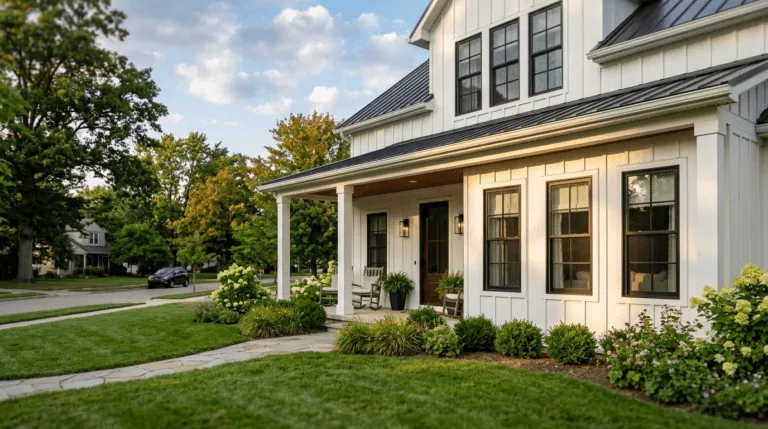
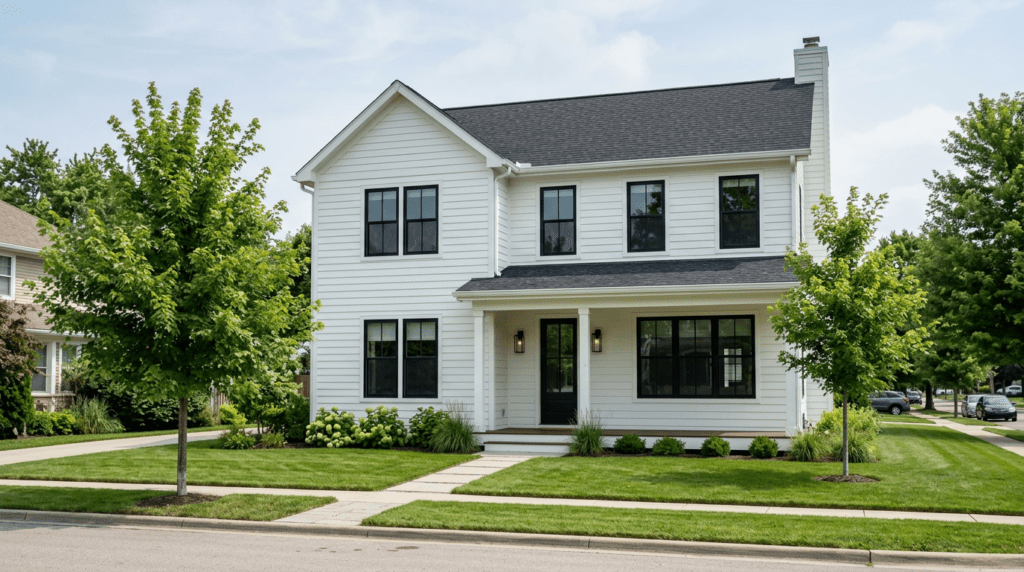
Black frames earn their keep on the outside, where contrast does the most work. The classic pairing is dark frames against light siding, the white-clapboard-and-black-sash farmhouse look that put this trend on the map. It is clean, high-contrast, and hard to get wrong.
The frames also flatter darker and more textured exteriors. Against deep green, charcoal, or navy siding they add a crisp outline rather than disappearing, as long as the trim around them stays light enough to separate the two. On brick and natural stone, the dark frames pick up the mortar lines and iron accents already in the material. Stained wood siding with black frames leans modern and warm at once.
One detail trips people up: grilles. On a dark frame, grids set between the panes of glass tend to blur into the view from across the street. If you want the divided-light look to read clearly, choose grilles that sit on the exterior surface of the glass, where the light catches them.
Styling Black Windows Inside the House
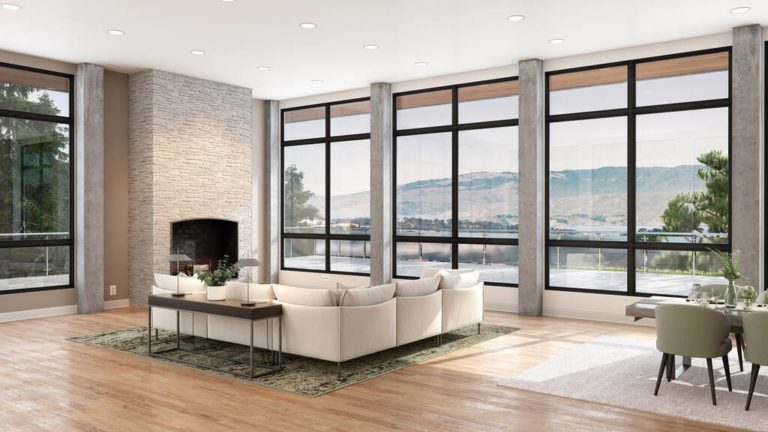
Indoors, a dark frame acts like a picture frame around whatever sits beyond the glass, turning a view of the backyard into the focal point of the room. The effect is strongest when the wall around the window stays light, so the frame reads as a deliberate outline rather than a dark smudge.
You have two clean directions. Match the window trim to the wall color for a quiet, built-in look that lets the glass and the view take over. Or lean into the contrast and echo the black elsewhere in the room, with a light fixture, hardware, or a furniture leg, so the frames feel intentional instead of lonely. Either way, keep the surrounding walls and ceiling bright to stop the frames from shrinking the space.
If a room is short on daylight, you do not have to give up the look. Many manufacturers offer a different color on each side of the frame, so you can run black on the exterior for curb appeal and a warm white or wood tone inside to keep the room feeling open. It is one of the most practical choices a homeowner can make.
Keeping Black Frames Looking Sharp
The honest trade-off with a dark frame is upkeep. Dust, pollen, and the white residue from Ohio’s hard water all show up faster on black than on white, so the frames need wiping more often to stay crisp. The good news is that cleaning them is quick and needs nothing special.
A soft cloth and a mild soap solution handle routine dust and fingerprints. Skip abrasive pads and harsh solvents, which can dull or scratch the finish and leave it looking worse than the dirt did. For the exterior, a light rinse and the same mild soap clear off pollen and spotting; the streak-free habits that keep your glass clear work on the frames too.
- A soft microfiber cloth for dusting and drying without scratching.
- Mild dish soap and warm water for routine cleaning.
- A second cloth for drying, which prevents the water spots that show most on dark frames.
- A soft brush for pollen and grit in the corners during spring.
What Drives the Cost of Black Windows?
Black windows cost more than standard white, and it helps to know where the premium comes from rather than just the bottom line. The single biggest driver is the finish: a durable, fade-resistant dark coating or capstock color takes extra steps to produce, and that shows up in the price of every unit.
After the finish, the usual factors apply. The frame material sets the baseline, with vinyl at the affordable end and fiberglass and wood higher up. Size and quantity matter, since a whole-house order spreads setup costs further than a single window. A two-tone frame, black outside and a lighter inside, adds a step and a little cost. Labor to install is the same as for any other color, so the difference is in the product, not the work.
Because so many variables move the number, a rough online figure rarely matches your actual project. A window cost estimate tool built around your window count, material, and finish gives you a far more useful starting point than a national average.
Are Black Windows Worth It?
For most homeowners chasing the look, the answer is yes, with one condition: match the frame material to the exposure. On a shaded elevation almost any material holds up, but on a big south or west wall that bakes all afternoon, a heat-stable choice like fiberglass or a dark-rated vinyl is what keeps the investment looking and working right for decades.
The color makes the most sense when you are already replacing windows or building new, since adding it to a project you are doing anyway costs far less than swapping good white windows just for the style. If you love the contrast, plan for a little extra cleaning, and pick the right material for your climate, black windows reward the spend in curb appeal and daily enjoyment.
Thinking About Black Windows for Your Ohio Home?
The right black window comes down to matching the finish and material to your home’s exposure, style, and budget, and that is far easier with someone who installs them every week. There is no reason to guess at the warranty fine print or the material that suits your walls.
Book a free, no-pressure window consultation with our Columbus-area team and get a straight recommendation on the right windows for your home.
FAQ: Black Windows

Ready to fix your windows? Get a free quote in 30 seconds.
Family-owned, licensed & insured. Free, no-obligation quotes.