
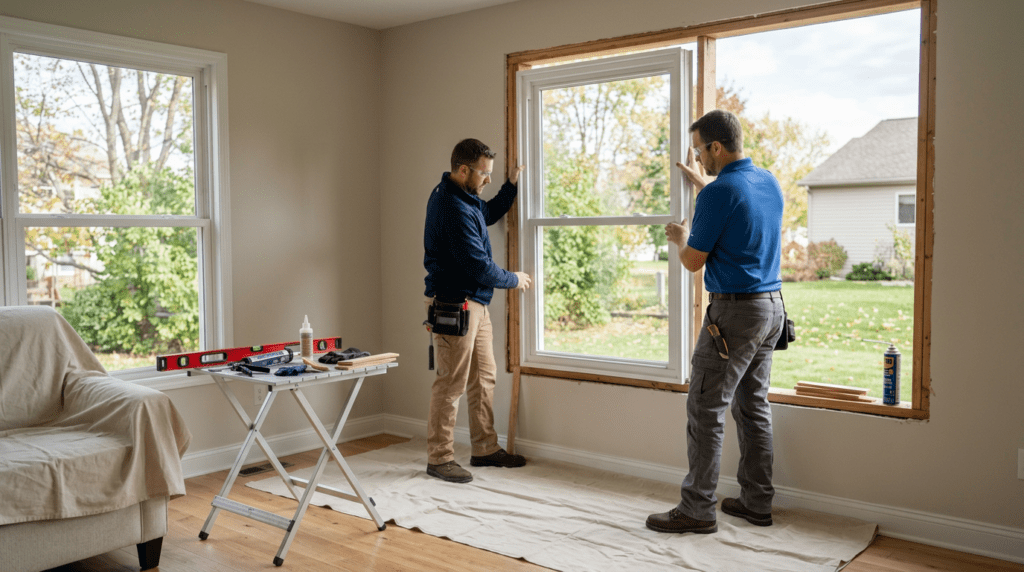
Signing the contract is the easy part. What most homeowners really want to know is what happens on the day the crew shows up: how long it takes, how much mess there is, and whether their house will be torn open to the cold. A professional install is a routine, well-rehearsed sequence, but the details matter, especially in Ohio’s climate.
This guide walks through the real timeline, what the crew does at each opening, how to prepare your home, and the one variable that can change everything: what gets found behind the old window. If you are weighing a project, our new window installation service page covers the scope, and this article covers the day itself.
Quick answer: Most window installation runs 30 to 60 minutes per window, so a typical crew replaces eight to ten in a day. The team protects the room, removes the old unit, preps the opening, sets the new window level and square, insulates and seals the gap, then tests it and cleans up. Hidden rot can add time.
How Long Window Installation Really Takes
The honest answer is that it depends on the type of replacement, but the per-window number is steady. A standard insert replacement takes a two-person crew roughly 30 to 60 minutes from start to finish, so a full house of eight to ten windows usually fits into a single day. A full-frame replacement, where the crew works back to the rough opening, can run several hours per unit.
Size and access stretch those numbers. A large picture window, a second-story opening that needs ladders or scaffolding, or a custom shape all add time. Ground-floor double-hungs go quickly; a wall of tall units over a staircase does not. Weather can also push a day, since crews will not seal an opening in driving rain.
The project as a whole is longer than the install. After you order, manufacturing lead time for made-to-measure windows typically runs a few weeks, and custom sizes or colors take longer. Plan the calendar in two parts: a wait for the windows to be built, then one or two days of actual installation once they arrive.
What Happens on Installation Day, Start to Finish
Most crews arrive in a morning window, often between 8 and 10. The lead installer walks the job first to confirm the order, check access, and flag anything that changed since the estimate. Then the work starts at one opening and moves methodically through the house, rather than opening every wall at once.
The sequence at each window is the same, and knowing it helps you tell a careful install from a rushed one. The gap around the frame is where the real performance lives, so the insulating and sealing steps matter as much as setting the glass.
- Protect the room. Drop cloths go down over floors and furniture, and the crew sets up a clean work path.
- Remove the old window. This is the loud part, with prying, scoring of old caulk, and the old sash coming out.
- Inspect and prep the opening. The crew checks the sill and framing, cleans the opening, and makes any repairs before fitting the new unit.
- Set it level, plumb, and square. The window is shimmed into place so it sits true; a window forced into a crooked opening never operates right.
- Insulate and seal. Low-expansion foam or backer rod fills the gap, then it is flashed and caulked against air and water.
- Reinstall trim and test. Interior and exterior trim go back on, and the window is opened, closed, and locked to confirm a smooth fit.
Insert vs Full-Frame: Why It Changes the Day
The biggest factor in how disruptive the day feels is whether you are getting insert or full-frame replacements, and that choice is driven by the condition of your existing frames. An insert, or pocket, replacement fits a new window inside the sound existing frame. Most of the work happens from inside, the exterior is barely touched, and each opening stays smaller and faster.
A full-frame replacement strips everything back to the rough opening, including interior and exterior trim. It takes longer and makes more mess, but it is the right call when the old frame is rotted, out of square, or you want to change the window size. The crew has to address trim on both sides of the wall, which is why these run several hours each.
If you are still deciding, the trade-offs between the two approaches deserve their own look. Our guide to replacement versus new-construction windows breaks down when each makes sense, and a good installer will tell you honestly which your home actually needs.
How to Prepare Your Home Before the Crew Arrives
A little prep the day before makes the install faster and protects your belongings. The crew will lay their own drop cloths, but clearing the area first lets them work without stopping to move your things, and it keeps dust and vibration away from anything fragile.
Walk each room getting windows and handle the short list below. Outside, make sure the crew can reach every opening, which means moving cars, patio furniture, grills, or planters away from the walls where ladders will stand.
- Take down curtains, blinds, and shades from every window being replaced, along with any window-mounted security sensors.
- Move furniture two to three feet back and clear a path so large units can be carried in and out.
- Remove wall art and shelf items near the openings, since drilling and prying can rattle a wall.
- Set up a safe room for pets and young kids away from the noise, open walls, and tools.
- Plan to have an adult home to answer questions and approve any unexpected repairs.
Getting the right windows on order in the first place starts with accurate numbers. If you are still in the planning stage, our notes on measuring a window for replacement explain what the installer confirms before anything is built.
Getting Windows Replaced in Ohio Weather
Window replacement happens year-round in Ohio, but the season shapes how the crew works. The fear most homeowners have, that their house will sit wide open to a January wind, is largely unfounded. Professionals work one opening at a time, so only a single window is out for the half hour it takes to set the new one, and the rest of the house stays closed and heated.
That said, mild weather makes for a cleaner job. Spring and fall are popular for good reason: caulk and sealants cure best in moderate temperatures, and there is no rain or deep cold to fight. A quality exterior sealant can still be applied when it is cold, but the crew may choose a product rated for low temperatures so the seal sets properly.
If you are replacing windows in winter because an old one finally failed, that is fine. Just expect the crew to keep the work tightly contained, close each opening before moving on, and possibly take a little longer so every seal is done right rather than rushed in the cold.
The Final Walkthrough and What to Check
Before the crew leaves, they should walk the job with you, and this is your chance to check the work while they are still there. Open, close, and lock every new window; it should glide without binding and latch without a fight. A window that sticks on day one will not improve on its own.
Look at the lines where the window meets the wall, inside and out. Interior trim should sit tight and even, and the exterior caulk bead should be continuous with no gaps that would let water or air in. Ask the crew to demonstrate any new operating hardware, especially on casements or tilt-in sashes you have not used before.
One thing to watch in the weeks after: a brand-new window should not feel drafty or fog up between the panes. If it does, that points to a sealing or flashing miss, not a defective window, and a good installer will come back to correct it. Persistent condensation between the glass is a separate issue our insulated glass replacement page explains.
Plan Your Project With a Free Assessment
Knowing what to expect takes the stress out of installation day, but the smoothest projects start with a clear plan and an honest look at your existing windows and frames. The condition behind your trim is what really decides the scope, and that is worth knowing before the work begins.
Book a free, no-pressure window assessment with our Columbus and Cincinnati team, and get a straight answer on timeline, approach, and anything your home needs before the crew arrives.
FAQ: Window Installation Day

Ready to fix your windows? Get a free quote in 30 seconds.
Family-owned, licensed & insured. Free, no-obligation quotes.