Vinyl is the frame material in most replacement windows sold today, and for good reason: it costs less than wood or fiberglass, never needs painting, and shrugs off moisture. But the word covers everything from a flimsy builder special to a stout, reinforced frame that outlasts the mortgage, and the price tag does not always tell you which one you are looking at. The difference is in details most buyers never check.
This guide lays out the honest pros and cons, the one spec that separates good vinyl from cheap, how the frames hold up through an Ohio winter, and how to read a window label before you sign anything. If you already know vinyl is your direction, our vinyl window installation page covers what a quality job looks like.
Quick answer: Vinyl windows are affordable, low-maintenance, and energy efficient, which makes them the most popular choice for replacement. The trade-offs are limited color options, frames you cannot repaint or repair, and wide quality gaps. Look for welded corners, internal reinforcement, and a good NFRC rating, not just a low price.
What Vinyl Windows Actually Are
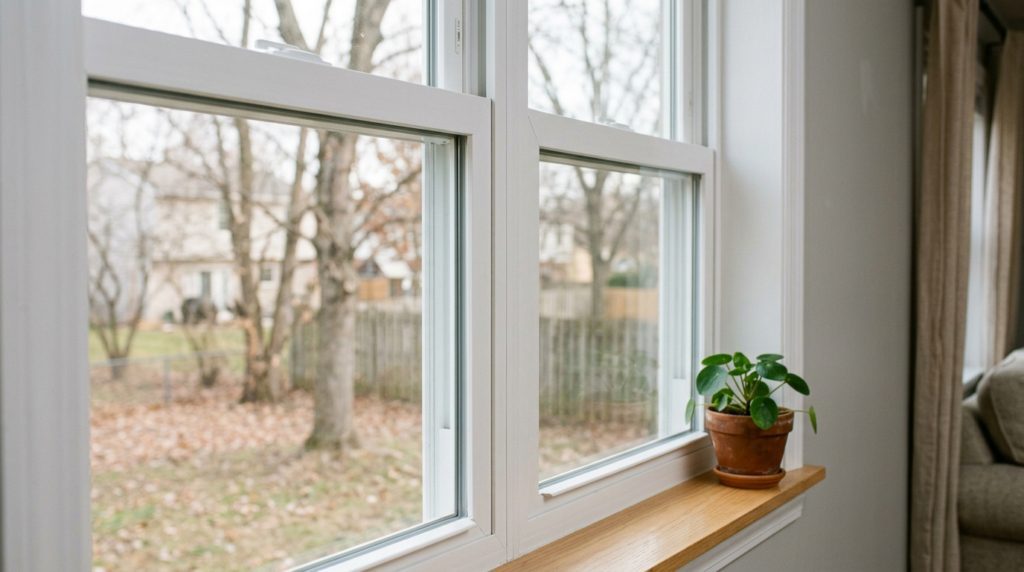
Vinyl windows are built from rigid PVC, the same family of plastic used for plumbing pipe, formed into hollow frame profiles. Those hollows are not empty by accident. Each frame is divided into sealed air chambers, and that trapped air is part of how the window insulates. A budget profile might have two or three chambers; a better one has more, with thicker walls between them.
The corners are where the frame is either made or broken. On quality vinyl, the cut frame pieces are heat-fused so the joint becomes one continuous piece of plastic with no fasteners. Cheaper windows screw or crimp the corners together instead, leaving a mechanical seam that can work loose and let air and water past it over time.
The glass package sits inside that frame as a separate decision. Most vinyl windows pair the frame with a double-pane insulated unit, often with a Low-E coating and argon fill. The frame and the glass are two halves of the same purchase, and a strong frame around weak glass, or the reverse, leaves performance on the table.
The Real Advantages of Vinyl
Vinyl earned its market share honestly. For most homeowners replacing tired windows, it hits the practical sweet spot of cost, comfort, and almost no upkeep. The benefits below are the reasons it shows up in roughly seven of every ten replacement jobs.
None of these are marketing claims. They are the day-to-day realities of living with the material, which is why it keeps winning kitchen-table decisions against pricier options.
- Lower cost. Vinyl is the most affordable mainstream frame material, which is why a whole-house replacement in vinyl fits budgets that wood or fiberglass would blow past.
- Almost no maintenance. The color runs through the material, so there is nothing to paint, stain, or seal. A wipe with soap and water once or twice a year is the whole job.
- It does not rot or rust. Vinyl ignores moisture, humidity, and insects, so it will not rot like wood or corrode like steel, even on a damp north wall.
- Solid energy efficiency. The chambered frame and a modern insulated glass unit cut heat transfer well, which shows up as steadier indoor temperatures and a smaller heating load.
- It fits odd openings. Vinyl molds easily, so manufacturers offer it in a wide range of shapes and sizes for non-standard rough openings.
Where Vinyl Falls Short
No frame material is perfect, and being honest about the limits is how you avoid regret two years in. Vinyl’s drawbacks are real, though most of them are about looks and flexibility rather than failure.
The biggest one is permanence of choice. Whatever color and style you pick is what you live with, because the surface does not take paint and the frame cannot be patched the way wood can.
- You are locked into the color. Vinyl does not hold paint reliably, so the factory finish is forever. Repainting it usually peels and can void the warranty.
- Fewer high-end looks. The color range, while wider than it used to be, still trails wood, and the sightlines can look bulkier than a slim fiberglass or aluminum frame.
- It is replace, not repair. A welded vinyl frame that cracks or warps cannot be mended in place. With wood you patch and repaint; with vinyl the sash or the whole unit gets swapped.
- Wrong fit for historic homes. On a period house, vinyl can clash with original trim and may not satisfy a historic district’s rules. Wood or clad-wood usually suits those facades better.
- Quality varies wildly. The vinyl label covers both excellent and throwaway windows, so the name alone guarantees nothing.
The One Spec That Separates Good Vinyl From Cheap
If you remember one thing from this guide, make it this: the corners and the reinforcement decide how long a vinyl window stays square, tight, and easy to operate. Two windows that look identical in the showroom can be a decade apart in real lifespan because of what you cannot see from the outside.
Welded corners are the first tell. Ask whether the frame corners are heat-welded into a single piece or mechanically joined with screws or clips. A fused corner has no seam to open up, while a screwed corner is a future air leak waiting for enough freeze-thaw cycles to loosen it. Run a finger along the corner; a smooth, continuous joint is the one you want.
On replacement jobs around Columbus, the vinyl windows that come back drafty or hard to lock are almost always the ones with screwed corners and no metal inside the frame. The welded, reinforced units from fifteen years ago are still tight. The frame, not the glass, is usually what gives out first.
The second tell is internal reinforcement. Large windows, sliders, and dark frames need a steel or aluminum stiffener inside the main profile so the vinyl does not bow under its own weight or in summer heat. Smaller white windows can skip it, but for anything wide or dark, an unreinforced frame is a window that will sag or distort. Ask, because the brochure rarely says.
Vinyl and Ohio's Freeze-Thaw Swings
Vinyl moves more with temperature than any other frame material. It expands in summer heat and contracts in the cold, and central Ohio hands it the full range, from humid ninety-degree afternoons to single-digit January nights. A well-made, properly installed window absorbs that movement without trouble. A cheap or badly fitted one shows the strain.
Color makes it worse. A dark frame on a sunny, sub-freezing day can run far warmer than the frozen air an inch away, and that daily expansion and contraction works on every seam and seal. On budget vinyl that movement can bow the frame and stress the insulated glass unit, which is a common path to a foggy, failed seal. If your glass has already clouded, our foggy glass repair page explains what can and cannot be saved.
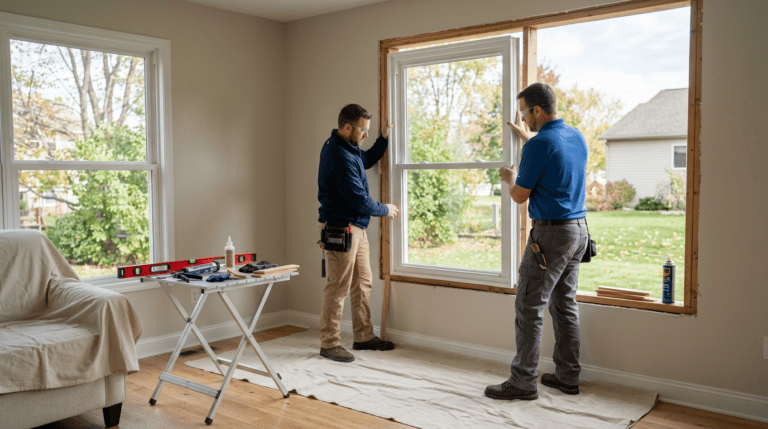
Installation is the other half of the equation. Vinyl needs room to move; jam it in too tight with no allowance for expansion and the frame can crack or the sash can bind on a cold morning. This is why a clean, well-detailed install matters as much as the window itself, and why a quality window installation pays off over the years a cheap one never will.
How to Read the Window Label
Every certified window carries an NFRC label, and learning to read two numbers on it tells you more than any sales pitch. The label is independent and standardized, so it lets you compare a window from one brand against another on equal terms.
U-factor measures how well the whole window keeps heat in. Lower is better, and for Ohio’s heating-dominated winters a low U-factor is the number to prioritize, because most of your energy dollars go to keeping warmth from escaping. The second number, solar heat gain coefficient, measures how much of the sun’s heat the window lets through; a moderate value works well here, letting in some free winter warmth without overheating the house in July.
Look past the glass spec, too. Air infiltration tells you how leaky the window is under wind pressure, and a tight number there is what a welded, reinforced frame buys you. The Energy Star label is a useful floor, not a finish line, since it only certifies that a window clears a regional minimum. Two windows can both wear the logo and still perform a full grade apart, so read the actual numbers.
Vinyl vs. Wood, Fiberglass, and Aluminum
Vinyl is the default, but it is not the only option, and knowing where it sits against the alternatives helps you decide whether to pay up or stay put. Each material trades cost against looks, strength, and upkeep in a different way.
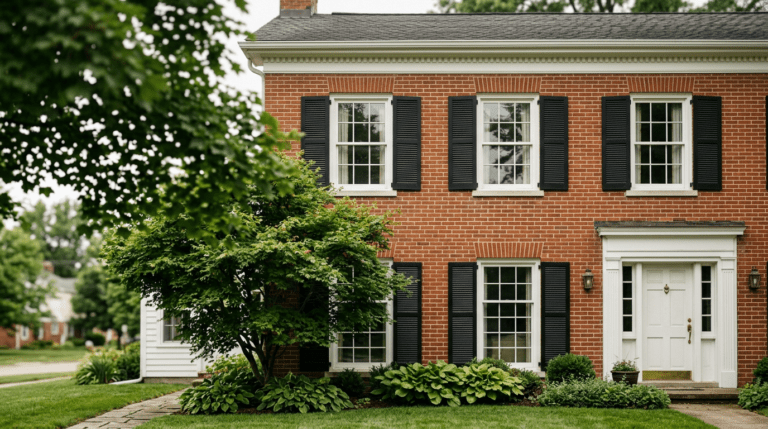
Against wood, vinyl wins on price and maintenance and loses on warmth and authenticity. Wood looks and feels premium and can be repainted any color, but it demands regular sealing and will rot if water gets past the finish. For a historic facade wood is often worth the work; for a 1990s colonial, vinyl is the practical pick.
Against fiberglass, vinyl wins on cost and loses on strength and color freedom. Fiberglass barely moves with temperature, holds dark colors without bowing, and can be painted, which is why it shines on large or dark windows where vinyl struggles. It costs more, though, so the case for it is strongest on big openings and bold colors. Our guide to fiberglass windows covers that comparison in depth. Against aluminum, vinyl wins on energy efficiency by a wide margin, because bare metal conducts cold straight indoors, leaving aluminum mostly to commercial and storefront use. To see how all the frame and operating styles line up, our overview of window types is a good map.
How Long Vinyl Windows Last
A quality vinyl window, well installed, commonly lasts two to four decades. That is a wide range, and where a given window lands inside it comes down to the build quality and the install far more than the brand on the sticker. The frame usually outlives the seal in the glass, so a clouded pane does not always mean the whole window is finished.
Several things shorten that life. Cheap unreinforced frames sag and rack out of square. Dark colors on thin vinyl distort in the sun. A too-tight or poorly flashed install lets water and movement do damage the window was never asked to handle. And a failed insulated glass seal, while not the frame’s fault, often gets the whole unit replaced when a glass-only swap might have done.
The maintenance side is genuinely light. Keep the tracks and weep holes clear so water drains, wash the frames a couple of times a year, and check the weatherstripping every so often. Do that, and a good vinyl window asks almost nothing of you for the rest of its service life.
How to Choose Vinyl: A Simple Sequence
Buying windows is easier when you take the decisions in order instead of getting lost in brand names. The sequence below moves from the choices that matter most to the ones that matter least, so you spend your attention where it counts.
Work through it before you talk to a salesperson, and you will ask sharper questions and be much harder to upsell on features you do not need.
- Confirm the corners are welded. Fused, seamless corners over screwed or crimped ones, every time. This is the single biggest quality divide.
- Check for reinforcement on big or dark units. Any wide window, slider, or dark frame should have a metal stiffener inside the profile.
- Read the NFRC numbers. Prioritize a low U-factor for Ohio winters, with a moderate solar heat gain coefficient.
- Pick the glass package. Double-pane with Low-E and argon is the sensible baseline; consider triple-pane on the coldest, most exposed walls.
- Choose color with the climate in mind. Dark frames look sharp but need quality vinyl and reinforcement to stay true.
- Vet the installer last, but never least. The best window installed poorly underperforms a modest one fitted right.
Mistakes That Cost You Later
Most vinyl-window regret traces back to a handful of avoidable shortcuts, and they all show up after the salesperson is long gone. Run through this list before you commit, because each item trades a little diligence now for a problem you do not want to inherit.
None of these are about spending more. They are about asking the right questions and not letting price be the only thing you compare.
- Buying on price alone. The cheapest quote almost always means screwed corners, thin walls, and no reinforcement.
- Choosing a dark color on budget vinyl. Without quality material and a stiffener, dark frames bow and can stress the glass seal.
- Ignoring the install. A tight, unflashed, or out-of-square fit undoes a good window fast.
- Trusting the Energy Star logo alone. Read the actual U-factor and air infiltration numbers instead.
- Planning to repaint later. Vinyl will not hold paint, so pick the right color the first time.
Thinking About Vinyl Windows for Your Home?
The hard part of buying vinyl is telling a good frame from a cheap one that looks identical in the showroom. A straight look at your openings, your exposures, and what you actually need takes the guesswork out and keeps you from overpaying for features that will not help.
Book a free, no-pressure window assessment with our Columbus and Cincinnati team and get an honest read on which vinyl windows make sense for your home and which to skip.
FAQ: Vinyl Windows

Ready to fix your windows? Get a free quote in 30 seconds.
Family-owned, licensed & insured. Free, no-obligation quotes.