The windows are the first thing the eye reads on a traditional house, and the wrong ones can flatten a facade that the rest of the home gets right. A 1920s Colonial wants tall double-hung sashes with divided panes; a steep-roofed Tudor wants casements behind diamond grilles. Get the match right and the house looks settled and correct. Get it wrong and even a costly window can make the whole front look cheap.
This guide covers the window styles that read as traditional, which architecture each one suits, how grille patterns change the look, and how to keep that classic appearance while upgrading the glass for an Ohio winter. If you are planning a new window installation, the style decision matters as much as the brand on the label.
Quick answer: Traditional window styles include double-hung, casement, bay and bow, and arched windows, usually dressed with grilles that divide the glass into smaller panes. The right choice follows your home’s architecture: double-hung for Colonial and farmhouse, casement for Tudor and Cottage, bay or bow for Victorian.
What Makes a Window Look Traditional
Before picking a style, it helps to name what the eye is actually responding to. Traditional windows share a few traits regardless of the exact shape: vertical proportions that stand taller than they are wide, a frame with visible depth and trim rather than a flush modern edge, and almost always glass divided into smaller panes by bars called muntins or grilles.
Symmetry is the other half of the look. On a traditional facade the windows line up in even rows, match each other in size, and sit in balanced relation to the front door. That order is what makes a Colonial or Georgian read as calm and formal. Materials reinforce it: painted wood, or a clad and fiberglass frame that mimics painted wood, looks right where a wide vinyl frame can look bulky.
You do not need a history degree to get this right. If you want the full menu of operating styles first, our overview of window types and shapes lays them all out. This guide narrows in on the handful that carry a classic look and how to deploy them on an older home.
Double-Hung Windows: The Traditional Workhorse
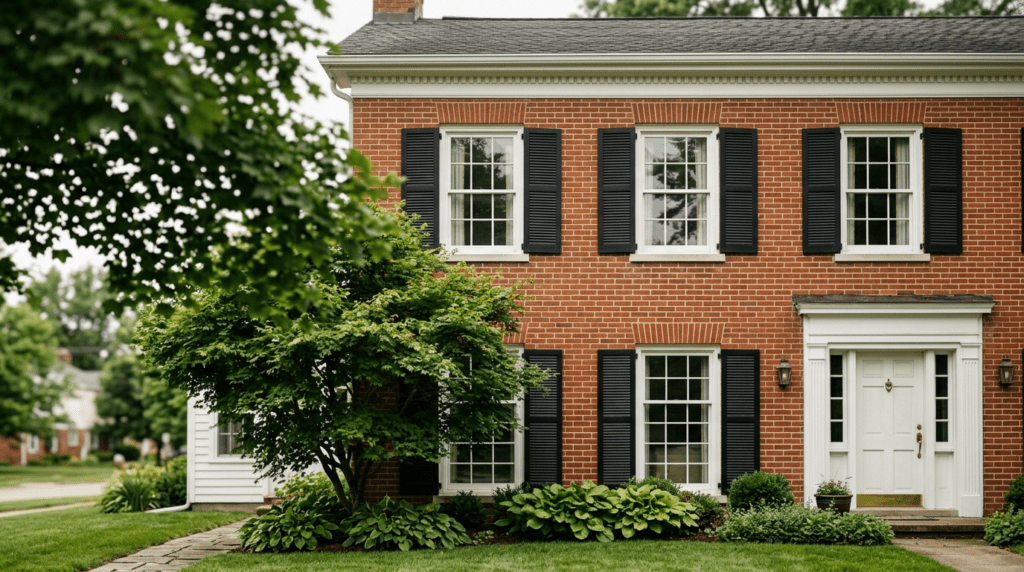
If one window says traditional, it is the double-hung. Two sashes stack in a single frame and both slide vertically, so the proportions are naturally tall and the rhythm across a wall stays even. This is the staple of Colonial, Cape Cod, Federal, Greek Revival, and farmhouse homes throughout older Ohio neighborhoods.
The grille pattern is what tunes a double-hung to a specific era. A Colonial typically wears a six-over-six pattern, six panes in each sash; Federal homes often go heavier with twelve-over-twelve; a Cape Cod can run a shorter upper sash to suit its low roofline. Pick the count that matches your home’s age rather than a generic two-over-two, which reads modern and can age a period facade badly.
Double-hungs also earn their keep day to day. Both sashes tilt inward on most modern units for easy cleaning, and opening the top sash vents warm air without a low draft across the room. A traditional look and a practical window are not at odds here, which is why a double-hung window remains the default for classic homes.
Casement Windows for Tudor, Cottage, and Craftsman Homes
Casements hinge at the side and crank outward like a small door, and they predate the double-hung by centuries, which is exactly why they suit the oldest-looking styles. A steep-gabled Tudor, an English-style cottage, or a French Country home reads correctly with tall, narrow casements, often paired and set behind diamond or rectangular grilles.
The style also belongs on Craftsman, Bungalow, and Prairie homes, where the grilles usually run vertical or sit only in the upper third of the sash. Because a casement seals tight against its frame when you crank it shut, it is also the most weathertight operable window, which matters when an Ohio wind drives rain or cold against the wall.
Where a double-hung gives you symmetry, a casement gives you a clear, uninterrupted view and a wider opening for ventilation. Grouped in twos and threes, casements can fill a broad opening while still keeping the divided-pane look that reads traditional. See our casement window options for how they pair and mull together into a wider unit.
Bay and Bow Windows for Victorian and Queen Anne Homes
When a traditional facade needs drama, it projects. Bay and bow windows push out from the wall to form a shallow alcove, and they are signatures of Victorian, Queen Anne, Edwardian, and Georgian architecture. A bay combines a wide center pane with two angled flankers; a bow curves through four or more equal units for a softer, rounder profile.
The projection does real work inside as well as out. The alcove creates a window seat, a plant shelf, or simply a brighter corner, all without adding floor space to the room. On Ohio’s many century-old homes in neighborhoods like Columbus’s Victorian Village, a bay is often the original centerpiece of the front parlor, and replacing it in kind keeps the house true to itself.
Because a bay or bow is built from several windows joined together, the units inside it usually repeat the home’s main style: double-hung sashes on a Victorian, casements on a Tudor. That consistency is what makes the projection feel built-in rather than bolted on after the fact.
Arched and Specialty Windows for a Formal Look
For the most formal traditional homes, the top of the window stops being a straight line. Arched, round-top, and Palladian windows add a curve that signals Georgian, Greek Revival, and grand Victorian architecture. A Palladian, a tall center arch flanked by two shorter square-tops, is the classic statement over an entry or on a stair landing.
These are usually fixed, non-operating shapes, so they are about light and proportion rather than ventilation. They pair with operable double-hungs or casements below to handle airflow while the specialty shape carries the architectural drama up top. A half-round transom over a front door or above a row of double-hungs does the same job at smaller scale.
Specialty shapes reward restraint. One well-placed arch on a gable end or stair landing lifts a facade; a house full of them looks busy and loses the calm symmetry that defines traditional design. Use them to mark the important spots, not every opening on the wall.
Grilles and Muntins: Getting the Pattern Right
The grille is the detail that most often makes or breaks a traditional window, and it is where homeowners cut the wrong corner. Original windows had true divided lights: separate small panes held by slim wooden muntins. Modern replacements offer three ways to recreate that look, and they do not read the same from the curb.
The difference shows most in how the bar catches light and shadow. A flat grille pressed between the panes looks painted-on from a few feet away, while a raised bar on the exterior throws the small shadow line the eye expects on a period home. For an older Ohio house with character worth keeping, that shadow line is worth paying for.
- Simulated divided lite (SDL): raised bars bonded to both glass surfaces, the closest look to a true divided window and the right pick for historic facades.
- Grilles between the glass (GBG): flat bars sealed inside the insulated unit; easy to clean and lower in cost, but flatter looking up close.
- Removable interior grilles: snap-in wood grids on the inside only; convenient, but they read as the least authentic from the street.
Matching Windows to Your Home's Architecture
Once you know the styles, matching them to a house is mostly a question of reading the roofline, the symmetry, and the era. Most traditional American homes fall into a handful of recognizable types, and each has a window that looks native to it. The goal is to repeat what the original builder would have specified, not to introduce a style the house never had.
Use the pairings below as a starting point, then confirm against any original windows still in place or a neighbor’s untouched house on the same block. When in doubt, the simpler and more symmetrical choice is almost always the safer one on a traditional facade.
- Colonial and Cape Cod: double-hung with six-over-six or six-over-one grilles.
- Federal and Greek Revival: tall double-hung, often twelve-over-twelve, usually with shutters.
- Victorian and Queen Anne: double-hung plus a projecting bay; one-over-one or two-over-two panes.
- Tudor and English Cottage: casements behind diamond or rectangular grilles.
- Craftsman and Bungalow: double-hung or casement with grilles in the upper sash only.
- Farmhouse: simple double-hung, two-over-two or no grilles, painted white.
Materials and Glass for Ohio's Older Homes
The look is only half the decision; the frame and glass decide whether a traditional window survives the climate. Original wood sashes are beautiful and correct, but in central Ohio they tend to fail at the sill and meeting rail first, where decades of freeze-thaw and trapped moisture rot the wood. You can keep the exact profile with a clad-wood or fiberglass frame that holds paint and shrugs off the cycling.
Glass is where a period window loses the most. A single-pane original is the biggest heat drain on an old house, so the move is to keep the divided-light look while upgrading to an insulated, Low-E unit behind it. Done well, the window reads as historic from the street and performs like a modern one through a Columbus January.
On older homes around Columbus, the most common mistake we see is a homeowner spending on quality windows and then choosing flat, snap-in grilles or skipping them entirely. The glass is fine, but the facade goes flat, and a 1910 house suddenly looks like a rental.
Color follows the same logic. Classic white or a soft historic cream suits most traditional homes, while a deep black or bronze can work on a transitional or updated facade. Whatever frame material you choose should hold that color without chalking after a few Ohio summers.
Mistakes That Cheapen a Traditional Facade
Most traditional-window regrets are not about the window itself but about a detail that breaks the period look. Before you sign off on an order, walk the front of the house and check it against this short list, because each item is easy to get wrong and hard to undo once the units are installed.
None of these cost more to avoid. They only take a moment of attention at the design stage, before glass is on order.
- Generic two-over-two grilles on a home whose era called for six-over-six or twelve-over-twelve.
- Flat grilles between the glass on a facade that needs the shadow line of raised SDL bars.
- Mismatched sizes or heights that break the symmetry a traditional front depends on.
- A bulky frame that swallows the glass and looks heavy where painted wood looked slim.
- Removing original character windows, a bay or an arched transom, instead of restoring them in kind.
Ready to Match the Right Windows to Your Home?
Choosing windows for a traditional or older home is as much about the grille pattern and proportion as the brand on the label, and the wrong call shows from the street for decades. A short look at your home’s architecture usually points to one clearly right style.
Book a free, no-pressure window consultation with our Columbus and Cincinnati team, and get a straight recommendation on the styles, grilles, and glass that will keep your home looking the way it should.
FAQ: Traditional Window Styles

Ready to fix your windows? Get a free quote in 30 seconds.
Family-owned, licensed & insured. Free, no-obligation quotes.