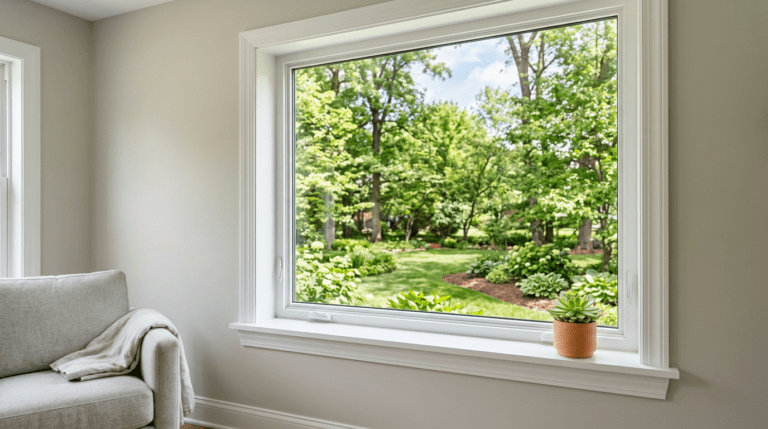
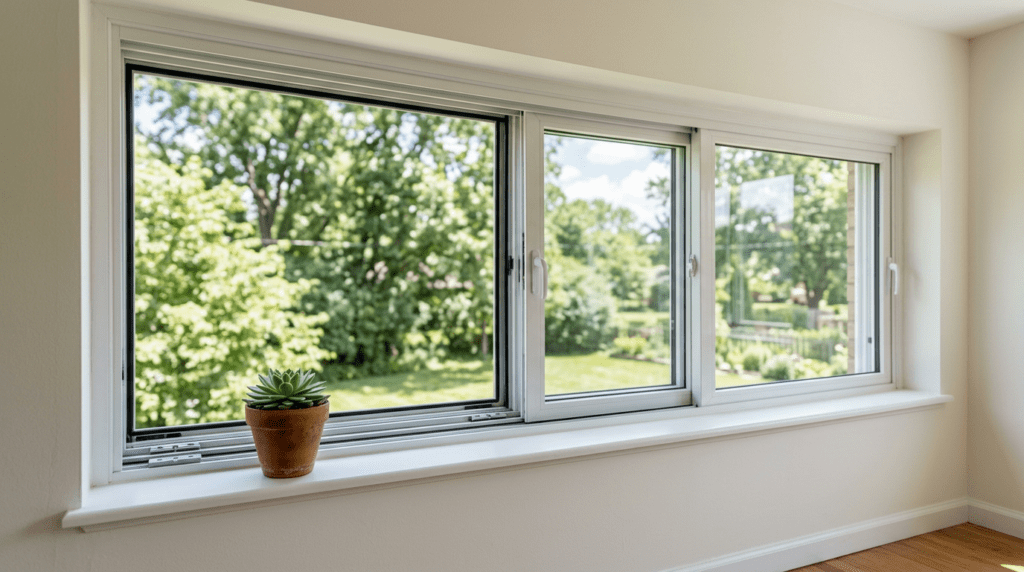
A sliding window does one simple thing: the sash glides sideways on a track instead of lifting up or cranking out. That single design choice is why sliders are easy to open, affordable, and a natural fit for a wide wall, and it is also why they let in a little more air and need their track kept clear. Most of the trade-offs people argue about trace back to this one mechanism.
When a slider starts to drag, jump, or refuse to lock, the window itself is rarely the problem; the rollers or the track usually are, and that is a small roller and track repair rather than a replacement. This guide covers how a slider works, the honest pros and cons, how it stacks up against double-hung and casement windows, and what to spec so it holds up through an Ohio winter.
Quick answer: A sliding window has one or more sashes that roll horizontally along a bottom track. It opens easily without swinging out, suits wide openings, and costs less than most styles, but only half opens at once and its sliding seal lets in more air than a crank window, so weatherstripping and track upkeep matter.
What a Sliding Window Is, and Why It's Called a Glider
A sliding window, also sold as a slider, glider, or gliding window, opens by moving sideways along a horizontal track rather than tilting, cranking, or sliding up and down. In its most common form one sash is fixed in place and the other rides past it on small rollers, so the moving panel slips behind or in front of the stationary one. The names all describe the same motion: the sash glides.
That horizontal action sets it apart from the windows it gets confused with. A double-hung window slides too, but vertically, with sashes that move up and down against gravity. A casement swings out on a hinge like a door. A slider keeps everything in one plane and lets the panel travel the width of the opening, which is why it reads as a wide, low window rather than a tall one. Most sliders are wider than they are high for exactly that reason.
How a Sliding Window Works
Underneath the simple motion is a small system of parts that each earn their keep. The sash carries a pair of rollers along its bottom edge, and those rollers ride in a metal or vinyl track set into the sill of the frame. A guide at the top keeps the panel upright, and where the moving sash meets the fixed one, or a second moving sash, an interlocking meeting rail laps the two together so they pass without leaving a gap.
The seal is the part worth understanding, because it shapes everything else. A slider does not press shut against a gasket the way a casement does; it relies on brush-style or fin weatherstripping that the sash glides across. That lets the window move with one finger, but a seal you can slide past is, by design, looser than one you compress. On most sliders the sash also lifts out of the track once you clear the stops, which is what makes them easy to clean and easy to service.
Single, Double, and Triple Sliders
Sliders come in a few configurations, and the difference is more practical than it looks on a spec sheet. The layout decides which way the window opens, how much of it you can clean from inside, and whether it can ever serve as an escape route. Picking the configuration is really picking how the window will behave day to day.
The three you will see most often:
- Single slider (often labeled XO). One fixed pane and one moving sash. The cheapest option, but you can only reach the outside of the fixed half from a ladder.
- Double slider (XX). Both sashes move, so you can open either side and tilt both in to clean. The most flexible choice for ventilation and upkeep.
- Three-lite slider (XOX). A large fixed picture pane in the center with a slider on each end. It spans a wide wall while still opening at both edges.
On a wide opening the three-lite gives you the view of a picture window with the airflow of two sliders, while a double slider is the easiest to live with where cleaning access and a code-sized opening matter.
The Pros of Sliding Windows
The appeal of a slider is real, and most of it comes straight from that gravity-free horizontal motion. Because the sash rolls rather than lifts, there is nothing to strain against and no balance springs to wind down over time. That makes a slider one of the easier windows to open from an awkward spot, which is why they end up over kitchen sinks and counters so often.
The simple mechanism pays off in other ways too. Fewer moving parts than a hung or crank window means less to fail and a lower price for the same glass area, and the wide, low proportions suit a big view. The strongest reasons to choose one:
- Easy, low-effort operation. No lifting and no cranking, friendly for older hands or a reach over the counter.
- Wide, unobstructed views. A slim frame and a broad pane make the most of a horizontal opening.
- No outward swing. Nothing projects over a deck, walkway, or patio, unlike a casement or awning.
- Lower cost and upkeep. Fewer mechanical parts than spring-balanced or geared windows.
- Simple inside cleaning on double and triple sliders, where the sashes lift out or tilt in.
The Cons, and the One That Matters Most
No window is free of compromise, and a slider’s weaknesses come from the same place its strengths do. The first is built into the design: because one sash has to park behind the other, only half the window ever opens. A six-foot slider gives you three feet of airflow, where a casement of the same size swings its whole width into the breeze.
The rest of the list is about the track and the seal, and these are the ones that bite in this climate. Run through them before you decide a slider is right for a given opening:
- Only half opens. Ventilation tops out around half of the glass area.
- A looser air seal. Sliding weatherstripping leaks more than a casement’s compression gasket.
- A dirt-and-water track. The horizontal channel collects grit, pollen, and rain that has to drain.
- Rollers that wear. Years of grit flatten or seize them, and the sash starts to drag.
- Harder outside cleaning on a single slider, where the fixed pane needs a ladder.
None of these rule a slider out. They simply tell you where the attention goes once it is installed, and the next two sections cover the parts most buyers underestimate.
Why the Seal Decides Comfort in a Cold Climate
The air seal is where a slider earns its reputation for being drafty, and it is worth understanding rather than fearing. A casement cranks tight against a continuous gasket, so it squeezes the gap shut. A slider cannot do that, because its sash has to keep moving, so it seals with brush fins the panel slides across. That seal works, but it sits looser by design, and the U.S. Department of Energy notes that sliding sashes tend to leak more air than hinged or projecting windows for this reason.
Ohio’s freeze-thaw winters then test it harder than a mild climate would. The weatherstripping stiffens in the cold, packs down over years of use, and the meeting rail is the first spot to feel a draft on a windy January night. The fix is usually the seal, not the glass.
On a lot of older Columbus sliders, the cold draft people blame on thin glass is really a flattened brush seal at the meeting rail. Fresh weatherstripping and a clean track bring most of them back without touching the unit.
Spec matters at purchase: a quality interlock at the meeting rail, low-E glass, and an argon fill close most of the gap with a good casement. If the draft comes with fog between the panes instead, that is a failed seal in the glass unit itself, and an insulated glass replacement restores it without a whole new window.
The Horizontal Track Is a Water-and-Ice Trap
A slider’s track is the one part competitors mention in passing and Ohio homeowners learn the hard way. Because it runs flat across the sill, it catches everything that falls or blows in: dust, pollen, dead bugs, and the rainwater that runs down the glass. Built into the bottom of the track are small weep holes that drain that water back outside, and they clog as easily as they drain.
When the weeps pack with grit, water pools in the channel instead of leaving. In summer that standing water grows mildew; in winter it freezes. Ice expanding in a clogged track jams the roller, and on a brittle vinyl track in January it can crack the channel outright. Worse, water that overflows the inside lip soaks the sill, and a sill that stays wet through enough freeze-thaw cycles starts to rot, a problem that often needs sill repair long before the window does.
The upkeep is simple and seasonal. Vacuum the track, clear the weep holes with a cotton swab, and wipe it dry, ideally each spring and again before winter. A clean track also keeps the glass easier to keep clear, so the same routine that keeps a slider gliding pairs well with a proper streak-free cleaning of the panes.
Sliding vs Double-Hung vs Casement
Choosing a slider usually means weighing it against the two windows it competes with most, and each wins a different job. A double-hung window is the closest cousin: it also opens only halfway and rides in a track, but vertically, with two sashes that move up and down. Double-hungs suit traditional facades and tall, narrow openings, while a slider fits a wide, low one and operates with less effort because nothing fights gravity.
A casement is the real trade. It cranks fully open for maximum airflow and seals tight against a compression gasket, so it beats a slider on both ventilation and air-tightness. What it gives up is the slider’s clean lines, its lower cost, and its lack of an outward swing. Where a window faces a deck, a walkway, or a patio, a slider stays out of the way while a casement window projects into it.
A rough rule: pick a slider for a wide opening, easy operation, and a tight budget; pick a casement when sealing and full ventilation rule, such as a bedroom that needs to breathe; and pick a double-hung when the look and proportions of the house call for it. Many homes use a mix, matched room by room.
Energy Efficiency: What to Spec for Ohio
A slider can be a comfortable, efficient window, but it starts a step behind a casement on air-tightness, so the glass package and the seal have to carry more of the load. The good news is that the same upgrades that help any window close most of the difference, and you do not need the most expensive option to get there.
For a Columbus or Cincinnati home, a double-pane unit with a low-E coating and an argon fill is the value sweet spot. Low-E reflects heat back where you want it through both the cold and the hot months, and argon between the panes slows the transfer, while a warm-edge spacer at the glass edge keeps that perimeter from becoming a cold strip that sweats. Triple-pane helps on the most exposed walls, but it is usually more than a typical opening needs.
Two slider-specific details matter as much as the glass. Insist on a solid interlocking meeting rail and quality weatherstripping, because that joint is where a slider leaks first, and look for an ENERGY STAR rating matched to the Northern climate zone. Orientation helps too: lower solar-heat-gain glass on west and south windows tames summer heat, while the tightest U-factor pays off on the cold north side.
Best Rooms and Uses for a Slider
A slider shines wherever its shape and motion fit the room. Over a kitchen sink or behind a counter, the side-to-side action means you are not reaching across to lift a heavy sash. On a wide wall in a living or dining room, a double or three-lite slider delivers a broad, low view that a single tall window cannot. And anywhere a window sits above a deck, a porch, or a walkway, the lack of an outward swing keeps the path clear.
Basements and bedrooms come with a catch worth planning around. Any room used for sleeping needs an egress window large enough to climb through, and because a slider opens only half its width, a unit that looks plenty big can still fall short of the code-required clear opening. The honest fix is to size up, since a wide double slider can pass where a tall, narrow one will not, or to choose a casement, which nets a larger opening for the same rough size.
- Over sinks and counters. Easy reach with no lifting.
- Wide living and dining walls. A broad, low view with airflow at both ends.
- Above decks, porches, and walkways. No sash projecting into the space.
- Basements and bedrooms. Only if the clear opening meets egress code.
When a Slider Drags, Sticks, or Won't Lock
A slider that has gotten hard to push, jumps in its track, or no longer latches is usually telling you about its hardware, not asking to be replaced. The most common cause is the rollers: years of grit flatten the wheels or seize their bearings, the sash drops out of true, and the lock no longer lines up with its keeper. It is the same failure that stops a sliding patio door gliding, and the same roller and track repair usually sets both right for far less than a new unit.
A few other culprits are worth checking before you blame the window. Grit packed in the track binds a sash that is otherwise fine, so a deep clean comes first. An opening that has racked out of square, common in older Columbus homes that have settled over a century, makes a long sash bind as it travels, and that is a frame problem a tune-up will not cure; re-squaring it usually means a full-frame replacement. And a cracked or fogged pane is its own repair: a single broken sheet is a straightforward glass repair, not a reason to scrap the frame around it.
Not Sure If Your Slider Needs a Fix or a Replacement?
If a slider in your home sticks, drafts, fogs, or just will not lock the way it used to, the cause is usually a worn roller, a clogged track, or a tired seal, and a quick look tells you which it is. There is no reason to fight a window every time you want fresh air.
Book a free, no-pressure window assessment with our Columbus and Cincinnati team, and get a straight answer on whether it is a simple fix or time for a replacement.
FAQ: Sliding Windows

Ready to fix your windows? Get a free quote in 30 seconds.
Family-owned, licensed & insured. Free, no-obligation quotes.