
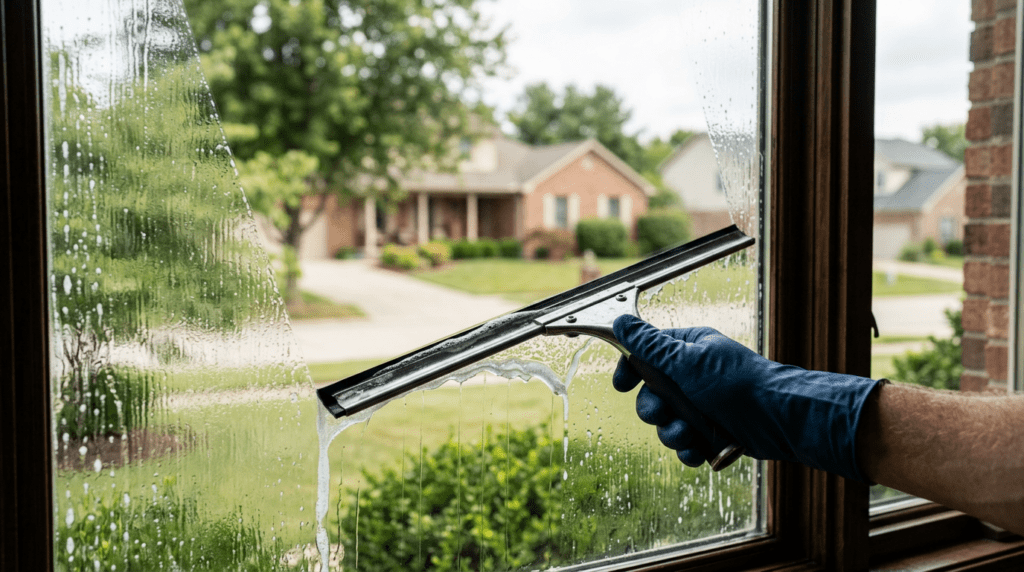
Clean glass is the fastest way to make a whole room feel brighter, yet streaks have a way of appearing the moment sunlight hits the window. The good news is that a streak-free finish comes down to technique and timing, not a secret cleaner. Most of the marks people fight are caused by the solution drying before it gets wiped, or by a cloth that is just pushing grime around.
This guide covers the tools, the solution, the order of operations, and the squeegee move the pros use, plus the Ohio-specific headache of hard-water spotting. If your glass looks cloudy between the panes rather than on the surface, that is a different problem, and our overview of glass repair explains why no amount of wiping will fix it.
Quick answer: To clean windows streak-free, work on a cloudy day so the solution does not dry too fast. Dust the glass first, then wash top to bottom in small sections with a few drops of dish soap in water. Pull a squeegee in a reverse-S, wiping the blade after each stroke, and buff the edges with a dry microfiber cloth.
What You Need: Tools and a Simple Solution
A streak-free window depends more on your cloth and squeegee than on the brand of cleaner in the bottle. Microfiber is the key: it lifts and holds dirt instead of smearing it, and unlike paper towels it leaves no lint behind. Keep two on hand, one for washing and a dry one for buffing, and skip the old newspaper trick, which can transfer ink and is rougher on the glass than people remember.
The solution itself can be simple. A few drops of liquid dish soap in a bucket of water cuts everyday film without leaving residue, and that residue is exactly what dries into streaks when you use too much soap. For glass that already shows a cloudy mineral film, white vinegar cuts it better than soap. If your tap water is hard, which is true across most of the Columbus area, mixing with distilled water keeps the minerals in your own water from drying into fresh spots.
Here is the short kit that covers nearly every home window:
- Two microfiber cloths — one to wash, one to buff dry.
- A quality squeegee with a fresh, flexible rubber blade.
- A bucket or spray bottle for the solution.
- Liquid dish soap for daily grime, or white vinegar for mineral haze.
- A soft brush or vacuum to clear loose dust first.
Why Windows Streak in the First Place
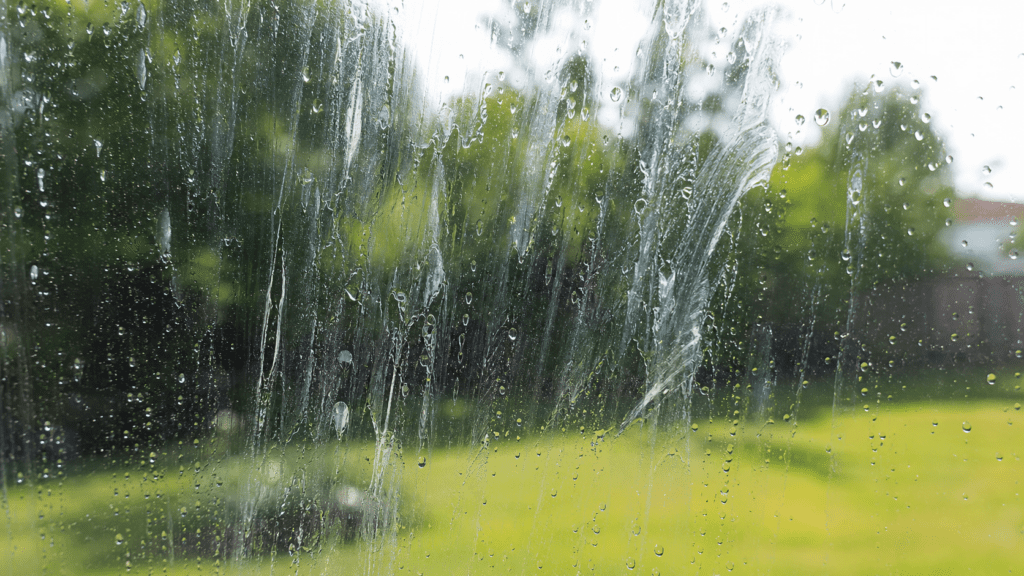
Streaks are almost never bad luck. They are a record of something that went wrong during the clean, and once you can read them you can stop them. The most common cause is the solution drying on the glass before you wipe it, which is why a window cleaned in full sun smears so easily while the same window in shade comes out clear.
The second culprit is residue. Too much soap, or a cleaner heavy with additives, leaves a thin film that dries into cloudy lines. A dirty or overused cloth does the same thing from the other direction, dragging yesterday’s grime across today’s glass. Hard water is the quiet third cause: the minerals in ordinary tap water dry into faint spots even when your technique is perfect.
Once you know the three triggers, the fix is obvious. Work out of direct sun, use less cleaner rather than more, and dry with something clean and lint-free. Everything else in this guide is built on those three ideas.
How to Clean Windows Streak-Free, Step by Step
With the right cloth, a squeegee, and a shaded window, the actual process is quick. The order matters more than speed, because each step sets up the next: dust before you wet, wash before you squeegee, and dry the edges before they have a chance to run. Work one pane or section at a time so the solution never dries ahead of you.
Read your own glass as you go. If a section starts to haze while you are still working, your solution is drying too fast, and you should move into shade or wet a smaller area at a time.
- Pick a cloudy day or a shaded window. Keep the glass out of direct sun so nothing dries before you wipe.
- Dust the glass and screens first. Brush or vacuum loose dust and pollen so you are not turning grit into a paste.
- Mix a simple solution. A few drops of dish soap in water, or distilled water with a splash of vinegar for hard water.
- Wash from the top down. Wet one section at a time and scrub from the top so dirty water never crosses clean glass.
- Squeegee in a reverse-S. Pull from the top corner in overlapping passes, wiping the blade after each stroke.
- Dry the edges and sill. Run a dry microfiber cloth around the perimeter to catch pooled water.
- Buff out leftover streaks. Polish any marks with a second clean, dry cloth before the glass fully dries.
The Squeegee Technique That Prevents Streaks
The squeegee is what separates a clear window from a smeared one, and it rewards a little practice. Start with the blade flat against the top corner of the glass and pull it across in one smooth pass, tilting it slightly so the runoff sheds toward the part you have not done yet. Then come back to the top and overlap that first pass by an inch or two, working down the pane in a connected reverse-S so you never lift the blade and leave a line.
The detail most people skip is wiping the blade after every single stroke. A squeegee that carries dirty water from the last pass will lay it right back down as a streak, so keep a dry cloth in your other hand and clear the rubber each time. A fresh, flexible blade matters too; a nicked or hardened one drags and chatters instead of pulling a clean sheet of water.
Finish by drawing the squeegee straight across the very bottom, then drying the thin band of water that always collects on the sill. That last wipe is the difference between glass that looks done and glass that dries with a row of drip marks along the frame.
Inside vs. Outside: Where the Streaks Actually Are

When a streak survives your best effort, it is often on the side you are not looking at. There is a simple way to find out: clean the inside with horizontal strokes and the outside with vertical ones. When a streak remains, the direction it runs tells you instantly which face of the glass it is on, so you are not buffing the wrong side over and over.
The two sides also carry different grime, which is why one cleaner pass rarely fixes both. Outside glass collects pollen, rain spotting, and sprinkler overspray, while inside glass picks up dust, cooking film in kitchens, and the faint haze from heating and air conditioning. Exterior windows usually need the wash step more than a quick wipe, especially after an Ohio storm season.
For second-story windows, resist the urge to lean out over a sill. A squeegee on an extension pole, or a hose-fed brush from the ground, handles the height far more safely than balancing on a ladder with a bucket in one hand.
Dealing With Hard-Water Spots and Mineral Stains
Hard-water spots are the streaks that ordinary cleaning will not touch, and they are common across central Ohio because the local water carries a lot of dissolved minerals. They show up most where a lawn sprinkler clips the glass, or where rain runs off a mineral-coated screen and dries in place. What you are seeing is not dirt sitting on the surface so much as a thin crust bonded to it.
White vinegar is the everyday fix. Warm it slightly, soak a cloth, and hold it against the spots for a few minutes to soften the deposit before you wipe, then rinse with distilled water so you are not laying down fresh minerals as you finish. For stubborn buildup, a dedicated mineral or lime remover made for glass works, applied to the cloth rather than sprayed across the whole pane.
Never reach for a razor blade, steel wool, or an abrasive pad on a hazy window. They scratch glass permanently, and worse, they can damage the low-E coating on modern energy-efficient panes. If a deposit will not lift with vinegar and patience, it is better to ask a glass pro than to risk scoring the surface.
Do Not Forget the Screens, Tracks, and Frames
Clean glass behind a dirty screen does not stay clean for long. The next rain pushes dust off the mesh and right back onto the pane, so it pays to pull the screens, brush them, and rinse them before you ever wet the glass. Let them dry flat while you work, then set them back once everything is buffed.
The tracks and frames are where most of the hidden grime lives. Vacuum the channel first to lift loose dirt and dead bugs, then wipe it with a damp cloth, working into the corners with a cotton swab or an old toothbrush. A dry track also helps the sash slide and keeps water draining the way it should, which matters once Ohio’s freeze-thaw cycle starts pushing moisture around the frame.
Wipe the frames last, top down, so any drips land on glass you can squeegee again rather than on a finished sill.
When Cleaning Won't Help: Fog Between the Panes
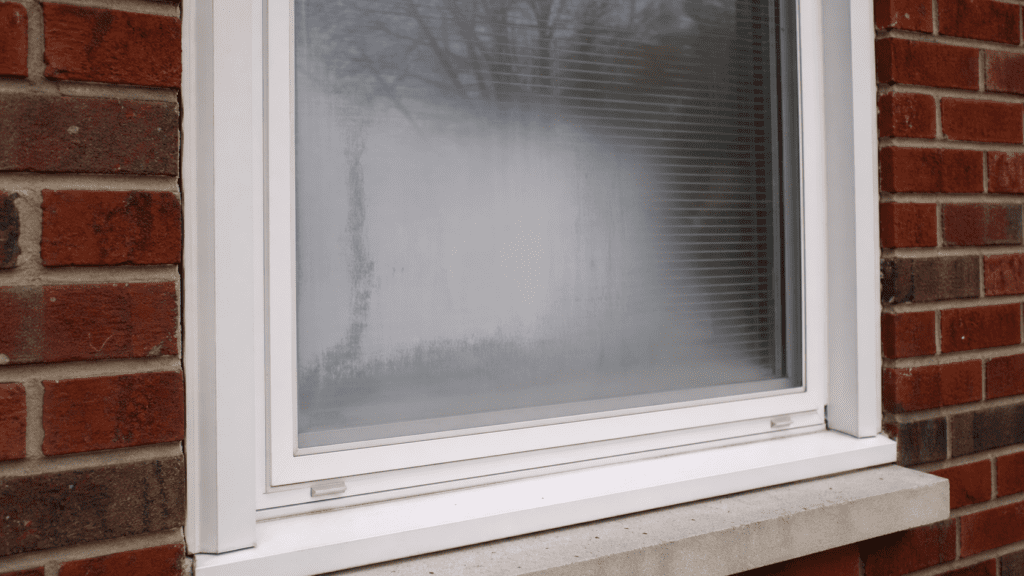
Sometimes a window looks permanently hazy no matter how many times you clean both sides, and the reason is that the haze is not on a surface you can reach. Modern windows are sealed double-pane units, two sheets of glass with an insulating gap between them. When that seal fails, moisture seeps into the gap and fogs the glass from the inside of the sandwich.
On a lot of older Columbus homes, what gets called a window that will not come clean is really a failed seal in a double-pane unit. The cloudiness sits inside the glass, where no cloth or cleaner can ever reach it.
No cleaning method fixes a blown seal, and the fog usually gets worse through Ohio’s freeze-thaw swings as the trapped moisture expands and contracts. The repair is to replace the insulated glass unit rather than the whole window, which our page on insulated glass replacement walks through. If you are wiping the same window for the third time with no change, that is the likely answer.
Want a Second Opinion on Cloudy Glass?
If a window stays foggy or spotted after a careful clean, a quick look tells you whether it is surface mineral buildup, a failing seal, or glass that has reached the end of its life. There is no sense scrubbing the same pane every week when the fix is underneath the surface.
Book a free, no-pressure glass assessment from our Columbus-area team and get a straight answer on cleaning, repair, or replacement.
FAQ: Cleaning Windows Streak-Free

Ready to fix your windows? Get a free quote in 30 seconds.
Family-owned, licensed & insured. Free, no-obligation quotes.