
An arched window is the one shape that makes people stop and look up. The curved top breaks the grid of square openings that every other window on the street follows, and it pulls daylight in from a higher angle than a flat header ever could. That distinctive look is also why an arch costs more and asks for a little more thought than a plain rectangle.
This guide covers what actually counts as an arched window, the shapes you can choose from, whether they open, the materials and glass that decide how one performs, and the cost factors behind the higher price. If you are planning a remodel or a replacement that involves a curved opening, the shape of that opening drives most of the decisions ahead.
Quick answer: Arched windows are windows with a curved or semicircular top, prized for natural light and curb appeal. Most are fixed, so they do not open, and nearly all are custom-built to the opening, which raises the price. They are worth it when the look matters and you pair them with operable windows for ventilation.
What Counts as an Arched Window
An arched window is any window topped by a curve instead of a straight, flat head. The terms round top and arch get used interchangeably for the same thing, and you will hear both at a showroom and on a quote. The curve can be a full half-circle, a low gentle rise, or a sharp point, but the defining trait is the same: a radius across the top where a rectangle would have square corners.
The shape is old enough to feel permanent rather than trendy. Arched openings run from Roman aqueducts through Gothic cathedrals, which is part of why they read as classic on a house instead of dated. In a home they usually sit high on a wall, over an entry, crowning a stairwell, or stacked above a row of regular windows to finish a tall gable end.
Arched windows are rarely the only window in a wall. More often the curve tops a larger composition, either as a single feature over a door or as the cap on a stack of working windows below it. That pairing matters, because the arch itself often does not open, and the window under it is what carries the daily work.
The Main Arched Window Shapes
The word arched covers a whole family of shapes, and the one you pick changes both the look and how it fits a wall. Some are full, dramatic curves built for height; others are shallow and wide, made to crown an opening under a normal ceiling. Knowing the names keeps a conversation with an installer from getting lost in catalog terms.
The shapes below are the ones you will actually be offered for a house, drawn from both modern replacement lines and older architectural styles.
- Half-round. A true semicircle, the classic arch with a full curve across the top, common over doors and large picture windows.
- Eyebrow. A long, shallow, gentle rise, well suited to a wide window or a lower ceiling where a full arch would not fit.
- Elliptical. A stretched, flatter arch for wide openings under a standard ceiling height, where a half-round would be too tall.
- Quarter-round. A single quarter of a curve, often used to soften a corner or end a run of windows.
- Full circle. A complete round window, also called a porthole or rose window, common in gables and stair landings.
- Gothic or pointed. Two curves meeting in a point at the top, borrowed from cathedral and Tudor styles for a vertical, formal look.
- Palladian. Not one window but an assembly, with a tall arched center flanked by two shorter rectangular windows on each side.
Do Arched Windows Open, or Are They Fixed?
Most arched windows are fixed. The glass is direct-glazed into the frame, meaning it is sealed into a stationary curved sash with no hinges, cranks, or tracks. Makers build them this way on purpose: a curve is far stronger and easier to seal when nothing has to move, and a fixed pane gives the biggest unbroken view and the cleanest sightline.
The trade-off is ventilation, and it matters more in Ohio than the brochures admit. Hot air rises, so the top of a room is exactly where you want a path for summer heat to escape, yet a fixed arch sitting up there can only trap it. In a humid July, a tall fixed window over a stairwell turns the upstairs landing into an oven by mid-afternoon.
Operable arched windows do exist, but the cleaner answer is usually to pair a fixed curve with a window that opens beneath it. A crank-out casement under the arch lets the room breathe while the curve above stays sealed, strong, and maintenance-free. You get the architecture without sealing the room shut.
The Smart Combination: An Arch Over a Working Window
The setup that solves most arched-window compromises is also the most common one you will see: a fixed arch stacked directly over one or more operable windows. You keep the curve and the high daylight, and the window below does the real work of opening, venting, and letting you reach the glass to clean it.
The pairing also puts the seal where it belongs. The fixed arch is the part you never touch, so its sealed glass stays undisturbed for years, while the double-hung or casement below takes the daily use that eventually wears out hardware. A Palladian window is this same idea taken wide, with operable units flanking a fixed arched center.
There is a code reason to think this way too. A bedroom or a finished basement needs an operable window large enough to climb out of in a fire, and a fixed arch never qualifies on its own. Stacking the curve over a working unit lets you have the look without giving up a required exit or a way to air the room out.
Materials: Vinyl, Wood, Fiberglass, and Aluminum
An arched window comes in the same four frame materials as any other window, but the curve raises the stakes on each one. A bent frame and a curved insulated unit move and flex more than a flat one, so the material’s stability decides how long the seal and the shape hold up. In a climate that swings from humid summers to hard freezes, that stability is not a small thing.
Each material handles the curve and the Ohio weather differently, and the right pick depends mostly on how exposed the window is.
- Vinyl. The most affordable and lowest-maintenance option; it molds easily to a curve, though color choice is limited and a cheap extrusion can look flat.
- Wood. The richest look and the only one you can refinish, but it swells, shrinks, and rots without a sheltered spot and regular sealing.
- Fiberglass. The most dimensionally stable; it barely moves through humidity and freeze-thaw, so a curved seal stays tight, at a higher price.
- Aluminum. Strong and slim-framed, but it conducts cold and can sweat on the inside face during a hard Ohio cold snap.
The curved sealed unit is the part most sensitive to movement, so on an exposed wall the stability of fiberglass or a clad frame earns its price. On an older home, a cracked or leaded pane in a wood arch can often be repaired on its own rather than rebuilding the whole curve.
What Drives the Cost of an Arched Window
Arched windows cost more than the rectangle next to them, and it helps to know why before you price a project. The single biggest factor is that almost every arch is custom. Stock sizes barely exist for curves, so the unit is built to your exact radius, and custom work carries a custom price no matter the brand.
From there, several choices push the number up or down. None of them are mysterious once you see them laid out.
- Size and radius. A larger or unusual curve means more material and a harder build than a small, standard one.
- Frame material. Vinyl sits at the low end, with wood and fiberglass costing more for the same shape.
- Fixed or operable. An arch that opens adds hardware and a mechanism, which raises its price over a direct-glazed unit.
- Glass package. Double versus triple panes, Low-E coatings, and tempered or laminated glass each add to the unit.
- Grilles and decorative glass. Divided lites, leaded, or stained patterns are extra labor on top of the base window.
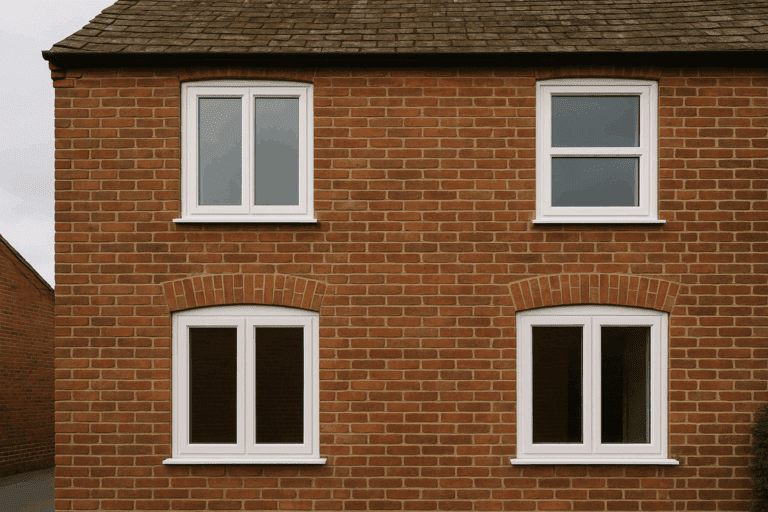
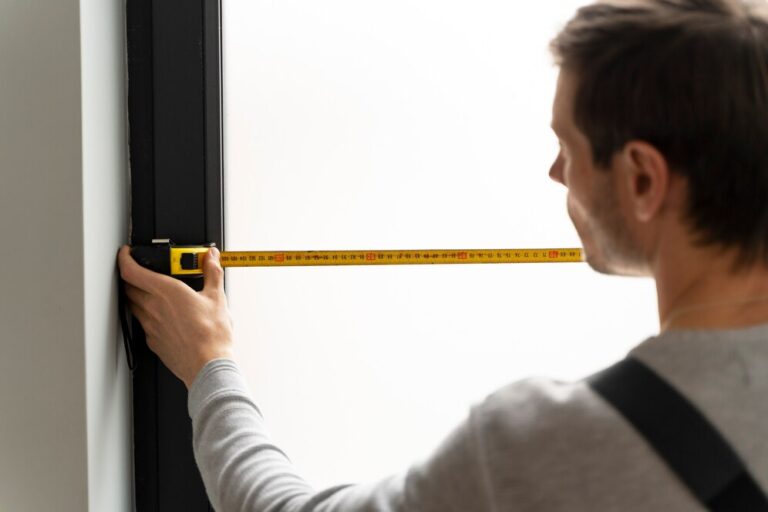
- Installation. A curved opening has to be measured and framed precisely, which takes more skilled time than a square swap.
The way to keep the cost sane is to settle the shape and size first, then choose the glass and grilles to fit the budget. Cutting corners on the installation is the false economy here, because a curve framed even slightly off will never seal right and will cost more to chase later.
Glass, Grilles, and Energy in a Curved Unit
A wide expanse of glass high on a wall is a wide path for heat to move, so the glass package matters more on an arch than on a small window. A double-pane unit with a Low-E coating and argon fill is the sensible baseline for this climate. Triple-pane is worth a look on a west or south wall that takes hard afternoon sun and on a tall two-story foyer window that dumps heat up high.
The detail that catches people out is the seal itself. A curved insulated unit has a bent spacer and a longer perimeter to seal than a flat one, and that curve is the first place it tends to give out. Through the freeze-thaw swings of a Columbus winter the seal flexes a little with every cycle, and an arched fixed pane is often the first window in a house to fog up between the panes.
When that happens, the curve has not failed, only the sealed unit inside it, and the foggy glass can be replaced without tearing out the frame. For looks, grilles between the glass or simulated divided lites trace the arch into smaller panes and suit an older home, while a single clear pane keeps a modern arch open and uncluttered.
Window Treatments for the Curved Top
The question that surprises new arched-window owners is how to cover the thing. A curved top will not take a standard blind or shade, so the privacy and glare you manage easily on a rectangle become a real decision at the top of the window. It is the one practical drawback that catalogs tend to skip.
Three approaches cover most homes. Many people leave the arch bare and treat only the rectangular window below it, which keeps the architectural shape on display and works well when the curve sits high and out of the sight-line. Where privacy or heat is a genuine problem, custom arch-shaped shades and fan-style blinds are made to the exact radius, at a custom price to match. An operable arch with blinds sealed between the glass skips both the dusting and the measuring.
On a sunny elevation, the bare arch is also where solar gain pours in during the afternoon. A Low-E coating on the glass does more for comfort there than any fabric ever will, so it is worth treating the glass first and the covering second.
Replacing or Restoring an Old Arched Window
Older Columbus and Cincinnati neighborhoods are full of original arched and segmental windows, from Italianate brick fronts to Queen Anne gables. Replacing one is rarely a matter of ordering off a shelf. No two old arches are exactly alike, and many that look like clean half-circles have flattened or pulled slightly off-center over a century of settling.
On older homes around Columbus, the arch you measure is almost never a perfect half-round. The opening has shifted over the years, so we template the actual curve on site and build the unit to that line. Order a stock half-circle for an old segmental opening and it fights the frame the whole way in.
In a historic district like German Village, a replacement may also need to match the original divided-lite pattern rather than drop in a single clear pane. Either way the curve has to be traced and measured, not guessed, which is why an arched replacement leans on careful on-site work far more than a square window ever does.
Are Arched Windows Worth It for Your Home?
An arched window earns its place when the curve genuinely lifts the room or the facade, and when you plan around the two things the shape gives up: easy ventilation and an off-the-shelf fit. Pair it with an operable window, choose the glass for how exposed the wall is, and make sure the curve is measured exactly rather than ordered as a standard size.
Book a free, no-pressure window assessment with our Columbus and Cincinnati team, and get a straight read on the right shape, material, and glass for your opening.
FAQ: Arched Windows

Ready to fix your windows? Get a free quote in 30 seconds.
Family-owned, licensed & insured. Free, no-obligation quotes.