

A cracked tabletop doesn’t just look bad—it’s a safety hazard waiting to happen. Replacing damaged or outdated glass restores function, protects your family, and refreshes your space. This guide walks you through damage assessment, glass types, customization, measurement, costs, installation, and maintenance so you can make smart decisions for a safe, durable upgrade.
Quick Decision Checklist: Should You Replace Your Glass Tabletop?
Replace immediately if you see cracks, deep scratches, or chips.
Signs of Damage: When Replacement is Non-Negotiable (Cracks, Deep Scratches, Chips)
A small chip expands under weight, turning a minor flaw into a dangerous break. I’ve restored glass elements in dozens of homes, and I’ve seen untreated cracks shatter when someone set down a hot dish. Inspect edges and surfaces regularly. If damage penetrates the glass depth, skip repair and replace.
Reasons for an Upgrade: Improving Safety, Aesthetics, and Functionality
Upgrade when your current glass lacks safety features or clashes with your decor. Tempered glass cuts injury risk by 75% compared to standard glass. Thicker options support heavier loads without flexing. Aesthetically, frosted or tinted glass transforms a room’s feel. Functionally, it stabilizes surfaces for daily use. A Columbus client replaced scratched annealed glass on their dining table with tempered low-iron glass, boosting safety and brightening the room.
Key Benefits of a New Glass Top (Safety, Value, Easy Maintenance, Modern Look)
New glass enhances safety with shatter-resistant materials that minimize sharp fragments. It adds property value through durable, high-quality materials buyers notice. Maintenance simplifies—smooth surfaces wipe clean without residue. The modern look integrates with contemporary furniture, creating sleek appeal.

Choosing the Right Glass: A Comparison of Your Main Options
Here are the key points to know about Choosing the Right Glass: A Comparison of Your Main Options.
Tempered Glass: The Safety Standard for Most Tables
Pros: Withstands impacts four times better than standard glass, shatters into safe, dull pieces.
Cons: Cannot be cut or altered after tempering.
Tempered glass handles high-traffic areas. Heat-treated for strength, it breaks into pebble-like pieces if shattered. I’ve installed it in homes where families needed reliable surfaces for kids’ play areas. If you drop a plate on tempered glass, it might crack, but it won’t send shards flying.
Laminated Glass: The Enhanced Safety & Security Option
Pros: Holds together when shattered, blocks 99% of UV rays, dampens sound.
Cons: Costs 30-50% more than tempered, thicker and heavier.
Laminated glass bonds layers with a plastic interlayer, preventing shards from scattering. It protects furniture below from sun damage. Suited for homes with pets or noisy environments, though its weight requires sturdy frames. Think car windshield—it cracks but stays intact.
Annealed (Standard) Glass: For Low-Risk Protective Covers
Pros: Most affordable, cuts to any shape on-site.
Cons: Breaks into large, dangerous shards; unsafe for standalone tabletops.
Annealed glass works as an overlay on wood tables but lacks strength for unsupported use. Fabricators cut it to custom shapes economically, yet safety limits application to low-risk scenarios like desk protectors.
Glass Alternatives: When to Consider Acrylic or Polycarbonate
Pros: Lightweight, resists shattering better than glass.
Cons: Scratches easily, yellows over time from UV exposure.
Acrylic or polycarbonate fits lightweight, portable tables. These materials handle impacts well outdoors but need protective coatings to avoid scratches. If you move furniture often or have kids who roughhouse, acrylic takes abuse without breaking.
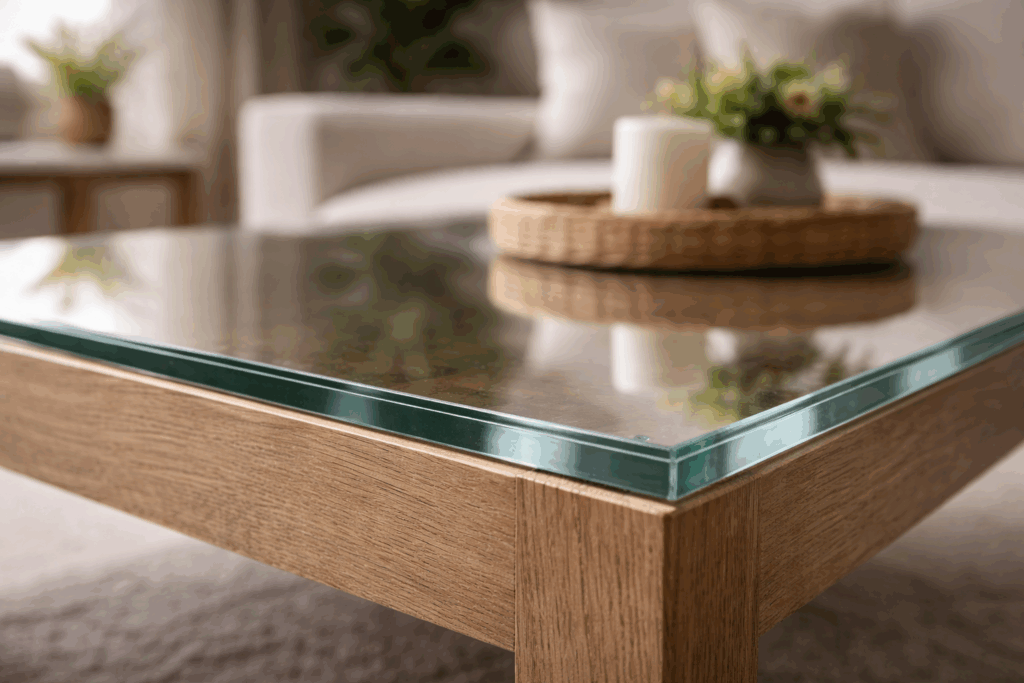
Customizing Your Tabletop: Thickness, Edges, and Finishes
Thickness dictates weight capacity and sag resistance.
How to Choose the Right Glass Thickness
Thicker glass costs more but lasts longer under heavy use.
| Thickness | Recommended Use | Weight Capacity Example |
|---|---|---|
| 1/4″ (6mm) | Protective covers, small tables, inserts | Up to 50 lbs on 24″ span |
| 3/8″ (10mm) | Unsupported tabletops, coffee tables, dining tables up to 48″ | Up to 100 lbs on 36″ span |
| 1/2″ (12mm) | Heavy-duty, large dining tables, commercial use | Up to 200 lbs on 60″ span |
For spans over 48 inches, consult a professional to prevent sagging. I once saw a homeowner use 1/4″ glass on a 60″ table—it bowed within a month.
Edge Work Explained: From Standard Polish to Decorative Finishes
Flat Polish: Clean, minimalist look with sharp 90-degree corners.
Beveled Edge: Angled, sophisticated border that catches light.
Pencil Edge: Rounded, C-shaped edge that prevents cuts.
Ogee & Other Decorative Edges: For traditional or statement furniture with ornate curves.
Edges affect safety and style. Rounded options prevent cuts, especially with kids around. Decorative edges add elegance but cost $5-10 more per linear foot. Flat polish suits modern designs, beveled fits vintage appeal.
Specialty Glass Options for a Unique Look
Low-Iron (HD) Glass: Ultra-clear, colorless transparency without greenish tint.
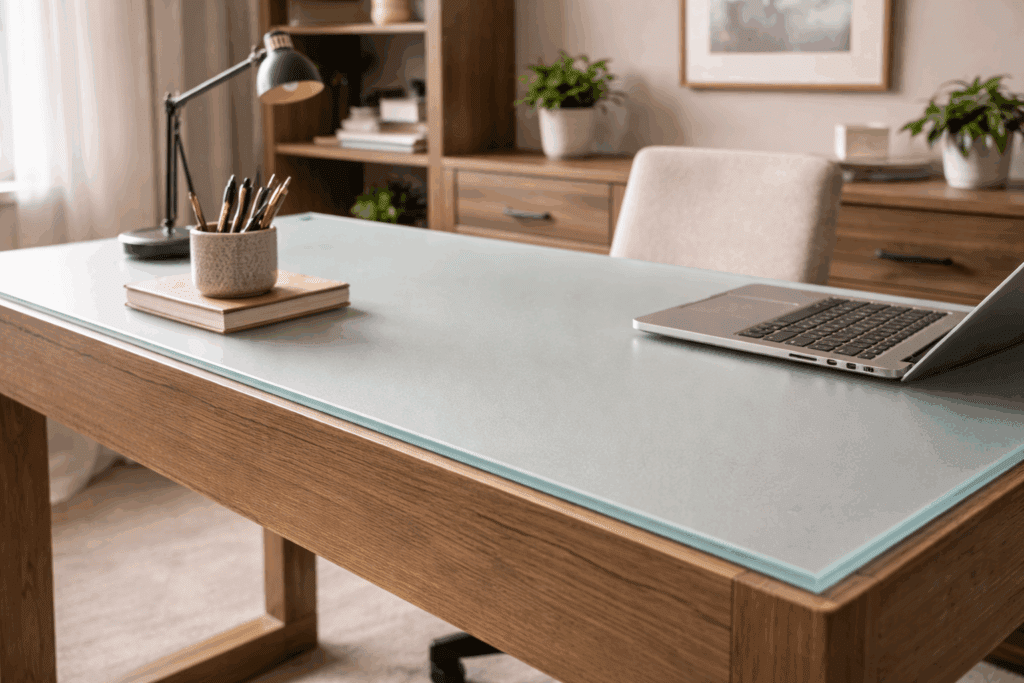
Frosted (Acid-Etched) Glass: Privacy and soft, diffused light for offices or bedrooms.
Tinted Glass (Bronze/Gray): Reduces glare and adds subtle color to bright rooms.
Low-iron glass eliminates the greenish cast standard glass has, giving crystal clarity. Frosted provides texture, ideal for desks where you don’t want people seeing papers. Tinted cuts sunlight intensity in south-facing rooms.
How to Measure for a Perfect Fit: A Step-by-Step Guide
Gather a tape measure, level, pencil, paper, and cardboard for templates.
Essential Tools You’ll Need for Accurate Measurement
A digital caliper helps verify thickness if replacing existing glass. Measure twice, order once—a mistake costs time and money.
Measuring Standard Shapes: Square, Rectangle, and Round
For squares or rectangles, measure length and width at three points—left, center, right. Tables aren’t always perfectly square. Record the smallest dimension to ensure fit. Add 1/8 inch overhang if you want glass to extend past the frame. For rounds, measure diameter across the center, not along the edge.
Measuring Complex Shapes: Ovals, Racetracks, and Custom Templates
Trace the shape on cardboard, marking key points like curves and corners. For ovals, measure major axis (longest point) and minor axis (shortest point). Send templates to fabricators for exact cuts. I’ve seen DIYers eyeball oval measurements and end up with glass 2 inches too short.
The Cost of Replacement: What to Budget For
Tempered glass starts at $10 per square foot, laminated at $15.
Primary Cost Factors: Glass Type, Size, Thickness, and Edge Work
Larger sizes and thicker options increase prices. Decorative edges add $5-10 per linear foot. A 24×24 inch tempered piece with flat polish costs around $60-80 for glass alone.
How Installation Affects the Price (DIY vs. Professional)
DIY saves $100-200 but risks errors. Professional installation adds $150-300, ensuring proper handling and fit. For large or heavy tops, many homeowners prefer scheduling professional glass fabrication and replacement service to avoid breakage during handling. If the table sits near windows or doors, it’s also a good time to check nearby glazing for damage that may require insulated glass seal restoration. Older furniture placed by windows often suffers moisture exposure, so surrounding wood components sometimes need repair of deteriorated wooden window elements. And when budgeting both tabletop and adjacent glazing upgrades together, using a quick window and glass project cost planner helps prevent costly surprises.
Example Cost Scenarios (Small Coffee Table vs. Large Dining Table)
A 24×24 inch tempered coffee table costs $150-250 total with delivery. A 72×42 inch dining table with beveled edges runs $500-800, including professional installation. Custom shapes or specialty glass (low-iron, frosted) add 20-30% to base price.

Installation: DIY vs. Hiring a Professional
DIY fits small, lightweight pieces under 30 pounds.
When a DIY Replacement Makes Sense (Small, Simple Shapes, Protective Covers)
Use suction cups for handling and silicone adhesive pads for securing. A 24-inch round coffee table top is manageable alone. Wear gloves and safety glasses—edges are sharp even after polishing.
When to Call a Pro (Large/Heavy Glass, Complex Shapes, Safety-Critical Tables)
Hire professionals for pieces over 50 pounds or complex shapes. At Window Gurus, we handle installations with precision tools and two-person teams. A 72-inch dining table weighs 80-100 pounds—dropping it means injury and $500 down the drain.
What to Look for in a Glass Replacement Service
Seek BBB A+ ratings, positive reviews on Yelp and Angi, and experience with custom glass. Ensure they offer warranties (at least one year) and quick turnaround (under four weeks). Ask if they measure on-site to avoid errors.
Special Considerations and Common Problems
Use tempered glass for UV and temperature resistance.
Outdoor & Patio Tables: Weather and Safety Concerns
Outdoor glass endures 100-degree swings without cracking. Secure against wind with heavy bases or adhesive pads. Avoid annealed types—they crack in cold snaps below 20°F.
The “Spontaneous Shattering” Phenomenon Explained (And Why Tempered Glass is Key)
Tempered glass rarely shatters spontaneously, but it happens when internal stresses or nickel sulfide impurities expand. It crumbles into harmless pieces, unlike annealed glass that sends shards flying. I’ve seen one case in ten years—a patio table shattered overnight. Tempered glass prevented injury.
Custom vs. Ready-to-Ship Glass: Which is Right for You?
Custom fits unique shapes but takes 2-4 weeks for fabrication. Ready-to-ship suits standard sizes (24×24, 36×36, 48-inch rounds) for faster delivery at lower cost. If your table is standard, save time and money with ready-made options.

Care and Maintenance: Protecting Your New Investment
Use microfiber cloths and a vinegar-water solution (1:1 ratio).
Best Practices for Streak-Free Cleaning
Spray, wipe in circles, then buff dry. Avoid ammonia-based cleaners—they leave residue. For stubborn spots, use rubbing alcohol on a cloth. Clean weekly to prevent buildup.
How to Prevent Scratches, Chips, and Damage
Place felt pads under objects to prevent scratches. Avoid dragging items across the surface. Use coasters for hot dishes—temperature shocks crack glass. Inspect quarterly for chips or cracks. Catch issues early before they spread.
Frequently Asked Questions (FAQ)

Ready to fix your windows? Get a free quote in 30 seconds.
Family-owned, licensed & insured. Free, no-obligation quotes.