

Foggy windows are usually caused by excess indoor humidity, poor airflow, or a failing insulated-glass seal—and the fix depends on where the moisture is forming. In this guide, we’ll show fast DIY steps to reduce condensation and when it’s smarter to bring in a pro for foggy window repair. If the issue is tied to drafts, loose hardware, or worn seals, start with a targeted window repair assessment to stop heat loss before it damages frames. Planning a bigger upgrade? Use the window cost calculator to estimate pricing, then request a call to confirm the best solution for your home.
First, Identify Where the Fog Is: Inside, Outside, or Between the Panes?
Inside condensation forms when warm, moisture-laden air contacts cold glass, turning vapor into droplets.
Condensation on the Inside: The Most Common Issue (Caused by High Indoor Humidity)
Daily activities drive this: cooking releases steam, showers add half a gallon of moisture per use, and even drying laundry indoors pumps humidity into the air. Over my decade at Window Gurus, I’ve fielded hundreds of calls during Ohio winters, and 80% trace back to indoor humidity exceeding 50%. Wipe the glass with a dry cloth. If droplets reappear within minutes, your home’s air holds too much moisture.
High humidity doesn’t just fog windows. It breeds mold on sills, warps wooden frames, and forces your furnace to work harder, spiking heating costs by 10-15%. Track humidity with a hygrometer. Readings above 50% in winter or 60% in summer demand action.
Condensation on the Outside: Often a Sign of High-Efficiency Windows
Outside fog appears on energy-efficient windows that trap indoor heat so effectively the exterior glass cools below the dew point. This happens on humid mornings when outdoor air saturates with moisture. It’s not a flaw; it’s proof your windows perform as designed, reflecting heat back inside instead of bleeding it outdoors.
I’ve inspected homes across Columbus where homeowners panicked over exterior fog, only to discover their new double-pane installations were working perfectly. Outside condensation clears as the sun warms the glass, typically within an hour. If it persists unusually long or appears in dry weather, check for obstructions like dense shrubs blocking airflow around the window.
Fog Trapped Between the Glass Panes: A Sign of a Broken Seal
Fog between panes results from a failed seal allowing air and moisture to infiltrate the insulated space. Double-pane windows rely on airtight seals and insulating gas—argon or krypton—to maintain efficiency. When seals crack from age, thermal stress, or poor installation, gas escapes and moisture seeps in. This fog doesn’t wipe away because it sits inside the unit, degrading insulation performance by 30% or more.
Inspect for hazy spots that remain constant regardless of indoor conditions. This requires professional diagnosis and repair, not DIY wipes or sprays. Ignoring it cuts your window’s R-value from 3 down to below 1, turning your investment into a drafty liability.

How to Stop Condensation on the Inside of Your Windows
Wipe windows with a microfiber cloth dampened with a mild soap solution to remove fog instantly and prevent streaks.
Immediate Fixes for Quick Relief
Open windows for 10 minutes daily, even in winter, to flush humid air outdoors and replace it with drier air. Place silica gel packs or moisture absorbers near sills to capture overnight condensation before it soaks into frames.
These fixes buy time but don’t address the underlying humidity problem. Use them as stopgaps while you implement longer-term strategies.
Long-Term Prevention: Control Your Home’s Humidity
Maintain indoor humidity at 30-40% in winter and 40-50% in summer. Use a hygrometer to monitor levels room by room. Run exhaust fans during showers and cooking to expel steam at the source before it spreads. A whole-house dehumidifier removes 20-30 pints of moisture daily, preventing recurrence across your entire home.
In one Cincinnati home I restored, the owners ran a portable dehumidifier in their basement, which housed a laundry room. Within two weeks, condensation on their first-floor windows dropped by 60%, and their heating bills fell by $40 per month.
Avoid overwatering houseplants near windows. Plants transpire moisture, boosting local humidity by 10-15%. Group them away from glass or reduce their numbers.
Long-Term Prevention: Improve Air Circulation
Install ceiling fans to circulate air and prevent stagnant pockets near windows. Even in winter, running fans on low speed pushes warm air down from ceilings, evening out temperatures and reducing the temperature differential that causes condensation.
Add trickle vents to window frames for constant fresh air intake without drafts. These small openings allow passive ventilation, exchanging indoor moisture for drier outdoor air. In one Columbus living room I worked on, installing trickle vents eliminated fog in a stuffy space where the homeowner rarely opened windows due to noise concerns.
Move furniture and heavy drapes away from windows to allow air to flow freely across the glass. Blocked airflow traps moisture and cools the glass surface, accelerating condensation.
Long-Term Prevention: Insulate Your Windows and Home
Apply weatherstripping to seal gaps around window frames, blocking cold drafts that chill the glass and create uneven temperatures. Gaps allow outdoor cold to penetrate, dropping the interior glass temperature below the dew point. Quality weatherstripping costs $10-20 per window and installs in under an hour.
Add thermal curtains or cellular shades to insulate glass at night, when outdoor temperatures plummet. These window treatments create an air barrier, raising the interior glass temperature by 5-10°F and cutting condensation by 40%.
Upgrade to low-E coatings on your glass. Low-emissivity films reflect indoor heat back inside, warming the interior pane and reducing the temperature gap that triggers fog. Retrofitting existing windows with low-E film costs $5-10 per square foot and pays back in energy savings within three years.

What to Do About Fog Between the Window Panes
Seals break from age, thermal stress, or poor installation.
Why It Happens: The Science of a Failed Window Seal
Over time, UV exposure degrades the sealant, creating microscopic cracks. Daily temperature swings expand and contract the glass, stressing the seal until it fails. Once compromised, insulating gas escapes and moisture infiltrates the space between panes.
This creates fog as temperatures fluctuate. Warm days vaporize trapped moisture, which condenses on cooler glass surfaces. Over time, mineral deposits from the water etch the glass, leaving permanent stains even after the fog clears. The unit’s R-value drops from 3 to below 1, eliminating the energy efficiency you paid for.
Can You Fix a Broken Window Seal Yourself? (DIY vs. Professional)
DIY seal fixes involve drilling small holes in the glass, injecting desiccant to absorb moisture, and resealing the holes. These kits cost $20-50 and promise quick results. In practice, they succeed in under 10% of cases. Moisture removal is incomplete, and the seal remains compromised, allowing new moisture to enter within months.
Professionals use specialized equipment to vacuum out moisture, refill the space with insulating gas, and reseal the unit with industrial-grade sealants. This process requires precise tools and expertise to avoid cracking the glass or damaging the frame. I advise calling experts for multi-pane units to avoid further damage and ensure the repair lasts.
At Window Gurus, we’ve seen dozens of failed DIY attempts that cost homeowners more in the long run when they eventually called us to fix both the original problem and the damage from their repair attempt.
The Permanent Solution: Window Pane or Full Window Replacement
Replace the foggy pane if the frame remains sound and structurally intact. This costs $200-500 per unit and restores clarity and insulation without altering the window’s appearance. It’s the best option for newer windows with isolated seal failures.
Opt for full window replacement in older windows where the frame shows signs of rot, warping, or repeated seal failures. Full replacement costs $600-1,000 per window but delivers better energy savings, modern features like low-E coatings, and warranties covering future seal failures.
In historic Cincinnati homes, we’ve swapped panes in original wood-framed windows, restoring clarity without altering the period-correct frames that define the home’s character. For mid-century homes with aluminum frames showing corrosion, we recommend full replacement with vinyl or fiberglass units that eliminate future maintenance and cut heating costs by 20-30%.

Understanding the Root Causes of Window Condensation
Condensation occurs when air cools to its dew point, the temperature at which it can no longer hold moisture as vapor.
The Science of Condensation: Temperature, Humidity, and the Dew Point
Water releases as liquid droplets on any surface below that temperature. Warm air holds more moisture than cold air. A 70°F room at 50% humidity contains twice the moisture of a 50°F room at the same percentage.
Windows condense because glass conducts heat rapidly, cooling its interior surface below the dew point when outdoor temperatures drop. A single-pane window at 30°F outdoors and 70°F indoors has an interior glass temperature around 45°F, well below the dew point for typical indoor humidity levels.
Track dew points with weather apps to predict fog. When outdoor dew points rise above 60°F and indoor humidity exceeds 50%, expect condensation on any glass surface cooler than the dew point.
Key Factors That Increase Indoor Humidity (Cooking, Showers, Plants)
Cooking releases steam from boiling water, simmering sauces, and baking. A single pot of pasta adds a pint of moisture to the air. Showers add half a gallon per use, saturating bathroom air and spreading moisture throughout the home if not vented. Plants transpire water through their leaves, with large specimens releasing a cup or more daily.
Overcrowded houseplants near windows boost local humidity by 10-15%, creating microclimates that fog glass even when the rest of the home stays dry. Limit plants in window areas or group them away from glass.
Unvented gas appliances, like older stoves and heaters, release moisture as a byproduct of combustion. A gas stove running for an hour can add two gallons of moisture to the air. Ensure proper ventilation or switch to electric appliances in tightly sealed homes.
The Critical Role of Ventilation in a Modern Home
Tight modern homes trap humidity without proper ventilation. Energy-efficient construction seals leaks that once allowed passive air exchange, reducing drafts but also preventing moisture from escaping. Without mechanical ventilation, indoor humidity climbs, fogging windows and fostering mold.
Balanced systems like heat recovery ventilators (HRVs) exchange stale indoor air for fresh outdoor air while retaining heat, reducing moisture buildup by 25%. HRVs cost $1,500-3,000 installed but pay back in energy savings and improved air quality within five years.
In one Columbus home built in 2018, the owners complained of persistent window fog despite new triple-pane windows. We installed an HRV, which dropped indoor humidity from 60% to 40% within a week, eliminating condensation and cutting their heating costs by 15%.
Troubleshooting: Condensation in Specific Situations
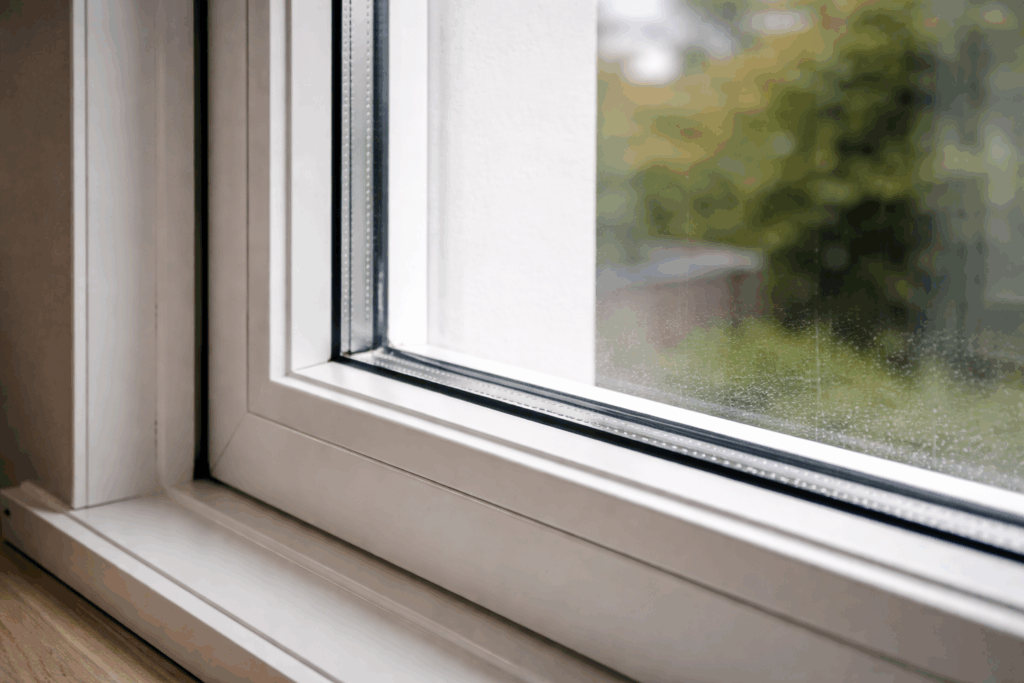
Winter worsens fog due to cold outdoor air chilling glass while indoor heating raises humidity.
Why Is Condensation Worse in Winter?
Indoor-outdoor temperature gaps of 40°F or more amplify this effect. A 70°F home with 50% humidity and 30°F outdoor temps creates ideal conditions for condensation on any glass surface below 50°F.
Cold glass acts as a condensation magnet, pulling moisture from the air faster than it can evaporate. In extreme cold, ice forms on the interior glass, melting into puddles as temperatures rise and soaking into sills and frames.
Insulate walls and attics to minimize temperature differentials. Proper insulation keeps interior surfaces warmer, reducing the gap that triggers condensation. Upgrading attic insulation from R-19 to R-38 raises interior wall temperatures by 5-10°F, cutting condensation by 30-40%.
Managing Fog in High-Moisture Areas: Kitchens & Bathrooms
Kitchens and bathrooms generate the most moisture in any home. Install extractor fans rated at 80 CFM or higher to remove steam fast. Run fans during cooking or showers and for 15 minutes afterward to clear residual moisture.
Use anti-fog sprays on glass for temporary barriers that prevent droplets from forming. These coatings work for a few weeks before requiring reapplication but provide immediate relief in high-use areas.
One client in Ohio fixed bathroom fog by upgrading to a timer-controlled fan that automatically ran for 20 minutes after each shower. The investment of $100 eliminated daily window wiping and prevented mold growth on the sill.
Keep bathroom and kitchen doors closed during high-moisture activities to contain steam. Open windows immediately after to vent moisture outdoors before it spreads to other rooms.
New Construction Homes and Window Fog Issues
New homes experience fog from curing materials releasing moisture. Concrete, drywall, and lumber contain water that evaporates over six to twelve months, saturating indoor air. This temporary condition fades as materials dry out.
Ensure builders include vapor barriers in walls and floors to speed resolution. Vapor barriers block moisture migration from foundations and exterior walls, reducing the load on your HVAC system.
Run dehumidifiers continuously during the first year to manage excess moisture. A 50-pint model removes enough water to keep humidity in check while materials cure.

Helpful Products and When to Call a Professional
Dehumidifiers extract excess water efficiently.
Products That Help: Dehumidifiers, Moisture Absorbers, and Window Films
A 50-pint model handles rooms up to 3,000 square feet, removing 30-50 pints daily and maintaining humidity at 40-50%. Models with built-in hygrometers and auto-shutoff cost $150-300 and pay back in energy savings within two years.
Moisture absorbers, such as DampRid buckets, work in small spaces like closets and near sills. They absorb up to a pint of moisture before requiring replacement, costing $10-20 and lasting two to three months.
Window films add insulation, reducing fog by 20%. Low-E films reflect indoor heat back inside, warming the interior glass surface and raising it above the dew point. Films cost $20-50 per window and install with basic tools in under an hour.
| Product | Best For | Cost Range | Effectiveness |
|---|---|---|---|
| Dehumidifier | Whole rooms | $150-300 | High (removes 30-50 pints/day) |
| Moisture Absorber | Closets/sills | $10-20 | Medium (absorbs up to 1 pint) |
| Window Film | Drafty windows | $20-50 | Medium (insulates, cuts fog 20%) |
When to Call a Window Expert: A Decision-Making Checklist
Call professionals if fog persists after humidity control efforts, seals appear damaged or cracked, or energy bills spike despite normal usage. Check for mold growth on sills, frame warping, or difficulty opening and closing windows.
Window Gurus offers free assessments across Ohio to diagnose and resolve condensation issues. We inspect seals, measure humidity, and recommend targeted fixes that address root causes rather than symptoms.
If you’ve tried dehumidifiers, improved ventilation, and insulated windows without results, the problem likely lies in the window unit itself. Professional diagnosis identifies seal failures, frame damage, or installation defects that DIY efforts can’t fix.

FAQ: Your Window Condensation Questions Answered

Ready to fix your windows? Get a free quote in 30 seconds.
Family-owned, licensed & insured. Most quotes delivered the same day.