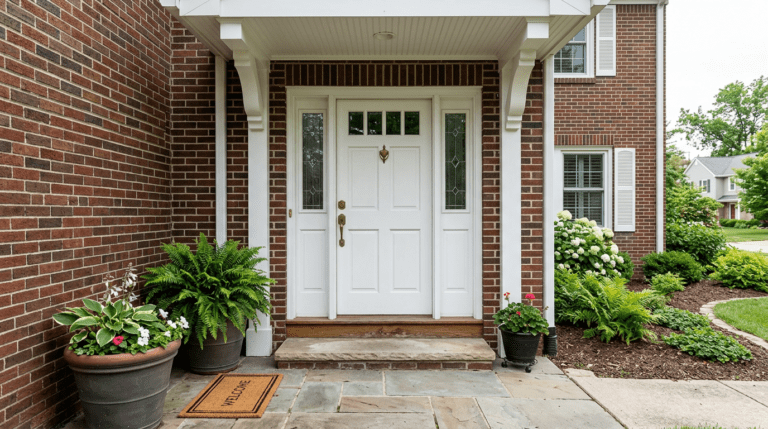
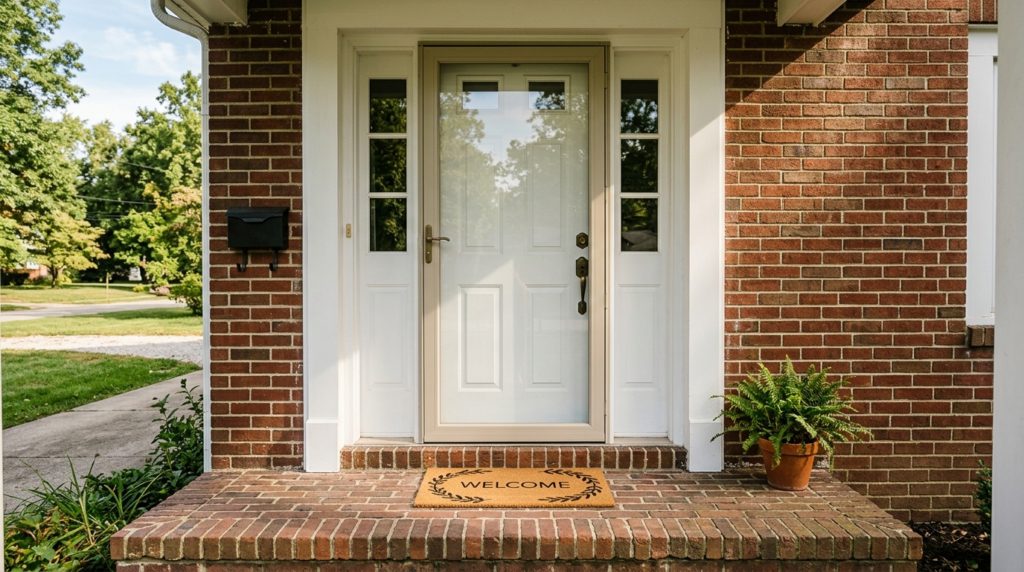
A storm door is the extra layer that takes the weather so your main entry door does not have to. Pick the right type and it adds light, fresh air, and an insulating pocket of still air. Pick the wrong one and it can trap heat against your front door or fog up every cold morning. The style you choose matters more than the brand on the box.
This guide walks through the storm door types by glass-and-screen layout, the materials they come in, what each one is good and bad at, and how to match a model to your entry and your climate. If you are also rethinking the door behind it, our overview of door styles and options is a good companion read.
Quick answer: The main types are full-view, mid-view, high-view, ventilating, retractable-screen, and security doors. Full-view shows the most glass and light, ventilating and retractable models prioritize airflow, and security doors add a reinforced frame and screen. Choose by sun exposure, how much you want to open it, and the door behind it.
What a Storm Door Is and How It Differs from a Screen Door
A storm door is a second, outer door mounted in front of your main entry door, usually built around a metal or composite frame with a glass panel and, often, a swap-in or built-in screen. Its job is to shield the entry door from rain, snow, wind, and sun while adding a pocket of still air that slows heat moving in or out. Because it carries glass, it works year-round, not just in summer.
That glass is the line between a storm door and a plain screen door. A screen door has only mesh, so it is a warm-season ventilation-and-bug solution with no winter insulation. A storm door gives you both: glass for the cold months and a screen for the warm ones. If you are still deciding between the two, our breakdown of storm doors versus screen doors compares them side by side.
The reason the type matters so much is that every storm door shares that frame-and-glass build but splits the opening up differently. How much of the door is glass, where the screen sits, and whether you can open part of it for air is exactly what separates one type from the next. That split is where this guide starts.
View Configurations: Full-, Mid-, and High-View Doors
The most common way storm doors are sorted is by how the glass and any solid or screen panels divide the face of the door. The three view styles below all use a fixed or seasonally swapped glass panel, and they differ mainly in how much glass you get and how much solid framing sits at the bottom.
More glass means more light and a clearer view, but also a larger pane to keep clean and a little less protection at the bottom from kicks, pets, and splashing rain. Less glass trades some view for a sturdier, easier-to-wipe lower half. Match the proportion to how the door is used and who uses it.
- Full-view: glass runs nearly the whole height for the most light and the clearest sightline, and many come with a swap-in screen panel for summer. Best where the view and curb appeal matter most.
- Mid-view: glass fills the upper two-thirds with a solid panel below, a balanced look that guards the bottom from scuffs while still letting in plenty of light. A common choice for busy family entries.
- High-view: glass sits only in the top section over a tall solid lower panel, the most protective layout for doors that take a beating from kids, pets, or weather-driven debris.
Ventilating, Retractable-Screen, and Security Doors
The next group is defined by how you bring air in rather than how the glass is arranged. These are the types to look at first if a cross-breeze and fresh air are the reason you want a storm door at all.
Each handles ventilation a different way, and each has a different part that can wear out, which is worth knowing before you buy. The choice often comes down to whether you want to store seasonal panels, slide a built-in screen, or never handle a screen at all.
- Ventilating: the glass splits into an upper and lower section, and you slide one open over a fixed screen for airflow without removing anything. Convenient, with no panels to store, though the sliding glass and its track need occasional cleaning.
- Retractable-screen: a hidden screen rolls down from the top, or up from the bottom, when you open the glass, then disappears into a housing when you want a clear view. No seasonal swap, but the roller and screen are the parts most likely to need service.
- Security (heavy-duty): a reinforced frame, heavier-gauge metal, a steel or aluminum security screen, and a deadbolt-ready lock turn the door into a real second barrier. The trade-off is weight and a more industrial look.
If your main reason for adding one is airflow, a ventilating or retractable model earns its keep. If it is protecting a back or side entry, the security build is the one to spec out.
What Storm Doors Are Made Of
Frame material decides how a door holds up to Ohio weather and how much upkeep it asks for. Most are built on one of four materials, and the differences show up over years of freeze-thaw cycles, sun, and slamming.
Aluminum is the default for a reason, but it is not the only sensible pick, and the right material depends on the door’s exposure and the look you want. The color and material also affect the entry door behind it, which the trade-offs section comes back to.
- Aluminum: light, rust-resistant, and affordable, usually wrapped over a foam or wood core for rigidity. The most common choice, though finishes can fade after many seasons in direct sun.
- Steel: the strongest option, used on most security doors, with a baked or powder finish. Heavier on the hinges and the entry frame.
- Fiberglass and composite: stable through humidity swings, will not rust, and resist warping, a good fit for damp or shaded entries.
- Wood: the traditional look for historic Columbus homes, but it needs regular paint or seal to survive moisture and is the highest-maintenance choice.
Why Homeowners Add a Storm Door
A storm door earns its place in a few concrete ways, and the size of each benefit depends on the door you already have. The biggest energy gains, for instance, go to homes with an older, leaky entry door, not a new, tightly sealed one.
The U.S. Department of Energy notes that an added door can cut heating and cooling losses on an older, drafty entry by a meaningful amount, mostly by trapping that buffer of still air. On a modern insulated door the energy case is smaller, and the reasons to add one shift toward light, air, and protection.
- Protects the entry door: takes the rain, snow, and sun so a costly wood or painted door behind it lasts longer.
- Adds an insulating air gap: the trapped layer of air slows heat loss in winter and heat gain in summer, most on a leaky old door.
- Brings in light and air: glass keeps the entry bright in winter, and a screen lets you open the main door for a breeze without bugs.
- Adds a barrier: a closed, locked outer door is one more layer between you and whoever is on the porch, and it muffles street noise.
The Trade-Offs You Should Know
Storm doors are not right for every entry, and the wrong choice can cause more trouble than no door at all. Two issues come up again and again in this climate, and both are about heat and moisture rather than the door’s build quality.
The first is heat buildup. On an entry that gets several hours of direct sun, a dark, full-glass model can trap a pocket of very hot air against the main door. The U.S. Department of Energy advises against one where the entry gets more than a few hours of direct sun a day, because that trapped heat can blister finishes and warp the door behind it.
On south- and west-facing entries around Columbus, we have watched a dark full-view door cook the slab behind it through a July afternoon, lifting the paint and bowing a fiberglass door. A lighter color and a ventilating panel usually solve it.
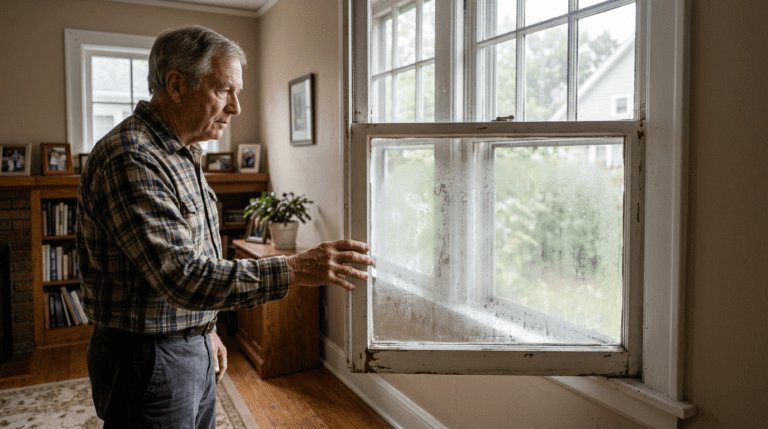
The second is condensation. In a cold Ohio winter, warm, humid indoor air meets the cold glass and frost or water forms, the same physics that fogs a failed window seal. Left to run, that moisture can pool on the threshold and rot it. A design with built-in venting and a frame that drains keeps it in check. If the fogging is on your main window glass instead, that points to a failed insulated-glass seal, which is a different repair.
- Heat trapping on sunny south or west entries can damage the main door, so choose a light color or a ventilating model.
- Winter condensation can rot a threshold if water is left to sit, so look for venting and drainage.
- Upkeep varies by material, with wood asking the most and aluminum needing little more than cleaning.
- Limited payback on a new, tight entry door, where the energy savings are small.
How to Choose the Right Type for Your Entry
With the styles and trade-offs in mind, choosing comes down to a short series of questions about your specific entry. Work through them in order and the field of options narrows quickly.
Start with sun, because it can rule out whole categories at once. Then weigh how you actually use the door, the door behind it, and your tolerance for maintenance. The goal is a match, not the most glass or the most features.
- Check the exposure. If the entry bakes in afternoon sun, lean toward a light color and a ventilating or retractable model, or reconsider a full-glass door entirely.
- Decide how much air you want. For frequent breezes, a ventilating or retractable-screen door beats a fixed full-view you have to swap panels on.
- Match the door behind it. A costly wood or painted entry wants light without trapped heat, and a stained slab is more sensitive to that heat than a white one.
- Weigh upkeep and security. Pick fiberglass or aluminum for low maintenance, wood for looks, and a steel security build for a vulnerable side or back entry.
- Confirm the fit and swing. Measure the opening and note which side hinges, since the door has to match the entry’s handing and the frame depth.
How Ohio Weather Tests a Storm Door
Beyond the type, this climate puts specific stresses on a storm door that decide how long it lasts and how well it works. Knowing them helps you spec the right hardware up front instead of fixing it later.
Storm-season wind is the first. A gust can catch an open door and tear it past its hinges, so a working hydraulic closer and a wind chain, the short cable that stops the door before it over-swings, are not optional on an exposed Ohio porch. The closer also keeps the door from slamming and cracking its own glass.
Freeze-thaw is the second. Water that collects in the frame or the bottom sweep freezes, expands, and pries at joints over a winter, and an out-of-square threshold, common in older Columbus homes, leaves gaps that an adjustable bottom expander has to close. If the opening or the entry behind it is in rough shape, that can be a sign the whole entry needs work, which is where new door and window installation comes in rather than hanging a fresh storm door over a failing one.
Not Sure Which Storm Door Fits Your Home?
The right choice depends on details a catalog photo will not show: which way your entry faces, how much sun it takes, the shape of the opening, and the condition of the door behind it. Guess wrong and you can cook a finish or end up storing panels you never wanted to handle.
Book a free, no-pressure entry assessment with our Columbus-area team, and we will help you match the type, glass, and hardware to your home before anything is ordered.
FAQ: Choosing a Storm Door

Ready to fix your windows? Get a free quote in 30 seconds.
Family-owned, licensed & insured. Most quotes delivered the same day.