 Reviewed by
 With over 10 years in the glass industry, I’ve helped thousands of customers find the perfect custom glass solution. This guide distills my experience into actionable steps for your project.
Key Takeaways
- 3 main options: local glass shops (fastest, best for repairs), big-box stores (limited to standard), online specialty (best for unusual shapes/tempered).
- Cost: $5–$15 simple cuts, $20–$50 large, tempered $25–$80. Add $15–$50 for shapes, $5–$20 polishing, $5–$15 per hole.
- Lead time: annealed same-day to 2 days, tempered 7–14 days, laminated 5–10, custom shapes 5–14. Plan ahead for any tempered work.
- 5 specs to provide: dimensions to 1/16″, thickness, glass type (annealed/tempered/laminated/low-E), edge finish, hole locations. Use paper templates for shapes.
- DIY OK for: thin annealed (1/8″), simple straight cuts, with $25 cutter + oil + straightedge. NEVER tempered (shatters when cut).
Find a Glass Cutting Service Near You: 3 Main Options
Here are the key points to know about Find a Glass Cutting Service Near You: 3 Main Options.
Option 1: Local Glass Shops & Glaziers (The Professional Choice)
Best for: Complex projects, safety glass, expert advice, and installation.
Pros: Highest quality, wide variety, expert measurement/installation services.
Cons: Higher cost, longer lead times.
“For anything structural or safety-critical like a shower door or tabletop, a professional glazier is non-negotiable. The risk of improper measurement or using the wrong glass type far outweighs any savings from DIY.”
In my time at Window Gurus, I’ve seen homeowners regret skipping a local glazier for intricate jobs. One client needed custom-cut glass for a historic home’s bay window. We handled the precise measurements and installation, ensuring the new panes matched the original architecture while improving energy efficiency. Local shops like ours offer on-site consultations, which prevent costly errors. They stock various glass types, including tempered and laminated options, and provide services beyond cutting, such as sealing and fitting. If your project involves doors or windows, a glazier ensures compliance with building codes.
Option 2: Big-Box Hardware Stores (e.g., Home Depot, Lowe’s)
Best for: Simple, non-safety glass cuts like window panes or picture frames.
Pros: Fast, inexpensive, convenient for basic needs.
Cons: Limited glass types (usually only annealed), cannot cut tempered glass, less precision.
Big-box stores suit quick fixes. Last year, I advised a client on replacing a small window pane after a storm. She picked up annealed glass at Lowe’s, cut on the spot for under $50. These stores handle basic rectangles and squares well, with staff using straightforward tools for cuts. However, they lack the equipment for tempering or complex shapes. If your need exceeds standard stock, expect to wait or seek elsewhere. For energy-efficient upgrades, like insulated units, big-box options fall short compared to specialized providers.
Option 3: Online Glass Suppliers
Best for: DIYers who know their exact specifications, specialty glass orders.
Pros: Huge selection, competitive pricing, convenient ordering.
Cons: You are responsible for measurements, no installation support, shipping risks.
Online suppliers expand choices for unique projects. I once sourced frosted glass online for a client’s privacy partition, which arrived precisely cut to our specs. Sites offering custom orders let you input dimensions, select thickness, and choose edges. They ship nationwide, often with tracking. Drawbacks include potential breakage during transit and the absence of hands-on help. At Window Gurus, we sometimes combine online sourcing with our installation for hybrid solutions, ensuring clients get the best of both worlds.
<МУЛЬТИМЕДИА> Comparison table summarizing the 3 options across key criteria: Cost, Speed, Glass Variety, Expertise, Best For. </МУЛЬТИМЕДИА>
Pro Tip: How to Vet Local Providers Using Google Maps
Search for “glass cut to size” or “glazier near me” in your area. Filter results by 4.5+ star rating. Scan reviews for mentions of “professionalism,” “on-time,” and “quality.” Check their photo gallery for examples of projects similar to yours.
From my experience, Google Maps uncovers reliable locals fast. I recommend calling two or three top-rated shops to discuss your project. Look for providers with A+ BBB ratings, like Window Gurus, where client feedback highlights our punctuality and durable results. This step avoids fly-by-night operations and ensures you partner with experts who value precision.

What Are You Building? (Common Projects & Glass Needs)
Here are the key points to know about What Are You Building? (Common Projects & Glass Needs).
Glass Tabletops & Desk Protectors
Recommended Glass: Tempered for safety.
Thickness: 1/4″ for protective tops, 3/8″ or 1/2″ for standalone tabletops.
Tabletops demand durability to handle daily use. I restored an oak dining table for a family in Columbus by adding a 3/8″ tempered glass top, which protected the wood while allowing its grain to show. Tempered glass resists impacts and heat, essential for surfaces near kitchens. For desk protectors, thinner options suffice if the base is sturdy. Always factor in the table’s size; larger spans need thicker glass to prevent sagging.
Custom Glass Shelving
Recommended Glass: Tempered.
Thickness: 3/8″ to 1/2″ depending on span and weight load.
Shelves support weight, so tempered glass prevents hazardous breaks. In a recent project, we installed 1/2″ tempered shelves in a Cincinnati bookstore, spanning 48 inches and holding heavy volumes without flexing. Calculate load: for books or decor, 3/8″ works for shorter spans under 36 inches. Brackets influence choice; stronger hardware allows thinner glass. This setup enhances storage while maintaining a sleek look in modern homes.
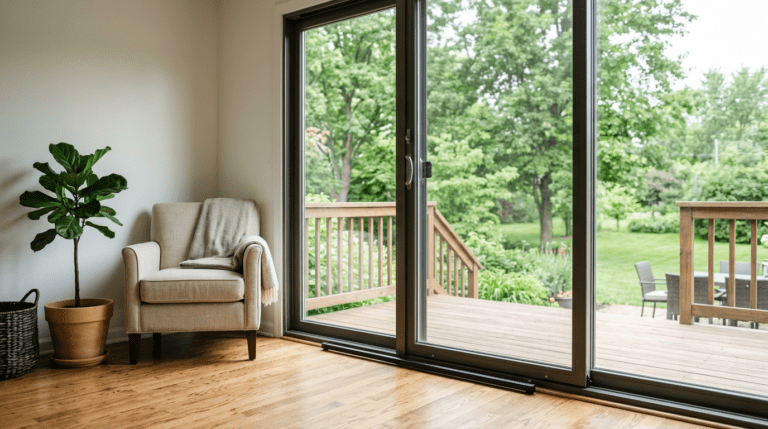
Window or Door Glass Replacement
Recommended Glass: Annealed for standard windows, Laminated or Insulated (IGU) for improved safety and energy efficiency.
Key Consideration: Match the existing glass type and thickness exactly.
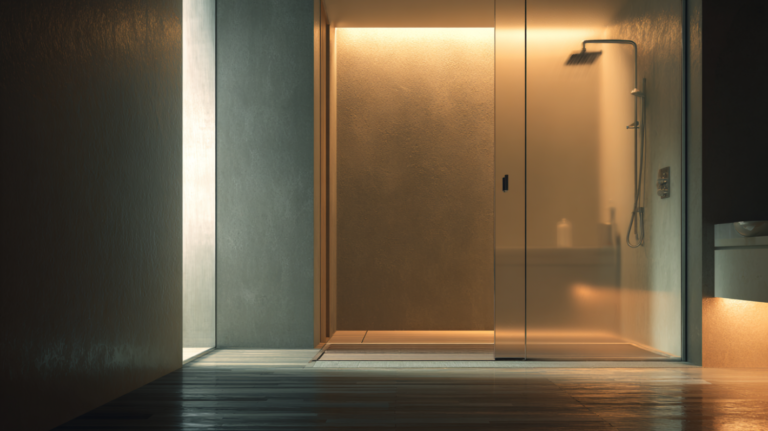
Shower Enclosures & Partitions
Recommended Glass: Tempered is required by building codes.
Thickness: 3/8″ or 1/2″ is standard for frameless doors.
Shower glass must withstand moisture and impacts. We fitted a frameless 1/2″ tempered enclosure for a client, ensuring it met code for shatter resistance. Thicker glass provides stability in larger setups. Clear or frosted options balance privacy and light. Proper sealing prevents leaks, a common issue I’ve fixed in dozens of bathrooms.
Picture Frames & DIY Projects
Recommended Glass: Annealed or Plexiglass.
Thickness: 1/8″ is typically sufficient.
For frames, annealed glass offers clarity at low cost. A DIY enthusiast I worked with used 1/8″ pieces for custom art displays, cut quickly at a local shop. Plexiglass suits lightweight needs, like mobile exhibits. These projects rarely require tempering, keeping expenses down while protecting contents from dust.

Your Pre-Order Checklist: Defining the Glass Specifications
Annealed (Standard): Breaks into large, sharp shards.
Step 1: Choose Your Glass Type (Safety vs. Standard)
For low-risk applications only.
Tempered (Safety): 4-5x stronger. Shatters into small, dull pebbles. Used for doors, tables, showers.
Laminated (Safety): Two glass sheets with a vinyl interlayer. Stays intact when broken. Used for windshields, skylights.
Select glass type based on risk. Tempered suits high-traffic areas, as I’ve recommended in countless consultations. Laminated adds noise reduction, ideal for urban homes. Cost rises with safety features, but they prevent injuries.
<МУЛЬТИМЕДИА> Simple comparison table: Annealed vs. Tempered vs. Laminated, highlighting Strength, Safety (break pattern), and Cost. </МУЛЬТИМЕДИА>
Step 2: Select the Right Thickness
Thickness affects strength and weight. Use 1/8″ for frames, 1/4″ for tabletops under light use, 3/8″ for shelves, and 1/2″ for heavy-duty doors. In one job, switching to 3/8″ tempered resolved a sagging shelf issue, supporting 50 pounds per square foot.
Step 3: Pick an Edge Finish
Seamed Edge: Edges are lightly sanded to be safe for handling. Not decorative.
Polished Edge: Smooth, glossy, and aesthetically pleasing. The standard for visible edges.
Beveled Edge: An angled, decorative edge cut along the perimeter.
Edges define the finish. Polished works for modern looks, while beveled adds elegance to tabletops. I’ve seen seamed edges suffice for hidden installations, saving costs without compromising safety.

How to Order: A 4-Step Guide from Measurement to Installation
Rule: Measure twice, order once.
Step 1: Measure Accurately (The #1 Mistake to Avoid)
Use a quality tape measure.
For rectangles/squares: Provide exact Width x Height.
For cutouts/notches: A precise diagram is essential.
Accurate measurements prevent returns. I’ve fixed many botched orders from poor measuring. Focus on the opening, not old glass.
Pro Tip: Always measure the opening, not the old glass. Deduct 1/8″ from the total width and height to allow for expansion and easy fitting.
Step 2: Gather Information for a Quote
Have this ready when you call: Dimensions, Glass Type, Thickness, Edge Finish, Quantity.
Prepared details speed quotes. In my practice, clients with specs ready receive estimates in minutes, avoiding delays.
Step 3: Compare Quotes & Choose Your Provider
Don’t just compare price. Consider lead time, reputation (reviews), and included services (delivery/installation).
Evaluate beyond cost. Window Gurus clients value our Yelp reviews praising quick turnarounds and expert installs.
Step 4: Place the Order & Understand Lead Times
Confirm all details on the order form before paying. Ask for an estimated completion date. Custom tempered glass takes longer due to the heating process.
Review orders thoroughly. Tempered pieces often need 10 days, based on our production timelines.
Advanced Customization: Specialty Glass & Shapes
Here are the key points to know about Advanced Customization: Specialty Glass & Shapes.
Specialty Glass Types
Frosted (Acid-Etched): For privacy with a smooth, durable finish.
Tinted (Bronze/Gray): Reduces glare and adds a decorative look.
Insulated Glass Units (IGU): Two panes sealed together for energy efficiency.
Fire-Rated Glass: Specialized ceramic glass for fire-rated walls/doors.
Specialty glass elevates projects. We used tinted IGUs in a home office to cut glare and heat, dropping energy bills by 20%.
Plexiglass & Acrylic: When to Choose It Over Glass
Use when lightweight properties and high impact resistance are more important than scratch resistance. Good for boats, RVs, and child-safe projects.
Plexiglass weighs half as much as glass. I recommend it for mobile setups where durability trumps clarity.
5
Frequently Asked Questions (FAQ)
Quick answers to common reader questions, drawn directly from real search intents.
Price depends on type, thickness, size, and edge work. A simple 1/4″ annealed glass shelf might be $20-40, while a large 1/2″ tempered tabletop could be $300+.
Three main options: (1) local glass shops — best for residential repairs, faster turnaround (1–7 days), better pricing on standard cuts ($10–$40 per cut depending on size); (2) hardware stores (Home Depot, Lowes) — limited to standard sizes, free cuts on glass purchased there but no shapes; (3) online specialty retailers (CutMyGlass, OneDayGlass) — best for unusual shapes and tempered glass, 5–10 day shipping. Find local shops by searching “glass cut to size” + your zip code on Google Maps; check ratings and reviews before ordering.
Standard annealed glass: $5–$15 per cut for simple rectangles up to 24″×36″. Larger sizes: $20–$50. Tempered glass (must be ordered, can’t be cut after tempering): $25–$80 per piece depending on size. Custom shapes (round, oval, with notches): add $15–$50 per shape complexity. Edge polishing: add $5–$20. Drilling holes: $5–$15 per hole. Bulk orders (10+ pieces): typically 15–30% discount. Always get written quotes — verbal estimates often miss specialty fees.
Standard rectangular annealed glass: same-day to 2 days at most local glass shops. Tempered glass: 7–14 days because tempering happens AFTER cutting (can’t be modified after). Laminated safety glass: 5–10 days. Custom shapes (round, oval, beveled): 5–14 days depending on complexity. Polished edges add 1–2 days. Plan ahead for any tempered glass project — there’s no shortcut to the fabrication time.
Yes for thin annealed glass (1/8″ or 3/32″) for simple straight cuts. You’ll need: glass cutter ($10–$25), cutting oil ($5), straightedge, gloves, and safety glasses. Process: score with cutter in one smooth motion, position over a thin rod or pencil, apply pressure to break along score line. Limitations: cannot cut tempered glass (will shatter), cannot cut thick glass over 1/4″ reliably without proper tools, cannot make precise curves without templates. For anything beyond simple rectangles in thin glass, use a pro.
Five measurements for any custom glass order: (1) length and width to nearest 1/16″ (use a metal tape, not a fabric measure); (2) thickness in inches (1/8″, 3/16″, 1/4″, 3/8″ most common); (3) glass type (annealed, tempered, laminated, low-E); (4) edge finish (raw cut for hidden, seamed for low-visibility, flat polished for premium, beveled for decorative); (5) any holes/cutouts with dimensions and locations. For shapes: provide a paper template traced to actual size, NOT just dimensions.
Top 6: (1) tabletop replacements (round, oval, rectangular) — most common; (2) shelf glass (for built-ins, display cases); (3) picture frame glass; (4) cabinet door inserts; (5) shower enclosure panels (always tempered, often custom-cut); (6) window pane replacements for older sashes (single-pane). Less common but available: clock face glass, terrarium panels, mirror cuts, decorative leaded glass replacements. Annealed handles most non-safety applications; tempered required for showers, tables, doors per code.