
- Services
- New Installation
- Reviews
- Projects
- About Us
- Contacts
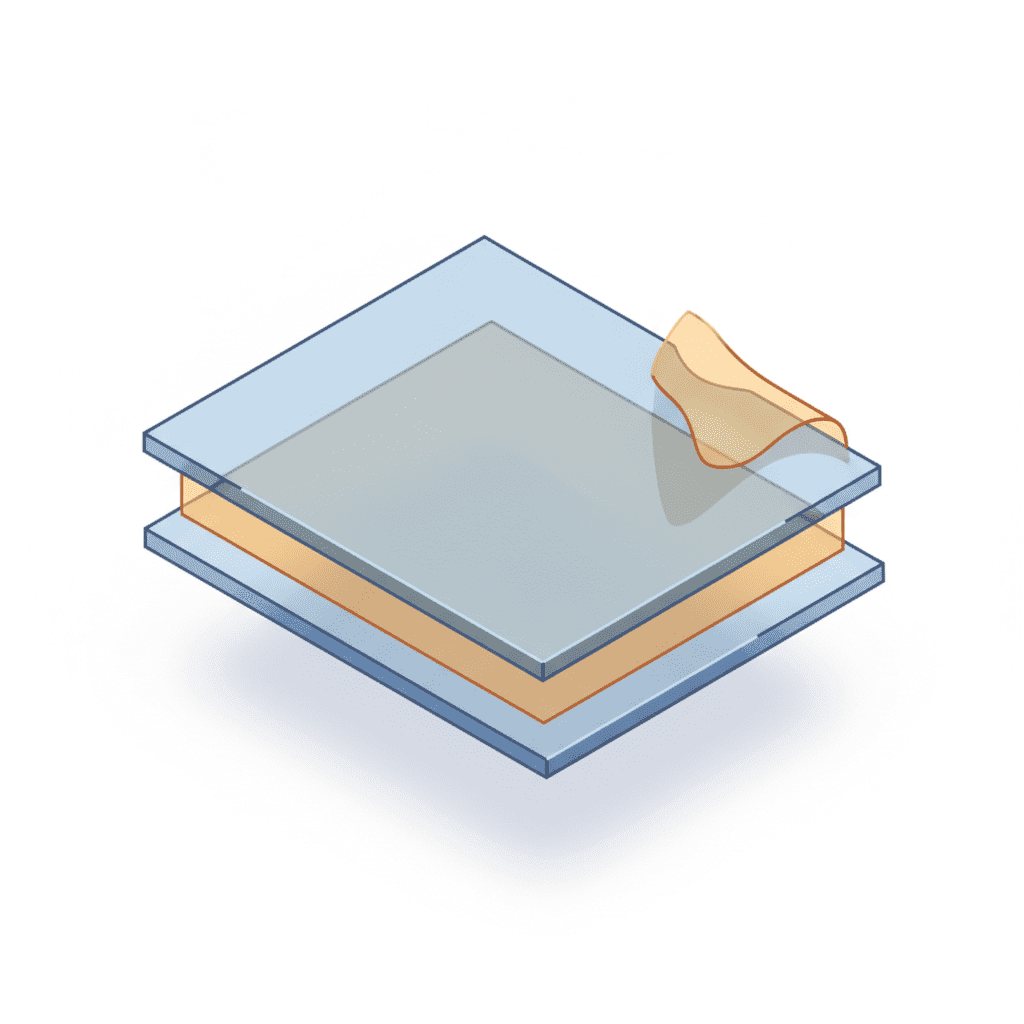
Safety glass made by bonding two or more glass panes around an interlayer of polyvinyl butyral (PVB) film, so that when broken, the fragments stay adhered to the film rather than scattering.
Safety glass made by bonding two or more glass panes around an interlayer of polyvinyl butyral (PVB) film, so that when broken, the fragments stay adhered to the film rather than scattering.
Laminated glass is made by permanently bonding two sheets of glass around a polyvinyl butyral (PVB) interlayer under heat and pressure. The PVB film is the key: when laminated glass breaks, the fragments adhere to the interlayer rather than scattering as dangerous shards. The glass may crack extensively, but the pane holds together — making it a critical safety and security product.
| Property | Laminated | Tempered |
|---|---|---|
| Break pattern | Cracks but stays in frame | Shatters into small cubes |
| Security | Excellent (intruder must hit repeatedly) | Poor (single blow shatters) |
| Sound reduction | Good (PVB dampens vibration) | Minimal added benefit |
| UV blocking | 99%+ (PVB blocks UV) | No UV benefit |
| Hurricane/impact | Yes (with impact-rated PVB) | No (not impact rated) |
| Cost | Higher | Moderate |
Laminated glass can be combined with the double-pane IGU format — typically as the interior pane — to combine thermal insulation with safety, security, and sound attenuation in a single unit.

Contact us now for a free estimate and take the first step toward repairing your windows!
Please leave your contact details.
The manager will contact you shortly.

