
- Services
- New Installation
- Reviews
- Projects
- About Us
- Contacts
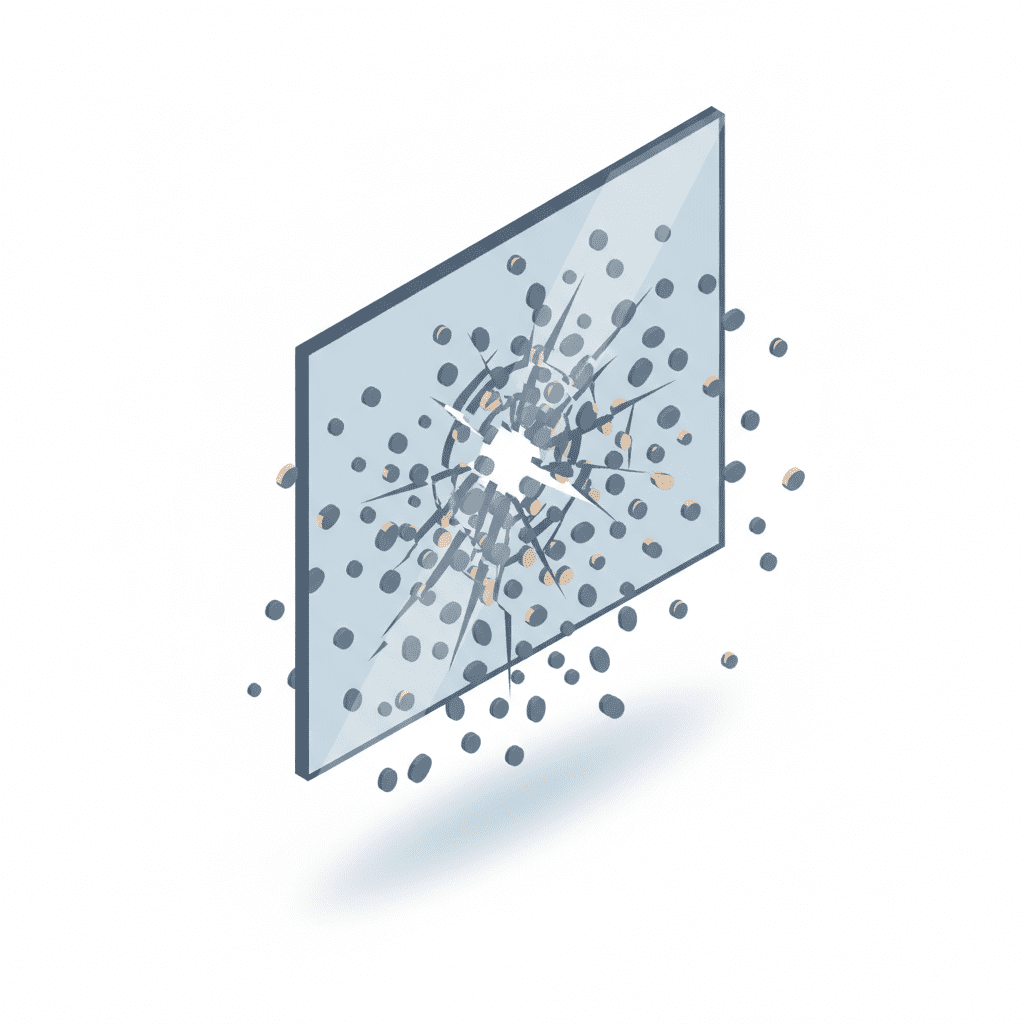
Safety glass that has been heat-treated to be approximately four times stronger than standard glass, and that shatters into small, blunt granules rather than sharp shards when broken.
Safety glass that has been heat-treated to be approximately four times stronger than standard glass, and that shatters into small, blunt granules rather than sharp shards when broken.
Tempered glass (also called toughened glass) is produced by heating standard float glass to approximately 1200°F, then rapidly cooling it with jets of air. This thermal treatment puts the surface layers of the glass into compression and the interior in tension, dramatically increasing its resistance to mechanical stress and thermal shock.
The International Residential Code (IRC) mandates tempered or safety glass in specific window locations where breakage risk is elevated:
When tempered glass breaks, the stored internal tension causes it to fracture into thousands of small, roughly cubical pieces with blunt edges—dramatically reducing the risk of laceration compared to standard glass, which breaks into large sharp shards.
Tempered glass has a small etched stamp in one corner indicating the manufacturer, thickness, and safety rating (ANSI Z97.1 or CPSC 16 CFR 1201). It cannot be cut or drilled after tempering—if dimensions need to change, a new piece must be cut and then re-tempered.
Tempered glass costs approximately 20–40% more than standard float glass of the same dimensions and thickness. For a standard 24×36-inch window, the difference is typically $30–$70.

Contact us now for a free estimate and take the first step toward repairing your windows!
Please leave your contact details.
The manager will contact you shortly.

