Between-the-glass blinds promise the look of a shaded window without the dangling cords, the dust, or the slats your cat bends out of shape. The blind lives inside the sealed glass, where you move it with a slider or a small motor, and it never touches the air in your room. For a lot of homeowners that sounds close to perfect, and in the right spot it is.
The catch is what the brochures skip. A shade sealed inside a window stops being a window treatment and becomes part of the glass itself, which changes how it fails, how you fix it, and what it costs to live with over twenty years. This guide covers how the blinds work, the honest pros and cons, how they hold up in an Ohio climate, and the kind of glass and seal issues that decide whether they were a smart buy.
Quick answer: Between-the-glass blinds are a slat shade sealed inside the insulated glass unit, operated by a magnetic slider or motor instead of cords. They stay dust-free and child-safe, but they cost more, offer fewer colors, and if the sealed unit fogs or the mechanism jams, the whole glass pane gets replaced, not just the blind.
What Between-the-Glass Blinds Actually Are
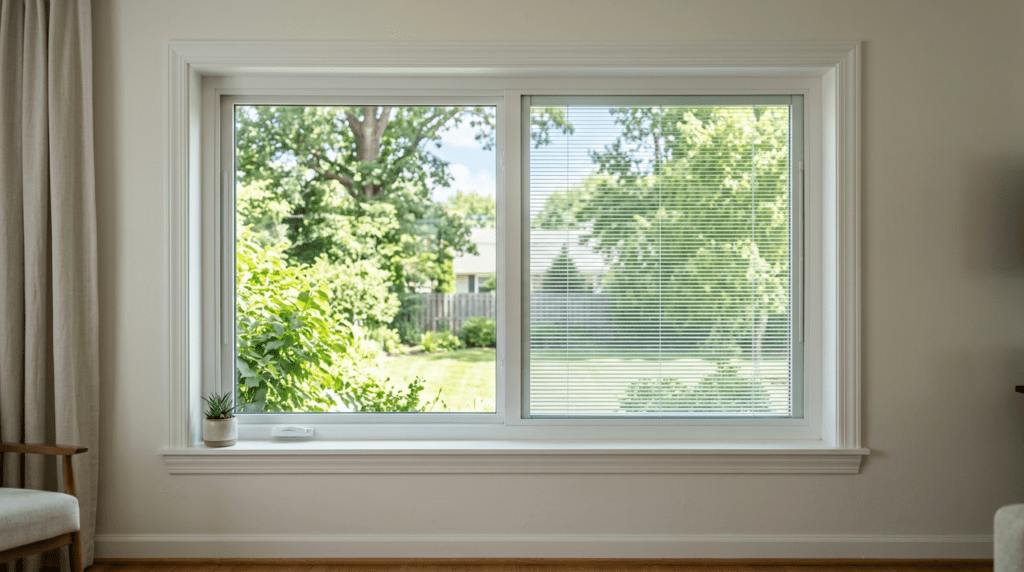
A standard energy window is an insulated glass unit: two panes of glass with a sealed air space between them. Between-the-glass blinds, sometimes sold as built-in or integral blinds, place a thin Venetian-style shade inside that sealed space during manufacturing. The slats sit in the cavity that would otherwise hold only air or insulating gas, fully enclosed by the two panes.
Because the shade is sealed in, nothing about it is exposed to your room. There are no cords hanging down, no slats collecting kitchen grease, and no fabric for a pet to chew. You see a clean pane of glass with a blind suspended inside it, and a single control on the frame to raise, lower, or tilt the slats.
That sealed design is the whole appeal, and also the whole problem. The same enclosure that protects the slats also means the blind and the glass are now one component. You cannot take the shade down the way you would lift a conventional blind off its brackets. Understanding that trade is the key to every pro and con that follows.
How the Slats Are Controlled
Every built-in shade needs a way to move the slats without breaking the seal, so the control sits on the frame and links to the blind magnetically or mechanically. Three systems cover almost everything on the market, and the one a window uses affects both convenience and what can wear out later.
The most common is a magnetic slider. A small handle on the outside of the frame holds a magnet that couples to a matching magnet on the shade inside. Slide it up or down and the blind follows; twist or nudge it and the slats tilt. Nothing pierces the glass, so the seal stays intact.
Higher-end units replace the slider with a motor. A hidden drive, powered by a battery pack, a small solar strip, or household wiring, lifts and tilts the slats at the push of a button or from a phone app, and many tie into Alexa, Google Home, or HomeKit. A few older or budget designs still use an external pull cord routed through a sealed port, which works but reintroduces the cord you were trying to avoid.
What People Like About Them
The reasons homeowners choose sealed-in blinds are practical, not cosmetic, and they hold up in daily use. The shade is protected from the two things that ruin ordinary blinds fastest: dust and handling. Tucked behind glass, the slats do not gather the film of pollen and cooking residue that turns white blinds gray, so cleaning means a quick wipe of the glass rather than wrestling with every slat.
Safety is the other big draw, especially for families. With the controls built into the frame and no loose cord anywhere, there is nothing for a toddler or a pet to get tangled in, which is the exact hazard that cord-free designs were created to remove. The list below sums up what owners tend to value most.
- No cords to clean or untangle, and nothing dangling within a child’s reach.
- Dust-free slats that stay protected from grease, pollen, and pet damage.
- A clean, streamlined look with the blind hidden inside a single pane of glass.
- Easy operation from one slider or button, with no separate curtain hardware needed.
- Clear sills, handy over a kitchen sink or behind furniture where reaching a normal blind is awkward.
The Drawbacks Worth Knowing First
None of the drawbacks make sealed-in blinds a bad product, but they all trace back to the same fact: the shade and the glass are one sealed unit. That single design choice drives the cost, the color limits, and the repair picture, so it is worth weighing before you commit.
Price comes first. Built-in blinds are a specialty item, and a window that carries one costs noticeably more than the same window with a shade hung on the wall. You are also locked into a narrower palette. Because the slats are sealed in at the factory, colors run to neutral whites, beiges, and grays, and you cannot restyle them later the way you would swap a curtain. The heavier sealed unit can even cap the maximum size on large windows and patio doors.
The repair math is the part people learn too late. A conventional blind that breaks comes down in two minutes and gets replaced for very little. When a sealed-in shade jams, or the unit between the panes clouds over, the blind is not separable from the glass, so the fix is a new insulated glass unit for that sash. You end up buying glass to solve a blind problem.
How They Affect Energy Efficiency
Energy performance is where between-the-glass blinds quietly give something up. A high-efficiency window relies on an inert gas, usually argon, sealed in the cavity between the panes to slow heat transfer. Fill that cavity with a working blind and there is no longer room to hold the gas reliably, so most built-in units run on plain air instead of argon.
The difference is not huge on paper, but it shows up in a climate with real winters. A slightly higher U-factor means the inner pane runs a touch colder on a January night, which in a humid Ohio home raises the odds of condensation forming along the glass edge. Over a Columbus winter, that recurring dampness is what stresses seals and frames.
You can claw back the loss by stepping up to a triple-pane version, which adds a third sheet of glass and a second cavity for insulation. That brings the efficiency back in line, though it raises the price and the weight again. If cutting energy bills is the main goal, a standard high-efficiency window with a separate blind usually wins on pure performance.
What Fails, and Why You Can't Just Fix the Blind
A built-in blind has two separate things that can go wrong, and they fail in different ways. The mechanism is one. A magnetic slider can lose its grip when the inside and outside magnets slip out of alignment, which looks alarming but often just needs the slider re-seated. Inside the unit, tilt gears can strip, a lift cord can fray, or the slats can jam part way, and those are not reachable without opening the sealed glass.
The second failure is the one our crews see most around central Ohio, and it has nothing to do with the blind. The edge seal that holds the two panes together can break down, especially under repeated freeze-thaw stress, and once it does, moist air seeps into the cavity and fogs the glass from the inside.
On older sealed units around Columbus, the glass seal usually gives out years before the blind mechanism does. By the time someone calls about a stuck shade, the unit is often already fogging at the corners.
Either failure lands in the same place. Because the blind lives inside the insulated unit, you cannot service it on its own, and a fogged or failed unit means an insulated glass replacement for that sash. It is the trade for keeping the shade sealed and clean: when something goes, the repair is glass, not a ten-dollar blind.
How Long They Last
Reliability for these units splits along the same line as their failures. The glass package itself usually carries a ten to twenty year warranty, and many last the full service life of the window. The moving parts inside are the question mark, and the honest answer is that it depends heavily on how hard they are used.
A blind in a fixed living-room window that gets adjusted a few times a day can easily match the life of the glass. The same mechanism in a sliding patio door that the whole family operates dozens of times a day sees far more cycles, and some of those see mechanism wear in as little as five to seven years. Use is the variable that brochures rarely separate out.
Gentle operation buys you years. Easing the slider rather than slamming it, not using the control bar as a grab handle, and keeping heavy curtains off the frame all reduce strain on the coupling and gears. Choosing an established brand with a real warranty matters too, because the part you cannot reach is the part you most want backed.
Keeping Them Clean and Working
The upkeep is genuinely light, which is half the reason people buy in. Since the slats are sealed away, routine cleaning is just the glass surfaces, inside and out, with a normal glass cleaner and a microfiber cloth. There is no slat-by-slat dusting and no taking anything down. The same habits that keep glass streak-free are all the shade itself needs.
A little attention to the frame and the moving control keeps the mechanism healthy. Operate the slider or motor with a smooth, moderate motion rather than forcing it, and check that any drainage channels at the sill stay clear so water moves the way the window was designed to drain. The short routine below covers it.
- Wipe both glass faces with glass cleaner and a microfiber cloth as part of normal window cleaning.
- Skip abrasive pads and harsh solvents, which can haze the glass or damage the frame finish.
- Operate the control gently, easing the slider or button instead of snapping it to the stop.
- Keep the sill drainage clear so condensation and rainwater drain instead of pooling at the seal.
- Recharge or replace motor batteries on schedule if the unit is motorized.
Are They the Right Choice for Your Home?
Between-the-glass blinds make the most sense where their strengths solve a real problem. They shine on hard-to-reach windows, over a kitchen sink, behind a deep counter, or high on a stair landing, where a normal blind is a nuisance to clean and adjust. They are also a strong pick for households with young children or pets, and for allergy sufferers who want fewer dust-catching surfaces in the room.
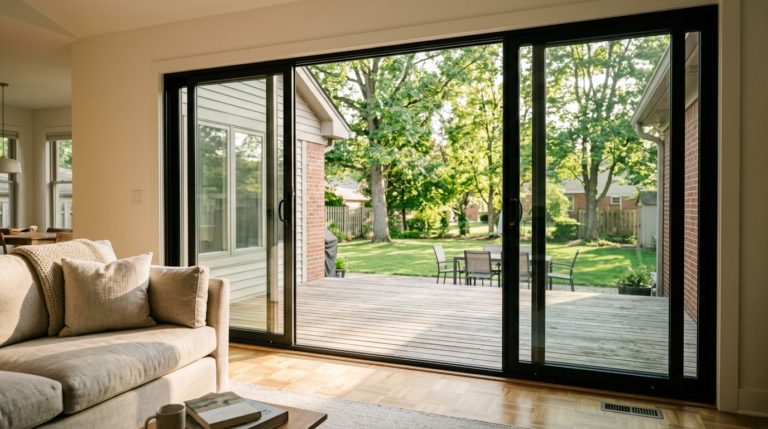
A sliding patio door is the classic case, since a sealed shade never gets caught in the track or knocked askew by traffic, though it is also the hardest-working spot for the mechanism. If you go that route on a door, gentle use and a solid warranty matter even more, and a quick look at how the door and its glass are holding up is worth it before you commit.
They are the weaker choice if you like to restyle a room often, if squeezing out every last point of energy efficiency on a budget is the priority, or if easy do-it-yourself repair matters to you. In those cases a high-efficiency window paired with a quality external shade, or a classic operable style like a double-hung window with a separate blind, gives you more flexibility. When you are weighing a whole-home project, our team can walk the options during a new window installation assessment.
Not Sure If Sealed-In Blinds Fit Your Windows?
Choosing between built-in blinds, a triple-pane upgrade, or a standard high-efficiency window with a separate shade comes down to the windows you already have and how each room gets used. A fogged or failing unit changes the math fast, and it is not always obvious from the inside which problem you are dealing with.
Book a free, no-pressure window assessment with our Columbus and Cincinnati team, and get a straight read on whether sealed-in blinds, new glass, or a different window altogether is the right call for your home.
FAQ: Between-the-Glass Blinds

Ready to fix your windows? Get a free quote in 30 seconds.
Family-owned, licensed & insured. Free, no-obligation quotes.