The front door does more visual work than any other part of a house. It anchors the curb appeal, signals the home’s style from the street, and is the first thing a guest touches. Picking one is a balance of three things: the look that fits your architecture, the material that survives your climate, and the glass and hardware that make it yours.
This guide walks through the most popular front door styles, the three main materials, the glass and configuration choices, and a simple way to match a door to the house you already have. For the full range of options and replacement help, our doors overview is the companion to this page.
Quick answer: The most common front door styles are traditional, craftsman, modern, and farmhouse, each built to suit a particular home architecture. Style sets the look, but the material (wood, steel, or fiberglass) decides durability, and the glass, color, and hardware personalize it. Start by matching the door to your home’s architecture, then choose the material for your climate.
Start by Matching the Style to Your Home
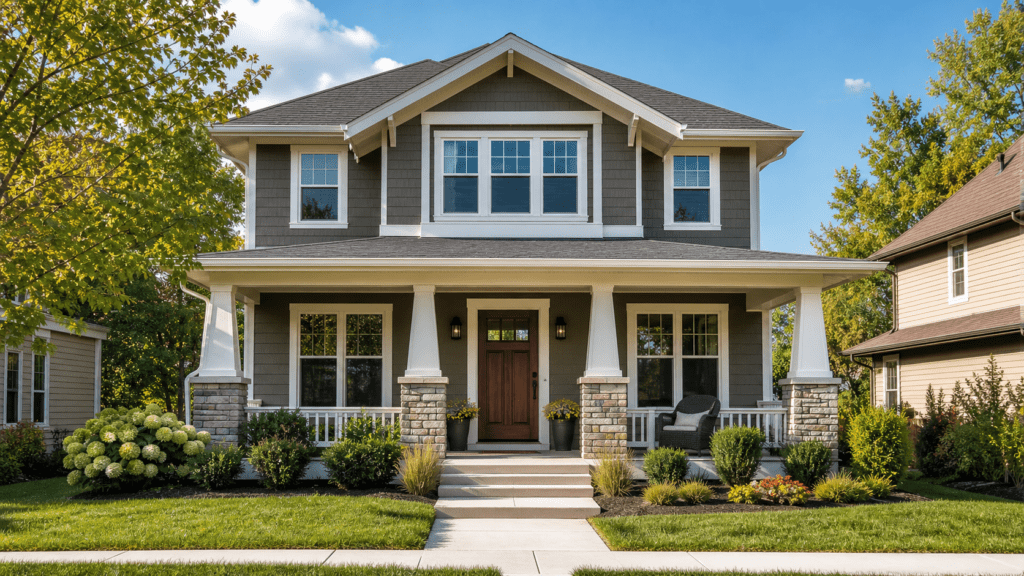
The fastest way to narrow the field is to let your home’s architecture make the first call. A door that fights the house looks wrong no matter how nice it is on its own, while a door that echoes the rooflines, trim, and era of the home reads as if it was always there. Stand across the street and look at the shapes already in play: the pitch of the roof, the window grilles, the porch columns.
From there the pairings get intuitive. Most homes fall into a handful of looks, and each has a door style that flatters it without much guesswork.
- Colonial or traditional homes suit a symmetrical six-panel or paneled door, often with a transom or sidelights.
- Craftsman bungalows call for a door with lower panels and a band of small upper glass lites.
- Modern or contemporary builds want a clean, flush or wide-plank door with minimal trim and big glass.
- Farmhouse exteriors pair with a board-and-batten or simple paneled door, often in a soft neutral.
- Tudor and Mediterranean homes carry an arched or round-top door beautifully.
If your home does not slot neatly into one of these, go by feel rather than label. A ranch or mid-century house likes long, low, horizontal lines and generous glass, a Victorian carries ornate paneling and a transom, and a Cape Cod stays simple and symmetrical. When in doubt, a clean traditional or craftsman door is the broadly flattering default that rarely looks out of place.
The Most Popular Front Door Styles
Once you know the look your home leans toward, it helps to see what each named style actually brings. These are the styles you will run into most often at a showroom or in a catalog, and the lines between them blur, since a craftsman door can be modernized and a traditional one dressed down. Think of them as starting points rather than strict rules.
What separates them is mostly the paneling, the amount and placement of glass, and the overall proportion. Here is how the common families read at a glance.
- Traditional. Symmetrical raised panels, refined detailing, and a timeless, formal feel that suits the most homes.
- Craftsman. Lower solid panels topped by a row of small glass lites, warm and architectural.
- Modern / contemporary. Sleek and minimal, with wide planks, flush faces, and bold geometric glass.
- Farmhouse. Simple paneling or board-and-batten, neutral colors, and an easy, welcoming look.
- Arched. A curved or round top that adds elegance and works on Tudor and Mediterranean homes.
- Dutch. Split into a top and bottom half that open separately, a charming, practical nod to farmhouse roots.
None of these is objectively best. The right one is the style that matches your home and the way you want the entry to feel.
Door Materials: Wood, Steel, and Fiberglass
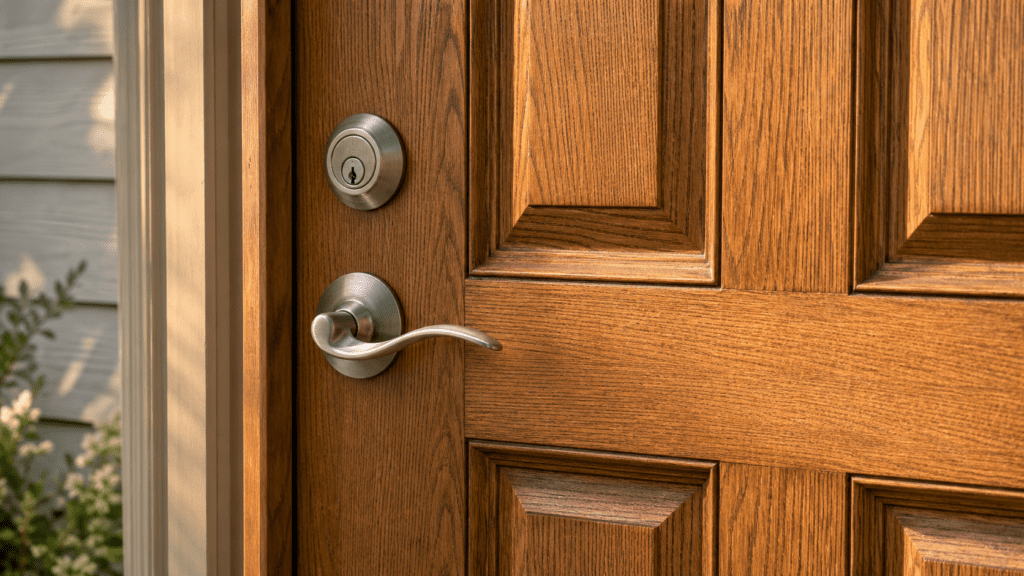
Style is what you see; material is what lasts. Almost every front door is built from one of three materials, and the choice drives durability, energy efficiency, maintenance, and how the door handles weather far more than the panel design does. Any of the popular styles above can be ordered in any of these materials.
Each has a clear trade-off. Wood is the classic, with a depth and a feel that the others imitate but never fully match, and it sands and refinishes easily, but it needs regular sealing and can warp or swell with moisture. Steel is the strongest and most budget-friendly, with solid security and good insulation, though it dents and can rust where the finish is scratched. Fiberglass splits the difference: it mimics wood grain convincingly, resists dents and rot, and usually delivers the best insulation, which is why it has become the default for exposed entries.
- Wood: the best looks and easy to refinish, but it needs regular sealing and dislikes moisture.
- Steel: the strongest and most affordable, though it can dent and rust where the finish is scratched.
- Fiberglass: low maintenance, energy-efficient, and weather-stable, which makes it the safe all-rounder.
If budget is tight and the entry is protected by a porch, steel gives a lot of security for the money. If the door faces the weather head-on and you want to forget about it for years, fiberglass is usually worth the step up. Wood is the choice when the look matters more than the upkeep.
Glass, Sidelights, and Configuration
How much glass a door carries changes its whole character, and the decision is part looks and part function. A full-glass door floods the entry with light and feels open and modern, while a solid door with no glass reads more secure and private. Most homeowners land in the middle, with a decorative glass panel, a row of lites, or frosted glass that lets light through without a clear view inside.
Beyond the slab itself, the surrounding configuration sets the scale of the entry. Sidelights, the narrow glass panels flanking the door, widen a plain entry and add light, and a transom window above does the same overhead. A double door makes a grand statement on a wide entry but needs the wall space to carry it, so on a narrow opening a single door with sidelights usually looks better than two cramped doors.
Keep security in mind with all that glass. Decorative or impact-rated glass and a quality deadbolt let you have the light without the easy break-in, which matters most on glass within arm’s reach of the handle.
Color and Hardware: The Finishing Touches
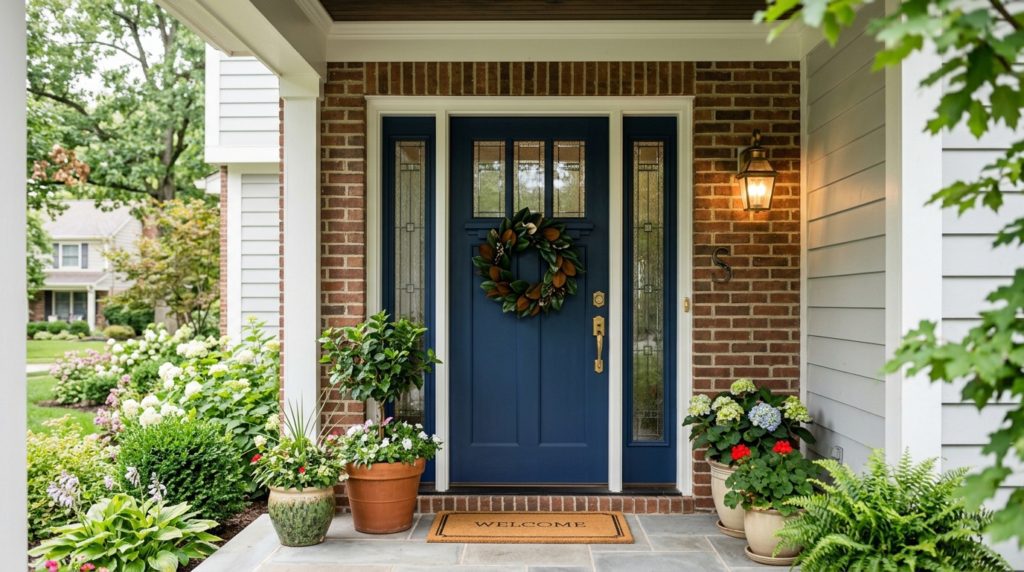
Color is the cheapest way to make a strong impression, and the front door is the one place a bolder choice is welcome. Deep blues, rich greens, black, and warm reds are perennial favorites because they pop against neutral siding without clashing, while a soft white or greige keeps a farmhouse or coastal look calm. If you plan to sell within a few years, lean toward a color that flatters the house rather than a trend that may date.
Hardware finishes the picture and is easy to underestimate. The handle set, knocker, hinges, and lock should share a finish, whether matte black, oil-rubbed bronze, satin nickel, or brass, and that finish ideally nods to other exterior metals like light fixtures and house numbers.
This is also the moment to think about a smart lock or keypad if you want keyless entry, since not every door prep and bore pattern fits every smart deadbolt. Sorting that out before the door is ordered saves a retrofit later.
Choosing a Front Door for Ohio's Climate
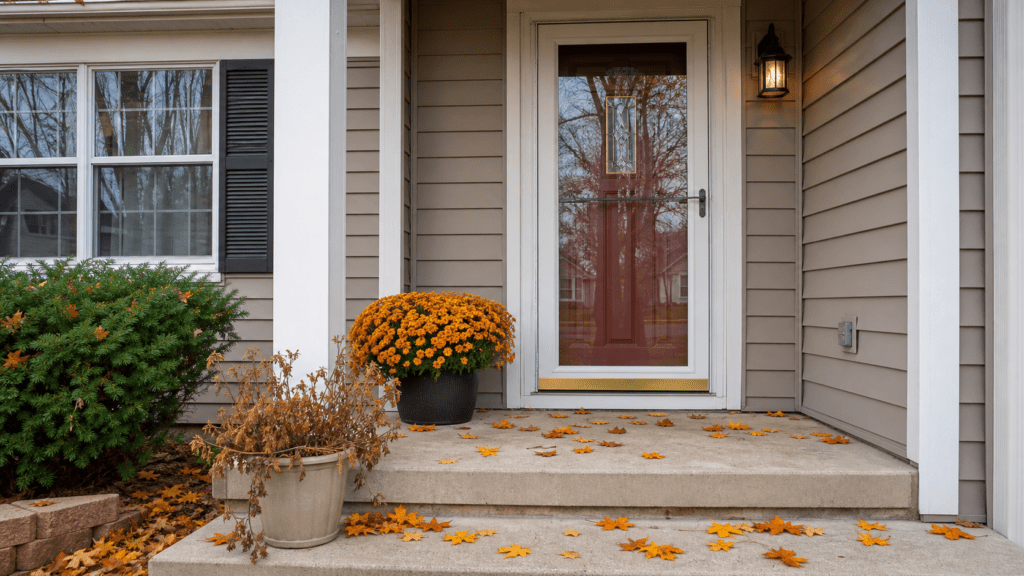
A door that looks perfect in a showroom still has to survive a Columbus winter and a humid Midwest summer. Ohio’s freeze-thaw swings, wind-driven rain, road salt, and strong afternoon sun are hard on an entry, and they tend to expose the weak points of each material. This is where the material choice you made earlier really earns its keep.
On Columbus jobs we see far more steel doors dented and rust-streaked along the bottom from winter road salt than fiberglass ones. For a west- or south-facing entry that takes weather and sun all day, fiberglass usually holds up the longest with the least fuss.
Wood needs the most attention here, since humidity makes it swell and the sun fades the finish, so a covered porch helps it last. Whatever the slab, the door is only as good as its seal: the weatherstripping, threshold, and a square, well-installed frame are what actually keep drafts and water out. A beautiful door hung in a tired frame will still leak heat, which is why a proper entry door replacement addresses the frame and seal, not just the slab. If you are also adding a storm door for an extra weather layer, our guide on installing a storm door covers that step.
Common Mistakes When Picking a Front Door
A front door is a long-term, highly visible purchase, so the misses are the ones you look at every single day. Most regrets trace back to choosing the slab in isolation, without thinking about the house around it or the weather it has to face. A quick gut-check against the list below saves an expensive do-over a year or two down the road.
None of these are about taste. They are about fit, scale, and the parts of a door you cannot see from the curb.
- Ignoring the architecture, so the door clashes with the trim, rooflines, and windows around it.
- Getting the scale wrong, like forcing double doors into an opening that is too narrow for them.
- Choosing material for looks alone and ignoring the climate the door has to survive.
- Chasing a trendy color you will tire of long before the finish wears out.
- Forgetting the frame and seal, which decide whether the door keeps drafts and water out at all.
Not Sure Which Door Fits Your Home?
Choosing a front door means weighing style, material, glass, and how it all stands up to Ohio weather, and seeing options against your own house makes the call far easier. There is no need to guess between fiberglass and wood, or single and double, on your own.
Book a free, no-pressure door consultation with our Columbus-area team and get straight guidance on the style and material that fit your home.
FAQ: Choosing a Front Door Style

Ready to fix your windows? Get a free quote in 30 seconds.
Family-owned, licensed & insured. Free, no-obligation quotes.