

Window tracks are the dirtiest few inches in most homes, and the grime that builds up there does more than look bad. Packed dirt makes a window stick and grind, blocks the drain holes that keep water out of your wall, and traps the moisture that grows mold. The good news is that a track full of years of gunk usually cleans up in twenty minutes with things already under your sink.
This guide walks through the quick baking-soda method, a deeper clean for a track that is truly caked, how to clear the weep holes that everyone forgets, and the mistakes that scratch or corrode a track. Clean tracks are part of the same job as clean, well-sealed glass, so it is worth doing right.
Quick answer: To clean window tracks, first vacuum out the loose dirt, then sprinkle baking soda along the track and spray it with a 50/50 mix of vinegar and water. Let it fizz for five to ten minutes, scrub the corners with an old toothbrush, clear the small drain holes, then wipe and dry. Most tracks take about twenty minutes.
Why Dirty Tracks Are More Than an Eyesore
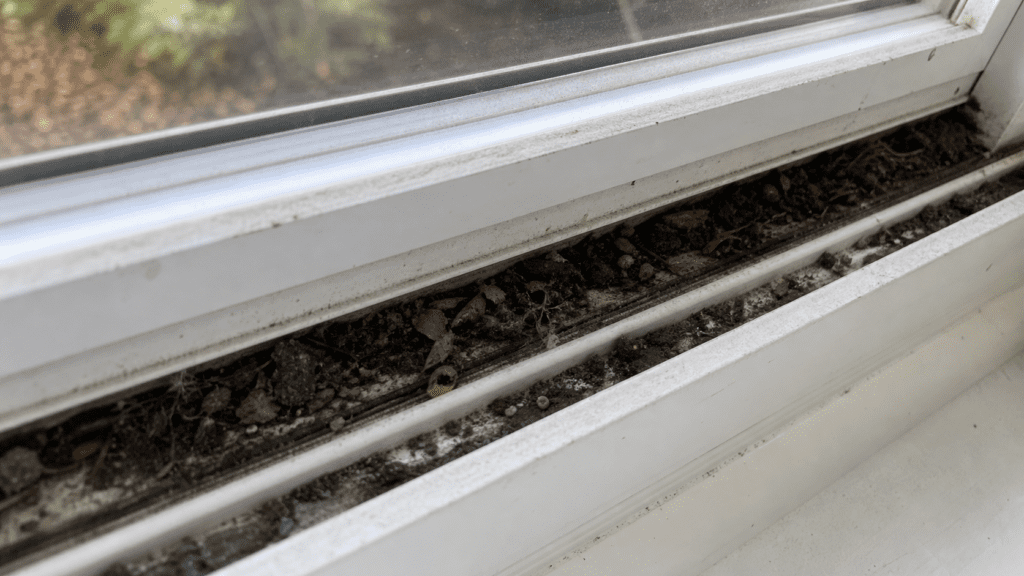
It is easy to ignore a grimy track until the window stops sliding, but the dirt is quietly causing three problems at once. First, packed grit grinds against the sash and rollers every time you open the window, wearing them out faster and making the window stick. A track that fights you is often just a track that needs cleaning, not a window that needs replacing.
Second, that buildup blocks the small drain holes at the bottom of the track, called weep holes, which are supposed to channel rainwater back outside. When they clog, water pools in the track instead of draining, and standing water is exactly what feeds mildew and the musty smell that comes with it. In a humid Ohio summer, a blocked track can stay damp for days.
Third, and most important in this climate, trapped water freezes. Through the freeze-thaw swings of a Columbus winter, ice expanding in a clogged track can stress the frame and force water past the seal into the wall. Keeping the track and its drains clear is cheap insurance against a much bigger repair.
What You Need to Clean Window Tracks
You almost certainly own everything required already, and none of it is harsh. The two cleaners that do the work are baking soda, a mild abrasive that lifts grime without scratching, and white vinegar, which dissolves mineral film and mildew. For everyday dirt, a few drops of dish soap in water works just as well as vinegar.
The tools matter as much as the cleaner, because the corners and drain holes are too tight for a cloth alone. Gather the short kit below before you start so you are not hunting for a swab with wet hands.
- A vacuum with a narrow crevice attachment for the loose debris.
- Baking soda and white vinegar (or a little dish soap) for the cleaning solution.
- An old toothbrush or stiff nylon brush to scrub the channel and corners.
- Cotton swabs to reach the weep holes and roller recesses.
- Microfiber cloths and a plastic scraper or putty knife for wiping and lifting hardened gunk.
How to Clean Window Tracks, Step by Step
The order here is what makes the job fast: clear the dry debris first, then let the cleaner do the loosening so you are not scrubbing hard. Work one track at a time and keep a dry cloth handy, since the fizz can run before you are ready for it.
The single step people skip is the drain holes, and it is the one that actually keeps water out of your wall, so do not rush past it.
- Vacuum the loose debris. Run a crevice tool along the track to pull out dust, dead bugs, and grit before any liquid.
- Sprinkle baking soda. Spread a thin, even layer along the dirty track.
- Spray with vinegar and water. Mist a 50/50 mix until it fizzes and the grime softens.
- Let it sit. Give it five to ten minutes to loosen the caked-on dirt.
- Scrub the corners. Work an old toothbrush along the channel and into the corners.
- Clear the weep holes. Poke a cotton swab into the small drain holes so water can escape again.
- Wipe and dry. Wipe everything out with a damp cloth, then dry the track completely.
Deep-Cleaning a Track That Is Truly Caked
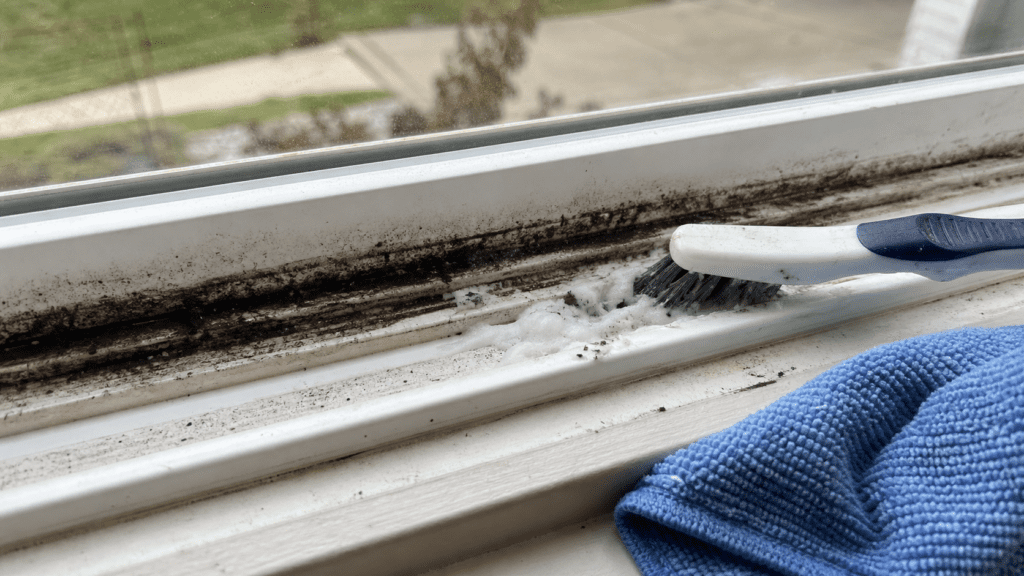
Sometimes a track is so packed with hardened grime that the quick method only scratches the surface. When the gunk has set like cement, you need to lift it mechanically before the cleaner can reach the channel underneath. A plastic scraper or an old putty knife, run flat along the track, breaks the crust loose without gouging the frame.
On many modern vinyl windows you can take the cleaning further by removing the sliding sash entirely. Slide the panel up past the stops and lift it out, which exposes the full track and the roller recesses that are impossible to reach with the window in place. Set the sash aside on a towel, vacuum and scrape the bare track, then soak the worst spots with the vinegar solution before a final scrub.
Take a moment with the rollers and the recesses they sit in while everything is open, since that is where grit does the most damage. Once the track is clean and dry, a quick shot of dry silicone spray, never an oily lubricant, helps the sash glide and keeps new dirt from sticking.
Do Not Forget the Weep Holes
The weep holes are the unsung heroes of a window, and they are almost always overlooked. These are the small slots at the bottom of the track, usually one at each end, that let rainwater drain back to the outside instead of pooling in the channel. When they pack with dirt, the track turns into a little reservoir.
On service calls around Columbus, a window that is leaking onto the sill turns out, more often than not, to be a clogged weep hole rather than a failed seal. Clear the drain and the leak usually stops.
Clearing them is simple: work a cotton swab, a narrow nylon brush, or a short burst of compressed air into each hole from the inside, then check from outside that water runs through. Pour a little water into the clean track and watch it drain to confirm. Doing this every time you clean the tracks keeps water moving the way the window was designed to move it, which matters most before winter sets in.
Mistakes That Damage a Track
Cleaning a track is low-risk, but a few common shortcuts cause real harm, and they tend to show up later as a scratched, corroded, or sticky window. Run through this list before you start, because every item here trades a little time now for a problem you do not want.
None of these are about effort. They are about using the right tools and resisting the urge to over-lubricate.
- Using a wire brush or metal scraper on an aluminum track, which scratches the surface and invites corrosion.
- Reaching for WD-40 or oily lubricants, which attract dirt and leave a sticky film that makes the next clean worse.
- Leaving the track wet, since standing moisture is exactly what you are trying to prevent.
- Skipping the weep holes, which undoes half the point of cleaning.
- Forcing a stuck sash instead of checking whether the problem is dirt or a worn roller.
When It Is the Rollers, Not the Dirt
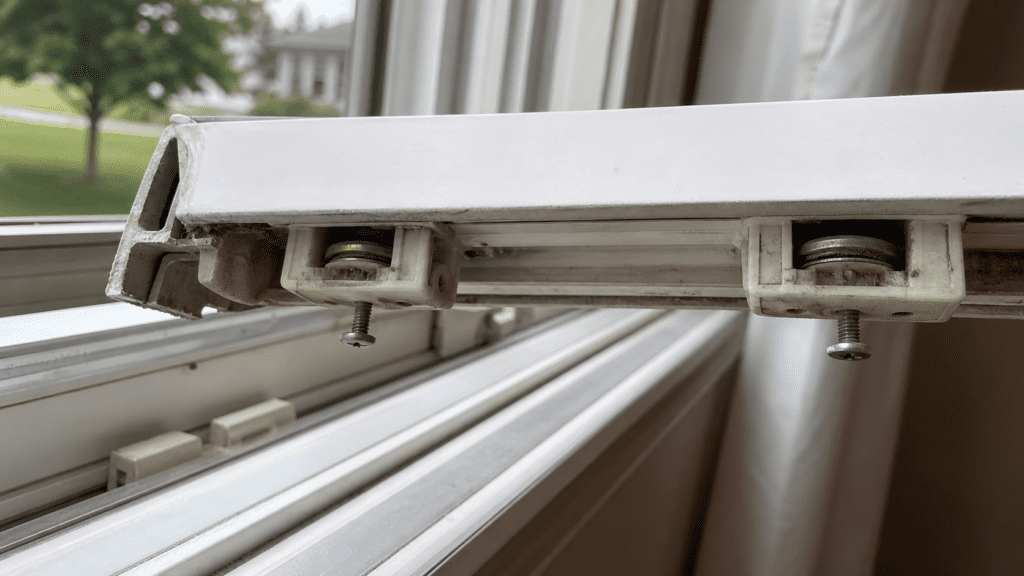
A clean track that still drags or jumps is telling you something cleaning will not fix. Over years of use, the small rollers or the balance hardware that carry the sash wear out, flatten, or seize, and no amount of scrubbing brings them back. If the window sticks right after a thorough clean, the hardware is the likely culprit.
The same goes for a track that is physically bent or a sash that has dropped out of square. Those are mechanical problems with the window itself, and forcing the sash only speeds the wear. A worn roller is usually a quick, inexpensive swap compared with living with a window that fights you or replacing the whole unit.
If a fresh clean does not restore a smooth glide, it is worth having the hardware looked at before the next season. Our guide to keeping screens and frames in shape covers the related upkeep, and a double-hung window tune-up handles the rollers and balances when cleaning is not enough.
Stuck Window That Cleaning Won't Fix?
If your windows still stick, grind, or leak after a good track cleaning, the issue is usually a worn roller, a clogged drain behind the frame, or a seal that has given out, and a quick look tells you which. There is no sense fighting a window every time you open it.
Book a free, no-pressure window assessment with our Columbus-area team and get a straight answer on whether it is a simple fix or something more.
FAQ: Cleaning Window Tracks

Ready to fix your windows? Get a free quote in 30 seconds.
Family-owned, licensed & insured. Free, no-obligation quotes.