A sticker peels off in two seconds on a good day. On a bad day the paper shreds, the glue stays behind in a gummy film, and you reach for a razor blade that leaves a scratch you will see every time the light hits the window. Price tags, kids’ decals, security stickers, and the manufacturer labels on new glass all come off cleanly once you soften the adhesive first and match your tool to the type of glass.
This guide covers the safe step-by-step method, which solvent to use on which mess, how to clear stubborn residue, and the mistakes that scratch the pane or crack it outright. If a sticker fight has already left a gouge or a cloudy patch, that is a job for glass repair, not more scrubbing.
Quick answer: Peel away as much of the sticker as you can, then warm the glue with a hair dryer and soak it with white vinegar, rubbing alcohol, or an adhesive remover. Wait a few minutes, scrape with a plastic card while the glass stays wet, and wipe clean. Skip metal blades on coated or frosted glass.
Why Stickers Are Harder to Remove Than They Look
The trick to removing a sticker is realizing you are fighting two different things, not one. The paper or vinyl face comes off in a peel. The adhesive underneath is a separate layer that stays bonded to the glass, and it is the part that turns a quick job into a frustrating one. Pull the face off first, then treat the glue as its own problem.
Time and sun make it worse. A fresh sticker lifts easily because the adhesive is still soft, but weeks of sunlight cure that glue into a hard, yellowed crust. South- and west-facing windows that bake through a Columbus summer are the worst offenders, which is why the manufacturer labels left on a new window all season are so stubborn by fall.
The kind of sticker matters too. A paper price tag releases with a quick soak, while a vinyl decal or an old security film peels in stretchy strips and leaves a thicker glue line behind. Knowing which one you are dealing with tells you how much heat and patience the job will take.
Match the Method to Your Glass
Here is the step almost every guide skips, and it is the one that prevents permanent damage: look at the glass before you pick a tool. Not all residential glass is the same hardness or the same surface. A plastic scraper is safe on everything, but a metal razor blade, which slides cleanly across flat untreated glass, will carve a permanent scratch into a coated, frosted, or tempered pane.
You cannot always tell coated glass by eye. Many newer windows carry a low-E coating or a surface film for tint and privacy, and those layers scratch far more easily than the bare glass underneath. When in doubt, treat the surface as delicate, keep to plastic and solvent, and test any tool on a hidden corner first.
- Clear annealed glass (older single panes, picture frames): the most forgiving, and the only surface where a sharp razor held flat is reasonable.
- Low-E or coated glass (most modern windows): no razor, since the coating scratches and clouds. Heat and solvent only.
- Frosted, etched, or textured glass: skip blades entirely, as the rough surface traps adhesive and shows every scratch.
- Tempered safety glass (doors and low windows): treat it like coated glass and never gouge it, because surface damage can weaken it.
What You Need to Remove a Sticker
Everything for this job is cheap and probably already in the house. The cleaners do the chemical work of breaking the bond, and the tools do the gentle lifting. None of it needs to be harsh, because the goal is to dissolve the adhesive, not to power through it.
Gather the kit before you start so you are not searching for a scraper with sticky hands. Pick one solvent to begin with and keep a second on hand for the stubborn spots.
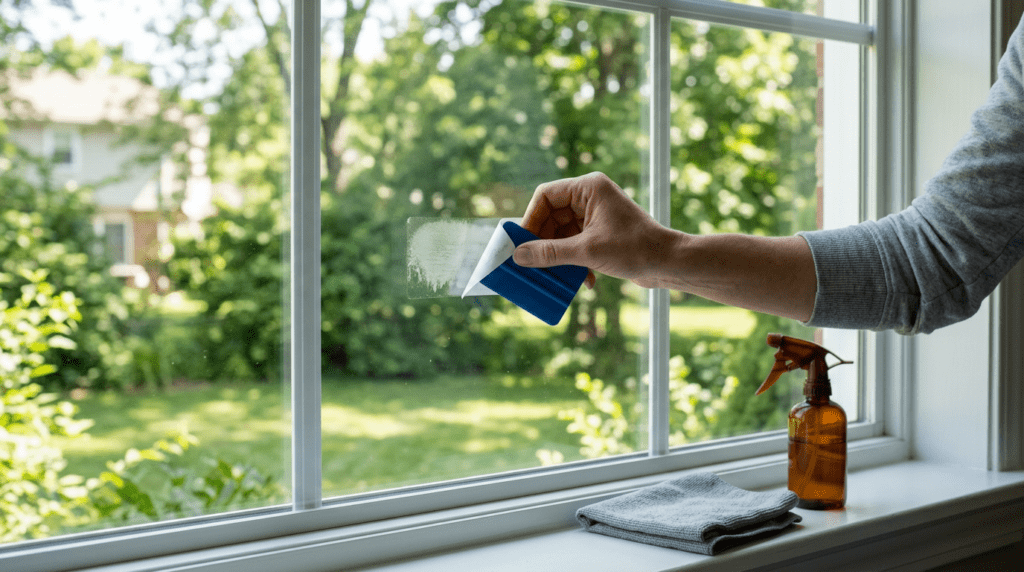
- A plastic scraper, old credit card, or plastic putty knife for lifting without scratching.
- White vinegar, rubbing alcohol, or a citrus adhesive remover to dissolve the glue.
- A hair dryer to soften cured adhesive before you scrape.
- Microfiber cloths and paper towels for soaking the residue and wiping clean.
- Dish soap and warm water for the final wash, plus cotton swabs for tight corners.
How to Remove Stickers From Glass, Step by Step
The order is what keeps this safe and quick: soften before you scrape, and keep the surface wet the whole time. Dry scraping is what scratches glass, so resist the urge to attack a dry sticker with a hard edge.
Work one sticker at a time and give the solvent a few minutes to do its job instead of forcing the residue. If a spot resists, re-treat it rather than pressing harder.
- Identify the glass. Check whether the pane is clear, coated, frosted, or tempered, and choose plastic over metal if there is any doubt.
- Peel the paper first. Lift a corner with a fingernail or card and pull the sticker back slowly at a low angle.
- Warm the adhesive. Hold a hair dryer on low a few inches away for a minute or two to soften the glue.
- Apply a solvent. Soak the residue with vinegar, rubbing alcohol, or adhesive remover and let it sit a few minutes.
- Scrape while wet. Slide a plastic scraper under the glue at a shallow angle, keeping the glass wet.
- Wipe and repeat. Clear the loosened residue with a microfiber cloth, then re-treat any stubborn patches.
- Finish streak-free. Wash with glass cleaner or a vinegar-water mix and buff dry to remove the oily film.
Heat, Solvents, and Soaks: Which to Use When
One method does not fit every sticker, and reaching for the right solvent saves a lot of scrubbing. Heat softens cured glue, oils and solvents dissolve it, and a long soak works when the glass is small enough to submerge. Match the approach to the mess and to the pane.
For most window glass, a little heat followed by alcohol or vinegar handles the job. The soak methods are better suited to jars and removable glass than to a fixed window you cannot dunk in a sink.
- Hair dryer heat: the best first move on a cured decal, softening the glue so it lifts in one piece.
- Rubbing alcohol: a fast, low-residue solvent for fresh glue and light residue on any glass.
- White vinegar: a gentle, eco-friendly soak that cuts adhesive and mineral film; give it ten minutes.
- Cooking oil or a baking-soda-and-oil paste: breaks down gummy residue, though it leaves a film to wash off afterward.
- Citrus adhesive removers: the strongest option for old, baked-on glue, but rinse the glass well when you finish.
- A warm soapy soak: for jars and removable panes only, never a fixed window in the wall.
Removing Stubborn Adhesive Residue
Sometimes the face peels away clean but a gray, gummy film stays welded to the glass. That leftover layer is its own job, and patience beats force every time. Re-warm it, re-soak it, and let the solvent sit longer before you touch it with a scraper.
Old window film and security decals are the toughest of all. They have usually cured for years and come away in stretchy, two-layer strips that fight back. Steam is the safest tool here, because a garment steamer or a steady stream of warmth keeps the adhesive soft while you work it loose with no blade needed. Rushing this is how a coated surface ends up clouded.
Once the bulk is gone, a final pass with rubbing alcohol on a microfiber cloth lifts the last haze. Finish by cleaning the pane the way you would any window, using our guide to a streak-free finish so the glass looks like nothing was ever stuck to it.
Do Not Crack the Glass: The Ohio Winter Caveat
Heat is your friend until it is not. The advice to pour boiling water on a sticker or blast it with concentrated heat assumes the glass is already warm. On a cold pane in January, a sudden hot spot opens a temperature gap across the glass that it cannot absorb, and the pane can crack, especially if the edge is already chipped.
On winter service calls around Columbus, the cracked pane behind a peeled-off decal is almost never the sticker’s fault. It is the kettle of hot water someone poured onto glass sitting at twenty degrees outside.
Keep heat gentle and moving, work at room temperature when you can, and never aim a heat gun or boiling water at a cold window. If a pane does crack from thermal shock, that becomes a glass repair rather than a cleaning problem, and forcing the sticker only spreads the break.
Mistakes That Scratch or Damage Glass
Removing a sticker is low-risk, but a handful of shortcuts cause damage that does not buff out. Most of them come from impatience: going at dry glue with a hard edge, or grabbing a solvent that attacks more than the adhesive. Run through this list before you start.
The common thread is the wrong tool on the wrong surface. The right move is almost always slower and gentler than instinct says it should be.
- A metal razor on coated or frosted glass, which leaves permanent scratches the moment it touches the surface.
- Steel wool or abrasive pads, which scour fine scratches into any pane.
- Acetone or nail polish remover on tinted glass or vinyl frames, which can dull, etch, or discolor them.
- Dry scraping, since the residue acts like grit under the blade with no solvent to float it.
- Overheating one spot, which can smear the adhesive wider and, on a cold pane, crack the glass.
Stickers and Labels on Brand-New Windows
New windows and fresh glass arrive covered in stickers: the manufacturer’s brand label, the energy-rating sticker, and often a protective film over the whole sash. They peel off easily the week they go in, while the adhesive is still fresh and the glass has not yet baked in the sun.
Leave them through a full Ohio summer and the story changes. Months of UV cure the glue and bond the protective film to the glass, turning a two-minute peel into an afternoon of solvent and scraping. The fix is timing: pull the labels and film within the first few weeks of a new install.
If the labels are already baked on after a recent window installation, treat them like any cured decal with heat and solvent, and keep blades off the low-E coating that almost every modern window now carries.
When It Is Damage, Not Residue
Not every cloudy patch is something you can clean off. If a haze sits between the panes of a double-pane window rather than on the surface you can touch, that is a failed seal, not adhesive, and no amount of scrubbing reaches it. The unit has lost its gas fill and needs an insulated glass replacement, not a solvent.
The same goes for a scratch or a clouded spot where a coating got scraped during a sticker fight. Surface coatings do not heal, and a gouge in the glass is permanent. A fresh chip or a crack that spread from thermal shock is a structural issue, not a cosmetic one.
When the glass itself is damaged rather than just dirty, a quick look tells you whether it is a simple reglaze or a sign the whole unit is due. Catching it early keeps a small scratch from becoming a draft or a leak down the line.
Scratched or Cloudy Glass After a Sticker Fight?
If a sticker left behind a scratch, a clouded coating, or a haze that will not wipe away, the glass may need more than a cleaning. There is no point living with a pane you have to look past every day, and a worn or fogged unit only gets worse through Ohio’s freeze-thaw winters.
Book a free, no-pressure glass assessment with our Columbus-area team and get a straight answer on whether it is a simple polish, a reglaze, or a unit worth replacing.
FAQ: Removing Stickers and Adhesive From Glass

Ready to fix your windows? Get a free quote in 30 seconds.
Family-owned, licensed & insured. Free, no-obligation quotes.