Tempered glass is the safety glass behind almost every modern shower door, glass railing, and patio door in your home, and most people only learn what it is when one shatters into a pile of harmless pebbles instead of dangerous shards. That dramatic break is the whole point: the glass is engineered to fail safely.
This guide explains what tempered glass actually is, how the heat-treating process makes it far stronger than ordinary glass, where it shows up around the house, and the real trade-offs that come with it. If you are weighing it for a window or shower and need help with glass repair or replacement, knowing how this material behaves makes the decision easier.
Quick answer: Tempered glass is glass that has been heated and rapidly cooled to build internal tension, making it four to five times stronger than regular glass. When it breaks, it crumbles into small, rounded pieces instead of sharp shards, which is why building codes require it in doors, showers, and other high-risk spots.
How Tempered Glass Is Made
Tempered glass starts as ordinary annealed glass, cut to its final size and shape before any strengthening happens. It then travels through a tempering oven that heats it to roughly 1,100°F, close to the point where glass begins to soften. That heating stage is where the panel gets its final form, because nothing can be changed afterward.
The transformation happens in the cooling. High-pressure jets of air blast both surfaces at once in a process called quenching, chilling the outside far faster than the core. The surfaces freeze into compression while the center stays in tension, and that locked-in balance of forces is what makes the finished panel four to five times stronger than the glass it started as.
The catch is permanence. Once a sheet is tempered, it cannot be cut, drilled, or ground without exploding, so every hole, notch, and edge has to be finished beforehand. That is why a replacement pane has to be made to exact measurements, and why you cannot cut tempered glass down to fit after the fact.
How to Tell If Glass Is Tempered
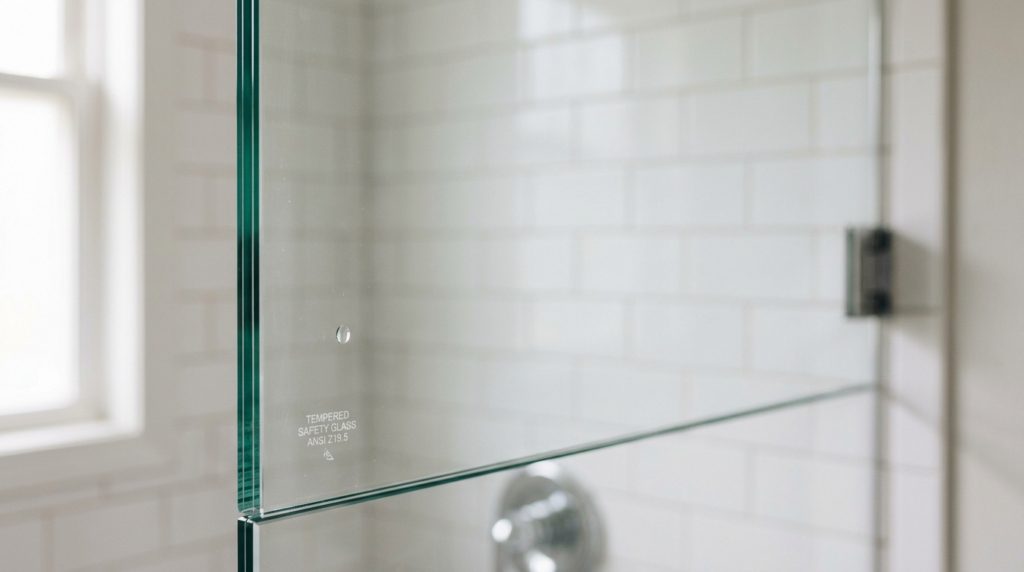
You usually cannot tell toughened glass from regular glass by looking through it, since the process does not cloud or tint the pane. The clearest sign is a small permanent stamp, often called a bug, etched into one corner. It names the manufacturer and the safety standard the glass meets, and it is sandblasted in before heat-treating so it never wears off.
If there is no visible stamp, a couple of other clues help. Treated panels often show faint distortion or wavy lines when you view them at a low angle in bright light, a side effect of the rollers in the oven. The edges are also smoother and more uniformly finished than a raw cut edge, because they have to be polished before tempering.
Getting this right matters when you are ordering a replacement, since code may require the new pane to match. Our full walkthrough on how to tell if glass is tempered covers the polarized-sunglasses trick and a few other field tests that do not risk the pane.
Where Tempered Glass Is Used
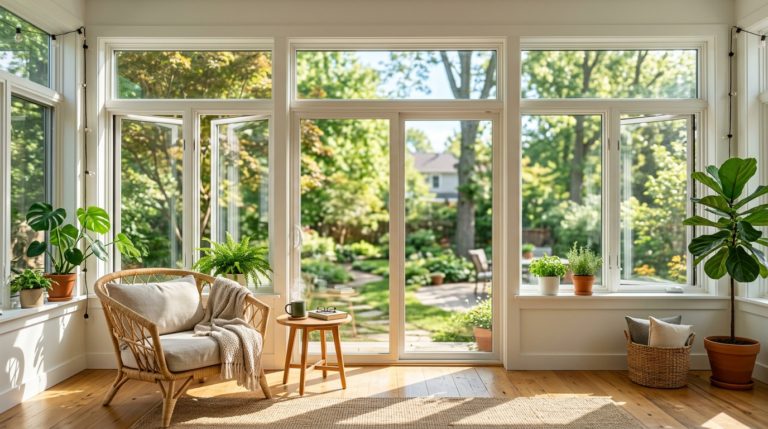
Tempered glass turns up anywhere a broken pane could hurt someone or take a beating, which covers a surprising share of a modern home. Builders reach for it because it answers two needs at once: it is tough enough for daily knocks, and it fails into blunt pieces if it ever does break.
Around the house and in commercial spaces, the common applications are easy to spot once you know what to look for:
- Shower doors and tub enclosures, where wet, slippery surroundings make safe breakage essential.
- Entry, patio, and storm doors, plus the large sidelights next to them.
- Windows close to the floor, stairs, or a door, the spots most likely to take an accidental hit.
- Glass railings, balustrades, and stair panels, which carry both people and code requirements.
- Tabletops, shelves, and display cases, where strength and clean edges matter.
- Kitchen backsplashes and appliance fronts, which sit near real heat.
- Phone and tablet screen protectors, the thin sheets that take the scratch instead of the device.
The pattern across all of these is risk. Where a fall, a slam, or a stray elbow could turn a pane into a hazard, this glass is the default, and in many of those locations it is not optional at all.
Where Building Codes Require Safety Glass
That last point earns its own section, because tempered glass is often not just a smart upgrade but a legal requirement. U.S. building codes, chiefly IRC section R308.4 for homes and IBC section 2406 for commercial buildings, define “hazardous locations” where only safety glazing is allowed. Tempered glass is the most common way to satisfy that rule.
The hazardous locations are the places where a person is most likely to walk into, fall against, or break the glass. They include glass in and beside doors, panels within a couple of feet of the floor, glazing near stairs and landings, and any glass around a bathtub, shower, or pool. Large low panes also qualify. The exact triggers depend on pane size, height above the floor, and distance from a walking surface.
On replacement jobs around Columbus we often find an original window that code now says should be safety glass, especially a low pane near a door or stair. When the old glass goes, the new one has to meet the current rule, which catches a lot of homeowners by surprise.
This is why identifying the existing glass matters before you order a replacement. If a pane sits in one of these locations, dropping in ordinary annealed glass is both unsafe and a failed inspection waiting to happen.
The Pros of Tempered Glass
The advantages of tempered glass all trace back to the same internal stress that the tempering process builds in. That single change in the material delivers a stack of practical benefits ordinary glass cannot match, which is why it has become the standard for so many uses.
The strengths that matter most for a home are straightforward:
- Safe breakage. It crumbles into small, dull-edged granules instead of long, knife-like shards, sharply lowering the risk of serious cuts.
- Real strength. Four to five times the impact and bending resistance of annealed glass means it shrugs off knocks, slams, and wind-driven debris.
- Heat tolerance. It handles higher temperatures and sudden swings far better than regular glass, which suits it to backsplashes, oven doors, and sunny windows.
- Scratch resistance. The hardened surface keeps its clarity through years of cleaning and contact.
- No loss of clarity. Tempering does not tint or cloud the pane, so you gain strength without giving up a clear view.
Taken together, these are the reasons the material has moved from a premium option to the expected choice in showers, doors, and any window that has to take abuse.
The Cons of Tempered Glass
For all its strengths, tempered glass comes with real limits, and knowing them up front prevents an expensive surprise later. None of these are reasons to avoid it where safety calls for it, but they do shape how you plan a project.
Keep these trade-offs in mind before you commit:
- It cannot be altered after tempering. No cutting, drilling, or edge work is possible, so every measurement has to be right the first time.
- The edges are the weak point. While the face is tough, a sharp hit to an exposed edge can trigger the whole panel to let go.
- It shatters completely. When it fails, the entire pane goes at once rather than cracking in place, leaving an open hole until it is replaced.
- Rare spontaneous breakage. Tiny nickel-sulfide inclusions left from manufacturing can expand over time and burst a pane with no impact at all, though this is uncommon.
- Higher cost. The extra processing makes it pricier than annealed glass, with the difference driven by size, thickness, and finish.
The spontaneous-breakage risk worries people most, but it is genuinely rare and far outweighed by the safety the glass provides everywhere else. For overhead or high-traffic spots where even a rare failure is unacceptable, laminated glass is the better answer.
Tempered vs Laminated and Other Safety Glass
Tempered glass is one of two main types of safety glazing, and the difference between them comes down to what happens at the moment of failure. Toughened glass breaks safely but breaks completely. Laminated glass, by contrast, is two panes bonded around a plastic interlayer, so when it cracks the fragments stay stuck to the film and the opening holds together.
That distinction drives the choice. Laminated glass is the pick where the barrier must remain after a break, such as overhead skylights, storefronts, hurricane zones, and security glazing. It also blocks more sound and UV. The tempered option wins on pure impact strength and cost for everyday doors, showers, and railings. Many high-performance windows combine both ideas in a single insulated unit.
Polycarbonate and acrylic panels are a third route, trading some clarity and scratch resistance for near-unbreakable toughness in places like sheds, basement windows, and vandal-prone areas. To see how all of these stack up against standard annealed glass, our guide to the types of glass used in windows lays out the full range.
Tempered Glass and Ohio's Freeze-Thaw Climate
Ohio’s weather puts glass through a yearly stress test, and tempered glass handles it better than most, though not perfectly. The wide swing from humid summers to hard winter freezes means a pane can heat up fast in afternoon sun and chill quickly after dark, and that uneven temperature is what cracks ordinary glass.
The treated pane resists this thermal stress far better because its surface is already under compression, so it tolerates the rapid hot-cold cycling that frustrates annealed glass near radiators, in sunrooms, and on south-facing walls. It still has limits: a deep edge chip or a half-shaded, half-sunlit pattern can concentrate stress enough to break even a strong sheet, which is why clean, undamaged edges matter so much in this climate.
For windows that fail repeatedly to seasonal stress, the fix is usually a glass package matched to the exposure rather than the same pane installed again. A quick look at where the glass sits and how the sun hits it usually explains a recurring crack.
Need Glass Identified or Replaced?
Not sure whether the glass in your door, shower, or low window is tempered, or dealing with a pane that has already broken? Identifying the right glass and meeting current safety code is exactly the kind of thing worth a second opinion before you order a replacement.
Our Columbus and Cincinnati team can identify the existing glass and handle the swap. Book a free, no-pressure glass assessment and quote and get a straight answer on what your project needs.
FAQ: Tempered Glass

Ready to fix your windows? Get a free quote in 30 seconds.
Family-owned, licensed & insured. Free, no-obligation quotes.