
The frame gets all the attention, but the glass is the part of a window that actually does the work. It decides how much heat you lose in January, how much sun bakes a south-facing room in July, whether a broken pane showers the floor with shards, and how much street noise reaches the couch. Two windows that look identical can perform worlds apart based on the glass alone.
This guide walks through the main types of window glass a homeowner will run into, from plain annealed glass to tempered, laminated, Low-E, tinted, obscure, and the insulated units that combine them. You will see what each one does well, where it is the wrong choice, and how the layers stack up in a real window. When a sealed unit fails and clouds over, that is usually a job for glass repair rather than a whole new window.
Quick answer: The common window glass types are annealed (basic float glass), tempered and laminated (safety glass), Low-E and tinted (energy and solar control), and obscure (privacy). Most modern windows seal two or three of these panes into an insulated glass unit with argon between them, so you are usually choosing a combination, not a single glass.
What to Weigh Before You Pick Glass
Choosing glass is really about deciding what you want the window to do, then matching the glass to that job. A bathroom on the street side has different priorities than a picture window facing the backyard. Before comparing products, it helps to rank a handful of factors for the specific opening you are working on.
Most decisions come down to the same short list, and in Ohio the energy and condensation pieces carry extra weight because of the long heating season and humid summers.
- Energy performance: how well the glass holds heat in winter and blocks solar heat in summer.
- Safety: whether the location legally needs glass that breaks safely.
- Privacy: rooms where you want daylight without a clear view in.
- Noise: openings facing a busy road, a school, or an alley.
- Security and UV: guarding against forced entry and the sun fading floors and furniture.
Annealed and Float Glass: The Starting Point
Almost every pane begins as float glass, made by floating molten glass on a bed of liquid tin to get a perfectly flat, even sheet. Left in that state and cooled slowly, it is called annealed glass. It is clear, inexpensive, and easy to cut, which is why it was standard in the single-pane windows of older Columbus homes.
The problem is how it breaks. Annealed glass fractures into large, jagged shards that can cause serious cuts, and it is the weakest option against both impact and sudden temperature swings. That is fine for a picture frame, but risky in a door or a low window where someone could fall against it.
For that reason, builders rarely use bare annealed glass in modern windows. It is the raw material that gets strengthened into tempered glass, bonded into laminated glass, or coated and sealed into an insulated unit. Think of it as the base that every other type improves on.
Tempered Glass: Built to Break Safely
Tempered glass is annealed glass that has been reheated and then cooled fast, putting the surface under compression. The result is a pane four to five times stronger than standard glass that, when it finally does break, crumbles into small blunt pebbles instead of long blades. That single property is why it is the workhorse safety glass in homes.
Building codes require safety glazing in specific spots, and tempered glass is the usual way to meet them. The common locations are doors and the glass beside them, windows close to the floor, panes near stairs and landings, and glazing around tubs and showers. If you are replacing glass in any of those places, it almost certainly needs to be tempered.
One catch is worth knowing: tempered glass cannot be cut or drilled after it is made, because any nick sets off the whole pane. It has to be sized and finished before tempering. A small etched stamp in one corner is usually the only way to spot tempered glass at a glance.
Laminated Glass: Holds Together When It Breaks
Laminated glass sandwiches a thin plastic interlayer, usually PVB, between two sheets of glass and bonds them under heat and pressure. If something cracks the pane, the shards stay stuck to that interlayer instead of falling out, so the opening stays covered and the glass stays in the frame. It is the same idea as a car windshield.
The bonded layer does three useful things beyond crash safety. It blocks the vast majority of UV rays, which slows the fading of floors, rugs, and furniture. It dampens sound noticeably, so it is a favorite for bedrooms facing traffic. And it resists forced entry, because an intruder cannot simply punch through and reach the lock.
Laminated glass costs more than tempered and is heavier, so it shows up where its extra benefits earn their keep: ground-floor windows, doors, overhead skylights, and homes near constant noise. Many windows pair a laminated pane with a tempered one to get both safe breakage and stay-together security in the same unit.
Low-E Glass: The Energy Workhorse
Low-emissivity, or Low-E, glass carries a microscopically thin metallic coating that reflects heat while letting visible light through. In winter it bounces your furnace’s warmth back inside; in summer it reflects the sun’s radiant heat away. The coating is invisible in normal use and has become the default on energy-rated windows.
Not all Low-E is the same, because coatings are tuned to climate. A passive, high-gain coating lets in more free solar heat, which suits a cold northern winter, while a solar-control coating blocks more of it for hot, sunny exposures. Ohio sits in a mixed climate, so the best coating often depends on which direction a window faces.
Two numbers tell you how a glass package performs. The U-factor measures how well it resists heat loss, where lower is better for our long heating season. The Solar Heat Gain Coefficient, or SHGC, measures how much solar heat it lets in. Reading both numbers together, rather than chasing a single figure, is how you match a glass package to the room and the wall it sits on.
Tinted and Reflective Glass: Taming the Sun
When the goal is cutting glare and solar heat rather than insulating, tinted and reflective glass step in. Tinted glass has a color baked into the glass itself, usually gray, bronze, green, or blue, that absorbs part of the sun’s energy before it reaches the room. It softens harsh light and takes some load off the air conditioner on a bright July afternoon.
Reflective glass works differently. A thin metallic layer on the surface bounces sunlight away like a mirror, which controls heat and glare more aggressively and adds daytime privacy. The trade-off is a darker, mirrored look that not every home wants, along with less daylight reaching the room behind it.
Both options reduce how much light comes through, so they are a balancing act between comfort and brightness. On most homes today, a good solar-control Low-E coating delivers much of the same heat control without the heavy tint, which is why straight tinted glass now turns up more in sunrooms, storefronts, and specific glare problems than in everyday windows.
Obscure and Decorative Glass: Light Without the View
Obscure glass, also called privacy or frosted glass, is treated so light passes through but a clear image does not. The surface can be acid-etched, sandblasted, or rolled with a pattern while the glass is still soft. The result lets a bathroom or an entry sidelight stay bright without putting the room on display.
There is a whole range of obscurity, from a light frost that only blurs shapes to deep patterns that hide almost all detail. Common spots are bathroom and shower windows, front-door sidelights, stairwell windows facing a neighbor, and garage or basement openings. Because the effect is about texture, obscure glass can still be tempered or insulated underneath.
Decorative options overlap here. Patterned, reeded, seedy, and glue-chip glass all blend privacy with style, and divided-light grilles can break a large pane into a traditional grid. These choices are more about character than performance, so they usually ride on top of whatever safety and energy glass the opening already needs.
Insulated Glass Units: Single, Double, and Triple Pane
An insulated glass unit, or IGU, is what turns flat glass into a modern energy-saving window. Two or three panes are held apart by a spacer around the edge, sealed airtight, and the gap is filled with a dense, slow-moving gas, usually argon or, in premium units, krypton. That trapped gas is a far better insulator than a single sheet of glass.
Pane count is the basic dividing line. Single-pane glass, common in pre-1980s homes, barely slows heat and sweats with condensation through an Ohio winter. Double-pane is today’s standard and handles most homes well. Triple-pane adds a third layer and a second gas chamber for the best insulation and quiet, at more weight and cost, and it earns its place on exposed or north-facing walls.
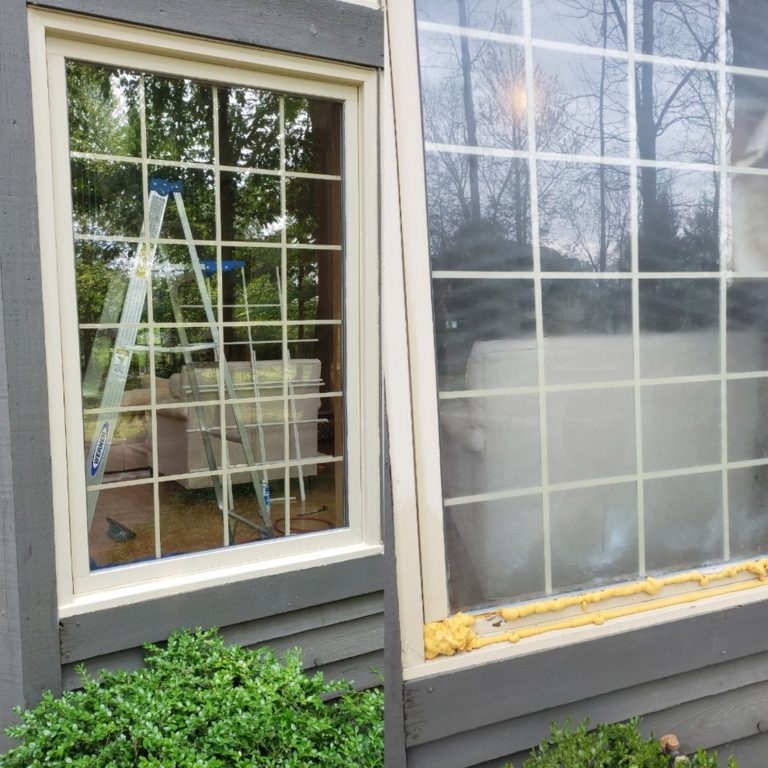
The weak point of every IGU is the edge seal. When it fails, the gas escapes and humid air creeps in, leaving the hazy film or fog trapped between the panes that no amount of cleaning will remove.
On calls around Columbus, a window that has gone cloudy on the inside is almost always a blown seal, not dirty glass. The sealed unit can usually be replaced without tearing out the whole frame.
If you are seeing fog between the panes, the unit has lost its seal, and an insulated glass replacement swaps the failed unit while keeping the existing frame and sash.
Specialty Glass: Acoustic, Impact, Fire, and Smart
Beyond the everyday types, a few specialty glasses solve specific problems. Acoustic glass is a laminated unit built with a thicker, sound-tuned interlayer and sometimes panes of uneven thickness, which together knock down outside noise more than standard double glazing. It is worth the upgrade near highways, flight paths, or a busy commercial street.
Impact-resistant glass is heavy-duty laminated glass rated to survive flying debris, the kind required along hurricane coasts. Inland Ohio homes rarely need that rating, but the same construction adds real security and storm resilience anywhere. Fire-rated glass, made from ceramic or specially treated glass, holds back flames and smoke for a set time and goes into doors and walls where code calls for a fire barrier.
At the high end, switchable or smart glass turns from clear to opaque at the flick of a switch, giving privacy on demand without a blind. It is striking and expensive, so for now it mostly appears in luxury baths, offices, and conference rooms rather than ordinary house windows.
Choosing the Right Glass for an Ohio Home
The real lesson of all these types is that a finished window is a stack, not a single choice. A typical replacement here might be a double-pane unit with one tempered pane for a door-side opening, a passive Low-E coating for the heating season, and argon fill, all in one assembly. You are choosing a recipe that fits the room.
Start with the non-negotiables. Safety glazing is set by where the window goes, so doors, low sills, and bath windows decide themselves. Then layer in comfort: a stronger U-factor for the exposed north and west walls that take Ohio’s wind, obscure glass where you want privacy, and laminated or acoustic glass on the noisy, street-facing side of the house.
For a whole-home project, it pays to map glass choices room by room rather than ordering one spec for everything. If you are planning new window installation, a walkthrough of each opening’s exposure, use, and privacy needs puts the right glass where it matters without overpaying for features a given window will never use.
Not Sure Which Glass Your Windows Need?
Matching glass to each opening gets easier with a second set of eyes, especially when safety codes, energy ratings, and a foggy unit or two are all in play at once. There is no reason to guess and order the wrong spec.
Book a free, no-pressure window assessment with our Columbus and Cincinnati team and get straight advice on the glass each window actually needs, whether you are repairing one pane or planning a full replacement.
FAQ: Window Glass Types

Ready to fix your windows? Get a free quote in 30 seconds.
Family-owned, licensed & insured. Most quotes delivered the same day.