Every window is made of the same handful of pieces, whether it is a hundred-year-old sash window in a German Village home or a new vinyl unit in a Dublin subdivision. Once you can name the frame, the sash, the glass, and the small bits of hardware that hold it all together, talking to a contractor gets a lot easier, and so does spotting a problem before it gets expensive.
This glossary walks through the window from the outside in: the structural frame, the moving sash, the glass and its hidden seals, the decorative grilles and trim, and the hardware that makes it lock and slide. If you are weighing a repair against a fresh unit, knowing the parts also helps you read a window installation quote line by line.
Quick answer: A window has three main parts: the frame (the fixed outer structure with the head, jambs, and sill), the sash (the moving panel that holds the glass, built from stiles and rails), and the glazing (the glass itself). Grilles, weatherstripping, balances, and locks round out the system.
The Three Main Parts of a Window
Strip a window down to its essentials and you are left with three things: a frame, a sash, and the glass. The frame is the fixed box that anchors into the wall and never moves. The sash is the panel that holds the glass and slides or swings to open. The glass, or glazing, is what you actually see through.
Almost every other term is a smaller piece of one of those three. The head, jambs, and sill belong to the frame. The stiles and rails belong to the sash. The spacer and the seal belong to the glass unit. Holding that map in your head keeps the rest of the vocabulary from feeling like a pile of unrelated jargon.
The exception is the hardware, the locks, balances, and cranks that connect the moving sash to the fixed frame. Those parts get their own section because they are the pieces that wear out first and the ones most homeowners end up asking about.
Parts of the Window Frame

The frame is the stationary structure that surrounds the entire window and ties it into the wall opening. It carries the weight of the sash and the glass, and it is the part that has to keep wind and water out year after year. A frame that is square and solid is the foundation for everything else working smoothly.
The frame itself breaks down into a few named pieces. The terms below come up constantly on quotes and in product catalogs, so they are worth knowing on sight.
- Head: the horizontal piece across the top of the frame.
- Jambs: the two vertical sides that run from the head down to the sill and guide the sash as it moves.
- Sill: the bottom horizontal member, sloped slightly outward so rain drains away from the house rather than pooling.
- Jamb extension: a flat strip that bridges the gap between the frame and the finished interior wall when the wall is thicker than the frame.
- Mullion: a vertical structural bar that joins two or more window units side by side.
One detail trips people up: the sloped outdoor sill is not the same as the flat indoor ledge you set a plant on. That indoor shelf is the stool, a trim piece covered later. Mixing up the two is the single most common naming mistake we hear.
Parts of the Sash
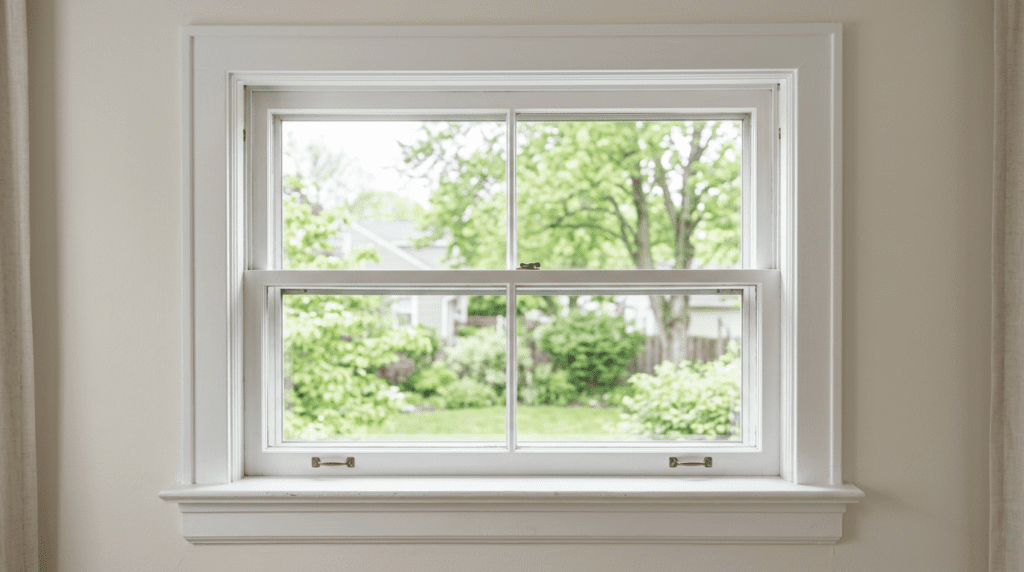
The sash is the framed panel that holds the glass and actually moves when you open the window. In a double-hung unit there are two of them, an upper and a lower; in a casement there is usually one. Because the sash is the part in motion, it is also where most of the friction, wear, and air leakage shows up over time.
A sash is built like a small picture frame around the glass, and its edges have their own names. The vertical sides are the stiles, and the horizontal top and bottom pieces are the rails. Where two sashes meet in the middle of a double-hung window, those overlapping rails are called the check rail or meeting rail, and that joint is where weatherstripping has to seal tightly.
When a sash starts to drop, stick, or rattle, the problem is rarely the glass and almost always the rails, the balances, or worn weatherstripping along the stiles. Knowing the sash is a separate, replaceable assembly is the reason many drafty windows can be fixed without tearing out the whole frame.
The Glass: Glazing, Panes, and Seals
Glazing is simply the trade word for the glass in a window, and it does far more than let in light. Modern windows use an insulated glass unit, two or sometimes three panes sealed together with a gap between them. That gap is usually filled with argon, a harmless inert gas that slows heat transfer better than plain air.
Holding the panes apart and sealed is a thin frame around the edge called the spacer bar, and the airtight bead that bonds it all is the seal. A microscopically thin low-emissivity, or low-E, coating on the glass reflects heat back where it belongs, into the room in winter and out of it in summer. The clear area you can actually see through, inside all of this, is the daylight opening.
The seal is the part that fails most quietly. When it breaks down, the argon escapes and moisture creeps in, leaving that foggy haze between the panes that no amount of cleaning removes. In Ohio, the freeze-thaw swing from a cold night to a sunny afternoon stresses these seals hard, which is why replacing a fogged glass unit is one of the repairs we handle most.
Grilles, Muntins, and Mullions

These three words sound alike and get swapped constantly, but they mean different things. Grilles are the decorative bars that divide a single pane into a grid of smaller squares for a classic, multi-pane look. On older windows those dividers were structural and called muntins, each one holding a separate small piece of glass.
On most modern windows the divided look is cosmetic. Grilles either snap onto the surface, sit sealed between the panes where they never need dusting, or come as simulated divided lite bars that are glued to both faces for a convincing traditional profile. Each approach trades a little authenticity for a lot less maintenance.
A mullion is the odd one out: it is not decorative at all. It is the heavier vertical post that structurally joins two whole window units into one assembly, like the bar between a picture window and the casements flanking it. If it divides the glass for looks, it is a grille or muntin; if it joins two windows for strength, it is a mullion.
Trim and Casing: Stool, Apron, and Drip Cap
Trim is the finish carpentry that frames the window against the wall and hides the rough gap around the unit. Inside, the flat boards running up the sides and across the top are the casing, the visible molding that gives a window its framed, finished look. Casing is mostly cosmetic, but it also covers the insulation and shims packed into the install gap.
Two interior pieces have specific names worth knowing. The stool is the flat interior ledge at the bottom, the shelf people wrongly call the sill. Below it, the apron is the short decorative board tucked under the stool that finishes the bottom of the casing. Together the stool and apron are the classic look you see on traditional Columbus homes.
Outside, the key trim part is the drip cap, a small angled flashing across the top of the window that throws rainwater out and away from the frame. On older houses a missing or rotted drip cap is a frequent source of leaks, because without it water runs straight down behind the casing and into the wall.
Window Hardware: Locks, Balances, and Cranks
Hardware is the collective name for the moving metal parts that let a window lock, glide, and stay where you put it. These are the pieces under the most stress, so they are also the ones that wear out and get replaced long before the frame or glass ever does. The exact set depends on how the window opens.
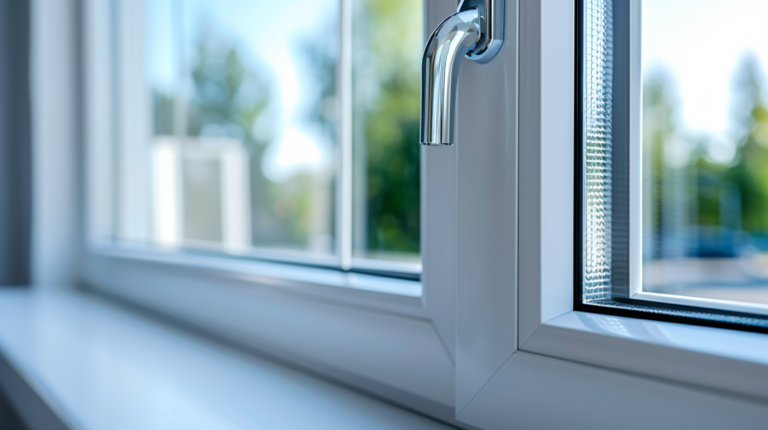
On a double-hung window, the sash rides on balances, spring or counterweight systems hidden in the jambs that hold the sash open at any height instead of letting it slam shut. A cam lock at the meeting rail pulls the two sashes tight against each other, pressing the weatherstripping into a seal, while the matching catch it grabs is the keeper. A small sash tilt pin or latch lets the sash pivot inward for cleaning.
A casement or awning window uses different hardware entirely: a crank-driven operating arm swings the sash open, and a folding handle or cam lever clamps it shut. Knowing which system you have makes ordering the right part far simpler, whether the fix is a double-hung balance or a casement crank that has stripped its gears.
Exterior and Installation Parts

A few parts you rarely see do the quiet work of keeping the window watertight and anchored to the house. The nailing fin, also called a nail flange, is a thin lip around the outside of the frame that fastens to the wall sheathing and tucks under the house wrap to block water. It is the difference between a window that sheds rain and one that leaks behind the siding.
At the base of the track on sliding and double-hung windows are the weep holes, small slots that drain rainwater back outside instead of letting it collect in the channel. Running around the whole opening is the weatherstripping, the flexible foam or fin that seals the moving sash against the frame and stops drafts. The rough opening, finally, is the framed hole in the wall the whole window drops into, always cut a touch larger than the unit to allow for shimming and squaring.
Around Columbus, the parts that fail first are almost never the glass. It is the weatherstripping going brittle and the weep holes clogging, because our freeze-thaw winters work moisture and movement into every gap. Catch those two early and a window lasts decades.
None of these parts are glamorous, but they are where water and cold air get in. When a window feels drafty or leaks during a storm, the culprit is usually weatherstripping, a clogged weep hole, or a failed nailing-fin seal long before anything structural is wrong.
How the Parts Differ by Window Type
The vocabulary stays the same from window to window, but which parts are present shifts with the style. A double-hung window has two operating sashes, two sets of balances, and a meeting rail in the middle. A single-hung looks identical but only the bottom sash moves, so it has half the balance hardware and a fixed upper sash.
Sliding windows trade the up-and-down balances for horizontal tracks and rollers, while casement and awning windows drop the sash tracks entirely in favor of a hinge and a crank. Fixed picture windows are the simplest of all: a frame, glass, and no moving sash or operating hardware at all, which is why they seal so well and almost never need a hardware repair.
Older homes around central Ohio add one more layer. Many original windows use a weight-and-pulley balance, a cast-iron sash weight hung on a cord inside the jamb pocket, rather than a modern spring. The parts have different names and the repair is different, but the logic of frame, sash, and glass still holds. Once you can picture how a modern double-hung window goes together, the older weight-and-pulley versions are far easier to understand too.
Knowing the Parts Pays Off
You do not need to memorize every term to get value from this. Knowing the difference between a sash and a frame, or a fogged seal and dirty glass, tells you whether you are facing a quick fix or a full replacement, and it stops you from paying to swap a whole window when a balance or a weep hole was the real problem.
If a window in your home is sticking, fogging, or letting in a draft and you are not sure which part is to blame, book a free, no-pressure window assessment with our Columbus and Cincinnati team. We will name the part, tell you straight whether it is a repair or a new installation, and never push the bigger job when the small one will do.
FAQ: Window Parts and Anatomy

Ready to fix your windows? Get a free quote in 30 seconds.
Family-owned, licensed & insured. Free, no-obligation quotes.