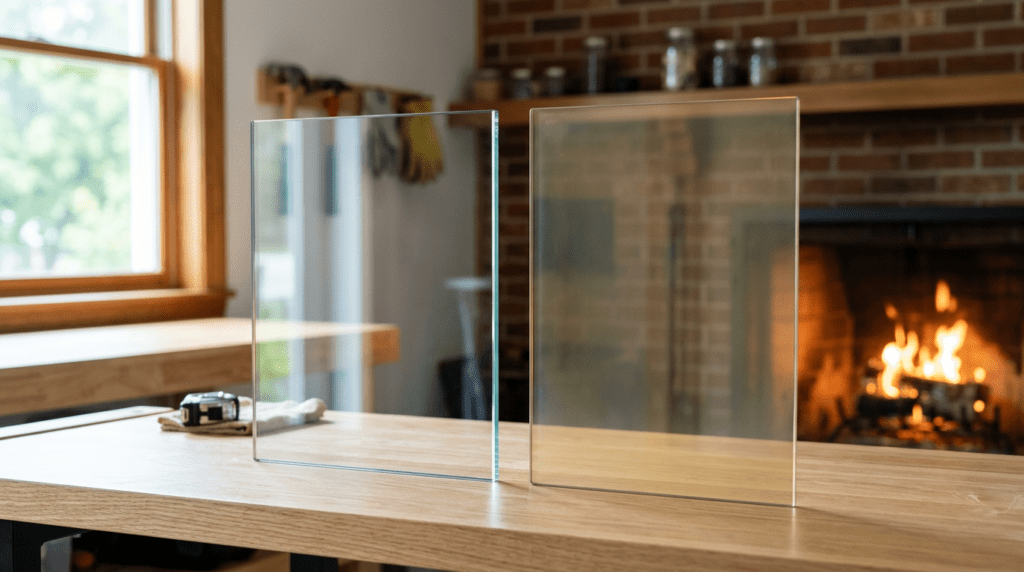
Two panes can look almost identical on a shelf, yet one belongs in a shower door and the other in a wood stove. Tempered glass and ceramic glass are built for completely different jobs, and using the wrong one is how a fireplace panel cracks in a single winter or a window fails a safety inspection. Knowing which is which saves money and, around heat, a real hazard.
This guide breaks down how each type is made, how much heat it takes, how it breaks, and where each one belongs in a house. If a pane in your home has already failed, our team handles glass repair and replacement and can match the right material to the opening.
Quick answer: Tempered glass is heat-treated regular glass built for impact safety in windows, doors, and showers. Ceramic glass is a glass-ceramic made to survive constant high heat in fireplaces and cooktops. Tempered shatters into blunt pebbles; ceramic withstands far higher temperatures without breaking.
Tempered Glass vs Ceramic Glass at a Glance
The short version is that these two materials solve opposite problems. Tempered glass is ordinary soda-lime glass that has been heated and rapidly cooled to make it stronger and safer when it breaks. Ceramic glass is not really glass in the everyday sense at all; it is a glass-ceramic engineered to shrug off heat that would weaken or crack a normal pane.
That single design goal drives every other difference. Tempered glass is optimized for human safety in places people touch and walk past. Ceramic glass is optimized for thermal survival in places that stay hot for hours. Hold that distinction in mind and the rest of the comparison falls into place.
- Tempered glass: strong, impact-safe, optically clear, and inexpensive, built for windows, doors, and shower enclosures.
- Ceramic glass: extreme heat tolerance and thermal-shock resistance, built for fireplace doors, wood stoves, and cooktops.
- The deciding question: is the pane there to keep people safe on impact, or to hold back constant heat?
How Each Type of Glass Is Made
The manufacturing routes explain why the two behave so differently. Tempered glass starts as a standard pane that is heated in a furnace to roughly 620°C and then blasted with cool air on both surfaces. The outside hardens first and squeezes the still-soft core, locking the finished sheet into a state of permanent surface compression. That built-in tension is what makes it up to four times stronger than untreated glass of the same thickness.
Ceramic glass is grown, not just heat-treated. Manufacturers melt the raw batch, form it, then hold it through a controlled crystallization step that seeds microscopic crystals throughout the material. Those crystals give the finished panel a near-zero rate of thermal expansion, so it barely moves as it heats and cools. Brand names you will see on a fireplace box, such as PyroCeram and NeoCeram, refer to this engineered glass-ceramic rather than ordinary tempered stock.
Because tempering is a surface treatment, you cannot cut or drill a tempered pane after the fact without it exploding; it has to be made to final size first. Ceramic glass can be cut to fit by a fabricator, which is one reason replacement fireplace panels are usually ordered to exact dimensions.
Heat Resistance: The Real Dividing Line
If there is one number that decides which glass you need, it is operating temperature. Tempered glass holds up well to everyday warmth, but it is rated for continuous exposure only to around 470°F. Push past that and the very surface tension that makes it strong begins to relax, weakening the pane until it can fail without warning. Sit it close to a wood fire and it is living on borrowed time.
Ceramic glass operates in a different league. Standard fireplace-grade panels handle continuous temperatures well above 1,200°F, and some rated grades go higher still. Just as important is thermal shock, the stress created when one part of a pane is far hotter than another. A splash of cold water or a draft on a blazing fireplace door would crack tempered glass; ceramic’s near-zero expansion lets it take that swing in stride.
This is the gap that matters in an Ohio winter, when a wood stove or fireplace may run hot for hours every evening while the room around it stays cold. A glass door that has to bridge that constant temperature difference is exactly the job ceramic was invented for, and exactly the one tempered glass is not.
How They Break and Why It Matters for Safety
The two materials also fail in opposite ways, and that behavior is a feature, not an afterthought. When tempered glass finally breaks, the stored surface tension releases all at once and the pane disintegrates into thousands of small, blunt pebbles instead of long razor shards. That is why building codes call it safety glazing and require it in places where someone could fall against it.
Ceramic glass is not built around that kind of impact safety. It tends to crack into larger pieces rather than crumble, which is acceptable in a fireplace door that no one is going to walk into, but a poor choice anywhere a person might strike it. Its strength is staying intact under heat, not protecting a body on impact.
So the safety logic flips depending on the threat. Against a human collision, tempered glass is the safer pane. Against a wall of constant heat, ceramic is the only one that stays whole. Neither is universally tougher; each is tougher at the job it was designed for.
Clarity, Tint, and Scratch Resistance
Looks matter when the glass sits in a living space, and here tempered glass has the edge. It stays optically clear and color-neutral, holds a clean polished edge, and resists surface scratching well, which is why it works in shower doors and glass railings where people see it up close every day.
Ceramic glass often carries a faint amber or smoky tint, a side effect of the crystals that give it heat resistance. In a fireplace that tint is invisible against the flames, but it would look off in a window. Its surface is also somewhat softer and more prone to fine scratches than tempered glass, so it is rarely chosen where appearance is the priority.
For a homeowner the practical takeaway is simple. If clarity and a flawless look drive the choice, tempered glass wins. If the pane sits behind a fire where no one studies its surface, a slight tint and softer face are a fair trade for surviving the heat.
Where Tempered Glass Belongs in a Home
In residential construction, tempered glass is the workhorse for any pane people live around. Safety codes require it in specific high-risk locations, and most builders default to it wherever a fall or collision is plausible. If you are choosing glass for a living space, this is almost always the answer.
Common spots that call for tempered safety glass include:
- Windows near the floor or within a set distance of a door, where a person could trip into them.
- Entry and patio doors, sidelights, and the panels in a sliding system.
- Shower and tub enclosures, where wet floors and bare feet raise the stakes.
- Glass railings, tabletops, and partitions that take everyday knocks.
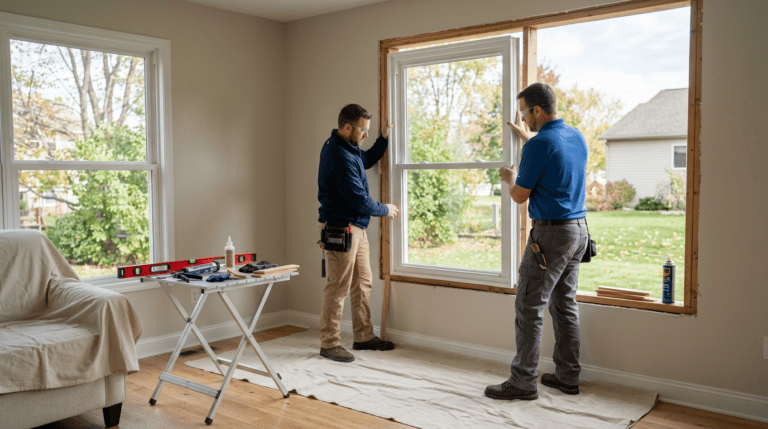
If a tempered pane in one of these spots breaks, it has to be replaced with another tempered unit cut to size at the factory, since the glass cannot be trimmed on site. Many of the openings we handle during a new window installation rely on it, and replacing the glass in a double-hung window means ordering a fresh tempered unit to the exact opening.
Where Ceramic Glass Belongs
Ceramic glass earns its premium in the handful of places that stay genuinely hot. Its whole reason to exist is sustained heat and thermal shock, so it shows up wherever a flame or element sits inches from the pane. For most homeowners, the encounter is a fireplace or a stove.
Typical ceramic glass applications include:
- Wood and pellet stove windows, where the glass sits close to a live fire for hours.
- Fireplace doors, both masonry and prefabricated units.
- Glass cooktops, which spread an element’s heat across the surface.
- Oven doors and industrial sight glasses on furnaces and boilers.
If you own a wood-burning insert and the door glass cracks, replacing it with cheaper tempered glass is a common and dangerous mistake. The new pane may look fine for a few fires, then fail under heat it was never built to take. Match a fireplace panel with ceramic, every time.
Which One Should You Choose?
The choice almost always answers itself once you name the real threat to the glass. Ask whether the pane mainly faces impact from people or constant heat from a fire. Impact points to tempered; sustained heat points to ceramic. Very few situations sit in the middle, which is what makes this comparison more straightforward than it first looks.
On service calls, the cracked panels we see most often are fireplace doors that someone replaced with ordinary tempered glass to save a little money. It survives a season, then lets go on a cold night when the fire is roaring. The right material the first time would have outlasted the stove.
For windows, doors, showers, and railings, tempered safety glass is the correct and code-compliant pick, and it is what belongs in nearly every opening in a typical home. Reserve ceramic for the fireplace, the wood stove, and the cooktop. When you are unsure what a specific opening calls for, the safest move is to ask before you order, because a wrong guess shows up as a crack later.
Cracked Glass? Get the Right Replacement
Whether a window pane shattered or a fireplace door finally gave out, the fix starts with matching the correct glass to the job. Putting tempered where ceramic belongs, or the reverse, only buys a repeat repair. A quick look tells our team which material and thickness the opening needs.
Book a free, no-pressure glass replacement quote with our Columbus and Cincinnati team and get the right pane cut to fit the first time.
FAQ: Tempered vs Ceramic Glass

Ready to fix your windows? Get a free quote in 30 seconds.
Family-owned, licensed & insured. Free, no-obligation quotes.