Ask most homeowners to point to the windowsill and they will tap the flat shelf inside the room where the plants and the coffee cup sit. That shelf has a job and a name, but in strict terms it is not the sill at all. The real windowsill does quieter, more important work, and when it fails it can take a chunk of the wall with it.
This guide sorts out what a windowsill actually is, how it differs from the interior stool and the apron below it, the materials sills are made from, and what the part does for the whole window. It also covers how sills fail in an Ohio climate and the point at which a tired sill needs professional sill repair rather than another coat of paint.
Quick answer: A windowsill is the horizontal base of a window frame. The exterior sill is a sloped, weather-resistant ledge that sheds rain away from the wall, while the flat interior shelf most people call the sill is technically the stool. Together they support the window, block drafts, and keep water out.
Sill, Stool, or Apron? Sorting Out the Names
The confusion is not your fault. Even some window installers say “sill” when they mean the interior shelf, so the words have drifted over time. But the distinction matters the moment something needs fixing, because the three pieces sit in different places and fail for different reasons.
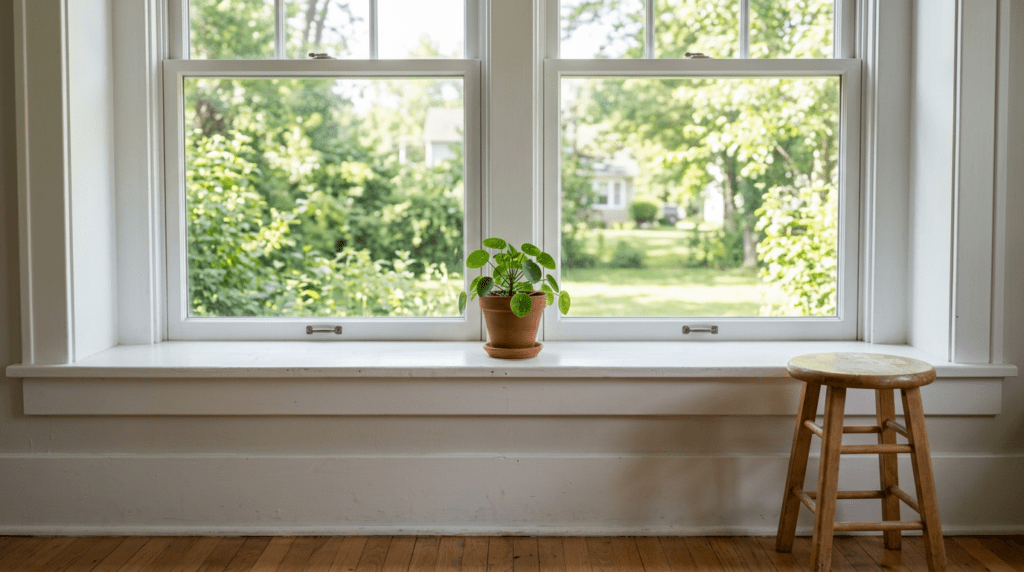
The sill is the structural board that forms the bottom of the window frame. On the outside of the house it is sloped and built to take weather. The stool is the flat, finished shelf on the inside, the piece you set things on, and it laps over the interior edge of the sill. The apron is the trim board fixed to the wall directly below the stool, covering the gap where the frame meets the drywall.
Picture it as one assembly working front to back: the weatherproof sill outside takes the rain, the interior stool gives you a level surface and a clean line for the sash to close against, and the apron finishes the look below. When a repair quote mentions the “sill,” it usually means the exterior structural piece; when you are worried about a stained or peeling shelf indoors, you are really looking at the stool.
Where the Sill Sits in the Window
A window frame is built from three parts that ring the glass: the head across the top, the jambs up the two sides, and the sill across the bottom. The sill takes the most abuse of the three, since gravity pulls every drop of water that hits the glass straight down onto it.
There are really two sills stacked in most walls. The one you can see is the finish sill, part of the window unit itself. Hidden behind the trim is the rough sill, a framing member that helps carry the load above the opening. Homeowners almost never touch the rough sill, but knowing it is there explains why a badly rotted finish sill can hint at trouble deeper in the wall.
At the top of the window, the head often wears a drip cap, a small flashing that throws water clear of the frame. The sill is its partner at the bottom, finishing the path that water takes off the glass and away from the house. The sash also rests on the sill when the window is shut; on a double-hung window the lower sash seats directly against it, which is why a warped sill can let in a draft even when everything looks closed.
What a Windowsill Actually Does
A sill looks passive, but it earns its place with four distinct jobs. Most homeowners only notice the last one, the flat surface, until one of the first three quietly fails.
Each role ties back to keeping the window solid and the wall dry. Lose any one of them and the symptoms show up fast, from a sticky sash to a damp patch under the window.
- Structural support. The sill anchors the bottom of the frame, spreads the window’s weight across the opening, and keeps the jambs from flexing.
- Water management. The sloped exterior surface sheds rain and snowmelt away from the wall instead of letting it pool against the frame.
- Draft and energy control. A sound sill closes off the bottom of the opening so conditioned air stays in and cold air stays out, working with the weatherstripping above it.
- A usable surface. Indoors, the stool gives you a ledge for plants, a place to mount blinds, or in a deep wall, a reading nook or bench.
Why the Exterior Sill Slopes
The single most important feature of an exterior sill is that it is not flat. It tilts gently downward, away from the glass and the wall, so water runs off under its own weight. A level sill would let rain sit in a puddle against the frame, and standing water is the start of almost every sill problem.
Underneath the front lip, most sills have a drip kerf, a thin groove cut along the bottom edge. Water following the underside of the sill reaches the groove and drops off there instead of curling back toward the siding. It is a small detail that does a lot of work, which is why it causes trouble when a thick coat of paint bridges the kerf and lets water track back to the wall.
In Ohio the slope matters even more than it does in a dry climate. Rain that lingers in a flat or sagging sill freezes overnight, and freezing water expands. Through a Columbus winter that cycle repeats dozens of times, prying open joints and lifting paint a little more each round until water finds its way into the wood. A sill that still sheds water cleanly is your first defense against freeze-thaw damage.
Common Windowsill Materials
Sills are made from a handful of materials, and the right one depends on whether it faces the weather outside or sits protected inside. Exterior sills have to handle sun, rain, and freezing; interior stools mainly need to resist scuffs and the odd spill, so the choices are different at each end.
Here is how the common options compare for a climate with cold winters and humid summers. Cost tends to rise from the top of the list down, but so does lifespan and resistance to moisture.
- Wood. The traditional choice, warm-looking and easy to shape, but it must be sealed and repainted or it will soak up water and rot. Old-growth wood on historic homes is often worth saving.
- Vinyl and PVC. Lightweight, affordable, and impossible to rot. It wipes clean and shrugs off moisture, though it can look plain and may yellow over many years.
- Fiberglass and composite. Strong, stable, and weather-tough, with the look of painted wood and far less upkeep. A common pick on modern replacement units.
- Stone. Marble, granite, or limestone reads as upscale, resists moisture and scratches, and lasts for decades. It is heavy and costly to install.
- Concrete and fiber cement. Dense and rot-proof, good for exposed exterior sills, but heavy and prone to hairline cracks if water gets in and freezes.
- Tile. Mostly an interior choice for kitchens and baths; durable and washable, though the grout lines need regular cleaning.
Choosing an Interior Stool That Survives Condensation
The interior shelf sees less weather than the outside sill, but it has one enemy people forget: condensation. On a cold Ohio morning, warm indoor air meets the chilled glass and the moisture runs down onto the stool, where it can sit for hours.
That daily wetting is hard on the wrong material. A painted MDF stool, common in builder-grade homes, swells and crumbles once water works through the paint at a corner or a nail hole. Solid wood holds up better when it is sealed, and PVC or stone simply does not care about the moisture.
If your windows sweat every winter, the stool material is worth a thought, but the condensation itself is the real signal. Heavy, persistent fogging often points to tired weatherstripping or, on older units, a failed glass seal that a foggy-glass replacement can solve. Drying the stool treats the symptom; finding why the glass runs so cold treats the cause.
How Windowsills Fail in an Ohio Climate
Most sill failures start the same way: water gets somewhere it should drain away from, and time does the rest. On exterior wood sills the usual path is a cracked paint film at the front edge, then water wicking into the end grain, then soft, spongy wood that crumbles under a fingernail. By the time the surface looks bad, the rot is often well established underneath.
Other failure modes show up by material. Concrete and stone sills crack when trapped water freezes and expands inside a hairline gap. Caulk joints at the ends of the sill shrink and split, opening a direct route for water. Indoors, a stool left wet from condensation lifts its paint, darkens, and eventually softens at the corners.
On older homes around Columbus, a rotted sill is rarely just the sill. By the time the wood is soft to the touch, water has usually traveled into the jamb and sometimes the framing behind it, so we probe the whole bottom corner before quoting a fix.
A quick probe with a screwdriver tells the story. If the tip sinks into the wood under light pressure, the rot is active and deeper than it looks. Firm wood that resists the point is sound, even when the paint is ugly. That single test decides whether you are looking at a cosmetic refresh or a real repair.
Repair or Replace a Windowsill?
Not every bad-looking sill needs to come out. The deciding factor is how far the damage has spread, not how rough the surface looks. A sill with flaking paint and clean, firm wood underneath just needs scraping, priming, and repainting. One that is soft, cracked through, or pulling away from the frame needs more.
For partial rot in solid wood, a two-part epoxy consolidant can rebuild the soft area, and it is often the right call on a historic Columbus home where the original old-growth sill is worth keeping. When rot has reached the jamb, the sash no longer seats, or water has gotten into the wall, patching only hides a spreading problem, and replacing the sill or the full unit through a window replacement is the honest fix.
Run through a short check before you decide:
- Probe the sill and the bottom corners of the jambs with a screwdriver; note anywhere the tip sinks in.
- Look for cracks that go through the sill rather than just the paint.
- Check whether the sash still closes flush and locks without a draft.
- Look inside and below for water stains on the wall or apron, a sign water has moved past the sill.
If the rot is shallow and contained, a repair will hold. If the probe sinks in at several spots or the stains have spread, replacement is the better value over the long run.
Keeping a Windowsill in Good Shape
A sill lasts far longer with a little seasonal attention, and the work is simple. The goal is always the same: keep water moving off the sill and out of the joints, and keep the protective surface intact.
Twice a year, wipe the exterior sill clean and look hard at the front edge and the end caulk. Touch up any cracked caulk and reseal bare or checked wood before winter, while the surface is still dry. Make sure the drip kerf underneath is clear of paint buildup and the slope still sends water outward. Indoors, wipe condensation off the stool on cold mornings so it cannot soak in.
Upkeep varies a little by material. Painted wood wants a fresh coat every several years; stone and concrete benefit from a periodic sealer; vinyl and fiberglass need nothing more than a wipe-down. None of it takes long, and it is far cheaper than rebuilding a sill that was left to rot. Catching a split caulk line in October can save the whole sill from a hard freeze in January.
Soft, Cracked, or Leaking Sill?
If the sill under one of your windows is soft, cracked, stained, or letting in a draft, the safest move is to find out how far the damage really goes before it spreads to the frame or the wall. A quick probe and a look behind the trim usually answer it.
Book a free, no-pressure inspection with our Columbus and Cincinnati team. We will tell you straight whether it is a simple sill repair or something that needs more, and you can get a free quote with no obligation.
FAQ: Windowsills, Stools, and Repairs

Ready to fix your windows? Get a free quote in 30 seconds.
Family-owned, licensed & insured. Free, no-obligation quotes.