The thin bars that divide a window into smaller panes go by several names: grids, grilles, or muntins. On almost every window sold today they are decorative, not structural, so picking them is a styling decision rather than an engineering one. That decision sticks, though, because the grid pattern is built into the sash and you live with it for as long as the window lasts.
Getting it right means matching the pattern to your home’s architecture, deciding how the bars are joined to the glass, and weighing the small trade-offs in view, light, and cleaning. The grille is one of several parts that make up a finished sash, alongside the balances and other moving hardware, so it pays to choose deliberately. This guide covers the patterns, the four construction types, and a simple way to decide.
Quick answer: Window grids, also called grilles or muntins, are decorative bars that split the glass into smaller panes. Choose a pattern that fits your home’s style, colonial grids for traditional houses, prairie or none for modern ones, then pick how they are built: between the glass for easy cleaning, or applied to the surface for a more authentic look.
Grids, Grilles, Muntins: The Same Bars, Different Words
Walk into any showroom and you will hear grids, grilles, and muntins used as if they mean the same thing. In everyday use they do. All three describe the bars that break a single sheet of glass into the look of several smaller panes, and the word you hear usually depends on the brand rather than on any real difference in the product.
The history explains the overlap. On old windows, muntins were the slim wood strips that actually held many small panes together, back when glass could only be made in small sizes. Modern glass comes in large sheets, so those bars are no longer needed for strength, and what looks like a divided window is really one pane with grilles added for style.
Two related terms are worth keeping straight. A mullion is the vertical post between two separate windows, not a bar inside the glass. And a single pane framed by grilles is called a lite, which is why you see patterns described as four-lite or six-lite. Once you know those, the rest of the vocabulary falls into place.
The Four Ways Grilles Are Built
How the bars are attached matters as much as the pattern, because it changes the price, the cleaning, and how convincing the look is up close. Manufacturers give these systems their own brand names, but they all fall into four families. The right one depends on how authentic you want the window to read and how much glass-cleaning you are willing to do.
From most traditional to most low-maintenance, here is how grilles are made:
- True divided lite (TDL). Real separate panes held by actual muntins, the way historic windows were built. The most authentic and the most costly, and rare on modern insulated units because each small pane needs its own seal.
- Simulated divided lite (SDL). Solid bars permanently bonded to the outside and inside glass surfaces, usually with a matching spacer between the panes. It mimics the depth and shadow of a real divided window without breaking the sealed glass unit.
- Grids between the glass (GBG). Slim aluminum bars sealed inside the insulated glass unit, so both glass faces stay perfectly flat. Nothing collects on them, which makes this the easiest type to clean.
- Removable interior grilles. A lightweight grid that clips onto the inside of the sash and lifts out, so you can wash the glass bare. The budget-friendly, renter-friendly choice, though the pattern reads as the least dimensional.
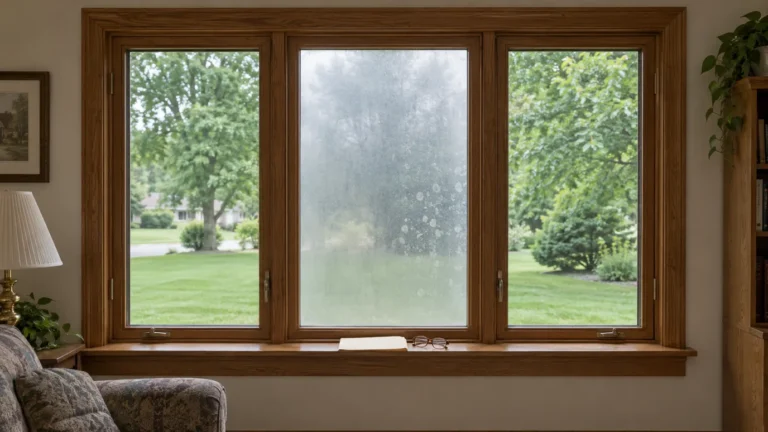
If a between-the-glass unit ever fogs up, the bars are sealed inside with the air space, so the cure is a new glass unit rather than a whole new window. That is the same sealed-unit glass repair any double-pane window may eventually need.
Popular Grid Patterns and the Looks They Create
The pattern is what people actually notice from the curb, and a handful of layouts cover most homes. Each one carries an architectural association, so the grid quietly tells anyone passing what era and style your house is dressed in. The trick is reading those associations before you commit to one.
These are the patterns you will be offered most often:
- Colonial. An even grid of equal squares, commonly six or nine panes per sash. The default for traditional and colonial-style homes.
- Prairie. Bars set in from the edges to form a border, leaving the center glass open. A clean Arts-and-Crafts look popularized by Frank Lloyd Wright.
- Diamond. Diagonal bars crossing into a lattice of diamonds, the signature of Tudor, Gothic, and storybook cottages.
- Farmhouse. A few large rectangles instead of many small squares, simple and current on modern farmhouse builds.
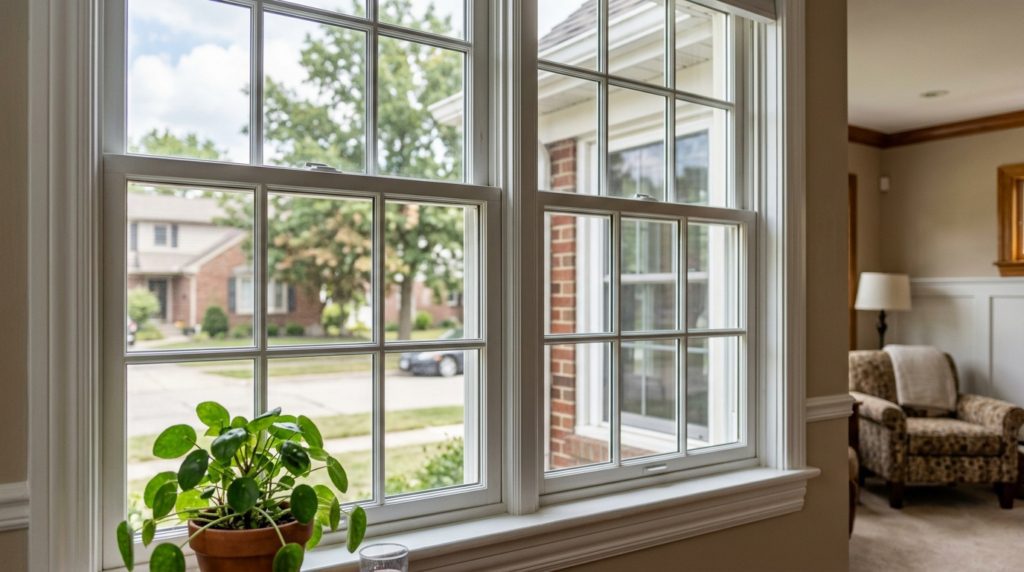
- Top-sash only. Grids on the upper sash with clear glass below, a craftsman and cottage favorite that keeps the view open. This look is common on double-hung windows, where only the top sash carries the pattern.
- Gridless. No bars at all, the choice for contemporary and mid-century modern homes that want an uninterrupted pane.
How to Match Grids to Your Home's Style
The safest rule is also the simplest: let the architecture choose the grid, not the trend of the moment. A pattern that fits the house looks right for decades, while a fashionable choice on the wrong style starts to look dated fast. Around Columbus and Cincinnati that matters more than in newer suburbs, because the older neighborhoods carry a clear mix of styles.
Match the grid to what the house already is:
- Colonial, Georgian, and Cape Cod: symmetrical colonial grids, often six-over-six.
- Tudor and storybook homes: a diamond lattice.
- Craftsman bungalows: top-sash grids or tall vertical fractional bars.
- Farmhouse: a few large rectangles, or none on the back of the house.
- Mid-century and contemporary: gridless, or a restrained prairie border.
Consistency holds the look together. Grids should run across the whole front of the house, or at least an entire elevation, so the windows read as a set rather than a patchwork. Many owners keep grids on the street-facing windows for character and skip them on the back for an open view, which is a sensible middle path. If your home sits in a historic district such as German Village or Victorian Village, check the local guidelines first, since some require a true divided-lite appearance and rule out the flat between-glass look. Our guide to windows in Columbus historic districts lists the city’s rules for muntins, glass and approved window lines.
On older Columbus homes we often see replacement windows wearing a grid that fights the house, nine-lite colonial bars dropped into a craftsman bungalow. The glass is fine, but the window looks borrowed from another street. Matching the original pattern is what makes a new window disappear into the architecture.
How to Choose: Five Quick Questions
With the patterns and construction types in hand, the choice comes down to a short series of questions. Work through them in order, because the answer to the first usually narrows everything after it. None of this needs a designer, just an honest look at the house and how you actually live in it.
Ask yourself, in this order:
- What style is the house? The architecture sets the pattern before personal taste enters.
- Front only, or every window? Decide where character matters and where an open view wins.
- How much glass-cleaning will you do? Between-the-glass or removable grilles if cleaning is a chore, surface bars if authenticity wins.
- How wide should the bars be? Slim profiles read modern, while wider contoured bars read historic.
- What color? Match the sash, or contrast it the way black grids do on a white frame.
If you are weighing grids as part of new windows, settle the pattern and construction type before you order, because grilles are built into the sash at the factory and cannot be added cleanly later. Bring a photo of your home’s front to the consultation so the pattern can be judged against the real facade, not a showroom wall.
What Grids Mean for View, Light, and Cleaning
Grids are not free, and the costs are not only on the invoice. Every bar you add subtracts a little from the view and the daylight, which is why large picture windows and rooms that live on their view are often left clear. On a small double-hung the effect is charming; on a wall of glass it can feel like looking through a cage, so scale the pattern to the window.
Cleaning is the trade-off people underestimate. Surface-mounted bars, the SDL and true divided types, create edges where dust, pollen, and Ohio’s hard-water spots gather, so each pane takes longer to wipe. Grids sealed between the glass leave both faces flat and wipe clean in one pass, and removable grilles let you take the grid out entirely for a deep clean. If spring pollen and summer storms already make window-washing a yearly battle, that difference adds up.
On energy, modern grids are close to neutral. Between-the-glass and simulated systems keep the insulated unit sealed, so they do not undo the efficiency of a good double-pane window, and some lines offer insulating spacer bars for cold climates. The bars do block a sliver of solar gain, but the amount is minor next to the glass package itself. If efficiency is your priority, focus on the glass package and frame first and treat the grid as a styling layer on top.
Common Mistakes When Choosing Grids
Most grid regret comes from a few avoidable errors, and they tend to surface only after the windows are in and impossible to change. Run through this list before you sign off on a pattern, because a grid is a long commitment built into the glass.
The errors techs see most often:
- Matching the trend, not the house. A fashionable pattern on the wrong architecture dates quickly and can hurt resale.
- Mixing patterns across the facade. Different grids on neighboring windows make the front look unplanned.
- Ignoring the cleaning reality. Choosing surface bars, then resenting the extra wiping every season.
- Over-gridding big windows. Heavy patterns on large panes choke both the view and the light.
- Trying to pry out between-glass grids. They are sealed inside the unit, and forcing them breaks the seal and fogs the glass.
See the Grids on Your Own Home
Choosing a grid is far easier with a window you can hold and a pattern shown against your own house. If you are deciding between colonial, prairie, or no grid at all, or weighing between-the-glass against surface bars, a quick look at your facade settles most of it fast.
Book a free, no-pressure window consultation with our Columbus-area team and see the patterns matched to your home’s style before you commit.
Window Grids and Grilles: Common Questions

Ready to fix your windows? Get a free quote in 30 seconds.
Family-owned, licensed & insured. Free, no-obligation quotes.