The screen is the part of a window nobody thinks about until a tear lets the mosquitoes in or a sun-faded mesh makes the whole house look tired. Yet the right screen does real work: it keeps insects out, lets a breeze through, and on the right window it can cut glare and block the afternoon heat that runs up a summer cooling bill. Picking one means matching the mesh and the frame to how the window opens and what you actually need from it.
This guide walks through the frame styles, the mesh materials and what each is good at, how mesh count affects what gets through, and how to measure for a replacement. If you are weighing new windows anyway, the screens are part of that decision, so it is worth knowing the options before you talk to anyone about new window and door installation.
Quick answer: Most homes use vinyl-coated fiberglass screen for its low cost and clear view, while aluminum lasts longer and resists denting. Choose specialty mesh, solar, pet-resistant, or fine no-see-um, when a window faces harsh sun, takes abuse from pets, or sits near water. Match the screen to the window and the room, not just the budget.
What a Good Screen Actually Does for the Room
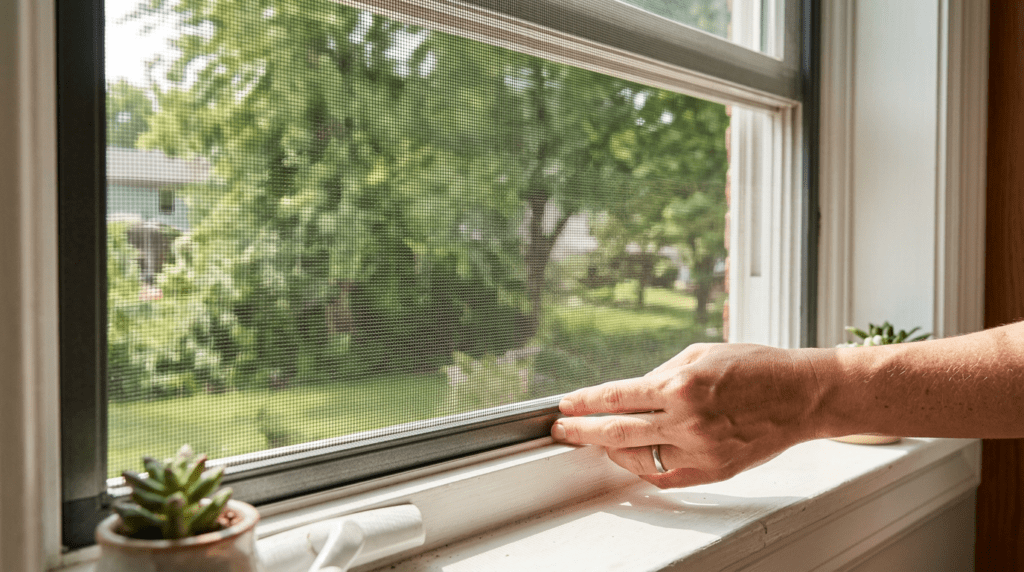
A window screen earns its keep three ways, and only one of them is keeping bugs out. The first is airflow without the swarm: an open window in May moves stale air through the house, but in Ohio that same opening is an invitation to mosquitoes, gnats, and the boxelder bugs that show up every fall. Intact mesh is the cheap barrier that lets you keep the window open at night.
The second job is the view and the light. Screen mesh is not invisible, and a heavy or aged weave can gray out a window noticeably, especially on a north-facing room that needs every bit of daylight. Newer high-visibility meshes were built specifically to fix that, trading a little durability for a clearer look. The third job, on some windows, is filtering what the air carries: pollen during a brutal Columbus spring, or the low sun that fades a sofa over a few summers.
Screens also protect the glass behind them from grit and small impacts, which is why a torn or missing screen often shows up alongside other window wear. If yours are sagging or full of holes, it is usually a sign the windows themselves are due for a closer look.
Window Screen Frame Types: Full, Half, and Retractable
Before the mesh, the frame style has to match how the window operates, because a screen only needs to cover the part of the window that opens. Getting this wrong is the most common ordering mistake we see, so start here.
A full screen covers the entire window opening and is standard on casement and awning windows that swing out, and on many picture-and-vent combinations. Larger full screens often carry a horizontal crossbar for rigidity so the mesh does not bow. A half screen covers only the lower portion and suits single-hung and many sliding windows, where just one sash moves and the other overlaps fixed glass. Half screens cost less and store more easily, but they leave the top open if you have a double-hung window that tilts both sashes.
Retractable screens are the third path, rolling into a slim housing when you are not using them so the view is completely clear in winter. They shine on doors and large openings where a fixed screen would be in the way, though the roller hardware adds cost and another moving part to maintain. Knowing your window style first, which our guide to window types lays out, tells you which frame you can even use.
Window Screen Mesh Materials, Compared
The mesh is where most of the decision lives, and the two everyday materials cover the majority of homes. Fiberglass is the default for a reason: it is inexpensive, flexes without creasing or denting, and is the easiest material to work with if you ever re-screen a frame yourself. Its trade-off is lifespan, since the vinyl coating breaks down under UV and a fiberglass screen typically needs replacing after roughly ten to twelve years.
Aluminum is the durable alternative. It holds its shape, resists corrosion, and can last decades on a low-traffic window, which is why it shows up on older homes and on sliding screen doors that take a beating. The downsides are that it dents if something hits it, can develop a chalky oxidized film over time, and costs more than fiberglass. Between the two, think about exposure and handling: a high window you rarely touch is a fine candidate for long-lived aluminum, while a screen you pop in and out every season is friendlier in fiberglass.
A third group worth knowing is the high-visibility meshes sold under names like UltraVue, BetterVue, and similar premium weaves. They use a finer, darker yarn that nearly disappears from inside, sharpening the view and letting in more light than standard fiberglass while still shedding water. They cost more, but on a main living-room window the clearer sightline is often worth it.
- Fiberglass: lowest cost, easy to install, good clarity, but a roughly 10 to 12 year lifespan.
- Aluminum: very long-lasting and rigid, but dents and can oxidize, and costs more.
- High-visibility mesh: finest standard view and best light, at a premium price.
Specialty Screen Meshes for Specific Problems
Beyond the standard materials, several specialty meshes solve one problem each, and they are worth the upgrade only on the windows where that problem actually exists. Spending more to put security mesh on a second-floor bedroom is wasted money, but the right specialty screen on the right window pays for itself in comfort or repairs avoided.
The most useful, in rough order of how often Ohio homes need them, are below. Many homeowners mix and match, putting solar screen on the hot west side and clear fiberglass everywhere else.
- Solar screen: a tightly woven mesh that blocks a large share of sun and heat, best on south- and west-facing windows that bake in the afternoon or on a sunroom that overheats. It also adds daytime privacy, at the cost of some view and indoor light.
- Pet-resistant screen: a heavy vinyl-coated polyester many times stronger than fiberglass, made to survive a dog or cat that pushes and claws. The trade-off is a slightly darker, less transparent mesh.
- No-see-um screen: a very fine weave that stops tiny biting midges, gnats, and sand flies that walk right through standard mesh. Useful near water or wooded lots, though the tighter weave cuts a little airflow.
- Pollen and allergen mesh: a multi-layer filter screen that traps a portion of pollen and dust, which can take the edge off a rough allergy season.
- Stainless steel security mesh: a rigid metal weave that resists cutting and impact, used on ground-floor windows and doors where protection matters more than a clear view.
Mesh Count: Why the Weave Matters
Mesh count is the number of strands per inch, written as two numbers like 18×16, and it quietly decides what gets through your screen. The standard 18×16 weave is the residential default and stops common pests like mosquitoes and flies while keeping airflow generous. It is the right call for most windows in most homes.
Go tighter, to a 20×20 weave or finer, and you start excluding the smaller invaders that a standard screen lets pass, along with more pollen and fine dust. The catch is that a denser weave also slows the breeze and slightly dims the view, so there is a real trade between protection and openness. Think about what you are actually keeping out before paying for the tightest mesh available.
For most Ohio homes the practical answer is standard 18×16 fiberglass on the windows you open for a breeze, and a finer or specialty weave reserved for the rooms with a specific complaint, a window near standing water, a hot western exposure, or an allergy sufferer’s bedroom.
How to Choose the Right Screen for Each Window
The best screen is rarely the same one for every opening, so it helps to walk the house room by room and ask what each window needs. A window you never open behind a sofa wants the clearest, lightest mesh you can get, while a kitchen window over a sink that you crank open to vent steam wants something easy to clean and quick to remove. Direction matters too, since a west-facing room takes the worst of the summer sun.
On replacement jobs around Columbus, the screens are almost always the first thing to fail. The frame outlasts the mesh by a decade, and a sagging or torn screen is usually what makes a perfectly good window look worn out.
A short way to narrow it down: start with how the window opens, which sets the frame; then weigh the room’s biggest annoyance against the view you want to keep. Run through these questions for each window.
- How does it open? Casement and awning need full screens; single-hung and sliders take half screens.
- Which way does it face? Hot south or west exposure is the case for solar mesh.
- What is the room’s headache? Pets, biting bugs, pollen, or glare each point to a specific specialty weave.
- How much do you value the view? A prized sightline justifies a high-visibility mesh.
How to Measure for a Replacement Screen
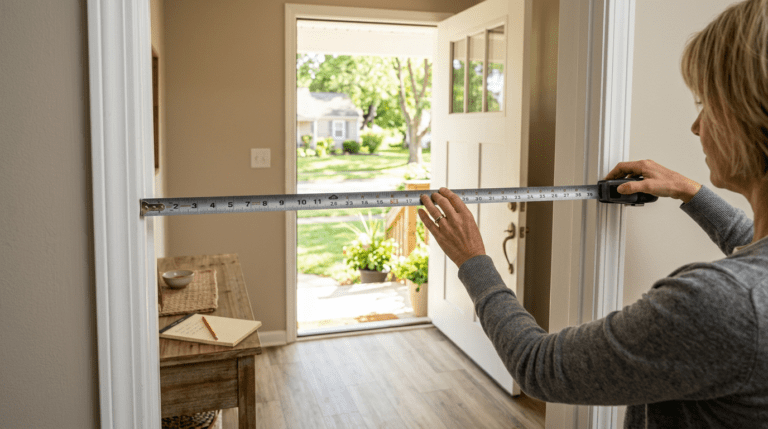
If a frame is intact and only the mesh has torn, re-screening is cheap and quick. If the frame itself is bent or corroded, you are ordering a replacement, and the measurement has to be precise because screens fit with very little play. The simplest path, when your old screen fit correctly, is to measure that frame rather than the window opening.
Keep a short kit handy and measure to the nearest sixteenth of an inch, because a screen that is an eighth too big will not seat and one that is too small rattles loose. Measure width and height at several points and use the smallest reading, since old frames bow.
- A steel tape measure marked in sixteenths.
- The old screen frame if it still fits, as your template.
- A notepad to record width, height, and frame thickness.
- Remove the old screen and lay it flat on a clean surface.
- Measure the width across the top, middle, and bottom; write down the smallest.
- Measure the height at left, center, and right; again take the smallest.
- Note the frame thickness so the new frame seats in the same channel.
- Check it against the opening to confirm the screen sits flush before ordering mesh.
Caring for Screens Through Ohio's Seasons
Screens last longest when they come off for the worst of the weather and get a wash now and then. A spring rinse clears the winter grime and the first wave of pollen, and a gentle scrub with mild soapy water and a soft brush keeps the mesh breathing instead of clogging into a gray film. Our walk-through on cleaning window screens without damaging the mesh covers the method that will not stretch or tear them.
Through an Ohio winter, a screen that stays in place does nothing but collect ice and block what little low sun the room gets, so many homeowners pull half and full screens for the cold months and store them flat. That habit alone can add years to a fiberglass screen. Storm season is the other hazard: wind-driven debris punches holes, and a screen that took a hit should be patched or re-meshed before the gap widens.
Know when a screen is simply done. Brittle, sun-faded fiberglass that cracks when you press it, a frame that no longer holds square, or aluminum gone chalky and pitted are all past saving. At that point a fresh screen, or new windows that come with screens fitted, is the better spend than another patch.
Not Sure Which Screens Your Home Needs?
If your screens are torn, sagging, or graying out the view, and you are already wondering whether the windows behind them are getting tired too, it is worth a second opinion before you spend on patches that will not last. The right answer is sometimes a simple re-mesh and sometimes a window that has reached the end of its run.
Book a free, no-pressure window assessment with our Columbus and Cincinnati team, or read up on new window and door installation if you are ready to weigh a full upgrade. Either way you get a straight answer, not a sales pitch.
FAQ: Choosing and Replacing Window Screens

Ready to fix your windows? Get a free quote in 30 seconds.
Family-owned, licensed & insured. Free, no-obligation quotes.