
- Services
- New Installation
- Reviews
- Projects
- About Us
- Contacts
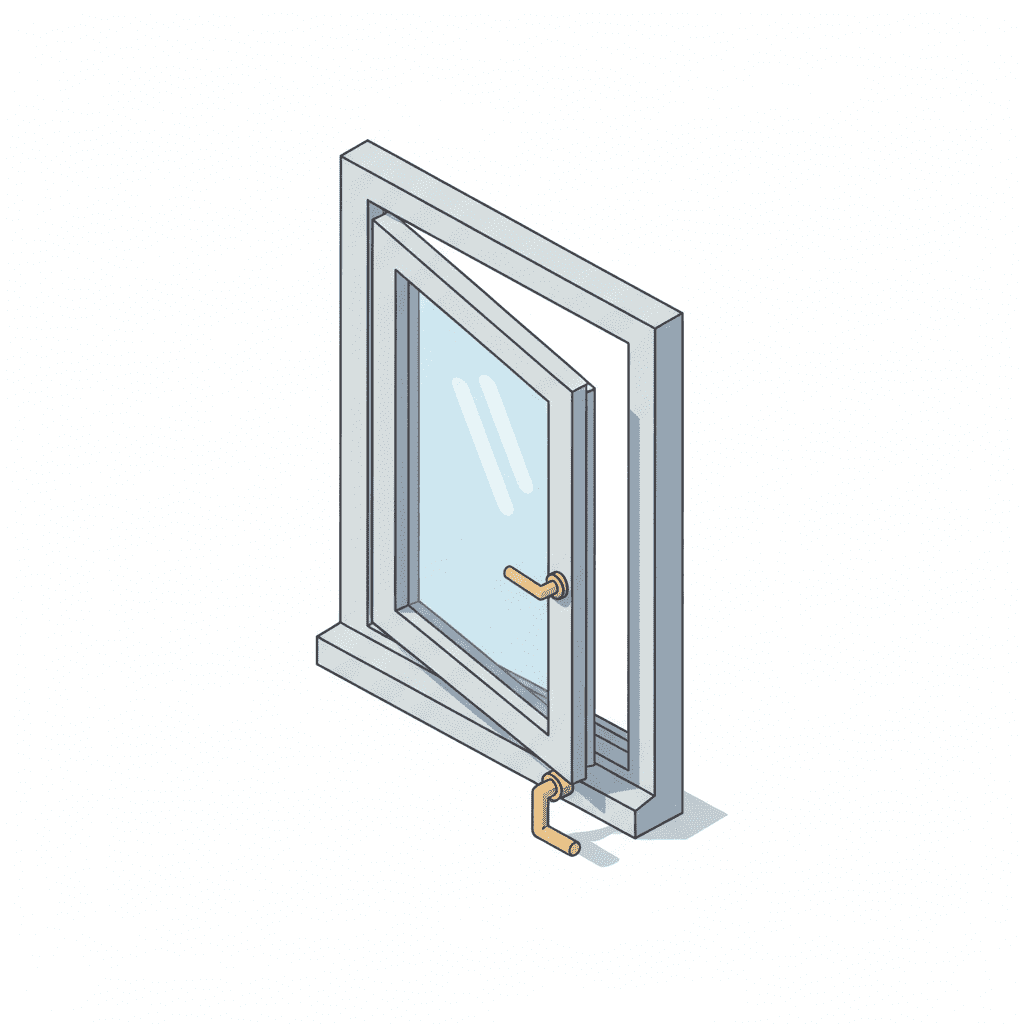
A window hinged on one vertical side that swings outward (or inward) like a door, operated by a crank mechanism, offering excellent ventilation and a tight seal when closed.
A window hinged on one vertical side that swings outward (or inward) like a door, operated by a crank mechanism, offering excellent ventilation and a tight seal when closed.
A casement window is hinged on its left or right side and opens by swinging outward — or in some European designs, inward — operated by a hand crank at the bottom of the frame. When closed, the sash presses firmly against a continuous perimeter seal, making casements among the most airtight window types available.
The crank turns a worm-gear operator that extends or retracts an arm attached to the bottom of the sash. This mechanism allows the sash to swing open to nearly 90°, providing excellent cross-ventilation — the open sash acts as a scoop that directs breezes into the room. Modern casements include multi-point locking hardware that engages locks at several points around the perimeter for a weather-tight seal.

Contact us now for a free estimate and take the first step toward repairing your windows!
Please leave your contact details.
The manager will contact you shortly.

