
- Services
- New Installation
- Reviews
- Projects
- About Us
- Contacts
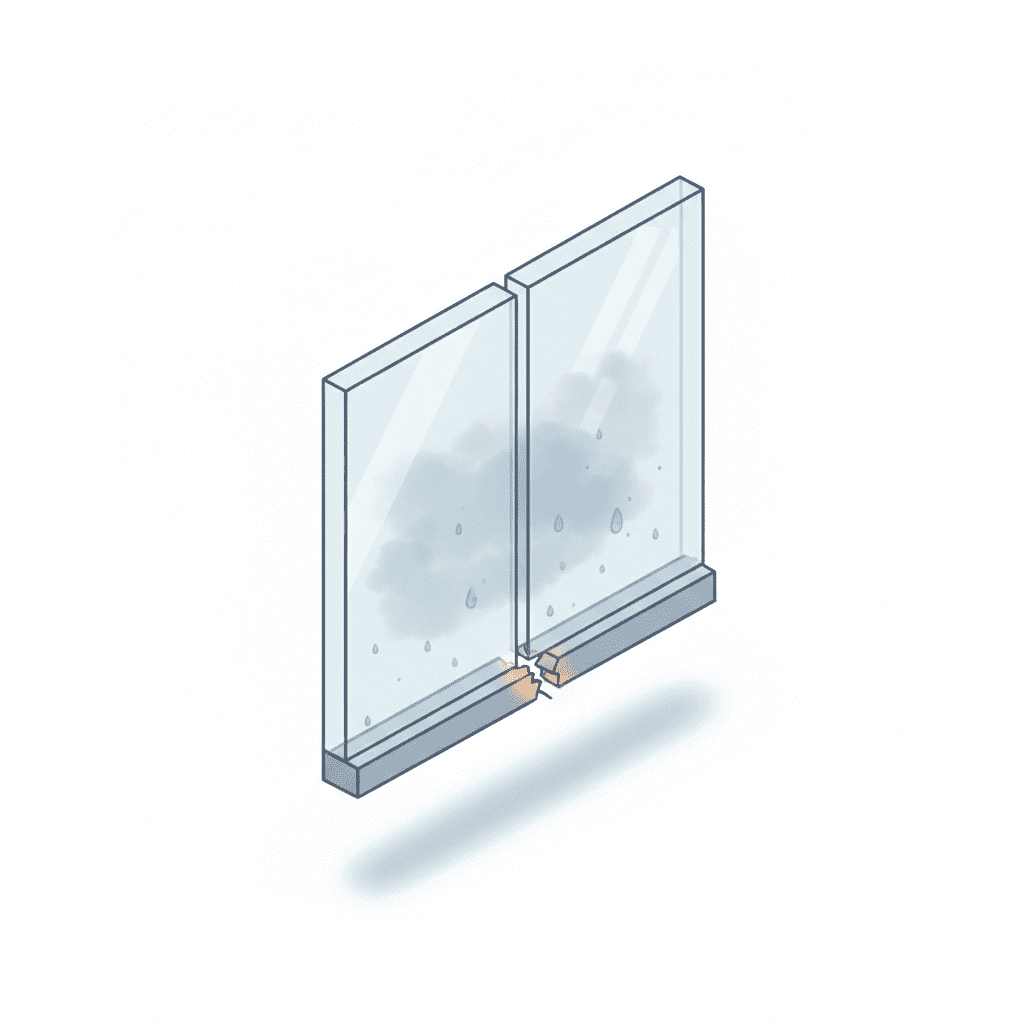
The breakdown of the hermetic seal between the panes of an insulated glass unit, allowing outside air and moisture to enter the cavity and causing permanent fogging between the panes.
The breakdown of the hermetic seal between the panes of an insulated glass unit, allowing outside air and moisture to enter the cavity and causing permanent fogging between the panes.
Seal failure is the most common defect in double- and triple-pane windows. It occurs when the hermetic seal — made of PIB butyl rubber and silicone — that closes the insulated glass unit loses its integrity, allowing outside air (and its humidity) to enter the gas-filled cavity. Once humid air is inside, it condenses on the cold glass surfaces and the desiccant in the spacer bar quickly becomes saturated, resulting in permanent fogging that cannot be wiped away.
The primary mechanism is thermal cycling fatigue. Every day, the glass expands and contracts with temperature changes, stressing the seal bond at the glass edge. Over 15–20 years (thousands of cycles), the seal material fatigues and micro-cracks develop. Other contributing factors include:
The definitive sign is haze, fog, or visible moisture between the glass panes — not on the surface. To confirm it’s between the panes (not surface condensation), try wiping it: if it doesn’t wipe off, it’s inside the unit. Other signs include: rainbow-colored iridescence on the glass (caused by residue from the evaporated moisture), and a slightly hazy or dirty appearance even when both surfaces are clean.

Contact us now for a free estimate and take the first step toward repairing your windows!
Please leave your contact details.
The manager will contact you shortly.

