
- Services
- New Installation
- Reviews
- Projects
- About Us
- Contacts
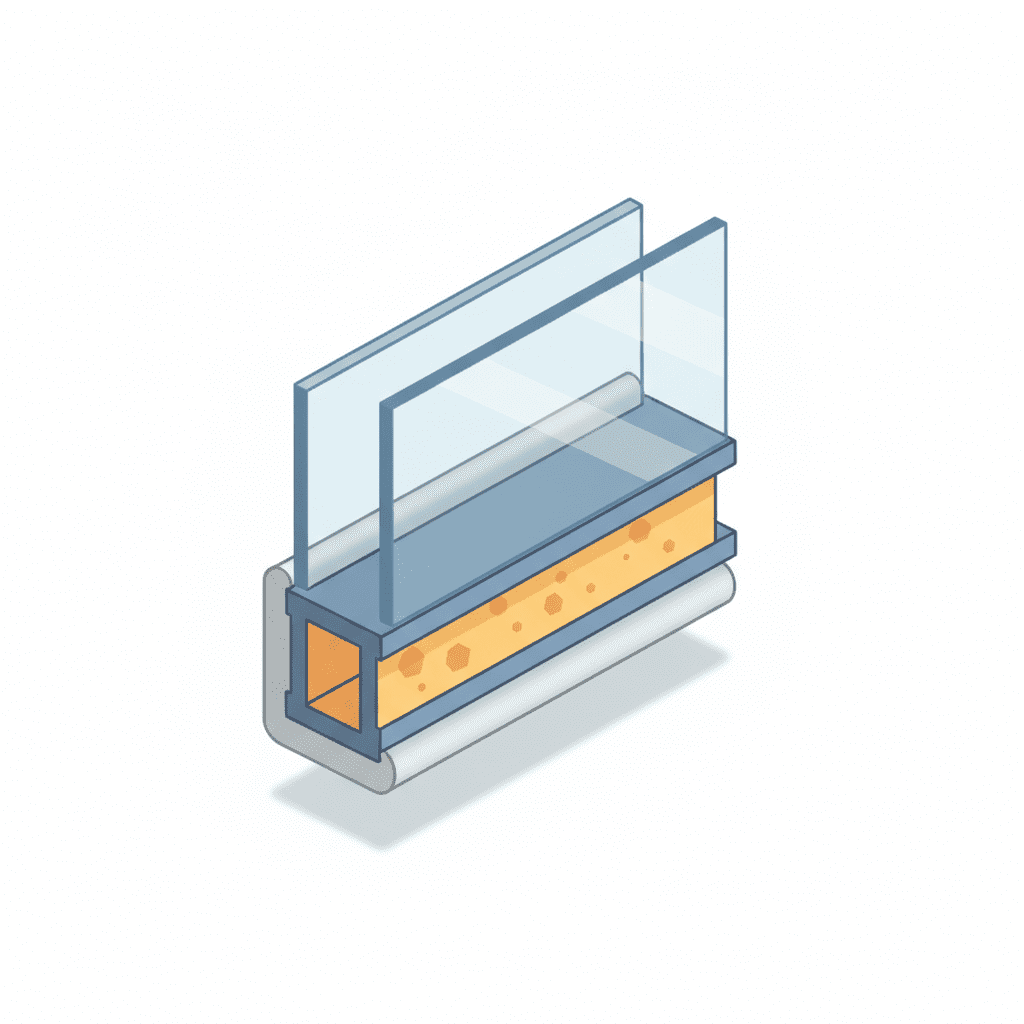
The frame element that runs around the perimeter of an insulated glass unit, maintaining the precise gap between glass panes and housing the desiccant that absorbs interior moisture.
The frame element that runs around the perimeter of an insulated glass unit, maintaining the precise gap between glass panes and housing the desiccant that absorbs interior moisture.
The spacer bar (also called a window spacer or warm-edge spacer) is the structural separator in an insulated glass unit. It runs along all four edges between the glass panes, bonded in place by the primary seal. It serves two critical functions: maintaining the correct gap between panes (typically 12mm for argon-filled units) and housing desiccant material that absorbs any residual moisture inside the sealed cavity.
Warm-edge spacer technology reduces the thermal bridging at window edges. In a cold Ohio winter, an aluminum spacer can be 10–15°F colder than the center of the glass, making it a condensation hotspot. Warm-edge spacers raise that edge temperature, reducing the risk of condensation and improving the effective insulation of the entire window.
The spacer bar’s desiccant has limited capacity. Once it is saturated with moisture (after seal failure), condensation becomes visible between the panes. At this point, the spacer bar itself is part of the failed IGU assembly and must be replaced along with the glass.

Contact us now for a free estimate and take the first step toward repairing your windows!
Please leave your contact details.
The manager will contact you shortly.

