
- Services
- New Installation
- Reviews
- Projects
- About Us
- Contacts
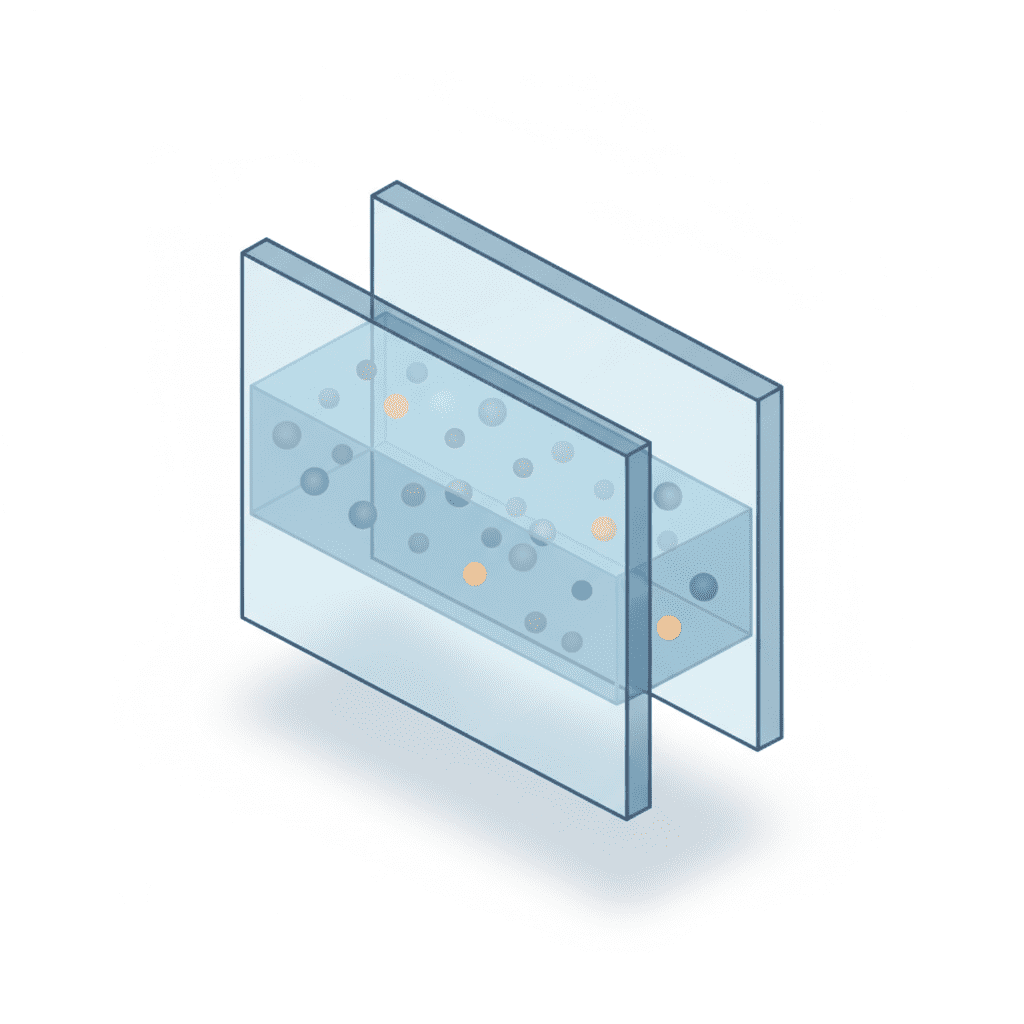
An inert, odorless gas injected into the cavity of double- or triple-pane windows to reduce heat conduction and improve thermal efficiency compared to air.
An inert, odorless gas injected into the cavity of double- or triple-pane windows to reduce heat conduction and improve thermal efficiency compared to air.
Argon gas is used in approximately 90% of residential insulated glass units manufactured in the United States. Argon is a naturally occurring inert gas that makes up about 1% of Earth’s atmosphere. It conducts heat roughly 34% less efficiently than air, making it an effective insulator for the space between window panes.
Plain air is a reasonably good insulator, but it contains moisture and convects heat (warm air rises, creating a slow circulation loop inside the cavity). Argon is denser than air, which suppresses this convection. It is also completely inert—it won’t react with the glass, sealants, or coatings over time.
Krypton gas is denser than argon and provides better insulation, but it costs significantly more. Krypton is typically used in triple-pane windows where the cavity gap is narrower (6mm vs. 12mm for argon). For standard residential double-pane windows in Ohio, argon is the practical choice.
All IGUs lose a small amount of gas over time—industry standards assume about 1% per year, meaning a 20-year-old window may retain 80% of its original gas. This gradual loss is acceptable. However, when the seal fully fails, argon escapes quickly and the window loses its thermal advantage.
There is no practical way to refill argon in a failed IGU. When the seal is broken, the correct solution is to replace the entire IGU with a new factory-sealed unit.

Contact us now for a free estimate and take the first step toward repairing your windows!
Please leave your contact details.
The manager will contact you shortly.

