
- Services
- New Installation
- Reviews
- Projects
- About Us
- Contacts
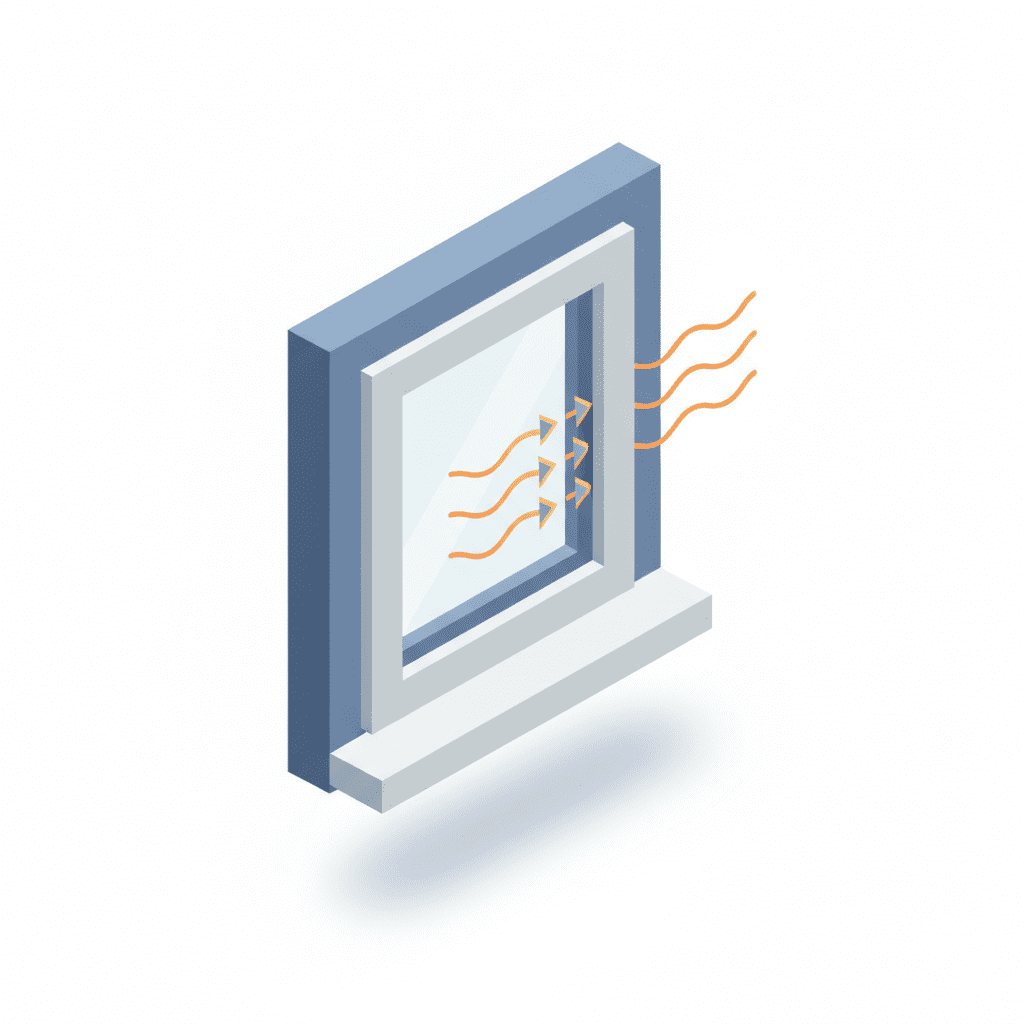
The uncontrolled movement of outdoor air into a building through gaps, cracks, and leaks in the window assembly — a major source of energy loss and drafts in homes with older windows.
The uncontrolled movement of outdoor air into a building through gaps, cracks, and leaks in the window assembly — a major source of energy loss and drafts in homes with older windows.
Air infiltration is the uncontrolled flow of outdoor air into (and conditioned indoor air out of) a building through unintentional openings in the building envelope. In windows, infiltration occurs through gaps between the sash and frame, failed weatherstripping, cracked glazing compound, and open weep holes. It is measured in cubic feet per minute per foot of crack length (cfm/ft) at a standard pressure difference.
The US Department of Energy estimates that air infiltration accounts for 25–40% of a home’s heating and cooling energy use. Windows and doors are the primary culprits. A single double-hung window with worn weatherstripping can leak as much heat as leaving a 4-inch hole in the wall open 24 hours a day.
Windows are rated by the NFRC for air leakage in cfm per square foot of window area at a standardized pressure (1.57 psf / 75 Pa). Lower is better:
Simple tests to find window air leaks:
In order of cost-effectiveness: replace weatherstripping ($10–$30 per window), re-caulk exterior joints ($5 per window), install interior window insulation film in winter ($5–$15 per window), replace failed windows (last resort). For most windows built before 2000, weatherstripping and caulk replacement alone reduces infiltration by 50–70%.

Contact us now for a free estimate and take the first step toward repairing your windows!
Please leave your contact details.
The manager will contact you shortly.

