
- Services
- New Installation
- Reviews
- Projects
- About Us
- Contacts
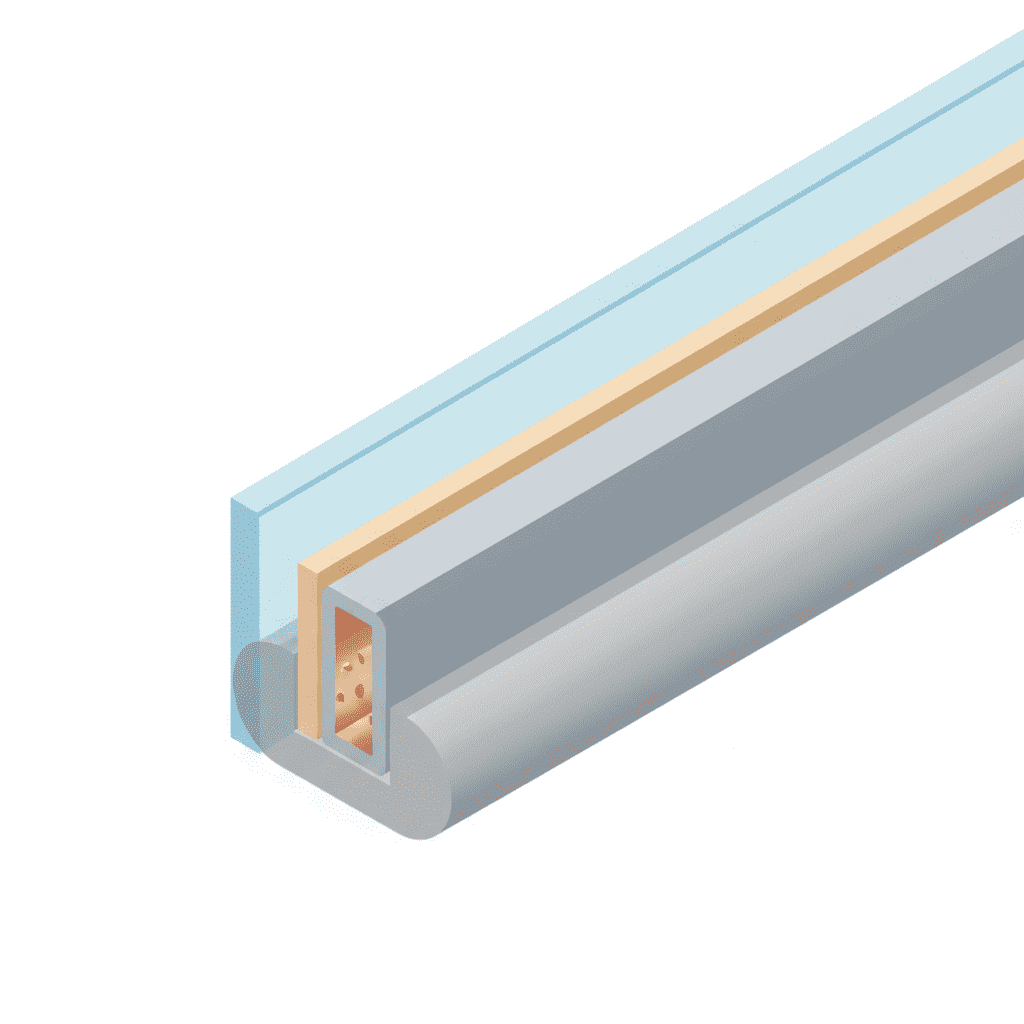
The airtight barrier formed by sealant and a spacer bar that bonds two panes of glass in an insulated glass unit, preventing moisture and air infiltration.
The airtight barrier formed by sealant and a spacer bar that bonds two panes of glass in an insulated glass unit, preventing moisture and air infiltration.
The window seal is the hermetic closure that keeps the insulating cavity of a double- or triple-pane window intact. It is typically a two-part system: a primary seal (PIB butyl rubber applied to the spacer bar) and a secondary seal (silicone or polysulfide that bonds the assembly to the frame).
Seals degrade over time due to repeated thermal expansion and contraction—glass and frames expand and contract with temperature changes, stressing the seal material. Other causes include:
The most obvious sign is condensation or fogging between the panes—moisture that cannot be wiped away because it is trapped inside. You may also notice a hazy or dirty appearance inside the glass, or distorted reflections caused by the panes bowing inward under pressure change.
Once the seal fails, the argon or krypton gas escapes and is replaced by regular humid air. The desiccant in the spacer bar absorbs the initial moisture, but once saturated, condensation becomes permanent. The window’s U-value worsens, increasing your heating and cooling costs.

Contact us now for a free estimate and take the first step toward repairing your windows!
Please leave your contact details.
The manager will contact you shortly.

