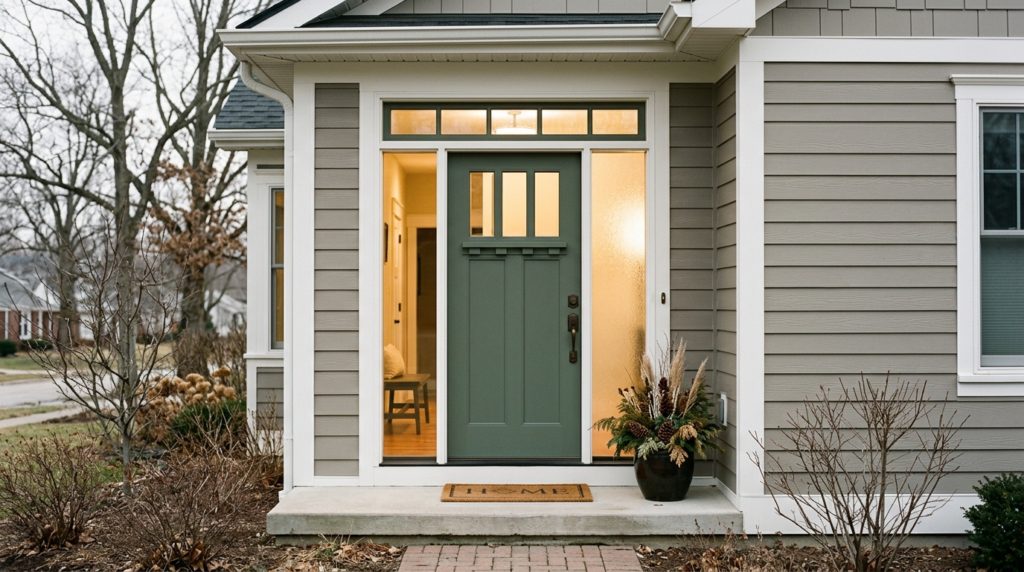
Sidelights are the tall, narrow glass panels that sit on one or both sides of a front door. They frame the entry, pull daylight into a foyer that would otherwise stay dim, and make a plain slab look like a designed entrance. Most are fixed glass, though some open for air.
This guide covers what sidelights are, the size and glass options you can choose, how they affect privacy, warmth, and security, and the mistakes that cause drafts later. If you are weighing them for a new entry, our door installation and repair team sees what works and what fails across Ohio homes.
Quick answer: Door sidelights are fixed, sometimes venting, glass panels beside a front door. They add natural light, curb appeal, and a wider, grander entry. You choose the height, glass style, and privacy level, then match insulated, Low-E glass to keep the entry warm through Ohio winters.
What a Sidelight Actually Is
A sidelight is a fixed window built into the frame right beside the door, running vertically from near the top of the opening down toward the threshold. You will also see it spelled sidelite or side lite, which mean the same thing. Because it shares the door frame, it reads as part of the entry rather than a separate window in the wall.
Most sidelights are fixed, meaning the glass does not open. That keeps the unit simple and weathertight, which matters at an entry that takes wind and rain head-on. Some manufacturers offer venting sidelights with a small operable section, so you can let a breeze through without opening the main door. They cost more and add another seal to maintain, so most homeowners stick with fixed panels.
Sidelights often pair with a transom, the horizontal glass panel above the door. Together they turn a single door into a full glass-framed entry. A lone sidelight on one side gives a looser, modern look, while a matched pair on both sides reads symmetrical and traditional.
Sidelight Sizes: Full, Three-Quarter, and Half
Sidelights are sold by how far the glass runs down the panel, not just by width. The coverage you choose sets how much light comes in and how much of your entry is visible from the street. Width stays narrow so the panels stay in proportion with the door beside them.
The common options trade light for privacy in a predictable way. A full panel floods the foyer, while a shorter glass area keeps the lower wall solid where passersby would otherwise see straight in.
- Full sidelight. Glass runs nearly the whole height for the most light and the most open look.
- Three-quarter sidelight. A solid panel at the bottom with glass above balances light and privacy.
- Half sidelight. Glass only on the upper half, good for busy streets or ground-level entries.
- Quarter sidelight. A small glass section near the top for a hint of light with the most privacy.
As a rule, a sidelight should be about half the width of the door or a little less, so it frames the entry instead of competing with it. Two narrow panels usually look better than one wide one, and they keep the whole entry balanced.
Glass Options From Clear to Decorative
The glass is where a sidelight earns its character, and the choice changes both the look and how much the world sees of your hallway. Clear glass gives the brightest, most open entry and an unobstructed view out, which suits homes set well back from the street. The trade-off is plain: a clear panel shows everything inside.
For most front entries, some level of obscure glass is the practical pick. Textured and patterned glass scatters the view while still passing daylight, so the foyer stays bright but the inside reads as a soft blur from the porch.
- Frosted and reeded. Even, simple privacy that fits modern and transitional homes.
- Rain and chinchilla. Heavier texture that distorts the view more for a busy, street-facing entry.
- Stained and beveled. Leaded or caming designs for traditional, craftsman, and Victorian fronts.
- Wrought-iron grilles. An ornamental metal overlay that adds a custom look and a sense of security.
- Built-in blinds. Shades sealed between the panes, so there is nothing to dust and you control the light.
If a panel ever clouds or the pattern looks coated with hard-water film, that is usually a glass issue, not a style you are stuck with. Swapping the glass alone is often possible, and our glass repair team handles entry panels the same way it handles windows.
Privacy by Day and by Night
Privacy with sidelights is not one fixed setting, it flips with the light. During the day, obscure glass works the way you expect: the brighter outside keeps anyone from seeing into a darker hallway. That is why frosted or textured panels feel private from the porch in daylight.
After dark the situation reverses. Once the foyer light is on and the street is dark, even moderately textured glass can show shapes and movement clearly from outside. Homeowners who picked lightly frosted panels for the daytime look are often surprised the first evening. If the entry faces the sidewalk, lean toward a heavier texture, a shorter glass area, or plan a covering you can close.
This day-night reversal also shapes where clear glass belongs. A clear sidelight is lovely for watching the yard, but it is the panel a passerby reads most easily at night. Pair clear or lightly obscured glass with a porch you can light well, or step up the obscurity on the side that faces foot traffic.
Sidelights and Ohio Winters: Where the Cold Gets In
Adding sidelights means adding glass and, just as important, more frame seams right at the most exposed spot on the house. In a mild climate that barely registers. Through an Ohio winter, the entry is where you feel every weak point, and the usual culprit is not the glass itself.
The cold path is almost always the mull, the joint where the sidelight frame meets the door frame. If that seam is not sealed and insulated during installation, you get a draft and a cold streak that no amount of weatherstripping on the door will fix. The glass matters too. A single-pane decorative panel will sweat and bleed heat, so insulated double-pane glass with a Low-E coating earns its place here for both comfort and condensation control.
On entry calls around Columbus, the cold draft people blame on the door is usually coming from the mull joint beside it, where the sidelight meets the frame. Seal that seam right and the whole entry warms up.
If your current entry already drafts or the sidelight fogs between the panes, the fix is targeted. A failed seal is replaceable on its own, and our insulated glass replacement swaps the foggy unit without redoing the whole door.
Are Sidelights a Security Risk?
The honest answer is that they can be if you ignore two things, and both are easy to design around. A sidelight puts glass within arm’s reach of the lock. With a thin clear panel and a simple thumb-turn deadbolt, someone could break the glass and reach the latch. That is the scenario worth planning for, not a reason to skip sidelights altogether.
Modern sidelight glass is far stronger than the old single panes that gave glass entries a bad name. Tempered glass resists impact and breaks into harmless pieces, while laminated glass holds together even when cracked, much like a vehicle windshield, so it is hard to punch through and reach inside. For a panel beside the lock, laminated glass is the upgrade that matters most.
The other half is hardware placement. Keeping the deadbolt out of easy reach of the nearest glass, or choosing glass that cannot be quietly broken, closes the gap. A solid frame, a reinforced strike plate, and quality glass make a sidelight entry as secure as a solid door for everyday use.
When a Sidelight Fogs Up or Cracks
A sidelight is a sealed insulated glass unit, the same as a modern window, so it can fail the same ways. The most common is a foggy haze between the panes that wiping never clears. That is a broken seal letting moisture in, not dirt on the surface, and it means the insulating layer is gone.
The good news is what it takes to fix it. A fogged or cracked sidelight panel can usually be replaced on its own, keeping the door, frame, and hardware in place. You do not need a whole new entry for one bad pane. Replacing just the glass unit restores both the look and the insulation with far less disruption.
Replace rather than patch when the frame around the panel is rotted, the unit is shattered, or a crack runs through the line of sight. A small chip in a stable corner can sometimes wait. When the damage reaches the seal, the insulation, or the security of the entry, swapping the glass unit is the lasting fix.
Can You Add Sidelights to an Existing Door?
This is the question that catches people out. You usually cannot bolt sidelights onto a door you already have. Sidelights are built into the door frame, so adding them means making the rough opening in the wall wider to fit the new, larger unit. That is structural work, not a trim upgrade you do over a weekend.
In practice, adding sidelights is a full entry-system replacement. The old door and frame come out, the opening is reframed to the new width, and a pre-hung unit with the door and sidelights together goes in as one assembly. Buying the door and sidelights as a single factory-built unit is what keeps everything square, sealed, and weathertight.
Because the opening changes size, this is a job where measuring and framing accuracy decide whether the finished entry drafts or seals cleanly. It is worth having the rough opening and header checked before you order anything. Our installation team handles the framing and the weather seal as one job, so the new entry performs from day one.
Choosing the Right Setup for Your Entry
With the parts understood, the choice comes down to a few decisions that fit your home and your street. Start with configuration. A single sidelight gives a modern, asymmetrical look and suits a narrower entry, while a matched pair flanking the door reads formal and balanced. Symmetry tends to feel traditional, and a lone panel feels contemporary.
Next, set the glass coverage and privacy level against how exposed the entry is. A door tucked behind a deep porch can take clear, full-length panels, while an entry close to the sidewalk wants shorter glass or a heavier texture. Match the frame material and color to the door and the house so the entry looks designed, not added on after the fact.
It helps to choose the door and sidelights together rather than picking a door first and forcing panels around it. The proportions, the glass, and any grille pattern should agree. Our guide to front door styles walks through the looks that pair well with sidelights, from craftsman to clean modern.
Mistakes to Avoid With Sidelights
Most sidelight regret traces back to a handful of choices made for looks alone. None of these are hard to avoid once you know to watch for them, and each one trades a little planning now for a draft, a privacy surprise, or a security gap later.
Run through this list before you order, because changing the glass or the configuration after install is far harder than deciding it up front.
- Clear glass right beside the lock. Choose laminated or obscure glass where someone could reach the deadbolt.
- Skipping Low-E insulated glass. A thin decorative panel sweats and leaks heat through an Ohio winter.
- Ignoring night privacy. Glass that hides the foyer by day can reveal it once the lights are on.
- Treating it as a bolt-on. Adding panels means reframing the opening, so plan a full entry replacement.
- Mismatched proportions. Panels wider than half the door overwhelm the entry instead of framing it.
- Forgetting the mull seal. The joint between door and sidelight must be insulated, or it drafts all winter.
Thinking About an Entry With Sidelights?
Sidelights can turn an ordinary doorway into the best feature on the front of your house. The details that decide whether it stays warm, private, and secure for years are the glass, the seal at the mull, and the framing. Those are the parts worth getting right the first time.
Book a free, no-pressure entry assessment with our Columbus-area team and get a straight answer on the right glass, layout, and install for your home.
FAQ: Door Sidelights
Ready to fix your windows? Get a free quote in 30 seconds.
Family-owned, licensed & insured. Free, no-obligation quotes.