
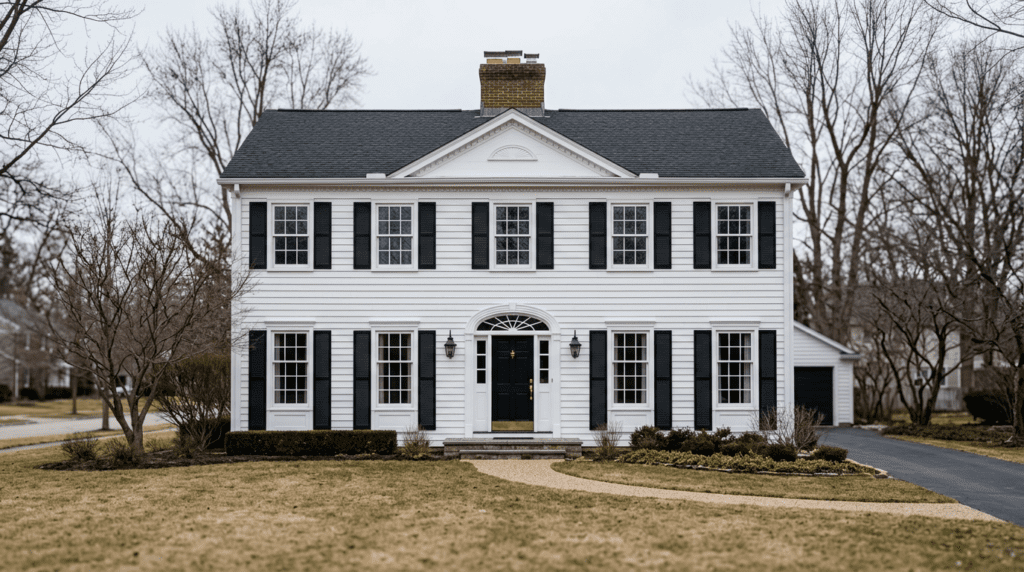
A colonial home reads as colonial because of its windows. Tall, evenly spaced, divided into small panes by slim bars, they line up across the front in a balanced grid that gives the style its formal, settled look. Get the windows wrong and the whole face of the house looks off, even to someone who could not name why.
So the choice is about more than glass and frames. It is about keeping the symmetry, the vertical proportions, and the divided-light pattern that define the look, while quietly upgrading to glass that holds up through an Ohio winter. A clean new window installation is usually the surest way to match every opening and keep the façade balanced.
Quick answer: Choose windows that keep the colonial look: evenly spaced, vertically proportioned double-hung sashes with divided-light grilles, usually a 6-over-6 or 9-over-9 pattern. Match the grille count across the whole front for symmetry, pick a white or black frame, and use Low-E double-pane glass to stay efficient.
What Makes a Window Look Colonial
Three things give a colonial window its character, and missing any one of them breaks the effect. The first is symmetry. Colonial design is built on balance, so windows sit in even rows and columns across the front, often with a centered door and matching openings on either side. The eye expects that rhythm, and it notices when it is disturbed.
The second is proportion. Colonial windows are taller than they are wide, standing upright rather than spreading sideways. That vertical shape keeps the formal posture of the style and is why a wide modern picture window looks so out of place on a colonial front.
The third is the divided light, the pattern of small panes separated by slim bars called muntins or grilles. Early glass came only in small sheets, so windows were assembled from many little panes, and that look became the signature of the style. Recreate those three traits and almost any window starts to feel colonial.
Colonial Styles Are Not All the Same
Calling a house colonial covers several related styles, and each one carries a slightly different window expectation. Knowing which kind you have keeps your choices historically honest rather than generic. The differences are subtle, but they guide the grille pattern, the proportions, and the details above the door.
Georgian colonials are the strict, symmetrical boxes most people picture, with rows of evenly matched double-hung windows and a centered entry. Federal homes lean more refined and add delicate touches, most famously a fanlight, the half-round window of radiating panes set above the front door. Dutch colonials wear a gambrel roof and lean on dormer windows to light the upper floor, while Cape Cod and saltbox houses keep things plainer with simple, smaller-paned sashes.
The takeaway is to match the window to the house in front of you, not to a stock idea of colonial. A row of formal 9-over-9 windows suits a tall Georgian and looks overdressed on a modest Cape Cod, where simpler 6-over-6 sashes fit the scale far better.
The Best Window Styles for a Colonial
The colonial look is built around one window above all others, but a few supporting styles have their place once you know where they belong. The goal is to keep the front of the house consistent while allowing some flexibility on the sides and rear, where the strict symmetry rule relaxes.
Double-hung windows are the heart of the style, with two sashes that slide vertically and the upright proportions colonial design demands. If you are weighing the operation, our comparison of single-hung and double-hung sashes explains how each one ventilates and cleans. The other styles in our overview of every window type can fill specific roles around the house.
- Double-hung is the default, historically accurate, and the right call for every front-facing opening.
- Casement windows work on side and rear walls where they are not seen from the street and you want easy crank-open airflow.
- Picture windows can anchor a stair landing or a second floor, as long as the divided-light grille keeps them in character.
- Bay and bow windows suit larger colonials, projecting out to add light and a window seat while keeping divided panes.
- Specialty shapes such as a half-round fanlight or an elliptical transom belong above the entry on Federal-style homes.
Getting the Grille Pattern Right
The grille pattern is the single most visible decision on a colonial window, and it is described by counting the panes in each sash. A 6-over-6 window has six panes in the upper sash and six in the lower, the classic look most people picture on a colonial. A 9-over-9 or 12-over-12 adds more, smaller panes and reads as more formal, which suits taller, grander homes.
Scale is what decides the count. Larger windows and two-story Georgian fronts carry a 9-over-9 or 12-over-12 comfortably, while smaller openings and humbler houses look right with a 6-over-6. Our guide to window grids and grilles walks through how the patterns change the feel of a façade.
The rule that matters most is consistency. Every window on the front of the house should share the same grille pattern so the symmetry holds. Mixing a 6-over-6 next to a 9-over-9 on the same elevation is the fastest way to make a careful restoration look accidental.
Divided Lite, Simulated Lite, or Grilles Between the Glass
Here is the choice most homeowners never hear about, and it decides how authentic the window looks and how easy it is to live with. The divided-light effect can be built three different ways, and they are not equal. This is where a colonial replacement project is won or lost.
A true divided lite assembles the sash from many individual panes, each its own small piece of glass, exactly as the originals were made. It is the most authentic and the most expensive, and because each pane is a tiny sealed unit, it is the least efficient of the three. A simulated divided lite uses one large insulated pane with slim grille bars permanently bonded to both glass faces, often with a matching spacer bar inside, so it looks like true divided light from the curb while keeping a modern, efficient seal.
The third option places the grilles between the two panes of glass, sealed inside the unit. This is the easiest to clean because the outer surfaces are flat, but the bars look slightly flat and recessed up close, and a sharp eye reads them as not quite right. For most colonial fronts, a simulated divided lite is the sweet spot: it keeps the period look without the cleaning and efficiency penalties of true divided light.
Frame Material for an Ohio Colonial
The frame material affects how the window ages, how much upkeep it needs, and how convincingly it holds the colonial look through central Ohio weather. All four common materials can wear a divided-light grille, so the decision comes down to authenticity, maintenance, and how the material handles freeze-thaw.
Wood is the most authentic and the warmest looking, and on an older Columbus colonial the original sashes are often dense old-growth lumber worth saving. The trade-off is upkeep, since wood needs paint and sealing to keep water out of the joints. Wood-clad windows wrap a wood interior in a tougher exterior skin, giving the look with less maintenance. Vinyl and fiberglass mimic the painted-wood appearance with little upkeep, and fiberglass in particular holds its seals well as the temperature swings.
On colonial homes around Columbus, the joints that fail first are the corners of a true divided lite, where water sits and the freeze-thaw cycle pries the muntins apart winter after winter. A clad or fiberglass frame with a simulated grille sidesteps that weak point and still keeps the divided-light face.
Glass and Energy Without Losing the Look
A colonial can keep every bit of its period character and still perform like a modern window, because the efficiency lives in the glass package, not the grille pattern. The original single-pane sashes that came with these houses leak heat and feel cold to sit beside, but you do not have to give up the look to fix that.
Low-E coated, double-pane glass is the baseline. The coating reflects heat back toward its source, keeping winter warmth inside and summer sun out, while the gas-filled space between panes slows the transfer that makes old single panes feel drafty. Paired with a simulated divided lite, you get the authentic grille over an efficient sealed unit, which is the combination that satisfies both the historic look and an Ohio heating bill.
Condensation is the local nuisance to plan for. Warm, humid indoor air meets cold glass and beads up, and on a true divided lite that moisture pools in every little corner. Better insulating glass keeps the inner pane warmer so it sweats less, and if an older colonial unit has fogged from a failed seal, a focused glass repair often restores it. The freeze-thaw swings of a Columbus winter punish weak glass hardest, so this is not the place to economize.
Color, Trim, and Shutters
The frame color and the details around it carry the colonial look as much as the window itself. Colonial palettes stay restrained, and the trim follows a few traditional rules that frame each opening and reinforce the symmetry of the front.
White is the timeless choice and the safest for a colonial, with black a strong second that suits Georgian and more formal homes. Cream, soft gray, and natural wood stain all read as period-correct, while bright or unusual colors fight the style. Whatever you pick, use one color across the whole front so the façade stays unified.
Trim and shutters complete the picture. Colonial windows wear wide, flat casing, often capped with a crown or a simple header above, which gives each window weight and definition. Shutters should look like they could actually close over the window, sized to cover half the opening each, in louvered, raised-panel, or board-and-batten styles. Classic shutter colors are black, dark green, and white, chosen to set off the frame rather than clash with it.
Do Not Forget the Front Door
The windows and the entry work as a set on a colonial, and replacing one without considering the other leaves the job half done. The same symmetry that governs the window rows runs straight through the centered front door, which is why the entry deserves attention while you are planning the windows.
On Georgian and Federal homes the door is the focal point of the symmetrical face, often flanked by narrow sidelights and topped with a fanlight or a rectangular transom that echoes the divided-light grilles. Matching the glass, the grille bars, and the proportions between the windows and the door keeps the whole front reading as one composition rather than a window project and a separate door project.
If the entry is dated or mismatched, it is worth coordinating the two. Our guide to front door styles covers the colonial-appropriate options, so the door, sidelights, and transom can share the same divided-light language as the new windows.
Mistakes to Avoid
Most colonial window regrets come from small choices that quietly break the symmetry or the period look. None of them cost extra to avoid at the planning stage, and all of them are obvious once the windows are in and it is too late.
Run through this list before you place an order:
- Mixing grille patterns across the front, which destroys the balanced rhythm that defines the style.
- Dropping the grilles entirely for easier cleaning, which turns a colonial window into a generic modern one.
- Using snap-in removable grids, the flat plastic kind that pop out, since they look cheap and rarely sit flush.
- Putting a wide modern picture window on the front, breaking the upright proportions colonial design depends on.
- Mixing frame colors on one elevation, which fragments a face that is supposed to read as a unit.
- Ignoring the transom or fanlight over the door, leaving the entry out of step with the new windows.
Planning Colonial Windows for Your Home?
Matching grille patterns across a symmetrical front, choosing between true and simulated divided light, and getting the glass right for an Ohio winter are exactly the details that make or break a colonial restoration. A short conversation up front saves a mismatched façade later.
Book a free, no-pressure window assessment with our Columbus-area team and get a straight answer on the right style, the right grille, and the right glass for your home.
FAQ: Windows for a Colonial Home
Ready to fix your windows? Get a free quote in 30 seconds.
Family-owned, licensed & insured. Free, no-obligation quotes.