 Reviewed by
A shattered glass door transforms your home from secure haven into vulnerable opening in seconds. Sharp fragments scatter across floors, weather rushes through the gap, and your property stands exposed to intruders. This guide walks you through immediate response steps, professional repair processes, cost breakdowns, and prevention strategies to restore protection fast and minimize risks.
Key Takeaways
- True emergencies: shattered patio slider, cracked tempered shower glass (collapse risk), broken storefront door, off-track sliding doors, structural frame damage.
- Cost: sliding patio IGU $400–$900, full door $800–$2,500. Front entry insert $300–$700, full door $1,500–$3,500. After-hours +50–100%.
- Speed reality: same-day only with stock sizes; tempered glass needs 7–14 days. Plan for 1+ week of plywood cover even with “emergency” service.
- 6-step immediate response: clear area → gear up (shoes/gloves/glasses) → photograph → cover opening → insurance claim → 2–3 quotes.
- Service red flags: only website form (no 24/7 phone), vague pricing, cash-only, no insurance certificate. Legitimate premium = 50–100%, not 3–5×.
First Response: Immediate Steps to Take After a Glass Door Breaks
Clear everyone from the zone immediately.
Step 1: Secure the Area and Ensure Personal Safety
Glass shards cut through skin like razors, and even small fragments embed in bare feet or pet paws. Move children and animals to another room, then block access with furniture, tape, or rope barriers. Don’t attempt cleanup without thick-soled shoes and heavy gloves—tempered glass breaks into pebbles that hide in carpet fibers and crevices.
Step 2: Assess the Damage Visually (Do Not Touch Broken Glass)
Stand back and examine the breakage pattern from a safe distance. Note whether the pane shows a single crack radiating outward, a spiderweb of fractures, or complete shattering. Check if the frame appears twisted or if hardware like hinges and locks sustained damage. This visual assessment helps you describe the situation accurately when calling for emergency service, but resist the urge to touch or prod the glass—even stable-looking cracks can collapse under pressure.
Step 3: How to Temporarily Board Up a Broken Glass Door (DIY Guide)
Gather plywood (at least 1/2-inch thick), duct tape, work gloves, and a measuring tape. Measure the door opening’s height and width, then cut plywood to cover the entire damaged section plus 2-3 inches of overlap on all sides. Position the board over the break from the exterior if possible (to prevent rain from seeping behind), then secure it with heavy-duty duct tape or screws driven into the door frame. For sliding doors, tape cardboard or plastic sheeting over the interior side to catch any remaining loose glass. This temporary seal keeps out rain, wind, and unwanted visitors until professionals arrive—I’ve seen makeshift boards hold for days during Ohio ice storms when replacement glass took time to source.
Step 4: Contact a 24/7 Emergency Repair Service

Why a Broken Glass Door Is a True Emergency
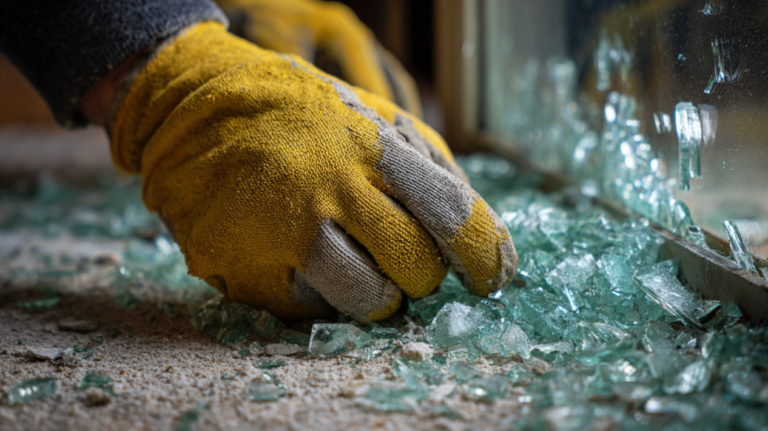
Sharp edges from broken glass cause deep lacerations that require stitches.
Immediate Safety Hazards: Risk of Injury
Tempered glass, despite breaking into pebbles, still produces fragments with cutting edges sharp enough to slice open hands or feet. Children who crawl or run near the break face higher injury rates—emergency rooms report spikes in glass-related wounds during weekends when families tackle DIY cleanup without proper gear. Pets suffer punctured paws that turn infected if fragments remain embedded.
Critical Security Breaches: Protecting Your Property
An open or weakened door invites burglars who scan neighborhoods for visible damage. FBI statistics show homes with broken windows or doors experience break-ins at rates 300% higher than intact properties. Even a boarded-up door signals vulnerability—thieves know temporary fixes buy time, not security. Sliding patio doors with shattered panels become entry points accessible with a simple lift and shove, bypassing locks entirely.
Exposure to Weather and Elements
Rain, wind, and temperature extremes enter through breaks, causing interior damage within hours. Water stains spread across hardwood floors, ruining finishes that cost thousands to restore. In Ohio winters, a broken door loses heat so rapidly that furnaces run continuously, spiking energy bills by 40-60% until the gap seals. Summer humidity floods in, promoting mold growth behind walls and under carpets—damage that escalates from cosmetic to structural if left unchecked for days.
Checklist: How to Choose the Right Emergency Glass Repair Service
Confirm the company holds valid state licenses and carries both liability and workers’ compensation insurance.
Verify Credentials and Reputation (License, Insurance, Reviews)
Ask for proof—reputable firms provide policy numbers without hesitation. Check reviews on Yelp, Angi, HomeAdvisor, and the Better Business Bureau. Window Gurus maintains an A+ BBB rating backed by hundreds of verified reviews, a track record built on punctuality and quality work. Avoid providers with no online presence or vague “5-star guarantee” claims unsupported by third-party verification.
Assess Service and Availability (24/7 Response, Local Expertise)
Look for round-the-clock availability and local knowledge. National chains often outsource after-hours calls to distant call centers, delaying response by hours. Local services in Cincinnati or Columbus respond faster because technicians live nearby and stock common glass types in their vans. Ask about average arrival times—30-90 minutes for emergencies is reasonable; 4-6 hours suggests understaffing or overextension.
Inquire About Experience with Your Door & Glass Type
Ask about past work on similar doors. Sliding patio doors require different handling than hinged French doors; tempered glass demands precise cutting to avoid shattering during installation. Request examples of completed projects matching your door style. Experienced teams explain the process clearly and anticipate complications like warped frames or non-standard dimensions.
Understand Costs, Guarantees, and Warranties
Request transparent pricing that breaks down labor, materials, and emergency fees separately. Reputable firms provide written estimates before starting work, not vague ranges that balloon at completion. Ask about warranties—quality providers guarantee parts for 1-2 years and labor for at least 90 days. Avoid companies that demand full payment upfront or refuse to itemize charges.
Key Questions to Ask Before Hiring
Pose these to separate professionals from amateurs: “What’s your average emergency response time?” “Do you stock tempered and laminated glass in your vehicle?” “What cleanup do you include—just large fragments or full vacuuming?” “Can you repair frame damage or only replace glass?” Answers reveal preparedness and honesty. Hesitation or evasive responses signal red flags.
The Professional Repair Process: What to Expect
Share photos or detailed descriptions over the phone.
Initial Phone Assessment and Quoting
Technicians ask about door type, glass thickness, and damage extent to provide an initial quote. For standard sliding doors with tempered glass, quotes typically range $200-$500 depending on size. Custom or laminated glass pushes costs higher. This phone assessment sets expectations and allows you to compare providers before committing.
On-Site Arrival: Temporary Securing and Precise Measurement
Upon arrival, experts secure the area by sweeping large fragments and stabilizing the frame to prevent further collapse. They measure the opening with precision—down to 1/16 inch—to ensure the replacement pane fits perfectly. Measurements account for frame irregularities like warping or settling, which DIY attempts often miss. Technicians also inspect hardware, checking if hinges, locks, or tracks sustained damage requiring separate repair.
Glass Sourcing and Custom Cutting
Professionals source matching glass—tempered for safety in high-traffic areas, laminated for security in ground-floor doors. Tempered glass must be cut and tempered at a factory, so same-day service depends on local stock. Laminated glass can be cut on-site if the technician carries the right tools. Custom jobs like tinted or energy-efficient glass add 1-3 days for ordering and fabrication. During my years restoring historic homes in Columbus, I’ve seen rushed cuts fail within weeks because installers skipped proper tempering—quality providers never shortcut this step.
Final Installation and Site Cleanup
Installers set the new pane into the frame, securing it with fresh glazing compound or rubber gaskets depending on door type. They test operation—sliding doors must glide smoothly, hinged doors must close flush without gaps. Final cleanup includes vacuuming fragments from floors, wiping down surfaces, and hauling debris away. The door functions like new, with no mess left behind for you to handle.
Understanding the Cost of Emergency Glass Door Repair
Size drives material costs—larger panes require more glass.
Key Factors Influencing the Final Price
Glass type adds complexity: tempered costs $50-$150 more than standard due to factory processing, while laminated glass runs $100-$300 higher for its multi-layer construction. After-hours service includes emergency fees ($75-$200) covering travel and setup outside business hours. Custom cuts for non-standard dimensions increase totals by $100-$300. Location matters too—urban areas like Cincinnati charge 10-20% more than rural regions due to higher operating costs.
| Factor | Description | Typical Cost Impact |
|---|---|---|
| Glass Type | Tempered adds strength; laminated adds security. | +$50-$300 |
| Door Size | Larger panels require more material and labor. | +$100-$400 |
| Labor Time | Emergency calls include travel, setup, and cleanup. | +$75-$250 |
| Timing | After-hours, weekend, or holiday service. | +$50-$200 |
| Location | Urban vs. rural service areas. | Varies 10-20% |
For standard sliding patio doors in 2025, expect $300-$600 for tempered glass replacement during business hours. Hinged French doors run $400-$800 due to dual-pane requirements. Commercial storefronts with heavy-duty glass exceed $1,000 for same-day emergency service.
Navigating Insurance Coverage and Claims
Many homeowner policies cover breakage from accidents, weather, or vandalism under dwelling or personal property sections. Review your policy’s deductible—if it’s $500 and the repair costs $450, filing a claim costs more than paying out-of-pocket. Document damage with photos from multiple angles before cleanup begins. File claims promptly; insurers often require notification within 24-72 hours. Provide the repair estimate from your chosen service—Window Gurus works directly with adjusters to streamline approvals. Deductibles typically apply, but reimbursement eases financial strain for major repairs.
Common Scenarios and Types of Damage
Shattering results from high-impact strikes—a baseball, thrown object, or body collision.
Shattered, Cracked, or Chipped Glass
Tempered glass disintegrates into pebbles, while standard glass fractures into jagged shards. Cracks spread from stress points like frame corners or thermal expansion, starting as hairline fissures that widen over days. Chips occur from small impacts near edges, often worsening into full cracks if left unaddressed. Each pattern signals different urgency: shattering demands immediate replacement, cracks require prompt sealing, and chips can wait if sealed with clear epoxy.
Damage from Vandalism or Attempted Break-ins
Intentional breaks leave irregular patterns—multiple impact points, scattered fragments, or pry marks around locks. Vandals often target ground-floor doors or those hidden from street view. Security upgrades deter repeats: laminated glass resists shattering even under repeated blows, holding together long enough to sound alarms or alert neighbors. After repairing vandalism damage in Columbus storefronts, I always recommend adding security film or upgrading to laminated panels—the upfront cost beats replacing glass every few months.
Accidental Impact Damage
Bumps from furniture during moves, kids’ toys, or pets jumping cause common breaks. These accidents produce localized cracks or chips rather than full shattering. Quick action saves money—small chips sealed with epoxy prevent spreading, avoiding full replacement. I’ve fixed dozens of such cases in family homes where a $50 chip repair prevented a $500 pane replacement.
Damage to the Door Frame or Hardware
Twisted frames or broken hinges compound glass issues, requiring full door assessment. Frames warp from settling foundations or impact force, causing gaps that stress glass until it cracks. Hinges loosen over years, allowing doors to sag and bind, which eventually shatters panes. Hardware damage often goes unnoticed until glass breaks—addressing both simultaneously prevents repeat failures.
Repair Considerations for Different Glass Doors & Types
These need balanced tracks post-repair to slide smoothly.
Sliding Patio Doors
Debris in tracks causes binding, stressing glass until cracks form. Tempered glass suits high-traffic areas because it breaks into pebbles rather than shards, reducing injury risk. Replacement requires lifting the door off tracks, removing the broken pane, and installing a new one with fresh weatherstripping. Tracks must be cleaned and lubricated to prevent future binding.
Hinged French Doors
Hinges demand alignment checks during repair. Misaligned hinges cause doors to rub against frames, stressing glass. Laminated glass resists shattering better here, holding together even if cracked—ideal for homes with children or high security needs. Dual-pane insulated glass adds energy efficiency, reducing heat loss through the door by 30-40% compared to single panes.
Commercial Storefront Doors
Heavy use calls for reinforced options. Storefronts endure constant opening, closing, and occasional impacts from carts or customers. Tempered glass rated for commercial use (thicker than residential) handles this abuse. Quick fixes maintain business operations—boarding up overnight and replacing glass the next morning minimizes lost revenue. I’ve coordinated dozens of such repairs for Cincinnati retailers, prioritizing speed without sacrificing quality.
Tempered vs. Laminated Safety Glass
Tempered breaks into pebbles for safety, ideal for areas where injury risk outweighs security concerns. Laminated holds together when shattered, with a plastic interlayer bonding glass fragments—perfect for ground-floor doors where break-in prevention matters. Tempered costs less and installs faster; laminated offers superior protection but requires custom ordering. Choose based on priorities: safety from cuts (tempered) or security from intrusion (laminated).
Preventing Future Glass Door Emergencies
Clean tracks monthly to remove dirt, leaves, and debris that cause binding.
Simple Maintenance and Inspection Tips
Inspect weatherstripping for cracks or gaps—replace it every 3-5 years to maintain seals. Tighten hardware annually; loose hinges stress glass, while wobbly locks invite forced entry. Check glass for tiny chips or cracks during cleaning—seal them with clear epoxy before they spread. Lubricate rollers and hinges with silicone spray to reduce friction and wear.
Upgrading Security: Films and Hardware
Apply protective films to strengthen glass against impacts. Security film holds shattered glass in place, preventing entry even after breakage—it buys time for alarms to summon help. Films cost $5-$15 per square foot installed, far less than replacing glass repeatedly. Install sturdy locks with deadbolts on hinged doors, and add secondary locks on sliding doors to prevent lifting off tracks. Motion-sensor lights deter vandals by eliminating hiding spots near entries.
FAQ: Emergency Glass Door Repair
Quick answers to common reader questions, drawn directly from real search intents.
Small cracks spread due to temperature changes and vibration, so DIY fixes rarely last. Clear epoxy kits seal cracks temporarily, buying days or weeks until professional repair. For cracks under 6 inches, epoxy works if you clean the crack thoroughly and apply it in thin layers. Longer cracks or those near edges require professional sealing or full replacement—attempting DIY on these often worsens damage, turning a $100 fix into a $500 replacement.
Five emergency-level scenarios: (1) shattered patio sliding door (security breach + family safety risk); (2) cracked tempered shower glass (collapse imminent — replace within 24 hours); (3) broken storefront door (theft + liability exposure); (4) sliding door off track during a storm or break-in; (5) glass door with structural frame compromise. Non-emergencies: hardware issues (handles, locks), single chip in glass, fogged double-pane, slow-leaking gasket — these wait until business hours.
Sliding glass patio door: $400–$900 for IGU replacement, $800–$2,500 for full door replacement. Front entry door with broken glass insert: $300–$700 for insert replacement, $1,500–$3,500 full door. Storefront commercial door: $700–$2,500. Emergency/after-hours surcharge: 50–100% over scheduled rates. Factor in: tempered glass takes 7–14 days to fabricate (plywood until then), so true 24-hour replacement is rare except for stock sizes.
Same-day: only if a glass shop has stock for the exact size and the damage is annealed glass (not tempered). 24–48 hours: standard pre-tempered glass sizes. 7–14 days: any custom tempered glass (most modern doors). Full door replacement: 2–6 weeks for standard, 6–12 weeks for custom. Bottom line: plan to board up the opening with plywood for at least 1 week even with “emergency” service. The “emergency” portion is securing the opening, not necessarily replacing it instantly.
Six-step protocol: (1) clear pets and children from the room and adjacent areas; (2) put on shoes, gloves, and safety glasses before approaching; (3) photograph the damage from multiple angles (insurance documentation); (4) cover the opening — packing tape grid for cracks, plywood for shattered; (5) call your insurance to start a claim if applicable; (6) contact 2–3 emergency glass repair services for quotes (don’t hire the first caller). Don’t: try to remove tempered glass yourself, sweep up barefoot, or leave the opening unsecured overnight.
Six-point checklist: (1) verifiable 24/7 phone line (not just a website form); (2) on-site within 60–90 minutes for true emergencies; (3) state license + insurance ($1M+ liability); (4) written quote BEFORE work begins (not after); (5) tempered glass capability if needed; (6) at least 5 verifiable local emergency-repair references. Red flags: vague pricing, demands cash only, no permanent address, won’t provide insurance certificate. Legitimate emergency services charge premium but not 3–5× regular rates.
Standard homeowners insurance covers sudden events — break-ins, weather damage, accidental impact (kids playing, fallen tree). NOT covered: gradual seal failure, wear-and-tear, freeze-thaw damage. Commercial property insurance varies widely — check your policy’s “vandalism,” “glass coverage,” and “business interruption” sections. Auto policy covers vehicle glass under comprehensive. Always: photograph everything BEFORE cleanup, file the claim within 48 hours, get the glazier’s written invoice for insurance file. Deductibles ($500–$1,500) often exceed the repair cost.