
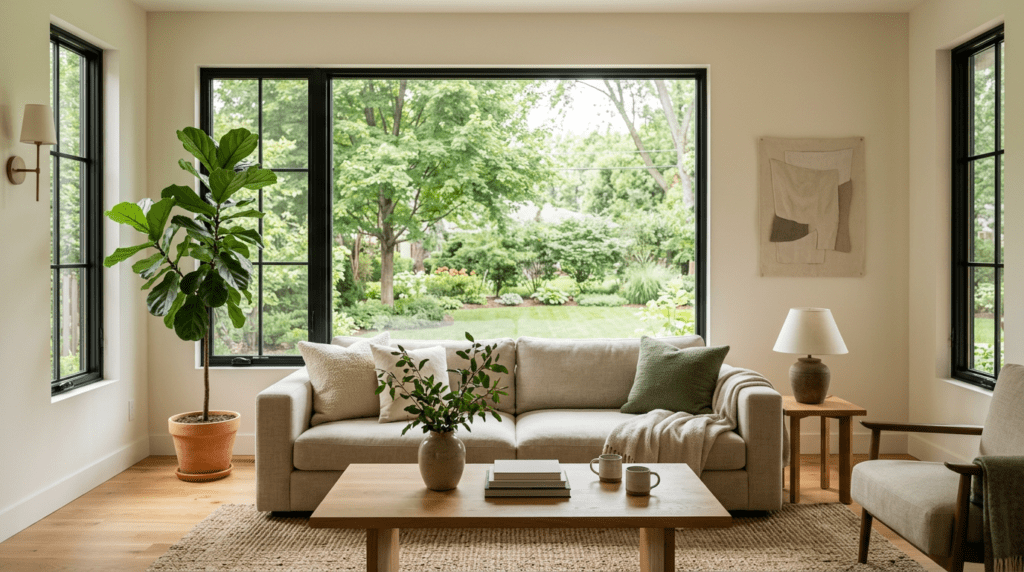
The living room is the room you actually live in, so its windows do more work than any others in the house. They set the light you read and watch TV by, frame the view you see every evening, and shape how warm or drafty the space feels through an Ohio winter. Get them right and the room feels open and calm. Get them wrong and you fight glare, cold drafts, or a wall of glass that leaves nowhere to put the couch.
This guide covers the window styles that work best in a living room, how to combine them, where to place them around your furniture, and how to keep daylight without losing privacy. If you are weighing a bigger change, new window installation can reshape the whole room, not just swap the glass.
Quick answer: The best living room windows balance light, view, and comfort. Picture windows and bay windows bring in the most light, casement and double-hung styles add ventilation, and floor-to-ceiling glass suits modern, open rooms. Place windows to work with your furniture, and choose Low-E glass to handle Ohio’s sun and cold.
Start With How the Room Faces
Before you pick a shape, look at which direction the wall faces. Orientation decides how much sun a living room window catches, and in Ohio that swing is large. A south-facing window pulls warm, steady light most of the day and helps heat the room in winter, which is a gift in January and a problem in July without the right glass. West-facing windows take the harsh late-afternoon sun that washes out a TV screen and fades upholstery.
North-facing rooms get soft, even light with little glare but almost no solar warmth, so they can feel cool and flat. East-facing windows catch gentle morning sun and stay comfortable by afternoon. Knowing the direction tells you how big you can go and what glass you need, long before you choose between a picture window and a bay.
On living-room jobs around Columbus, the biggest regret we hear comes from a large west-facing picture window put in without Low-E glass. It looks stunning the day it goes in, then bakes the room every summer afternoon and glares on the television until sunset.
The Best Window Styles for a Living Room
A living room can carry almost any window style, which is why the choice comes down to how much light, view, and ventilation you want. Most rooms end up combining a large fixed window for the view with a few operable windows for fresh air. Browsing the full range of window types helps, but a handful of styles do most of the work in a living room.
Start with the workhorses below, then mix in a shape that fits your home’s character. None of these has to stand alone; the best walls usually pair two or three.
- Picture windows sit fixed in the wall and give the widest, clearest view with the most glass. A picture window is the usual centerpiece, often flanked by operable units for air.
- Bay and bow windows push out from the wall to add floor space and a built-in nook, ideal for a reading bench or a row of plants.
- Casement windows crank open on a hinge for full top-to-bottom ventilation and a clean, modern frame.
- Double-hung windows are the traditional choice, easy to clean and a natural match for older Columbus homes.
- Floor-to-ceiling windows turn a wall into glass for a bold, open-concept look in rooms with the ceiling height to carry it.
Mixing and Combining Window Styles
Few living rooms rely on a single window. The most satisfying walls combine a large fixed pane for the view with smaller operable windows that open for a breeze, so you get light and airflow without compromise. Designers have leaned on a few reliable combinations for a century because they simply work.
The classic is a wide picture window with a double-hung or casement on each side, sometimes called a Chicago window. Joining several windows into one mulled unit, with slim framing between them, reads as more glass and a more open wall. A bay window is itself a combination, a picture window in the center with angled side windows that crank open for ventilation.
When you combine windows, keep the sightlines clean and the operable units within easy reach. A tall stack of fixed glass above a row of casements gives you height and fresh air at once, and it keeps the parts you actually open at a comfortable height over a sofa or a radiator.
Placing Windows Around Your Furniture
A beautiful window is wasted if the couch has to block it. Living rooms are furniture-heavy, so plan the glass and the layout together rather than fighting them later. Think about where the sofa, the media unit, and any built-ins will land before you commit to a window size or sill height.
A sofa can sit in front of a window when the sill is high enough to clear the backrest, and a lower window may call for a console table or a gap behind the seat. Television placement matters just as much: a screen on a wall facing a west window will glare every afternoon, so angle the layout or plan for a covering. In many Ohio homes the heat register sits right under the living-room window, and a deep sofa pushed against the wall can block that warm air all winter.
Fireplaces add another variable. Tall, narrow windows on either side of a chimney breast keep the fireplace as the focal point while still pulling in daylight. The goal is a room where the windows, the seating, and the heat all share the space instead of competing for it.
Balancing Light and Privacy
The whole point of a big living-room window is light, yet a wall of glass facing the street can leave you feeling on display. The fix is rarely heavier curtains, which cancel the daylight you paid for. It is smarter placement and lighter layers.
Setting windows a little higher on the wall keeps sightlines from the sidewalk out of the room while still flooding it with light. Frosted or patterned glass in a lower sash, sheer curtains, or a simple top-down shade all guard privacy without going dark. Landscaping helps too; a shrub or small tree placed off the corner of the window softens the view in without blocking the sky.
Layering is the key idea. Combine a higher window line, a sheer for daytime, and a heavier panel only for night, and the room stays bright when you want it and private when you need it. That balance is far easier to design in at the window stage than to retrofit after the glass is set.
Glass and Frames That Hold Up in Ohio
In this climate the glass package matters more than the window’s shape. A large living-room window is a big opening for heat to escape in winter and pour in during summer, so the difference between single glazing and a modern insulated unit shows up on every utility bill. Double-pane glass with a Low-E coating and an argon fill cuts that loss and blocks the UV rays that fade a sofa.
Frame material decides how the window ages through Ohio’s freeze-thaw swings. Vinyl and fiberglass resist the moisture and temperature cycling that warps and rots a neglected wood frame, while clad wood keeps a warm interior look behind a weatherproof skin. On a large fixed pane, the seal is what fails first, and a broken seal is what fogs the glass between the panes.
Condensation is the warning sign to watch. A little on the inside on a cold morning is just humidity in the room; moisture trapped between the panes means the seal has gone and the insulating gas has leaked out. Sizing the glass and frame to the wall’s exposure is what keeps a bright living room from turning into a cold, drafty one.
Common Living Room Window Mistakes
Most living-room window regrets trace back to a handful of avoidable mistakes, and they tend to surface a season or two after the work is done. Run through this list while the plan is still on paper, because each item is cheap to fix now and expensive to live with later.
None of these are about budget. They are about matching the glass to the room, the climate, and the way you actually use the space.
- Skipping Low-E glass on a big south or west window, which turns the room into a greenhouse and fades the furniture.
- Ignoring the room’s orientation, so the TV wall fights afternoon glare every day of the week.
- Choosing all-fixed glass with no operable window, leaving the room with a great view and no fresh air.
- Setting the sill too low behind a planned sofa, so the couch ends up covering half the glass.
- Blocking the heat register under the window with deep furniture, which makes the room feel cold all winter.
Planning New Living Room Windows?
Choosing living room windows is part style and part building science, and the two have to agree for the room to feel right year round. If you are staring at a wall trying to picture the glass, a set of trained eyes on the actual room saves a lot of second-guessing.
Book a free, no-pressure window consultation with our Columbus and Cincinnati team, and get straight guidance on the styles, glass, and placement that fit your living room and your home.
FAQ: Living Room Windows

Ready to fix your windows? Get a free quote in 30 seconds.
Family-owned, licensed & insured. Free, no-obligation quotes.


