Acrylic sheeting, sold under names like Plexiglas, Lucite, and Acrylite, has become a popular stand-in for glass in windows where shatter-resistance, weight, or an odd shape matters more than a perfect energy rating. It looks like glass, lets in nearly as much light, and takes a hit far better. For the right opening it is a smart, budget-friendly choice.
This guide breaks down where plexiglass earns its place, where it disappoints, and how it compares with polycarbonate and ordinary glass, so you can match the material to the opening instead of guessing. If a sealed glass unit has already failed, our glass repair team can tell you whether acrylic or new glass is the better fix.
Quick answer: Plexiglass windows use clear acrylic instead of glass. They are far more impact-resistant, lighter, cheaper, and easy to cut into custom shapes. The trade-offs are surface scratching, UV yellowing over time, and weaker insulation than double-pane glass. Use them for basements, sheds, storm panels, and pet-prone rooms, and keep real glass for primary, climate-facing windows.
What Plexiglass Windows Actually Are
Plexiglass is not really a product name so much as a household label for cast or extruded acrylic, a clear thermoplastic that machines and polishes to look much like glass. The original Plexiglas brand dates to the 1930s, and rivals such as Lucite and Acrylite are the same base material. When a hardware store sells you a plexiglass pane, you are buying acrylic.
It helps to know where acrylic sits between two neighbors. Ordinary annealed glass is rigid, scratch-resistant, and crystal clear, but it shatters into sharp shards. Polycarbonate, known by the Lexan brand, is nearly unbreakable and handles heat better, yet it scratches faster and costs more. Acrylic lands in the middle: tougher and lighter than glass, clearer and cheaper than polycarbonate.
For a window, that middle ground is the whole appeal. A standard acrylic pane runs about an eighth of an inch thick, weighs roughly half what the same sheet of glass would, and shrugs off the stray baseball or hail that would crack a glass lite. Knowing the material is acrylic also tells you how to clean and mount it, which is where most plexiglass windows fail early.
The Case for Plexiglass: Real Advantages
The reason builders reach for acrylic is a short list of genuine, measurable advantages, not marketing gloss. The headline is impact strength: a sheet of acrylic takes roughly ten times the blow a same-thickness glass pane can absorb, and instead of bursting into shards it tends to craze or crack in place. In a basement window at boot level or a child’s playroom, that difference is a real safety margin.
Weight and workability come next. Acrylic weighs about half as much as glass, so a large pane is something one person can carry and set without a suction cup and a helper. It cuts with ordinary shop tools, drills without a special bit, and bends with gentle heat, which makes it the obvious pick for an arched transom, a porthole, or any opening a glazier would charge extra to template.
- Impact resistance: shrugs off hail, balls, and slammed sashes that would shatter glass.
- Light weight: about half the heft of glass, easier to carry and mount.
- Clarity: passes roughly 90 percent of visible light, on par with a clean glass pane.
- Lower cost: cheaper to buy, ship, and install than tempered or laminated glass.
- Custom shapes: sawn, drilled, and curved on site for odd or one-off openings.
The Drawbacks You Have to Plan Around
Every advantage of acrylic comes paired with a limit, and ignoring those limits is how a cheap window turns into a yearly chore. The most familiar one is scratching. Acrylic is soft, so a dry wipe, a gritty rag, or an ammonia cleaner leaves hazy swirls that never buff out. A pane near a sidewalk, a dog, or a sandbox will show its age fast.
The harder problems are chemical and thermal. Without a UV coating, sun-facing acrylic slowly yellows and clouds over the years, while heat makes it soft enough to bow. Acrylic also expands and contracts far more than glass as the temperature swings, so a pane mounted tight in a frame can buckle in an Ohio summer and pull loose in a deep freeze. And a single sheet insulates no better than old single-pane glass, which matters in January.
- Scratches easily: abrasive cloths and the wrong cleaners leave permanent haze.
- UV yellowing: uncoated acrylic clouds and ambers after years of direct sun.
- Heat and movement: softens in high heat and expands several times more than glass.
- Weak insulation: one sheet roughly matches single-pane glass, not a sealed double-pane unit.
- Shorter service life: a primary window in full weather will not outlast quality glass.
Plexiglass vs. Polycarbonate vs. Glass
Choosing well means putting acrylic next to its two alternatives for the specific opening you have. Against glass, acrylic wins on safety and weight but loses on scratch resistance, long-term clarity, and insulation. If the window is a primary one you look through every day and want to last decades, glass is still the standard, especially as a sealed double-pane unit.
Against polycarbonate, the math flips toward acrylic for most homes. Polycarbonate, sold as Lexan, is the material you want behind a basement window in a high-crime area or anywhere a near-unbreakable barrier is the whole point, and it tolerates heat better. But it costs noticeably more, scratches even more readily than acrylic, and yellows too without coatings. For everyday shatter-resistance at a fair price, acrylic is the sweet spot, and polycarbonate is the upgrade you pay for only when security is the goal.
A simple way to decide: pick glass for clarity, insulation, and longevity; pick acrylic for impact-resistance, light weight, and custom shapes at low cost; pick polycarbonate when nothing short of near-unbreakable will do. Match the material to what the opening actually demands, and you avoid both overpaying and under-building.
When Plexiglass Windows Make Sense
Acrylic shines in the openings where glass is overkill, fragile, or hard to fit. Think of the spots that take abuse, sit out of the main sightline, or have an unusual shape. In those places the impact-resistance and easy cutting pay off, and the weaker insulation barely matters because the room is not climate-critical anyway.
These are the jobs we most often see acrylic do well, and where we would suggest it before glass:
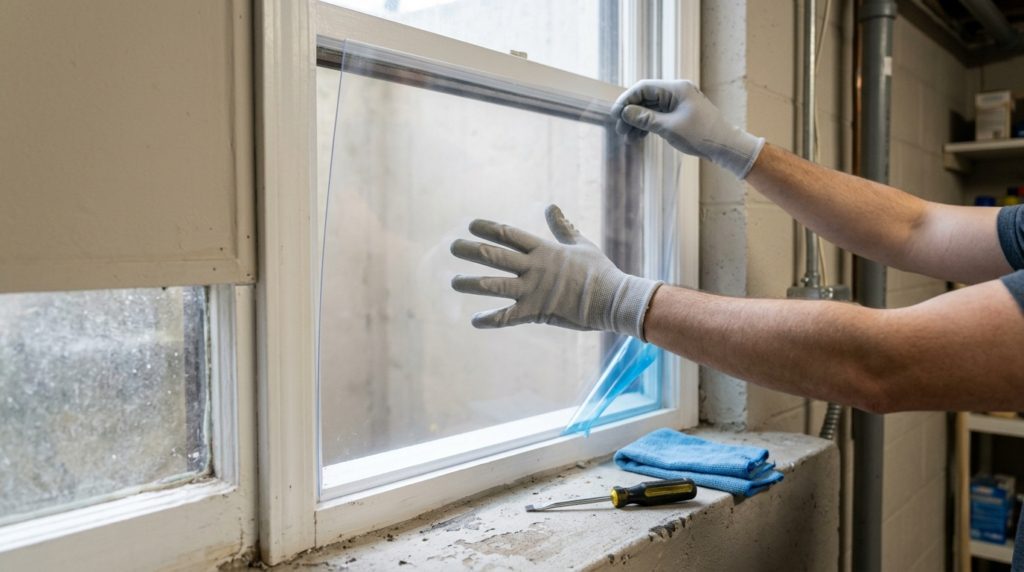
- Basement and garage windows: low, exposed openings that take knocks and rarely need a tight energy seal.
- Sheds, workshops, and outbuildings: unheated spaces where shatter-resistance beats insulation.
- Sunroom and porch panels: large, light-hungry areas where the weight savings simplify the build.
- Homes with kids, pets, or stray balls: playrooms and ground-floor rooms where a broken glass pane is the real hazard.
- Emergency storm board-ups: a fast, clear stand-in over a broken window until a permanent repair.
- Odd and custom shapes: arched, round, or angled openings that are cheaper to cut from acrylic.
That storm board-up case is worth a note for Ohio homeowners. After a wind or hail event, a cut sheet of acrylic screwed over the opening keeps weather out and stays clear while you wait, which beats nailing up plywood and buys time for a proper fix.
When Real Glass Is Still the Right Call
For the windows that define how a room feels and how much you spend heating it, glass usually wins. Any primary, climate-facing window benefits from the insulation of a sealed double-pane unit, the kind acrylic simply cannot match with a single sheet. Through an Ohio winter, that gap shows up directly on the heating bill and as condensation on a cold inner surface.
Thermal movement is the other reason to be careful. Acrylic’s tendency to expand and contract with temperature makes it a poor fit for a tight, year-round window frame in a climate of wide seasonal swings, where it needs room to move that glass does not.
On replacement jobs around Columbus, the acrylic panes that fail early are almost always the ones screwed tight into a frame with no room to move. Through a few freeze-thaw cycles they bow, gap at the edges, and start leaking air, while the same sheet set with a little expansion clearance holds up fine.
If your real problem is a foggy or drafty window rather than a broken one, acrylic is not the cure. A clouded pane usually means a failed seal, and our foggy window repair service restores the insulating glass instead of trading it for a sheet that insulates worse.
How to Keep Plexiglass Clear and Scratch-Free
Because acrylic scratches so easily, cleaning is where most plexiglass windows are quietly ruined. The cardinal rule is to skip ordinary glass cleaners: ammonia-based sprays, the blue kind, cloud and craze acrylic over time. Reach instead for a plastic-safe cleaner or plain mild soap and water, and never wipe a dry, dusty pane.
The method is gentle and slow. Rinse loose grit off first so you are not grinding it across the surface, then wipe with a clean microfiber cloth using light pressure and a fresh section as it loads up. Paper towels and rough rags are abrasive enough to dull the finish, so keep them away. A periodic anti-static plastic polish helps shed dust and can buff out the lightest marks.
The same soft-touch habits keep screens, frames, and acrylic looking right, and our guide to cleaning window screens without damage covers the related care. Treat acrylic gently and it stays clear for years; scrub it like glass and it hazes in a season.
Not Sure Which Material Your Window Needs?
Wondering whether a tricky opening calls for acrylic, polycarbonate, or new insulated glass? The right answer depends on where the window sits, what it has to survive, and how it is framed, and guessing wrong is what leads to a foggy, bowed, or scratched pane a year later.
Get a straight recommendation from our Columbus and Cincinnati team with a free, no-pressure window assessment, and we will tell you which material and glazing actually fit the job.
FAQ: Plexiglass Windows

Ready to fix your windows? Get a free quote in 30 seconds.
Family-owned, licensed & insured. Free, no-obligation quotes.