Open any modern window and the part doing the real work is hidden in plain sight. The glass is not one sheet but a sealed sandwich of two panes with a thin, gas-filled gap between them. That assembly is an insulated glass unit, or IGU, and almost everything a window does to keep your home warm, quiet, and dry happens inside it.
Most homeowners only learn the term when something goes wrong and the glass turns cloudy. This guide opens the unit up: what the parts are, how the sealed gap actually slows heat, why the edge seal is the piece that fails first in an Ohio winter, and how to tell a fogged double-pane window that needs new glass from one that needs nothing at all.
Quick answer: An insulated glass unit (IGU) is two or more glass panes bonded to a spacer bar and sealed at the edge, with a dry, gas-filled gap between them. The gap slows heat transfer, the desiccant-filled spacer keeps it clear, and the perimeter seal holds it all together. When that seal fails, the glass fogs.
What an Insulated Glass Unit Actually Is
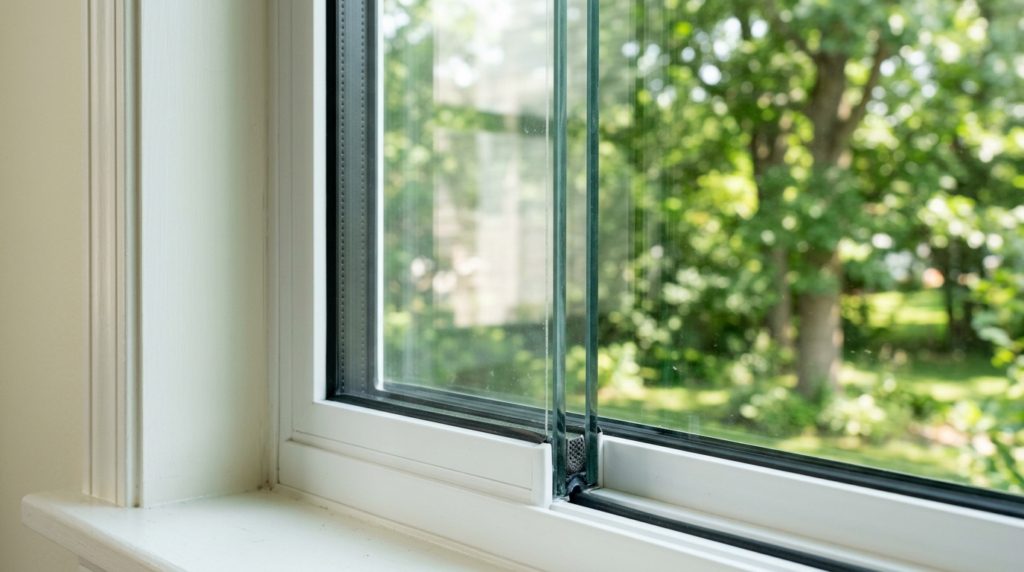
An insulated glass unit is the sealed pane assembly that fills the opening in a modern window or glass door. Instead of one sheet of glass, you get two panes, sometimes three, held a fixed distance apart by a spacer bar and bonded together around the entire edge. The space between the panes is dry and still, and on better units it is filled with an inert gas rather than plain air.
The word unit is the important part. Once the factory seals it, the assembly behaves as a single sealed component. You cannot open it, top up the gas, or wipe the inner surfaces. The exact amount of gas and the small charge of moisture-absorbing desiccant are locked in for the life of the unit, which is why the whole thing is engineered to stay airtight for decades.
It also helps to separate the glass from the window around it. The frame and sash are the moving, weatherproofing parts; the IGU is the glazing they hold. That distinction matters later, because when the glass fails you can often replace the sealed unit alone and leave a perfectly good frame in place.
The Parts Inside the Sealed Edge
Most of an IGU is plain glass, but the engineering lives in the inch or so around the perimeter where the two panes meet the spacer. That hidden edge is what turns two ordinary sheets into a sealed, insulating component, and every part of it has one job.
Two seals do the holding. A primary seal of polyisobutylene, a sticky butyl, sits between the spacer and each pane and forms the real barrier against moisture getting in and gas leaking out. A secondary seal of polysulfide or silicone wraps the outer edge and gives the unit its structural strength, keeping the sandwich together through wind load and temperature swings. When people talk about a window with a broken seal, this edge is what they mean.
- Glass panes: two or three sheets, often with one carrying a low-emissivity coating, sometimes tempered or laminated for safety and sound.
- Spacer bar: the frame that holds the panes a set distance apart and defines the width of the gap.
- Desiccant: a moisture-absorbing material packed inside the spacer that keeps the trapped air bone-dry so it cannot fog.
- Gas fill: argon, or less often krypton, in the gap, both denser and slower to conduct heat than air.
- Primary and secondary seals: the butyl moisture-and-gas barrier and the structural outer seal that hold everything airtight.
How an IGU Keeps Heat Where You Want It
The insulating work happens in the gap, not the glass. Glass itself conducts heat readily, so a single pane is barely warmer than the air outside. Trap a layer of still, dry gas between two panes and you break that path: gas conducts heat poorly, and as long as the layer cannot circulate, it slows the flow of warmth from the warm side to the cold side.
Gap width is engineered, not a case of wider being better. The sweet spot sits around half an inch, near 12 to 16 millimetres. Go much wider and the gas starts to circulate in a slow convection loop, carrying heat across the very space meant to block it, so an overly thick gap can perform worse than a correct one. Filling that gap with argon, which conducts heat at roughly two-thirds the rate of air, squeezes out more performance without changing the size.
The last piece is the low-emissivity coating, a metallic layer thinner than a wavelength of light baked or sputtered onto an inner glass surface. It reflects radiant heat back toward its source. In Ohio’s mixed climate that does double duty: it keeps furnace heat inside through a long cold winter and bounces summer solar gain back out, which is why a low-E unit feels less cold to stand next to in January. All of this shows up in the window’s U-factor, where a lower number means a better insulator.
The Edge Seal Is the Part That Fails First
For all the attention glass gets, it almost never fails on its own. The weak point of any insulated glass unit is that thin ribbon of seal around the edge, and it is the first thing to give out. Understand the seal and you understand nearly every IGU problem a homeowner ever sees.
Ohio’s climate is hard on it in a specific way. On a bright winter afternoon the sun warms the outer pane while the inside stays cool, then overnight the order reverses and the temperature drops well below freezing. Each swing makes the two panes expand and contract by different amounts, and the spacer adhesive between them flexes to absorb the difference. Do that through hundreds of freeze-thaw cycles a winter and the seal slowly fatigues, much like a paper clip bent back and forth. Units built with a narrow gap feel this stress most, because there is less room to absorb the movement.
On older homes around Columbus the glass is usually fine; it is the edge seal that is twenty years tired. South and west windows that bake in the afternoon sun and freeze at night are almost always the first to cloud, years before anything happens to the pane itself.
Once a hairline gap opens in the seal, the desiccant slowly saturates and the argon bleeds out. The unit can lose much of its insulating value before any haze is visible, so a window that looks perfectly clear may already be performing like plain glass.
Warm-Edge and Aluminum Spacers
The spacer does two quiet jobs: it sets the gap width and it carries the desiccant that keeps the air dry. What older units got wrong is that the spacer also touches both panes, so whatever it is made of conducts temperature straight across the edge of the glass.
A traditional aluminum spacer is a superb conductor, which is the last thing you want at the edge of a window. It pulls cold from the outer pane to the inner one and chills a band of glass around the perimeter. On a humid Columbus morning that cold edge is exactly where indoor moisture condenses and frosts, even when the center of the glass is clear. A warm-edge spacer, made of foam or steel with a built-in thermal break, slows that transfer. The edge of the glass stays warmer, condensation has less reason to form, and the seal lives under less thermal stress, so it lasts longer.
If you are specifying replacement glass for a freeze-thaw climate, the spacer is the upgrade that earns its keep. It is easy to fixate on the gas fill and the coating and forget the one part that decides whether the edge of your glass sweats all winter. The same sealed unit goes into a fixed picture window or an operable casement window, so the spacer question applies whatever style you choose.
What Fog Between the Panes Really Means
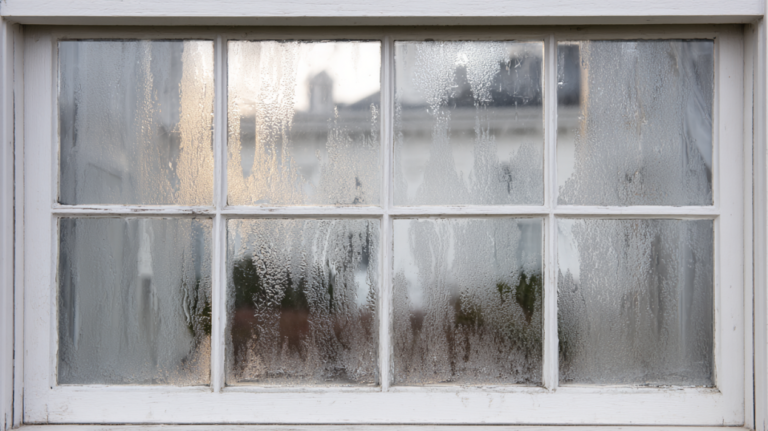
The classic sign of a dead IGU is glass that looks hazy, streaked, or full of condensation that no amount of cleaning touches. That is because the moisture is not on the surfaces you can reach. It is sealed inside the gap, condensing on the second or third glass surface where a cloth will never go.
That fog is a death certificate for the seal. By the time you can see it, the perimeter seal has failed, the desiccant has soaked up all the moisture it can hold, and most of the insulating gas has already drifted out. The unit still keeps the rain out, but it has stopped doing the insulating job it was built for, so it now performs much like a single old pane. The haze is cosmetic; the lost performance is the real cost.
The good news is that the rest of the window is usually untouched. When the frame, sash, and hardware are sound, the cure is a fresh sealed unit, not a whole new window. Replacing the foggy glass restores the insulation and the clear view while keeping the window you already have.
Where Condensation Actually Comes From
Condensation on a window sends a lot of people shopping for replacements they do not need, because three very different problems all look like a wet pane. Knowing which one you have saves money and worry.
A quick wipe test settles it. If your cloth clears the moisture, it sits on a surface you can reach and the sealed unit is fine. If the haze stays put, it is trapped inside the glass and the seal has gone. The location of the water tells the rest of the story.
- On the room side: moisture on the inside surface points to high indoor humidity and weak ventilation, not a failed unit. It is common in winter and on kitchen and bathroom windows.
- On the outside surface: dew on the exterior pane on a cool morning is actually a sign of a healthy low-E unit. The outer pane is staying cold because the glass is doing its job and not leaking heat outward.
- Between the panes: haze you cannot wipe away is the only one that means the glass itself is finished, because the seal has failed and let moisture into the gap.
Single, Double, or Triple Pane?
The number of panes is really a question of how many insulating gaps you want. A single pane has none: it carries an R-value near 1, radiates cold into the room, and sweats or frosts on a winter night. Almost every window made for an Ohio home today is at least a sealed double-pane for that reason.
A double-pane unit with a low-E coating, an argon fill, and a warm-edge spacer is the practical sweet spot for most homes here. It handles freeze-thaw winters and humid summers, cuts outside noise, and keeps the edge of the glass warm enough to resist condensation, all without adding much weight to the sash.
Triple-pane adds a third sheet and a second gas-filled gap, and it is not automatically the better buy. The extra pane brings real gains for very exposed windows, north-facing rooms, and homes on busy roads where noise matters, but it also costs more and loads more weight onto the sash and hinges, with returns that shrink against a good double-pane. For most Columbus and Cincinnati homes, a well-built double-pane spends your money where it actually moves the comfort needle.
Replace the Glass or the Whole Window?
A failed IGU rarely means you need a new window. Because the sealed unit and the frame are separate parts, the first question is simple: is everything except the glass still in good shape? When the sash closes square, the hardware works, and the frame is solid, swapping in a fresh sealed unit is the faster, cheaper fix, and it leaves the window you know in place.
The whole window earns replacement when the problem is no longer the glass. A frame that has racked out of square, hardware that has worn past adjustment, or wood that has gone soft are signs the unit is not the only tired part, and that is when a full window installation makes sense. A long-failed seal can also drip moisture down onto the sill, and water sitting on that wood through freeze-thaw season is how a small glass problem turns into rot in the sill below.
One more case looks dramatic but usually is not. A pane that cracks on a bright, cold day with no impact behind it has failed from thermal stress, where sun heats the center while the shaded edge stays freezing. That is a single-pane glass repair question about the cracked sheet, separate from whether the seal has gone.
Foggy or Drafty Glass? Get a Straight Answer
If a window has clouded over, feels cold to stand near, or sweats around the edges every winter, the cause is usually a tired edge seal or a cold aluminum spacer, not a window that has to be torn out. The fix is often far smaller than people expect.
Book a free, no-pressure glass assessment with our Columbus and Cincinnati team and get a clear answer on whether you need new glass, a tune-up, or nothing at all.
FAQ: Insulated Glass Units

Ready to fix your windows? Get a free quote in 30 seconds.
Family-owned, licensed & insured. Free, no-obligation quotes.