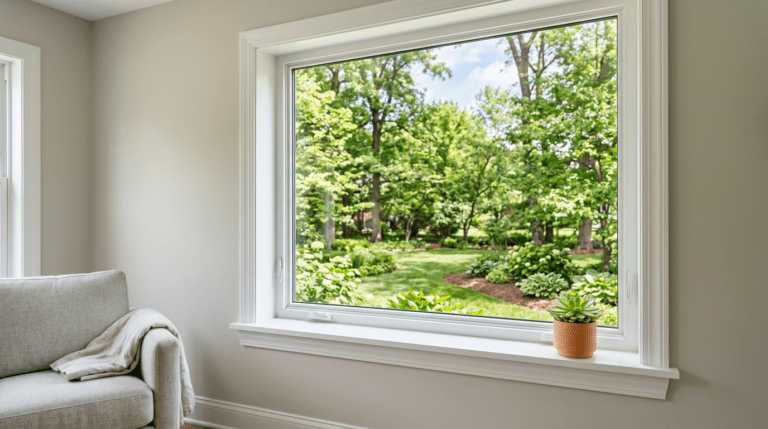
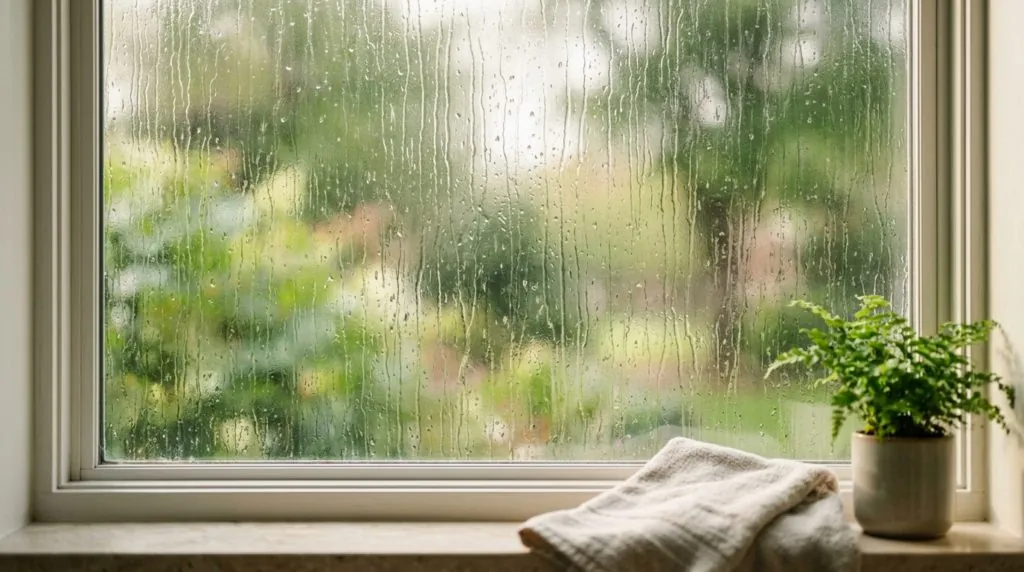
You want a bathroom or front entry that feels private, but you do not want to live in the dark. That is the exact problem rain glass solves. It is a textured, obscure glass with a soft vertical pattern that looks like water running down a pane, and it blurs the view through the glass while letting almost all the daylight through.
People reach for it most on bathroom windows, entry doors and their sidelites, and shower enclosures, but it works anywhere clear glass leaves you feeling watched. If your existing window is clear or fogged, you do not always need a whole new unit; sometimes a glass swap trades the clear pane for a private one and keeps the frame. This guide covers what rain glass is, how it is made, its real pros and cons, how it stacks up against frosted and reeded glass, and where it earns its place in an Ohio home.
Quick answer: Rain glass is a textured privacy glass with a raindrop-like pattern pressed into one face. It scatters light to blur the view from either side while still letting daylight pour through, so a room stays private and bright at the same time. It is popular for bathrooms, entry doors, and showers.
What Rain Glass Actually Is
Rain glass belongs to a family called obscure or patterned glass, the same category as frosted, reeded, and seedy glass. What sets it apart is the texture: instead of a uniform haze, it carries a flowing, vertical pattern that mimics rainwater streaking down a windowpane. Light passes through, but the surface bends and scatters it so eyes cannot resolve a clear image on the other side.
The privacy it gives sits in the middle of the obscure-glass range. It is more revealing than a heavy frost and more private than lightly textured decorative glass. You read shapes, light, and movement through it, never detail. That balance is the whole point. A frosted pane can dim a small bathroom; rain glass keeps the room nearly as bright as clear glass while still hiding what is behind it.
Because the pattern is busy and directional, it also disguises the everyday flaws that make clear glass look dirty. Fingerprints, water spots, and smudges disappear into the texture instead of catching the light, which is part of why it shows up so often in wet, high-traffic spots.
How Rain Glass Is Made and How to Orient It
Rain glass is rolled, not etched. During manufacture, molten glass passes between patterned rollers that press the raindrop texture into one face while the other stays smooth. That is why every sheet has a textured side and a flat side, and it is a detail that matters when the glass is installed. The smooth face is easy to wipe; the textured face holds onto grime in its grooves.
For an interior pane or a shower panel, the textured side usually faces in toward the room or the shower, where it stays dry and gets cleaned often. For an exterior window, the texture is sealed inside the sealed unit so weather, pollen, and freeze-thaw grit never sit in the pattern. The pattern direction matters too. Rain glass is meant to run vertically, like falling water; flip it sideways and the effect looks wrong and reads as a mistake.
You can buy it as a single decorative pane for an interior door or cabinet, or built into an insulated unit for an outside wall. If you are weighing your options, our overview of window glass types shows where patterned glass fits alongside tempered, laminated, and Low-E.
The Benefits of Rain Glass
The headline benefit is the one that sells it: privacy without a dark room. In a north-facing bathroom or a tight powder room that already fights for light, that trade matters. You keep the view of the outside world blurred while the space stays usable in daytime without flipping on a switch.
Beyond privacy and light, the texture does quiet practical work that clear glass cannot. The pattern hides water spotting and fingerprints, which is a real edge in a humid bathroom or on a busy front door. It also adds a layer of deterrence, since someone outside cannot scan a room to see what is worth taking. The benefits below are why it keeps showing up in remodels.
- Daylight with privacy. The texture blurs the view but passes nearly the full light of clear glass.
- Hides smudges and spots. Fingerprints, hard-water marks, and streaks vanish into the pattern.
- Subtle security. A view nobody can read is a weaker target than a clear window.
- Low upkeep. The smooth face wipes clean, and the busy surface forgives the spots clear glass shows.
- Style that fits anywhere. The soft, flowing look suits both traditional and modern rooms.
The Downsides to Weigh
Rain glass is not a privacy guarantee in every condition, and it helps to know the limits before you commit a room to it. The biggest one is night. Once a light is on inside and it is dark outside, a backlit pane shows a soft silhouette, more than the daytime view suggests. For a bathroom or bedroom you still want a blind or curtain for full nighttime privacy; the glass handles the day.
The texture cuts both ways, too. You cannot see out clearly either, so it is the wrong choice for a window where the view is the whole reason the window exists. The grooved face also collects grime, so on an exposed surface it takes a little more effort to clean than flat glass. None of these are dealbreakers, but they decide where the glass belongs.
- Limited at night. A lit room shows a silhouette to anyone outside after dark.
- No clear outward view. You lose the crisp picture window look in both directions.
- Texture holds dirt. The patterned face needs more attention than a smooth pane.
- Costs more than plain glass. Patterned and tempered options run above standard clear.
Rain Glass vs Frosted and Reeded Glass
Rain glass is one of several privacy textures, and the right pick depends on how much you want to hide and the look you are after. Frosted glass, made by acid-etching or sandblasting one face to a fine matte, gives the most uniform privacy of the three. It blurs the view to near-opaque, but that same density dims a room more, so it suits a space where light loss is acceptable.
Reeded, or fluted, glass uses straight vertical ridges for a crisp, lined, mid-century look. It reads more architectural and bolder than rain glass, with a similar level of obscurity. Rain glass sits between the two in feel: softer and more organic than reeded lines, brighter and less clinical than a full frost. If you are comparing the whole family, our guide to privacy and patterned glass lays the options side by side.
There is no single winner. A spa-like bathroom often leans rain or reeded for character; a window that needs maximum cover with no view might call for frost. Pick the texture by the privacy level and the style, not by name alone.
Where Rain Glass Works Best in a Home
Rain glass earns its keep anywhere you need to block sightlines but keep the light. The classic spot is the bathroom window, especially in older Columbus and Cincinnati homes where the bath sits close to a neighbor or a side yard. It is just as common on entry doors and their sidelites, where you want daylight in the foyer without giving passersby a clear look inside.
It also fits a stairwell or landing window, a transom over a door, a kitchen window above the sink that faces a fence, and shower enclosures where it hides water spots and the occupant alike. In a humid Ohio summer, the texture is forgiving of the condensation and hard-water spotting that make a clear bathroom pane look perpetually dirty.
On bathroom jobs around central Ohio, the window people think is failing is usually just a clear pane that shows every water spot and fogs with shower steam. Swapping it for a patterned privacy glass solves the privacy worry and hides the spotting in one move, with no change to the frame.
Rain Glass for Exterior Windows: What to Know
Using rain glass on an outside wall is different from dropping a single decorative pane into an interior door, and a couple of details keep it performing through Ohio winters. An exterior window needs an insulated glass unit, so the rain glass becomes one lite of a sealed, two-pane assembly with a gas fill between. The textured face is sealed inside that unit, which keeps weather, pollen, and freeze-thaw grit out of the pattern and leaves smooth, wipeable surfaces facing the world.
Privacy does not have to cost you efficiency. A patterned outer lite can still pair with a Low-E coating and an argon fill, so the window holds heat in January as well as a clear unit would. Safety code is the other piece: glass in and near a door, and glass in a tub or shower area, must be tempered safety glass, so order the rain glass tempered for those locations.
You also do not always need a full window to gain privacy. On a sound frame, swapping the clear or fogged sealed unit for a patterned one is often enough, which keeps the existing window and trim in place. When the frame is past its prime, a fresh window installation lets you spec rain glass, Low-E, and tempering from the start.
Want Privacy Without Losing Daylight?
If a bathroom, entry, or stairwell window leaves you feeling exposed, rain glass may be the simplest fix, and you may not need to replace the whole window to get it. The right answer depends on whether your frame is sound and whether the glass needs tempering for its location.
Book a free, no-pressure window and glass assessment with our Columbus and Cincinnati team, and get a straight read on whether a glass swap or a new unit makes more sense for your home.
FAQ: Rain Glass

Ready to fix your windows? Get a free quote in 30 seconds.
Family-owned, licensed & insured. Free, no-obligation quotes.