A double-pane window that is cracked, shattered, or clouded over is not the same problem in every case, and the right fix depends on which part actually failed. Some of these windows need nothing more than a new sealed glass unit dropped into the frame you already have. Others have a problem the glass cannot solve. Knowing the difference saves you from paying for a whole new window when a far smaller job would do.
This guide breaks down the three things that go wrong with these windows, what each one means for repair versus replacement, why a foggy pane is a sealed-unit problem and not dirty glass, and where the line sits between keeping the frame and starting over. If you already know the glass is the issue, our double-pane window repair service covers most of what follows.
Quick answer: Often, yes. If the frame and sash are sound, a glass company can replace just the sealed insulated glass unit and keep the existing frame, which fixes both cracked panes and foggy seal failures. A full window replacement is only needed when the frame itself is rotted, warped, or badly out of square.
First, Figure Out What Actually Broke
People say a double-pane window is broken to mean three very different things, and each one points to a different repair. Sorting yours into the right bucket is the single most useful step before you call anyone, because it tells you whether you are looking at a quick glass swap or a bigger job.
The first kind is visible glass damage: a crack across one pane, a chip from a stray rock, or a pane shattered by impact. The second is a failed seal, which shows up as fog, haze, or water droplets trapped between the two panes where you cannot wipe them away. The third, and the one homeowners miss most, is frame damage, where the vinyl, wood, or aluminum around the glass has rotted, swelled, or pulled out of square.
Glass damage and seal failure are usually repairable while keeping the frame. Frame damage is the case that tips a project toward full replacement. The rest of this guide walks each one in turn so you can tell which you have before the truck shows up.
What a Double-Pane Window Really Is
Understanding the repair is easier once you picture what sits in the frame. A double-pane window is built around an insulated glass unit, often called an IGU: two sheets of glass held a fixed distance apart by a spacer bar around the edge, with the gap filled with dry air or an inert gas like argon and sealed shut. That sealed cavity is what blocks heat, cold, and noise far better than a single sheet of glass.
The seal is the whole game. A drying agent inside the spacer pulls any stray moisture out of the cavity so the glass stays clear, and the gas fill slows heat transfer. Many units also carry a near-invisible Low-E coating on an inner surface to reflect heat back where you want it. None of this works once air can move in and out of the cavity.
This is why you cannot treat the glass like a single pane and just pop in a new sheet. The unit is a factory-sealed sandwich, so repairing the glass really means building or ordering a fresh sealed unit and setting it into your existing sash. For a fuller breakdown of how these units are put together, see our explainer on what an insulated glass unit is.
Cracked or Shattered Glass: Your Options
When the glass itself is cracked or broken, a strip of clear packing tape or a dab of glazing putty over the crack can keep weather and bugs out for a few days. Treat that as triage only. It holds nothing in place structurally and does nothing for the broken seal underneath, so it is a stopgap until the real fix happens, not the fix itself.
The lasting repair is to replace the sealed glass unit. A technician removes the damaged IGU from the sash, measures the opening, and sets in a new sealed unit matched to the original thickness, gas fill, and coating. The frame, sash, hardware, and trim all stay. Because the labor and parts are limited to the glass, this runs well below the price of a brand-new window.
One pane cannot be swapped on its own. The two sheets and the spacer are sealed as a single piece, so breaking or removing one means the cavity is open and the unit has to be rebuilt as a whole. If only the glass is damaged and the frame is solid, a straightforward glass replacement usually settles it in a single visit.
Foggy Glass Means the Seal Has Failed
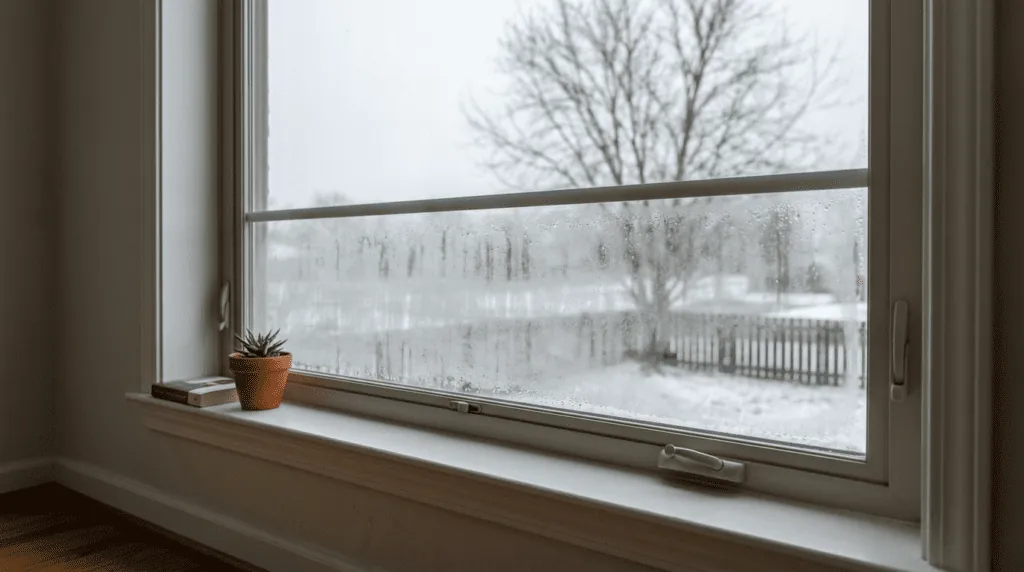
A window that looks permanently smeared, milky, or beaded with moisture you cannot reach is showing a failed seal. Once the edge seal gives out, humid air seeps into the cavity, the drying agent saturates, and condensation forms between the panes. No amount of cleaning touches it, because the haze is on surfaces you cannot get to.
Seals fail for predictable reasons. Most units are built to last somewhere between ten and twenty years, and age alone eventually breaks down the sealant. Standing water at the bottom of the frame, harsh direct sun that expands and contracts the glass day after day, and poor drainage all speed the failure. A clouded unit is not just ugly: it has already lost most of its insulating value because the gas fill has leaked out.
The good news is that a fogged window is one of the most repairable problems on this list. The frame is almost always fine, so the fix is the same sealed-unit swap used for cracked glass. Our foggy and insulated glass replacement service handles exactly this, restoring a clear, properly sealed unit without disturbing the rest of the window.
Why Defogging Kits Don't Really Work
You will find services and DIY kits that promise to clear a foggy window without replacing the glass. They drill a small hole through one pane, flush out the moisture, sometimes squirt in a cleaning solution, and fit a tiny vent so the cavity can breathe. For a while the glass does look clearer, which is why the method keeps getting sold.
The catch is that it defeats the entire point of a double-pane window. A vented cavity is no longer sealed, so the gas fill is gone for good and the unit insulates little better than a single sheet of glass. Outdoor humidity now flows freely through that vent, which means the fog often returns, and you are left with a drilled pane that still has to be replaced.
If a window has fogged badly enough to bother you, the cavity seal has already failed and the insulating value is already lost. Replacing the sealed unit gives you clear glass and the energy performance back. Drilling and venting gives you neither for long, so it is a shortcut worth skipping.
Repairing the Glass vs Replacing the Whole Window
Here is the distinction that saves the most money, and the one most homeowners get wrong: repairing a double-pane window usually does not mean buying a new window. When only the glass or the seal has failed, the sash and frame you already own stay in place and only the sealed unit is exchanged. People assume a broken pane means a full replacement, and most of the time it does not.
A full window replacement earns its keep when the frame is the problem. Rotted wood, vinyl that has warped in the sun, aluminum that conducts cold and sweats, or a sash so far out of square that it will not seal are all frame-level failures that new glass cannot cure. The same goes for a window that sticks, leaks air around the edges, or has rotted at the sill.
A simple test helps: press and inspect the frame around the glass. If it is firm, square, and dry, you are a candidate for a glass-only repair. If it gives, flexes, shows soft or discolored wood, or the window no longer opens and latches cleanly, replacement of the whole unit is the better long-term call. Age matters too, since a frame near the end of its life rarely justifies fresh glass.
How Ohio Winters Speed Up Seal Failure
Sealed glass units do not fail at the same rate everywhere, and central Ohio is hard on them. The freeze-thaw cycle is the main culprit: water works into the edge seal, freezes overnight, expands, and pries the seal open a little more with each swing. A unit that might last twenty years in a mild climate can give out years sooner here, and once a tiny breach opens, each winter widens it.
Humid summers add the second half of the problem. Warm, moist air is exactly what gets pulled into a compromised cavity, so the fog you notice in fall often traces back to the muggy stretch before it. Older Columbus-area homes make this trickier still, because a single house can carry a mix of original and replacement units that age at different speeds.
On service calls around Columbus, a fogged unit almost always clouds at the bottom edge first, where snowmelt and condensation pool against the spacer. When a homeowner points to haze creeping up from the sill, that is the seal talking, not dirty glass.
What Drives the Cost of the Fix
No two double-pane repairs cost the same, and the price tracks a handful of factors rather than a flat rate. Knowing them ahead of time helps you read a quote and understand why one window costs more than another in the same house.
The glass itself is the biggest lever. A larger unit, a thicker or tempered pane required by code near doors and floors, an argon or krypton gas fill, and a Low-E coating all add to the unit price. After that, the work depends on how the glass is held in the sash and how easy the window is to reach.
- Unit size and glass type: bigger panes, tempered safety glass, gas fills, and Low-E coatings each raise the cost.
- Frame material and sash design: vinyl, wood, and aluminum sashes each take different labor to open and reglaze.
- Access and floor: an upper-story or hard-to-reach window costs more to service safely.
- Number of windows: units that failed together are often cheaper to handle in one visit.
- Urgency: an emergency board-up or rush order adds to a standard repair.
A glass-only repair almost always lands well under the cost of a new window, which is the strongest argument for fixing rather than replacing whenever the frame allows it.
Should You Repair It Yourself?
Replacing a sealed glass unit is not a typical weekend project, and the reasons are practical rather than snobbish. Measuring the opening for a tight, square fit, prying out old glazing without cracking the sash, and seating a new unit so it seals correctly all take specific tools and a feel for the work. A unit ordered a fraction of an inch wrong is a unit that will not seat or seal.
Safety is the other half. A cracked or shattered pane has loose, sharp edges, and a large IGU is heavy and awkward to handle alone, especially above the first floor. The factory gas fill and edge seal also cannot be recreated with hardware-store caulk, so a home patch tends to fog again before long.
Where you can help yourself is in the diagnosis. Tape over a crack to keep weather out, note whether the haze wipes away or sits between the panes, and check the frame for rot or flex before the visit. Arriving with that information lets a technician measure, order the right unit, and finish the job faster.
Get a Straight Answer on Your Window
If you are not sure whether your window needs new glass or a new frame, the fastest way to know is to have someone look at it. A few minutes of inspection settles whether the seal failed, the glass cracked, or the frame is the real culprit, and which fix actually makes sense for your home.
Book a free, no-pressure window assessment with our Columbus and Cincinnati team and get an honest call on repair versus replacement before you spend a dollar.
FAQ: Broken and Foggy Double-Pane Windows

Ready to fix your windows? Get a free quote in 30 seconds.
Family-owned, licensed & insured. Free, no-obligation quotes.