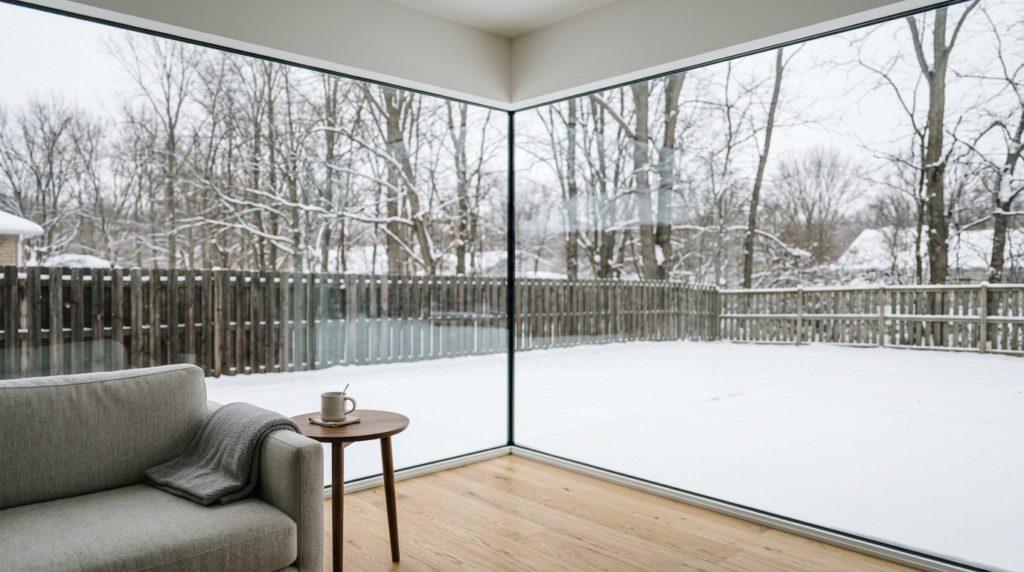
A corner window wraps glass around the spot where two walls meet, opening a view in two directions at once and pulling daylight deep into a room that would otherwise have one bright wall and three dim ones. It is one of the most striking things you can do to a room, and also one of the few window projects that touches the structure of the house, not just the opening.
That mix of high reward and real complexity is why corner windows deserve a careful look before you commit. This guide covers the main styles, the genuine upsides, the downsides nobody puts in the brochure, and how the choice plays out in an Ohio climate. If you are weighing one as part of a remodel or a new window installation, knowing the trade-offs up front saves an expensive surprise later.
Quick answer: Corner windows place glass at the junction of two walls for wraparound light and views. They come as mulled units with a corner post or as frameless glass-to-glass designs. The upside is light and openness; the downside is higher cost, trickier sealing, and the need for a structural header to replace the corner.
What a Corner Window Actually Is
Most windows sit in the middle of a wall with solid framing on every side. A corner window is different: it turns the corner, so glass meets glass, or meets a slim post, right where two exterior walls join. From inside, the effect is that the edge of the room seems to dissolve, because the one spot you expect to be solid is open to the outdoors instead.
That single change has knock-on effects. The corner of a building is normally a structural anchor and the point where the wall framing is strongest. Putting a window there means the load that corner carried has to go somewhere else, and it means two runs of glass have to seal tightly against each other in the spot most exposed to wind and rain. Everything good and everything tricky about these windows flows from that one decision.
Corner units can be fixed, a sealed picture-style pane for pure view, or operable, with casement or slider sashes that crank or glide open for airflow. Many homeowners combine the two, using a fixed pane on one leg and an operable unit on the other so the window both frames the view and ventilates the room.
Types of Corner Windows
Although every corner window does the same basic job, how the two panes meet at the corner is what separates the styles, and that detail drives both the look and the cost. Choosing well is mostly about how much uninterrupted glass you want at the joint versus how much structure and budget you are willing to give up to get it. The same families show up across manufacturers, even when the names differ.
Before you fall for the frameless look in a photo, it helps to know what each option asks of the house. The list below runs from the simplest to the most demanding.
- Mulled (coupled) corner windows. Two framed units meet at a structural corner post, or mullion, that carries the load. The post is visible, so the view is interrupted, but it is the easiest type to install and rarely needs special engineering.
- Frameless glass-to-glass. Two panes butt together at the corner and are bonded with clear structural silicone, with no post at all. The view is uninterrupted and the look is modern, but the load must be carried by a reinforced header above, which makes this the most complex and costly option.
- Gridline (grille) corner windows. A mulled or glass corner dressed with muntins or grilles. The bars add a traditional, divided-light look and can visually anchor the corner without a heavy post.
- Sliding corner windows. One or both legs use a slider so the corner opens for ventilation, a favorite in kitchens and home offices where airflow matters as much as the view.
If you are still mapping out which window shapes suit which rooms, our overview of window styles and how they work pairs well with this one, since a corner is usually built from two of those standard units.
Why People Want Them: Light and Two-Way Views
The appeal lands the first time you stand in front of one. Light arrives from two directions instead of one, which fills in the shadowed back of a room and stretches the bright part of the day. A north-and-east corner catches gentle morning light; a south-and-west corner stays lit into the evening. Either way, the room feels larger than its square footage suggests.
The view is the other half of the draw. A standard window frames a single scene like a picture; a corner window wraps it, so a backyard, a tree line, or a quiet street reads as a panorama rather than a snapshot. In a tight room, that wraparound glass visually pushes the walls outward and lets a small space breathe.
Operable corner units add real ventilation on top of the looks. With glass on two walls you can set up cross-breezes that a single window cannot, drawing cooler air through on the kind of mild Ohio evening that does not need the air conditioner. Done well, the same window that sells the view also trims your reliance on mechanical cooling in spring and fall.
The Structural Catch No One Mentions
Here is the part the design magazines skip: the corner of your house is doing a job, and a window cannot do that job. In most homes the corner is where wall framing ties together and, often, where overhead loads come down. Cut a window into it and the weight that corner carried has to be rerouted, usually into a header beam engineered to span the opening and hand the load off to the framing on either side.
This is why a corner window is a remodel, not a swap. A normal replacement drops a new unit into an existing opening; a new corner window means opening the wall, sizing and installing a structural header, and in many cases pulling a permit and having an engineer or qualified contractor sign off on the load path. Skip that step and you invite doors that stick, drywall cracks above the window, and a slow sag you will be chasing for years.
The frameless glass-to-glass styles raise the stakes, because with no corner post at all, every bit of that load lives in the header. None of this should scare you off. It just means the planning and the crew matter more than they do for an ordinary window, and the quote should reflect genuine structural work rather than a simple install.
Corner Windows and Ohio Winters
A building corner is already the coldest, leakiest spot in the average wall, where two planes of insulation meet and never quite seal perfectly. Replace that corner with glass and you have put your largest expanse of low-insulating material at the exact point most exposed to wind-driven rain and the deepest winter cold. In a climate that swings from humid summers to single-digit January mornings, that location matters.
The first thing you notice when the glass is wrong is condensation. On a cold morning the corner pane runs colder than the rest of the room, so indoor humidity collects there first, beading up or even frosting along the joint. Left alone, that moisture feeds mildew on the trim and can work its way into the framing. A failed seal on an older corner unit shows up the same way, as fog trapped between the panes that no cleaning will remove.
On older corner windows around Columbus, the corner joint is almost always the first place to give out. Wind and freeze-thaw work the seam season after season, and we see drafts and condensation start at the corner long before the rest of the window shows any trouble.
The fix is in the glass package and the sealing, not in giving up the window. If a corner unit is already fogging at the seam, that is usually a failed insulated-glass seal rather than a window that has to be torn out, and it is worth diagnosing before you assume the worst.
Choosing Glass That Can Take the Climate
Because a corner window puts so much glass at a vulnerable spot, the glass package is where you either protect the comfort of the room or quietly undermine it. The floor for any Ohio installation is double-pane insulated glass with a low-emissivity (Low-E) coating and argon gas in the cavity. The Low-E coating reflects heat back where it belongs, keeping winter warmth in and summer sun out, while the argon slows heat transfer through the unit.
For a north-facing corner, a large expanse of glass, or anyone chasing the lowest heating bills, triple-pane glass earns the upgrade. The extra pane and second gas cavity raise the insulating value and, just as usefully, warm the inside surface of the glass, which is what actually cuts the corner condensation described above. Warmer glass means less moisture collecting at the seam on a cold morning.
Whatever package you choose, the corner joint itself has to be sealed for the climate, not just for looks. Quality structural silicone on a frameless joint and proper flashing behind a mulled one are what keep wind-driven rain out of the wall. If a corner is already failing at the glass, our team handles glass repair and replacement without tearing out the whole frame when the structure is still sound.
Design Ideas, Room by Room
Corner windows reward rooms where light and view do the most work, and the strongest placements tend to repeat from house to house. The trick is matching the window to how you actually use the room, rather than dropping glass in the corner just because the corner is there.
A few placements consistently earn their keep:
- Bedrooms. A corner unit beside the bed brings in soft morning light and a two-sided view, though it pays to plan blinds or glazing for privacy and for sleep.
- Living rooms. Wrapping the main seating corner in glass turns an ordinary room into the one everyone gathers in, especially where the view outside is worth framing.
- Kitchens. A sliding corner over the counter or sink opens for ventilation while flooding the work surface with daylight from two sides.
- Home offices and dining nooks. Light from two directions cuts screen glare and makes a small nook feel like a destination rather than leftover space.
If you love the idea of a glassy, light-filled corner but the structural work gives you pause, a bay or bow window can deliver a similar sense of openness while projecting out from a single wall, which is far simpler to frame. It is a common middle ground for homeowners who want the drama without rebuilding a corner.
Common Mistakes to Avoid
Most corner-window regret traces back to a handful of avoidable decisions made early, usually around budget, glass, or who does the work. None of them are exotic. They are the corners people cut to save money or time, and each one tends to surface a season or two later.
Walk through this short list before you sign anything:
- Treating it like a standard replacement. A corner window needs structural planning and often a permit; a quote that ignores the header is a quote for trouble.
- Skimping on the glass package. Builder-grade or single-coating glass at the coldest point of the house invites condensation and high bills.
- Hiring a crew that has never built one. The corner joint and the load path are unforgiving, so experience with corner installs is not optional.
- Forgetting privacy and glare. Two walls of glass means twice the exposure, so plan window treatments before the install, not after.
- Ignoring the upkeep. Frameless corners show every smudge and need regular cleaning and seal checks to keep looking their best.
Thinking About a Corner Window?
A corner window can be the best thing you do for a room or an expensive lesson in structural shortcuts, and the difference is almost always in the planning. The right glass package, a properly engineered header, and a crew that has done it before are what separate the two outcomes.
If you are considering a corner window in the Columbus or Cincinnati area, book a free, no-pressure consultation and quote with our team. We will walk the opening, talk through the structure and the glass, and give you a straight answer on what the project really involves.
FAQ: Corner Windows

Ready to fix your windows? Get a free quote in 30 seconds.
Family-owned, licensed & insured. Free, no-obligation quotes.