 Reviewed by
This guide walks you through repairing broken window glass at home, from quick temporary solutions to full pane replacement. Readers gain tools, steps, and tips to restore security, weather protection, and energy efficiency without unnecessary costs or delays.
Key Takeaways
- Quick decision: DIY for single-pane wood sash, ground floor, under 6 sq ft. Hire pro for IGU, tempered, second-story, oversized.
- Cost ladder: DIY single-pane $15–$50, pro single-pane $80–$300, IGU replacement $150–$400, tempered $200–$700.
- Crack-only repair: windshield resin kit ($15–$30) works for cracks under 4″ not reaching edge. Won’t work on tempered glass.
- Temporary cover: packing tape grid (immediate), plastic + duct tape (2–3 wks, $15), 1/2″ plywood (months, $20). Plywood for security/large openings.
- Safety protocol: shoes, gloves, glasses, long sleeves. Pull glass straight out (no twisting). Cardboard box for disposal, label “BROKEN GLASS”.
First Aid for Your Window: Immediate Temporary Fixes
Cover the opening with heavy-duty plastic sheeting or a trash bag taped securely around the frame edges.
What to Put Over a Broken Window (Before the Full Repair)
For added strength, layer cardboard inside the plastic and secure with duct tape. This blocks rain, wind, and debris while maintaining some visibility. Plywood cut to size offers better security for larger breaks; screw it directly into the frame without damaging the structure. In one case from my work at Window Gurus, a client in Columbus used this plywood method during a storm, preventing further water damage until we arrived for permanent replacement.
DIY vs. Professional Repair: A Quick Decision Guide
Opt for DIY if the break involves a single pane in a simple wood frame, with no structural damage.
When to Repair It Yourself (Cost, Scope, Simplicity)
Costs stay low—around $50 for materials like glazing compound and points—versus $200+ for pros. Simple cracks or small breaks suit beginners; the process takes 2-4 hours. Scope fits if you have basic tools and the window remains accessible.
When to Call a Professional (Safety, Glass Type, Complexity)
Contact pros for shattered double-pane units, tempered glass, or deteriorated frames, since these situations require sealed-unit handling and safer removal — for most homeowners, booking a glass repair service is faster and far less risky than attempting a DIY pull-out. If you’re seeing haze or moisture between panes after impact, the IGU has failed and needs targeted insulated fogged window repair to restore clarity and performance. And when broken glass comes with soft, crumbling wood at the sill or lower corners, pairing the fix with rotted wood window repair helps stop repeat cracks caused by frame movement and ongoing moisture.
Safety First: Essential Precautions for Handling Glass
Wear thick gloves resistant to cuts, safety goggles to shield eyes from shards, and closed-toe shoes for foot protection.
Personal Protective Equipment (PPE) Checklist
Long sleeves and pants guard skin; a dust mask filters fine particles during cleanup. Think of PPE as insurance against emergency room visits—not optional.
Securing the Work Area and Protecting Surfaces
Clear the area of children, pets, and furniture. Lay drop cloths or tarps under the window to catch debris. Tape off nearby surfaces to avoid scratches or compound spills. Lock doors to keep curious hands away from sharp edges.
The Right Way to Handle and Dispose of Broken Glass
Sweep large pieces into a sturdy box using a broom and dustpan—never hands. Vacuum remaining fragments with a shop vac equipped with a HEPA filter to trap fine particles. Dispose in sealed bags labeled as sharp waste to prevent recycling bin accidents. Double-bag for extra security.
Pre-Repair Checklist: Assessing Damage, Tools, and Materials
Inspect for cracks spreading from impact points versus full shatters leaving empty frames.
Assessing the Damage: Is it a Crack or a Full Break?
Cracks often seal temporarily with epoxy; full breaks require complete pane replacement to restore security and insulation. Run your gloved finger along the crack to check if it extends beyond visible lines—hidden fractures compromise strength.
Essential Tools Checklist (From Putty Knife to Caulk Gun)
Gather a putty knife for scraping, hammer for points, utility knife for trimming, measuring tape for sizing, and caulk gun for sealants. Add pliers for stubborn glass removal and a heat gun to soften old putty without damaging wood.
| Tool | Purpose | Why Essential |
|---|---|---|
| Putty Knife | Scrapes old putty | Ensures clean frame for new seal |
| Hammer | Installs glazing points | Secures glass without cracks |
| Measuring Tape | Sizes replacement pane | Prevents ill-fitting glass |
| Caulk Gun | Applies sealant | Creates weather-tight barrier |
| Utility Knife | Trims excess material | Achieves smooth finish |
| Heat Gun | Softens old compound | Removes putty without gouging wood |
Required Materials Checklist (Glazing Compound, Points, Sealant)
Stock glazing compound for bedding, metal glazing points for holding, silicone sealant for edges, and primer plus paint for finishing. Include sandpaper (120-grit) for smoothing frames and mineral spirits for cleaning residue. Buy 10% more compound than calculated—leftovers beat mid-job trips to the hardware store.
How to Choose and Measure for the Right Replacement Glass
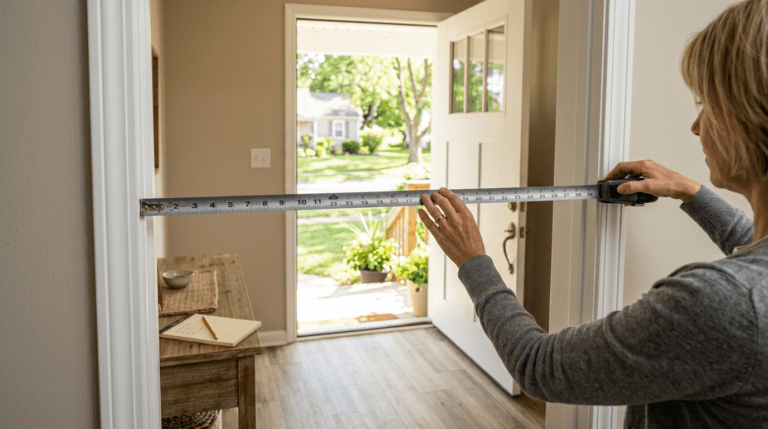
Measure frame opening width and height, subtracting 1/8 inch for expansion. Select single-pane glass for older windows or insulated units for modern ones; match thickness to original for proper fit. Standard residential glass runs 1/8 inch thick; older homes may need 3/32 inch. Bring a shard to the glass shop for exact matching—thickness, tint, and texture matter for seamless blending.
The Core Method: Step-by-Step Guide to Replacing a Window Pane
Detach the sash by removing stops or hinges for easier access.
Step 1: Remove the Window Sash (If Necessary) and Remaining Glass
Tap out loose glass shards carefully with a hammer and chisel, wearing gloves. Work from the top down to prevent pieces from falling inward. If the sash stays in place, protect the floor with tarps and work cautiously around fixed edges.
Step 2: Remove Old Putty, Glazing, and Glazing Points
Scrape away hardened putty using a putty knife heated slightly with a heat gun for ease—don’t overheat or you’ll scorch the wood. Pull out old points with pliers to clear the rabbet (the groove holding the glass). Stubborn putty sometimes requires a chisel; angle it away from the frame to avoid gouges. Clean the rabbet with mineral spirits and a rag to remove oil residue.
Step 3: Prepare the Frame and Apply a Bed of Glazing Compound
Clean and sand the frame with 120-grit sandpaper to create a smooth surface. Roll compound into ropes about 1/4 inch thick and press into the rabbet for a cushioned base. This bed prevents glass from rattling and seals against moisture infiltration—skip it and you’ll hear clicking with every breeze.
Step 4: Install the New Glass Pane
Set the pane into the compound bed, pressing gently to seat it evenly without forcing. Apply pressure around the perimeter, not the center, to avoid cracking. The glass should sit flush with minimal wobble; excess compound will squeeze out—wipe it away before it hardens.
Step 5: Secure the Glass with New Glazing Points
Push points into the frame every 6 inches using a hammer or point driver to hold the glass firm. Angle them slightly inward to grip without cracking the pane. Two points per side suffice for small windows; larger panes need closer spacing (every 4-5 inches) for stability.
Step 6: Apply and Smooth the Final Layer of Glazing Compound
Layer compound over points at a 45-degree angle, creating a beveled edge that sheds water. Smooth with a putty knife dipped in mineral spirits for a clean finish—draw the knife in one continuous stroke per side to avoid ridges. The bevel should match neighboring panes for uniform appearance.
Step 7: Curing, Priming, and Painting the Frame
Let compound cure for 7-10 days before painting—check firmness by pressing lightly with a finger. Prime bare wood with oil-based primer to seal against moisture, then paint to match existing trim. Overlap paint slightly onto the glass (1/16 inch) to seal the compound-glass joint and prevent water seepage.
Alternative Method: How to Repair a Minor Crack Without Full Replacement
For small cracks under 6 inches, apply clear epoxy resin designed for glass. Clean the area with rubbing alcohol, inject resin into the crack using a syringe, and cure under UV light or sunlight for 24 hours. This seals without removal, maintaining the original pane’s integrity and saving the cost of replacement. I’ve used this on historic windows in Cincinnati homes, preserving wavy antique glass that modern replacements can’t replicate—clients appreciated keeping authenticity while stopping drafts.
Adapting the Repair for Different Window Types
Wood frames allow traditional putty use; scrape, prime, and repaint for lasting protection.
By Frame Type: Wood, Vinyl, and Aluminum Windows
Vinyl requires adhesive sealants instead of putty—avoid heat tools above 140°F to prevent warping. Aluminum needs rivets or clips instead of glazing points for secure holds; drill pilot holes to prevent cracking the frame. Each material demands its own fastening method—force wood techniques on vinyl and you’ll end up with melted edges and loose glass.
By Glass Type: Single-Pane vs. Double-Pane (IGU)
Single-pane swaps easily at home with basic tools and glazing compound. Double-pane insulated glass units demand professional replacement due to sealed gas layers between panes; DIY attempts risk breaking the seal, causing permanent fogging and voiding energy efficiency. If condensation appears between panes, the seal already failed—replacement becomes the only fix.
Special Cases: Handling Tempered and Laminated Glass
Tempered glass shatters into pebbles on impact—replace entirely, as it can’t be cut or repaired once broken. Laminated types hold together with an inner plastic layer; cut away damaged outer layers carefully with a utility knife before installing new glass over the intact laminate. Tempered windows often mark themselves with a corner stamp; check before attempting repair to avoid wasted effort on irreparable breaks.
Common Mistakes to Avoid During Window Repair
Skipping safety gear leads to injuries—cuts from hidden shards happen fast. Using wrong glass thickness causes poor fits and drafts; always match original specs. Rushing curing skips result in weak seals that crack with temperature changes—wait the full 7-10 days before painting. Ignoring frame damage allows rot to spread into sills and studs, turning a $50 fix into a $500 structural repair. Overapplying compound creates messy, uneven edges that trap moisture and peel paint within months. One client tried forcing oversized glass into a frame, cracking three panes before calling us—measure twice, cut once applies to glass selection too.
FAQ: Your Window Glass Repair Questions Answered
Quick answers to common reader questions, drawn directly from real search intents.
Glazing compound cures in 7-14 days, depending on humidity and temperature. Test firmness by pressing lightly with a fingertip—if it leaves an impression, wait longer. Painting too soon traps solvents, causing bubbles and poor adhesion that ruins the finish.
For a single-pane window: (1) put on safety gloves and glasses; (2) remove the broken glass starting at the top corner, working down — pull pieces straight out, never sideways; (3) scrape old glazing compound from the rabbet (channel) with a putty knife; (4) clean the channel with a wire brush; (5) measure the opening and order new glass cut to that size minus 1/8″ each direction; (6) bed the new pane on glazing tape or compound, secure with glazier’s points every 4–6″, finish with a smooth bead of glazing compound at 45°.
Three options ranked by speed: (1) clear packing tape grid pattern over the cracks (both sides) — 5 minutes, $2, holds shards in place until proper repair; (2) heavy-duty plastic sheeting + duct tape over the entire opening — 5 minutes, $15, holds 2–3 weeks; (3) 1/2″ plywood cut 1″ larger than the opening, screwed into the frame — 30 min, $20, secure for months. Use plywood for any window over 6 sq ft, ground-floor windows (security), or if proper repair is delayed beyond 1 week.
DIY makes sense when: window is single-pane, frame is wood with removable beads, you have basic tools, the opening is under 6 sq ft, ground floor only. Hire a pro when: double-pane (IGU replacement requires careful sash removal), tempered glass anywhere (cannot be cut, must be ordered), oversized panes, second-story or higher, or you don’t already have safety glasses + work gloves. Cost difference: DIY $15–$50, pro $80–$300 — but the pro carries liability insurance.
Yes for cracks under 4 inches that don’t reach the edge. Use a windshield repair kit ($15–$30) — works on flat home glass too. Process: clean the area with rubbing alcohol, attach the suction-cup bridge over the crack, inject the resin, expose to UV light for 5–10 min, scrape excess. Result: crack becomes invisible from 3 ft away, structural integrity restored to ~80%. Limitations: doesn’t work on tempered glass (resin can’t penetrate the stress pattern), cracks reaching the edge, or impact stars larger than a quarter.
5-point checklist: (1) Type — single pane vs IGU vs tempered (look for stamps “T” or “TEMPERED”); (2) Size — measure the opening to estimate replacement cost ($10–$15/sq ft for single-pane, $25–$50 for IGU); (3) Frame condition — soft or rotten frame means full window replacement, not just glass; (4) Surrounding water damage — staining or warping below indicates seal compromise; (5) Cause — accidental impact (insurance covers) vs gradual seal failure (homeowner expense). Document with photos for insurance before any cleanup.
Five-rule protocol: (1) shoes (closed-toe), gloves (cut-resistant or thick leather), safety glasses, long sleeves — every time; (2) work top-to-bottom — pieces fall down, not up; (3) pull glass straight out toward you, never twist or pry sideways (creates new fractures); (4) place removed glass in a cardboard box (never trash bags — punctures); (5) double-bag for disposal and label “BROKEN GLASS” on the outside. For tempered glass: ALL pieces are sharp shards, more dangerous than annealed.