Open a window and the part that actually moves in your hand is the sash. It is the framed panel that grips the glass and slides, swings, or sits fixed inside the larger window. Most people never think about it until a window will not stay up, fogs over, or sticks shut on a humid Ohio afternoon, and the fix almost always comes down to the sash.
This guide breaks down what a sash is, the parts that make it up, the hidden cords and balances that carry its weight, and how to read the warning signs before a small problem turns into a draft or a rotted frame. If a sash is already giving you trouble, our window sash repair team handles the rest.
Quick answer: A window sash is the movable framed panel that holds the glass inside a window. It is made of vertical stiles and horizontal rails around the glazing, and it slides up and down, glides side to side, or cranks open depending on the window style. The fixed outer frame stays put while the sash does the moving.
What a Window Sash Actually Is
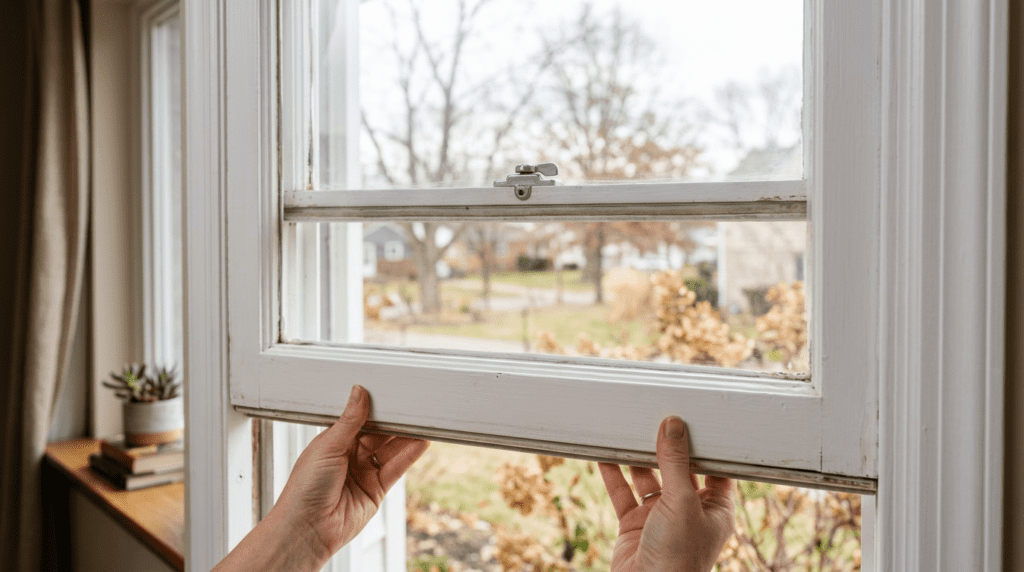
A window sash is the assembly that surrounds and holds the glass: a rectangle of framing pieces with the glazing fixed inside it. In a unit that opens, the sash is the part that travels, while the frame around it never moves. That single distinction clears up most of the confusion people have about window anatomy.
Think of it as a window within a window. The outer frame, made up of the head, jambs, and sill, is built into the wall opening and holds everything in place. The sash sits inside that frame and carries the glass. On a double-hung window you have two sashes stacked in the same opening, and either one can move. On a fixed picture window the sash is still there, it simply does not open.
The material of the sash sets how it ages. Wood sashes, common in older Columbus homes, look the part but swell and rot when moisture gets in. Vinyl sashes resist water but can warp in summer heat. Aluminum conducts cold and tends to sweat with condensation on a January morning. Knowing what yours is made of tells you what is likely to go wrong with it.
The Parts of a Window Sash
A sash looks simple from across the room, but it is built from several distinct pieces, each with a job. Once you can name them, describing a problem to a technician gets a lot easier, and you can tell the difference between a part that wears out and one that fails the whole window.
Here are the pieces that make up a typical sash, from the framing members to the small hardware that locks and seals it.
- Stiles. The two vertical sides of the sash that run top to bottom and give it rigidity.
- Rails. The horizontal members; the top rail caps the sash and the bottom rail rides against the sill.
- Meeting or check rail. On a double-hung window, the spot where the two sashes overlap in the middle, where the lock and weatherstrip sit.
- Muntins and grilles. The thin bars that divide the glass into smaller panes, whether structural or purely decorative.
- Glazing. The glass itself plus whatever holds it in, from old putty to a modern glazing bead or insulated unit.
- Sash lock and weatherstripping. The cam lock that pulls the sash tight and the seal that closes the gap against drafts.
What Holds the Sash Up: Cords, Weights, and Balances
A sash that slides vertically has to be held against gravity, or it would drop the moment you let go. How that is done is the biggest difference between an old window and a new one, and it explains a lot of common complaints about windows that will not stay open.
Traditional double-hung windows use a counterweight system. A sash cord runs from the side of the panel, over a pulley at the top of the frame, and down to an iron weight hidden inside a hollow pocket in the jamb. The weight balances the sash so it floats to any position. A small removable panel called a pocket cover, sometimes known as a wag tail, lets you reach the weight when a cord snaps.
In a lot of pre-war Columbus homes the glass and the wood are fine, and the only thing wrong is a frayed sash cord that finally let go. People assume the whole window is shot when it is really a half-hour fix once you open the pocket.
Modern windows drop the weights entirely. They use a spring balance or a block-and-tackle balance tucked into the jamb liner, the channel the sash rides in. These take up less space and need no pocket, but when a balance wears out the sash gets heavy and will not stay raised. Telling which system you have is the first step in any repair.
Which Windows Have a Sash
Almost every window has a sash, but the way it moves changes with the style. If you are not sure what you own, the motion you use to open it is the giveaway. This matters because the repair and the replacement parts differ from one type to the next.
Single-hung and double-hung windows have sashes that slide up and down in vertical tracks. On a single-hung only the bottom sash moves; on a double-hung both do, which makes cleaning and airflow easier. The two look identical from outside, so the difference between single-hung and double-hung windows comes down to whether that top sash is operable.
Sliding windows use the same idea turned on its side, with sashes that glide horizontally. Casement and awning windows hang their sash on a hinge and crank it open, so there is no track to clog, but the hinge and operator can wear. Even a fixed picture window has a sash holding the glass; it is sealed shut for a clean view and a tighter seal. Whatever the style, the sash is the piece doing the work.
Signs a Sash Is Failing
A sash gives plenty of warning before it fails outright, and reading those signs early keeps a minor repair from becoming a full replacement. The trick is matching the symptom to the part, because each kind of trouble points to a different piece of the panel.
Foggy or hazy glass that you cannot wipe away is the seal between the panes giving out, letting moisture into the insulated unit. Ohio’s freeze-thaw swings are hard on those seals, and once one fails the view stays cloudy for good. That is a job for insulated glass replacement, which swaps the failed unit without touching the rest of the sash.
A draft you can feel near a closed window usually means worn weatherstripping or a sash that no longer pulls tight at the meeting rail. Sticking or a panel that will not budge points to swollen wood, paint sealing the edges, or a worn balance. A sash that drops shut on its own is almost always a broken cord or a spent balance. And soft, dark wood at the bottom rail is rot, the one sign you should never paint over.
Forcing a Stuck Sash, and Other Mistakes
Most sash damage we see on service calls is not from age. It is from a homeowner forcing something that needed a gentler touch. A sash is a balanced assembly, and a few common shortcuts crack glass, bend hardware, or turn a quick fix into a replacement.
Run through these before you wrestle with a stubborn window, because each one trades a moment of patience now for a problem you do not want later.
- Forcing a painted-shut sash. Score the paint line first; prying a stuck panel can split the rail or crack the glass.
- Ignoring a frayed cord. A failing cord drops the sash without warning and can pinch fingers or break glass.
- Painting over soft wood. Fresh paint hides rot but does not stop it; the decay keeps spreading underneath.
- Over-tightening the lock. Cranking a misaligned cam lock bends it instead of fixing the gap that is causing the draft.
- Wiping foggy glass again and again. The haze is sealed between the panes, so cleaning the surface never helps.
Repair the Sash or Replace the Window?
When a sash gives trouble, you rarely have to replace the entire window. The sash is a serviceable part, and most problems are fixed without disturbing the frame that is built into your wall. Knowing the options keeps you from paying for more than the job needs.
Cord and balance failures, worn weatherstrip, a broken lock, and a single fogged pane are all sash-level repairs. A rotted bottom rail on a wood sash can often be cut out and rebuilt rather than scrapped. When the sash itself is too far gone, a sash replacement kit rebuilds just the moving panels inside your existing frame, which is faster and less invasive than a full tear-out.
Full replacement makes sense when the rot has spread past the sash into the jambs or sill, or when an old single-pane sash is costing you real money every Ohio winter. If you want to see how the sash fits with the rest of the unit, our guide to the parts of a window lays out the whole anatomy. When in doubt, a technician can tell you in a few minutes whether it is a repair or a replacement.
Sash Sticking, Fogging, or Dropping Shut?
If a window in your home sticks, fogs, drafts, or refuses to stay open, the sash is the most likely cause, and most of those problems are a straightforward repair rather than a new window. There is no reason to fight a window every time you want fresh air.
Book a free, no-pressure window assessment with our Columbus and Cincinnati team and get a clear answer on whether your sash needs a simple repair or a full replacement.
FAQ: Window Sashes

Ready to fix your windows? Get a free quote in 30 seconds.
Family-owned, licensed & insured. Free, no-obligation quotes.