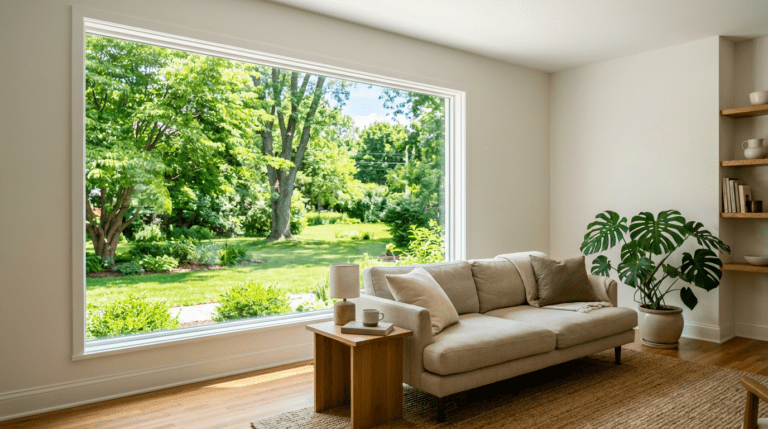
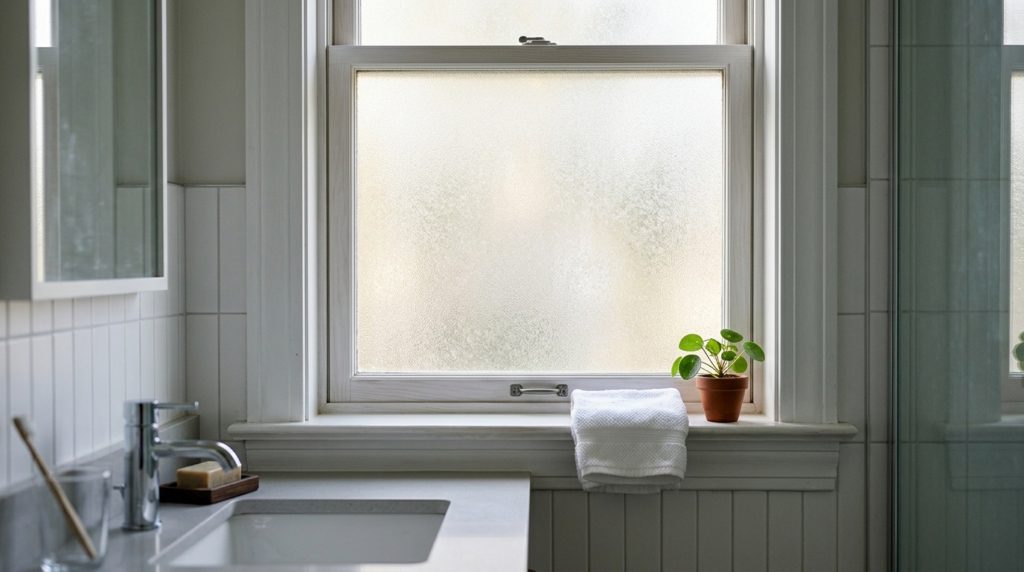
A bathroom window is the one window where privacy is not optional. It often sits low enough for neighbors and passersby to see in, it gets used at the most private moments, and it frequently faces a side yard or the narrow gap between two houses. The good news is that you can block the view and still let daylight in, and you have far more choices than a fogged-up roller shade.
This guide compares every practical option, from peel-and-stick film and frosting spray to permanent etched and obscure glass, tints, and moisture-proof shades. It also covers the part most articles skip: how bathroom steam and Ohio’s cold glass decide which of these actually last. If you want a permanent fix, swapping the pane for obscure or frosted glass is often the cleanest route.
Quick answer: For fast, renter-friendly privacy, apply frosted or patterned window film, the easiest way to block the view while keeping light. For a permanent upgrade, replace the pane with obscure, acid-etched, or sandblasted glass. Add a waterproof shade or blind for night privacy, since film and tint stop hiding silhouettes once the light is on inside.
Why Bathroom Windows Are the Hardest to Keep Private
Most rooms only need privacy after dark, but a bathroom needs it around the clock. The window tends to sit at eye level over a sink or beside a tub, on the side of the house closest to the property line, where a fence or a neighbor’s window is only a few feet away. That combination is why a clear pane that feels fine in a living room feels exposed in a bathroom.
The second problem is moisture. This is the most humid window in the house, hit by shower steam several times a day, then chilled on the other side by an Ohio winter. That swing leaves condensation running down the glass and pooling on the sill. Any privacy solution you choose has to shrug off that water, or it lifts, molds, or warps within a season.
So the real question is not only how well an option blocks the view, but whether it survives steam, handles night privacy, and still lets in enough light to keep a small room from feeling like a closet. The options below are sorted by how permanent they are and how they hold up to all three.
Privacy Film: The Fast, Renter-Friendly Fix
Adhesive window film is the easiest and most reversible way to add privacy, which is why it is the default for renters and quick weekend jobs. You clean the glass, spray it with soapy water, smooth the film on like a large sticker, and squeegee out the bubbles. It peels off later without harming the glass, so it suits anyone who cannot make a permanent change.
The styles go well beyond plain frost. A classic matte frost mimics etched glass, gradient film stays clear at the top and opaque where you need cover, and patterned or stained-glass designs add character while still scrambling the view. Reeded and geometric prints are popular right now because they read as intentional rather than as a privacy patch.
Film has two honest limits. It blocks the view by day, but once the bathroom light is on at night it still shows soft silhouettes, so it pairs best with a shade. And on a steamy, cold bathroom window the edges are the weak point, where moisture creeps under and lifts a corner over time. Our walkthrough on frosting glass for lasting privacy covers the prep that keeps an edge stuck down.
Frosting Spray and Etching Cream: DIY Frosted Glass
If you like the idea of frost but want it on the glass itself rather than on a film, two DIY routes get you there. Frosted glass spray, sold as a glass-effect aerosol, lays down a fine etched look in a few light coats. It is not permanent, scrapes off with a blade if you change your mind, and lets you build opacity gradually by adding coats until the view disappears.
Glass etching cream is the permanent cousin. You mask off a pattern with painter’s tape or a stencil, spread the cream, wait, then rinse it away, and the acid has eaten a thin frosted layer into the surface for good. It is cheap and gives a true etched finish, but it cannot be undone, so it belongs on glass you own, never a rental.
Both are good for small windows and shower panels where replacing the glass feels like overkill. Mask the frame and sill carefully, work in a ventilated room, and test your opacity on a corner first. Spray that goes on too thin will still let shadows through when the light is behind it.
Obscure and Textured Glass: A Permanent Upgrade
The most durable privacy comes from the glass itself, not a coating on top of it. Obscure glass is manufactured or treated to scatter light so shapes blur while brightness passes through, and because the privacy is built into the pane, steam and scrubbing never wear it away. This is the route to choose if you are already renovating or replacing the window.
There are several finishes, and they differ in how much they hide and how they look from inside the room:
- Acid-etched glass has a smooth, even matte face that diffuses light gently and resists fingerprints, the most refined of the bunch.
- Sandblasted glass is blasted with grit for a similar frosted look, slightly more textured and a touch easier to mark.
- Patterned or rolled glass is pressed with a texture, from subtle ripples to bold geometric reeds, for the strongest scrambling of the view.
- Reeded and fluted glass uses vertical ribs that are very on-trend and blur anything more than an inch behind them.
Each blocks a different amount, so heavier textures suit a window facing a close neighbor while a light etch suits one with a hedge already in front of it. Our guide to privacy and patterned glass types breaks the finishes down side by side.
Tints and Reflective Glass: One-Way Privacy in Daylight
Window tint and reflective film take a different approach. Instead of frosting the glass, they darken or mirror it so that during the day you can see out clearly while the brighter outdoors hides the dim interior from view. For a bathroom with a good outlook you want to keep, that one-way effect is appealing because it preserves the scene through the glass.
The catch is that the trick depends entirely on which side is brighter. After dark, with the bathroom light on, the relationship flips: now the inside is the bright side, the mirror effect reverses, and anyone outside can see in while you see only your reflection. A tint or reflective coating alone is therefore daytime privacy, not around-the-clock privacy.
Tint also cuts some daylight, which works against a small, already-dim bathroom. It pulls double duty by reducing heat and glare on a sun-baked west window, so it can be worth it where solar gain is a problem. Just plan to pair it with a shade for the hours after sunset, or choose frost instead if night privacy is the priority.
Blinds, Shades, and Shutters: Privacy You Can Adjust
Sometimes the best answer is a covering you can open and close on demand, and the bathroom has good reasons to want that flexibility. A shade lets you flood the room with morning light, then drop it for a shower or after dark. The key in this room is choosing a material that laughs off humidity rather than soaking it up.
Fabric curtains and untreated wood are the wrong call here, because constant steam breeds mold and warps the slats. Better-suited choices hold up far longer:
- Faux-wood or PVC blinds give slat-by-slat control over view and light and wipe clean without warping.
- Waterproof roller or solar shades resist moisture and roll fully out of the way for daytime light.
- Plantation shutters in vinyl or composite look built-in and let you tilt the louvers for partial privacy.
- Cafe-style coverings screen only the bottom half of the window, blocking sightlines while the top still pulls in light.
Because a covering handles night privacy that frost and tint cannot, the smartest setups often layer the two: permanent obscure glass or film for the day, and a waterproof shade for the night.
The Moisture Problem Nobody Mentions
Privacy guides love to rank films and glass, but they rarely admit that the bathroom window itself is fighting you. This pane takes more abuse than any other in the house: repeated steam, daily temperature swings, and a sill that stays damp. That environment is exactly what makes peel-and-stick products fail early and what stresses the window over time.
On a cold Ohio morning, warm bathroom air hits the chilled glass and condenses, and that water finds the edge of any film and works underneath it. Trapped moisture behind a coating can also feed mildew you cannot see. It is the main reason a permanent, glass-level solution outlasts a surface one in this room specifically.
On bathroom calls around Columbus, the privacy films curling at the corners are almost always the bathroom ones. Steam plus a cold pane gets under the edge, and once water is in there, no amount of re-squeegeeing keeps it down.
There is also a privacy mimic to rule out. If your double-pane bathroom window has gone permanently cloudy between the panes, that is a failed seal, not privacy, and the fog points to a window losing its insulation. That is a repair, not a feature, and swapping the sealed unit through insulated glass replacement restores both clarity and efficiency. Running the exhaust fan during and after every shower protects whichever privacy option you pick.
Replacing the Window or Just the Glass
When you are renovating or the window is already tired, building privacy into the glass beats layering something on top. During a remodel you can specify obscure, acid-etched, or reeded glass as the unit goes in, so the privacy is permanent, moisture-proof, and invisible as a fix. It is the once-and-done option for anyone tired of replacing film every couple of years.
You do not always need a whole new window, either. If the frame is sound and only the view bothers you, a glass shop can often cut a piece of obscure glass to size and swap just the pane or the sealed unit, keeping your existing sash. That retrofit is cheaper and faster than a full replacement and avoids any disruption to the wall or trim.
Which path fits depends on the window’s age and condition. A solid, well-sealed window is a candidate for a glass-only swap, while an old, drafty, or rotting one is better handled as a full new window installation with privacy glass chosen up front. Either way, you end up with privacy that needs nothing more than the occasional wipe.
How to Choose the Right Privacy Option
With so many routes, the decision comes down to a few honest questions rather than picking the prettiest pattern. Start with whether you own or rent, because that alone rules permanent etching and glass swaps in or out. Then weigh how much daylight the room can spare, since a dim north-facing bathroom cannot afford a heavy tint.
Run through these before you buy:
- Rent or own? Renters lean to film or a shade you can remove; owners can etch or replace the glass.
- Day, night, or both? Frost and obscure glass cover the day; add a shade or blind for night.
- How much light can you lose? Keep frost light or gradient in a dim room, go heavier where light is plentiful.
- Quick fix or forever? Film and spray are reversible; etched and obscure glass are permanent.
For the bigger picture of light, layout, and glass in this room, our guide on choosing bathroom windows for privacy and light walks through the trade-offs before you commit to one approach.
Mistakes to Avoid
Most privacy disappointments trace back to a handful of avoidable errors, and nearly all of them ignore how wet and cold this window gets. A few minutes of planning saves you from redoing the job next year. Run down this list before you start.
None of these are about effort. They are about matching the solution to a steamy, temperature-swinging window.
- Filming over a foggy double-pane, which hides a failed seal instead of fixing it and lets the window keep degrading.
- Skipping the exhaust fan, so trapped steam lifts film edges and breeds mildew behind coverings.
- Hanging fabric curtains or bare wood blinds, which mold and warp in constant humidity.
- Relying on tint alone for night privacy, when the mirror effect reverses the moment the light comes on inside.
- Etching a rental window, a permanent change you cannot undo when the lease ends.
- Choosing a heavy dark tint in an already-dim bathroom, trading the view problem for a gloom problem.
Get the Right Privacy Glass for Your Bathroom
If you are weighing whether to film a clear pane, swap in obscure glass, or replace the window outright, a quick look at the actual window usually settles it. The condition of the frame and seal decides whether a glass-only retrofit will hold up or whether you are better off starting fresh.
Book a free, no-pressure window assessment with our Columbus and Cincinnati team, and get a straight answer on the cleanest way to make your bathroom private without losing the light.
FAQ: Bathroom Window Privacy

Ready to fix your windows? Get a free quote in 30 seconds.
Family-owned, licensed & insured. Free, no-obligation quotes.